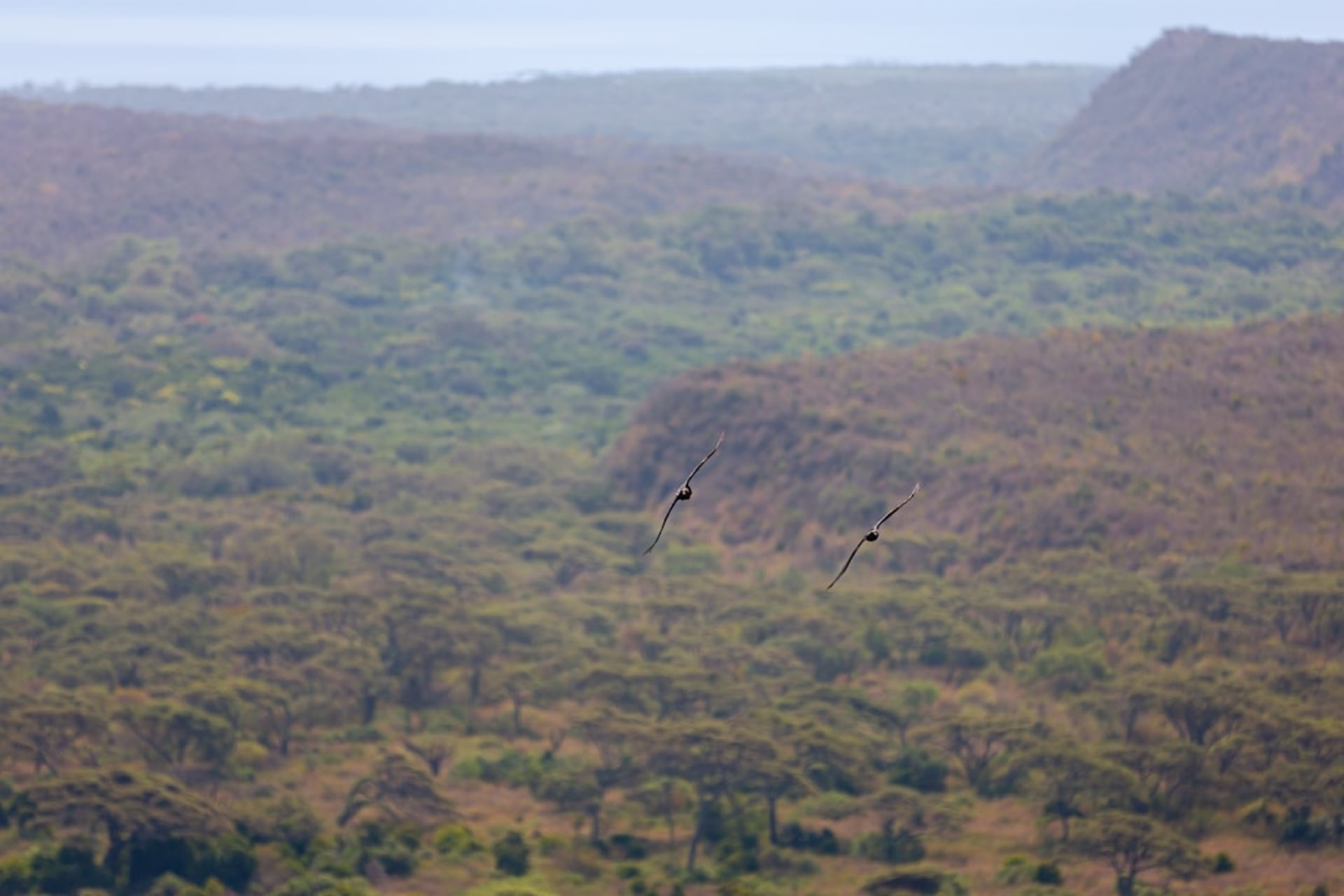
Meshaha Valley
"We dropped a thousand meters into Meshaha Valley in an afternoon and I swear I could feel the air get thicker with every switchback."
A deep gorge route linking Chenek to the park's western escarpment, where the trail drops steeply into a different, warmer world.

Nobody warned me how much of a mood swing the descent into Meshaha Valley would be. We’d spent days up on the escarpment at altitudes where the wind never really stopped and everything smelled faintly of cold stone, and then the route from Chenek turned and just started dropping — switchback after switchback down into this deep gorge that connects toward the park’s western edge. Within an hour the vegetation had changed completely, scrubby highland grass giving way to thicker green, and I unzipped my jacket for the first time in three days.
The trail itself demands attention. It’s steep, loose in places, and our guide kept a pace that made it clear this wasn’t a section to zone out on. But the payoff is that you’re walking through a landscape most day-trippers to the Simiens never see — the gorge walls rise up on either side, streaked with mineral colors, and there’s a real sense of being swallowed by the mountain rather than walking along its top. Lia, who’s usually the more cautious hiker between the two of us, actually seemed to relax here; something about being enclosed by rock instead of standing at the edge of a thousand-meter drop.
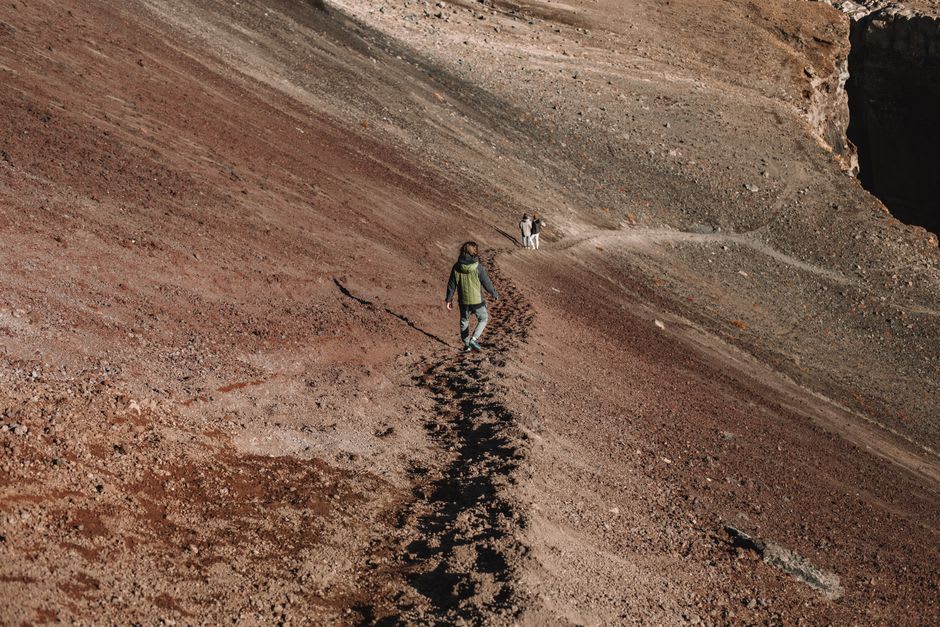
We stopped for lunch near a stream at the bottom of one section, and it was genuinely one of the quietest, most private moments of the whole trek. No other groups, no gelada troops performing for cameras, just the sound of water and the occasional bird call echoing off the gorge walls. Our guide pointed out fig trees growing wild along the water, which felt strange after days of nothing but Afro-alpine grassland and heather scrub higher up.
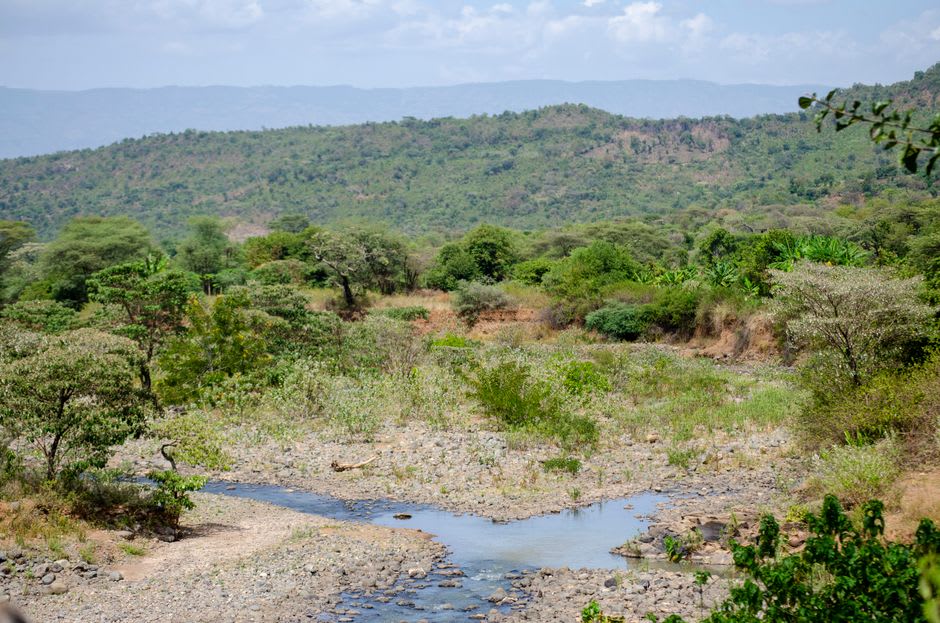
By the time we climbed back out toward the western escarpment my legs were done arguing with me and had just accepted their fate. But Meshaha Valley was the section of the trek that made the Simiens feel less like a single dramatic viewpoint and more like an actual mountain range with real variety inside it.
When to go: Dry season, October to March, gives the best footing on the steep switchbacks; go earlier in that window if you want the gorge still green from the rains.
Keep exploring
More from Simien Mountains
 simien-mountains
Ras Dashen
The roof of Ethiopia and the fourth highest mountain in Africa at 4,550 meters, a long summit day from Chenek that rewards with an emptiness that is both geographical and internal.
Explore simien-mountains
Sankaber
The first camp on the classic Simien trek, perched at the escarpment's edge where gelada baboons graze within arm's reach and the cliff drops into nothing.
Explore simien-mountains
Silki Yared
The Simiens' third highest peak and its most overlooked, a high ridge traverse accessible from the southern approach that offers solitude and wolf sightings in roughly equal measure.
Explore simien-mountains
Amba Ras
A remote escarpment viewpoint on the eastern Simien circuit where the plateau ends in a series of layered cliff faces and the world below is a different country entirely.
Explore simien-mountains
Ambiko
The high camp beneath Ras Dashen where trekkers spend a cold, thin-aired night before the long push to Ethiopia's tallest peak.
Explore simien-mountains
Argin
An Amhara farming village inside the national park where barley fields and gelada baboon troops share the same terraced slopes.
Explore