
Sardinia's most dramatic eastern coast, where the Gennargentu mountains drop straight into the Tyrrhenian and limestone cliffs hide coves reachable only by boat or the kind of trail that tests your commitment.

Ogliastra doesn’t try to be accessible. The region sits on Sardinia’s eastern spine where the mountains run almost to the water’s edge and the roads follow the logic of goat paths, which is to say they follow no particular logic at all. This is precisely the point. The Nuragic peoples who built their stone towers here three thousand years ago understood that geography is the best fence, and the geography has been making the same argument ever since. What’s inside it — the limestone sea cliffs, the gorges, the coves that require a boat or a two-hour hike to reach, the villages where a statistically improbable number of people live past a hundred — rewards the effort with a completeness that flatter, easier places simply cannot match.
The Cliffs and Coves
The stretch of coast between Arbatax and Baunei is the reason most people come. The Supramonte massif sheers off into the sea here as white limestone cliffs anywhere from fifty to three hundred meters tall. Cala Mariolu, Cala Sisine, Cala Luna — the names are better known than the roads to them, because most of these beaches have no roads. You hire a boat from Santa Maria Navarrese or Arbatax, or you walk. I did the trail from Baunei down to Cala Golone one June morning: three hours of descent through maquis and juniper, then a cove of water so improbably clear I had to resist the urge to describe it to someone immediately. The water temperature was 22 degrees. I stayed until the light changed.
Su Gorroppu
The gorge cuts through the Supramonte limestone in a crack so narrow that for stretches the sky above you is a thin stripe of blue between walls forty meters high. Su Gorroppu is one of the deepest canyons in Europe and the walk into it — a two-hour approach from the Genna Silana pass — earns you something that feels genuinely primeval: the sound of water on rock, the cold air that stays cold even in July, the occasional ibex navigating the cliff faces with total indifference to physics. The canyon bottom is boulder-hopping after the first kilometer; good boots are not optional.
The Blue Zone Villages
Ogliastra sits inside one of the world’s five Blue Zones — the regions where people routinely live past a hundred at rates that make epidemiologists nervous. Villagrande Strisaili and Arzana have been studied extensively; the explanations vary. The diet (beans, wild herbs, hard cheese, local wine in small quantities). The terrain (everything here requires walking uphill). The community structure (multigenerational households, no one eating alone). I ate lunch at a table outside a bar in Talana — malloreddus pasta with lamb ragù, a carafe of Cannonau, bread baked that morning — and thought that if this is the explanation, it seems almost unfair to the rest of us.
Arbatax and the Red Rocks
The town of Arbatax itself is functional rather than beautiful, but the porphyry sea stacks at its tip — hunks of red and pink rock rising from the sea with the confidence of something placed there deliberately — are strange and good. At low tide you can walk out among them on a flat ledge of rock while the sea moves through the gaps below. I went at sunrise, which was excessive dedication, but the red rocks in red light made a kind of chromatic joke I was glad to have witnessed.
When to go: May and June for the coast trails before the July-August heat makes the long approaches punishing. Late September is also excellent — the sea temperature peaks in October, boat services are still running, and the gorge crowds thin considerably. The interior villages are worth a winter visit for the pastoral quiet, though mountain roads can close after snow.
Keep exploring
More from Sardinia
 sardinia
Olbia
Sardinia's main port city, dismissed by most as a place to fly through on the way to the coast, but holding two thousand years of layered history in a compact, unpretentious center.
Explore sardinia
Orgosolo
A Barbagia mountain village where every wall is a political mural and the air carries woodsmoke and the smell of aging pecorino.
Explore sardinia
Oristano
A quiet provincial capital on Sardinia's western coast presiding over lagoons full of flamingos, Phoenician ruins at the sea's edge, and the finest grey mullet roe on the island.
Explore sardinia
Palau
A working ferry port on Sardinia's northeast coast that doubles as the easiest gateway to the La Maddalena archipelago, with a granite bear keeping watch over the strait.
Explore sardinia
Sant'Antioco
An island connected to Sardinia by a Roman-era causeway, where a Phoenician necropolis sits beneath the town and one of the last people alive still weaves sea silk by hand.
Explore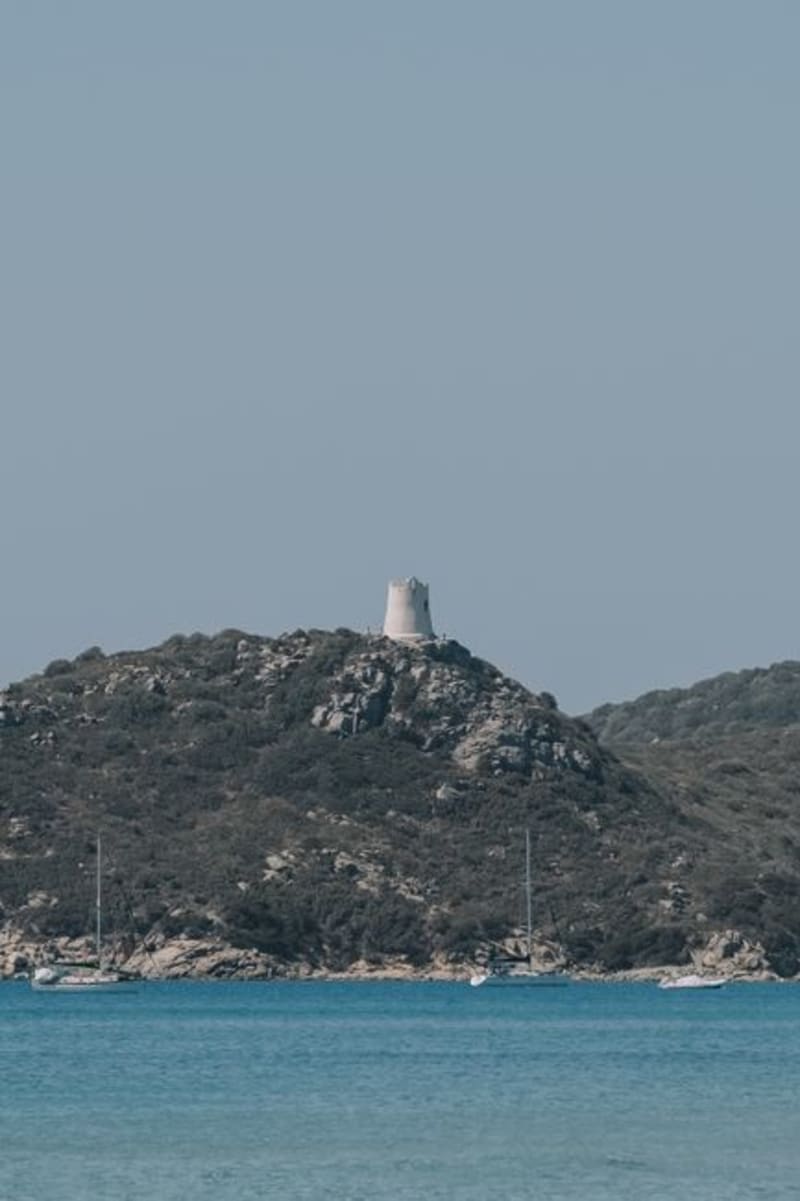 sardinia
Santa Teresa Gallura
Sardinia's northernmost town, where granite cliffs shaped like folded dough drop into water so clear you can see Corsica on the horizon and the seafloor at the same glance.
Explore