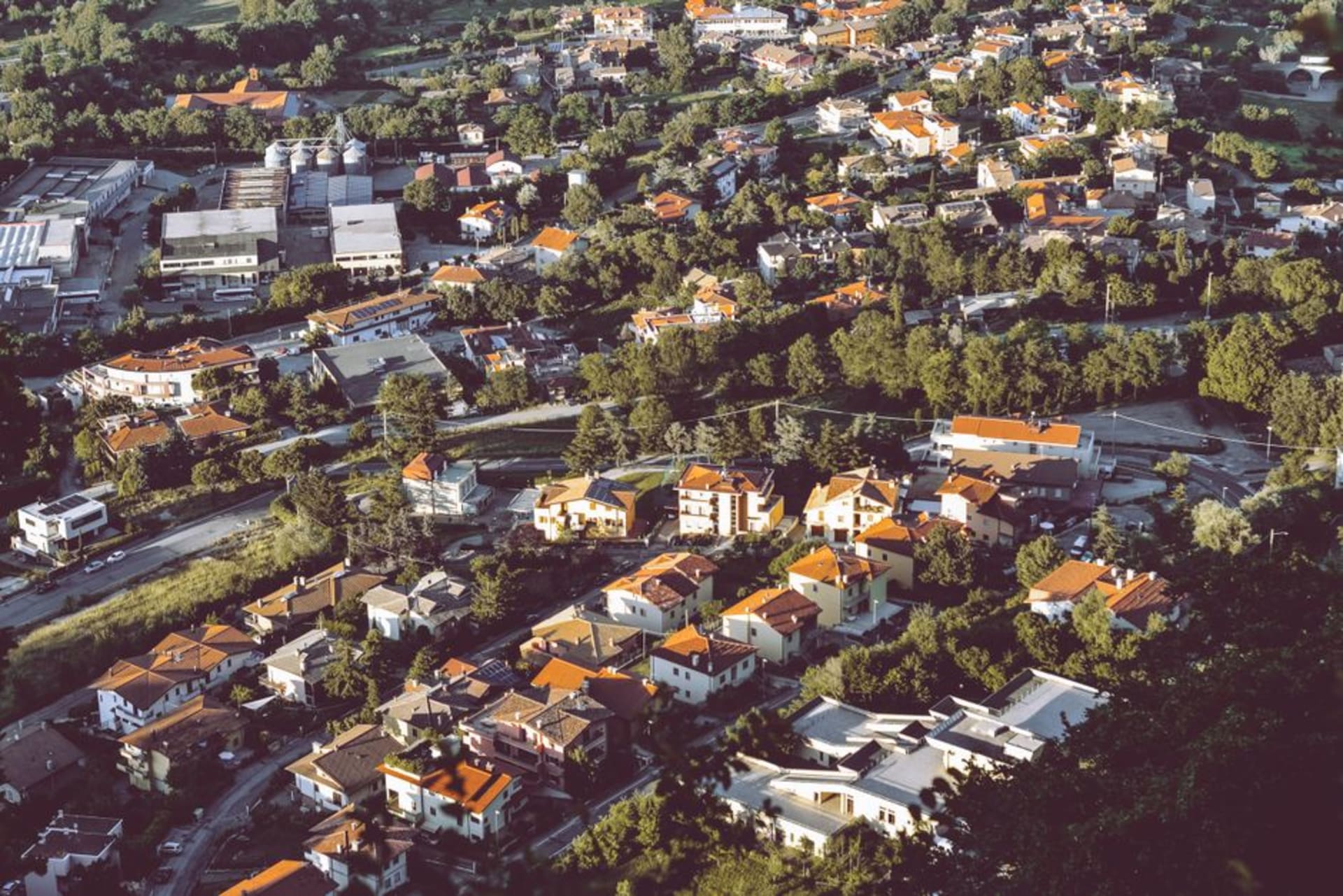
Dogana
"I realized we'd crossed into San Marino only when Lia pointed at a customs sign half-covered in ivy, because otherwise the road just kept going."
San Marino's largest, flattest, and most modern town, a border settlement of shopping strips and roundabouts where the country stops feeling medieval.

Nobody puts Dogana on a postcard, and having spent an afternoon there, I understand why — and also think that’s a little unfair. The name literally means “customs house,” which tells you everything about its function: this is the town that absorbed the border crossing from Rimini, sprawled out flat where the other eight castelli sit up on hills, and it looks the part. Shopping centers, car dealerships, roundabouts, a strip of duty-free stores that made me briefly forget I wasn’t just on the outskirts of some Italian regional city. We came through almost accidentally, needing gas and a bathroom on the drive up to Monte Titano, and ended up staying longer than planned.
What kept me there was exactly the thing that makes Dogana unglamorous — it’s the most honest place in San Marino to see how people who aren’t running a UNESCO tourist economy actually live. More than a third of the country’s population lives in and around here, in apartment blocks and terraced houses that could be anywhere in the Romagna hinterland, going to jobs that have nothing to do with towers or crossbow museums. We wandered into a bar for coffee that was doing brisk local trade — men in work clothes, nobody looking at a phone for photos, the barista not remotely interested in whether we were tourists.

Lia, who has more patience than me for this kind of anthropological wandering, made me walk a few of the side streets instead of just cutting through to the highway, and it paid off — a little park with kids on bikes, a church that’s plain compared to anything in the old town but clearly used, a bakery with a line out the door around noon that had nothing to do with tourism whatsoever. It’s the closest San Marino gets to feeling like a normal Italian suburb, except it isn’t Italy, a distinction that matters more than you’d think once you notice license plates changing and prices dropping slightly on cigarettes and perfume, the classic border-town economics playing out in real time.
I won’t pretend Dogana is beautiful. It isn’t, not in any conventional sense, and if your only goal in San Marino is the towers and the walled city, you can skip it entirely and just pass through on the road up. But it earns its place as the flip side of the whole country’s story — the modern, working, populated San Marino that keeps the ancient postcard version economically viable. Standing at a roundabout watching commuter traffic with Monte Titano rising directly behind it, medieval spine and strip-mall foreground in the same frame, told me more about how this country actually functions than an hour inside the towers did.
When to go: Any weekday morning, when the bakeries and bars are doing real local business rather than catering to whoever’s passing through on the way up the mountain.
Keep exploring
More from San Marino
 san-marino
Domagnano
A quiet castello of olive groves and stone farmhouses, famous for a Gothic gold hoard dug up by a farmer in 1893.
Explore san-marino
Faetano
San Marino's quiet agricultural southeast, where the Sangiovese vines run to the Italian border and the pace drops to something closer to still.
Explore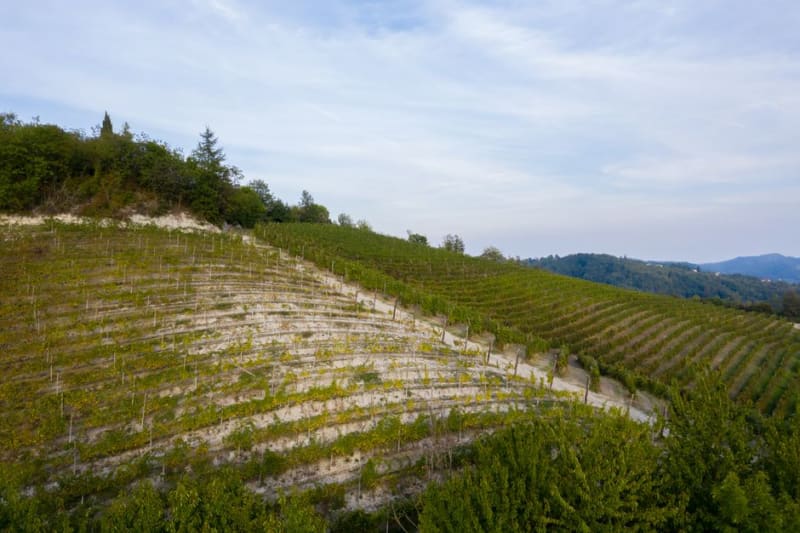 san-marino
Fiorentino
A hillside castello of terraced vineyards where the Adriatic shows up as a silver line on the horizon on clear days.
Explore san-marino
La Guaita
The oldest fortress in the world's oldest republic, and still the one image you can't shake after leaving.
Explore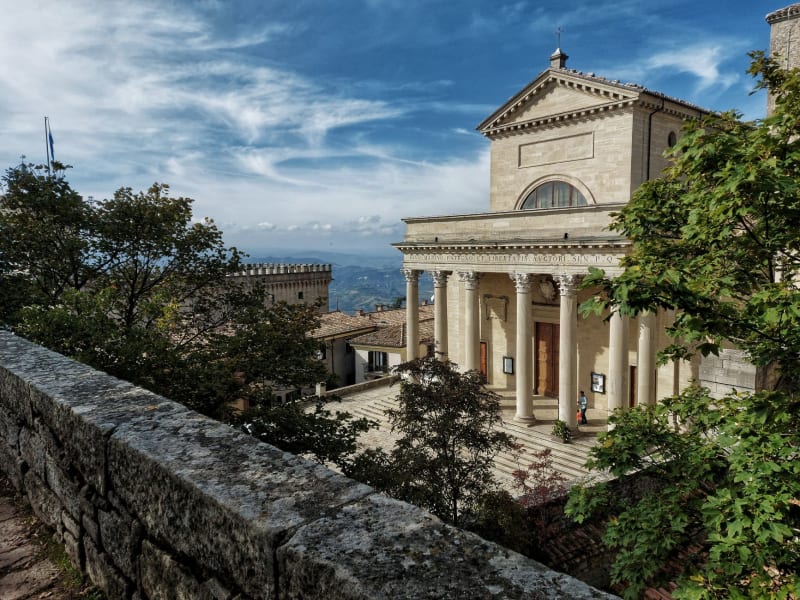 san-marino
Montale
The third and loneliest of San Marino's towers — you can't go inside, but the solitude of the walk there is its own reward.
Explore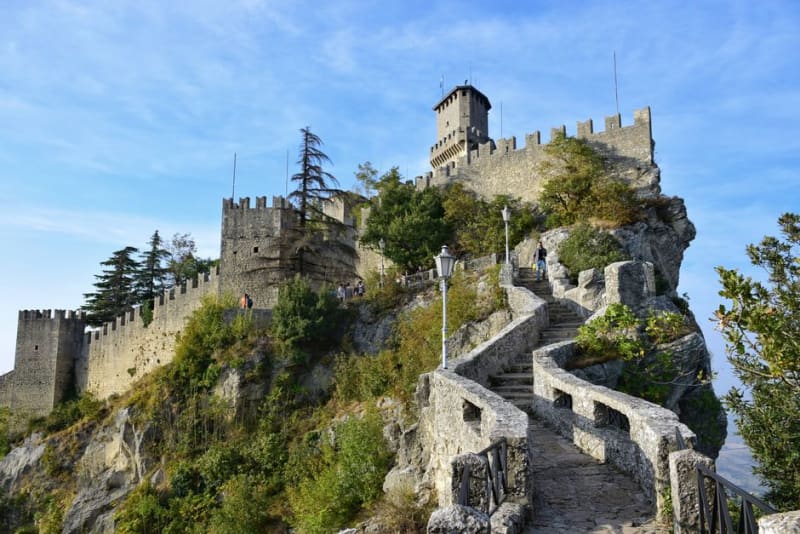 san-marino
Monte Titano
The limestone ridge crowned by three medieval towers, San Marino's UNESCO-listed centerpiece and the reason most people ever hear of the country.
Explore