Monte Titano
"By the third tower my legs were done, but I stood there anyway, watching clouds drag shadows over half of Italy at once."
The limestone ridge crowned by three medieval towers, San Marino's UNESCO-listed centerpiece and the reason most people ever hear of the country.

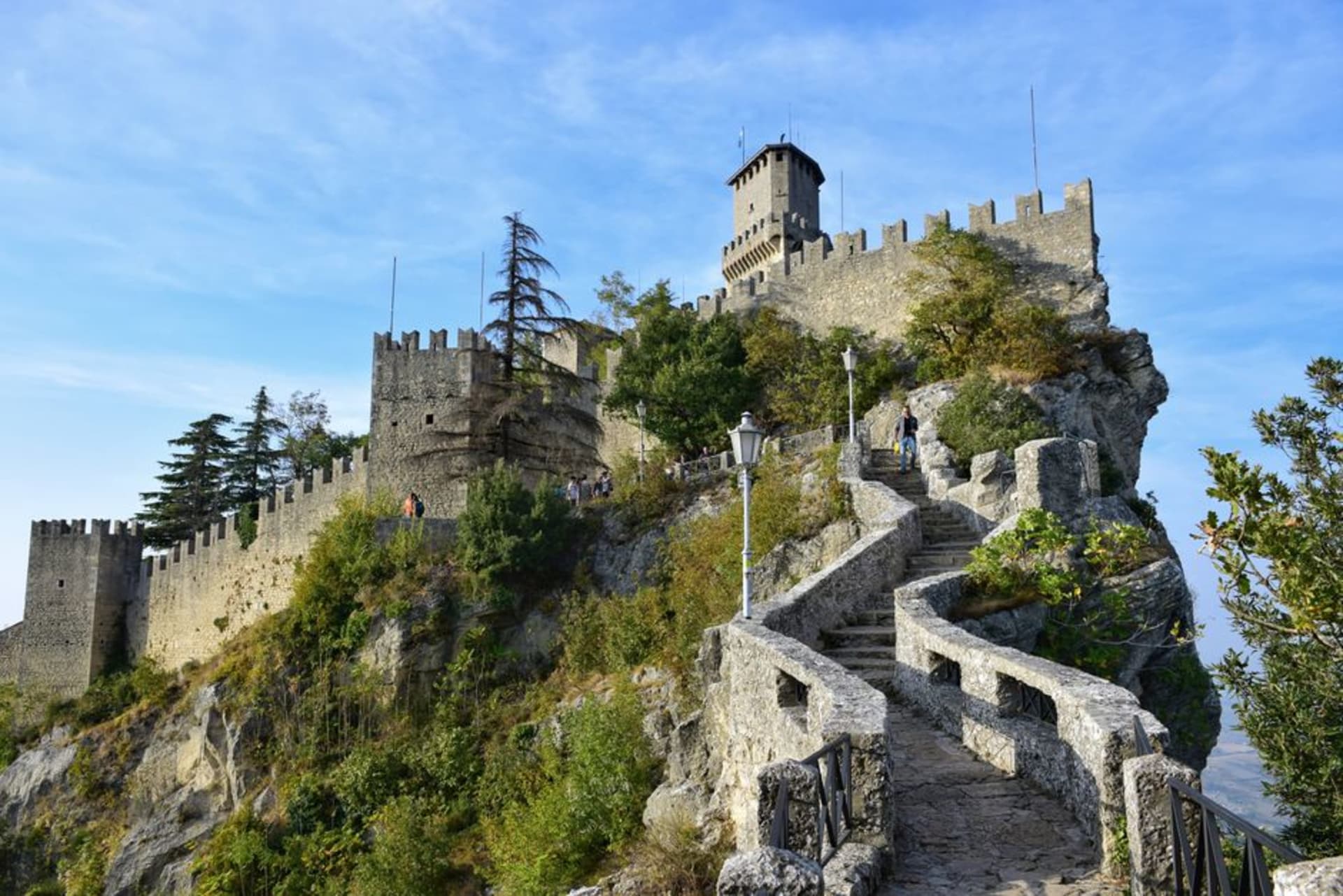
You see Monte Titano long before you reach it — it rises out of the Romagna plain like something out of a fantasy illustration, a grey limestone spine with three towers stacked along its ridge, visible from the coast on a clear day and from most of San Marino’s other castelli on any day. I’d seen the photo a hundred times, the classic postcard shot of Guaita tower with cloud below it, and I went in half-expecting the mountain itself to be an afterthought to the towers. It isn’t. The rock is the whole point — the reason a tiny, absurdly old republic has survived tucked into these cliffs since, depending on who you believe, the fourth century.
We climbed from the old town up toward Cesta, the second tower, on the path that runs along the spine rather than the road most tour buses take, and it’s steeper than it looks in photos. Limestone underfoot, scrubby vegetation clinging to gaps in the rock, and the city just falling away below you in terracotta roofs. By the time we reached Cesta, which now houses a small arms museum I found more interesting than I expected, my legs were unhappy and the view had already stopped being scenery and started being something closer to vertigo — you can see the Adriatic on one side and, on a good day, apparently as far as the mountains of Croatia, though I’ll admit I couldn’t swear to what I was actually looking at that far out.

The walk between Cesta and the third tower, Montale, is the part most visitors skip, since Montale is closed to the public and there’s no formal path connecting them — you have to double back and pick up a trail through what’s technically a nature reserve now, all juniper and windswept limestone with almost nobody on it. It was the best twenty minutes of the whole day. We had the ridge essentially to ourselves, the crowds thinned to nothing, and I remember Lia pointing out how the wind sounded completely different up there than it had in the walled city just below, sharper somehow, unobstructed.
What surprised me most about Monte Titano, coming from someone who’d assumed it was purely a photo-op mountain, is how much it still functions as a defensive structure in your head even now — you understand instantly, standing on that ridge, why nobody managed to conquer this place for over a thousand years. The rock does the work a wall would do elsewhere. UNESCO listed the whole historic center and the mountain together in 2008, and for once that felt like an accurate description rather than a bureaucratic formality — you can’t really separate the towers from the stone they’re bolted into.

We came down as the light was going gold, and the towers, lit from the side, looked less like tourist attractions and more like what they actually are — watchpoints built by people who genuinely needed to see trouble coming from a long way off.
When to go: Early morning, before the tour buses from the coast arrive, or the last hour before sunset when the crowds thin and the light turns the limestone amber.
Keep exploring
More from San Marino
 san-marino
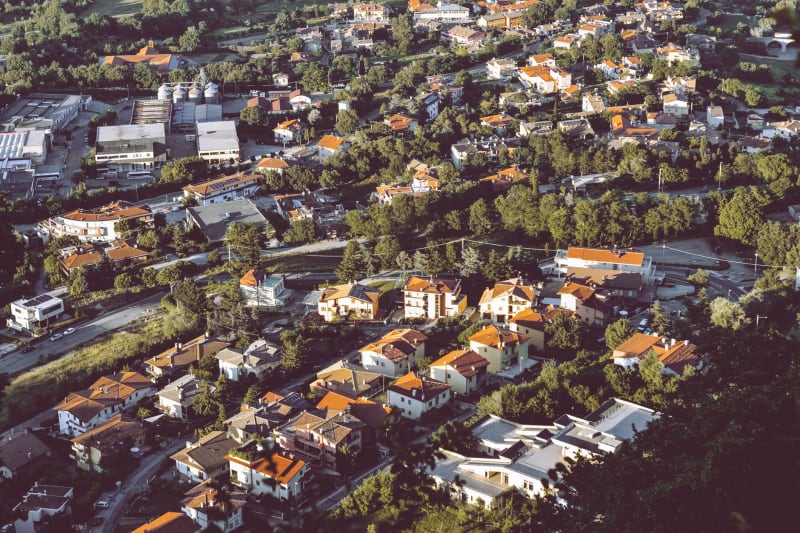
Montegiardino
San Marino's smallest municipality — a hilltop village of stone and silence so compact it feels like a secret the republic keeps from its visitors.
Explore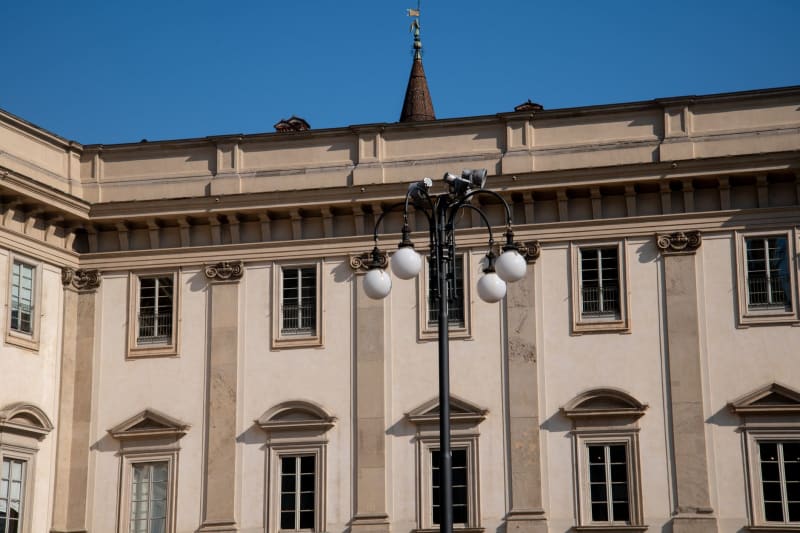 san-marino
Museo di Stato
The republic's state museum holds seventeen centuries of Sammarinese history in a palace that tourists walk past without realizing what's inside.
Explore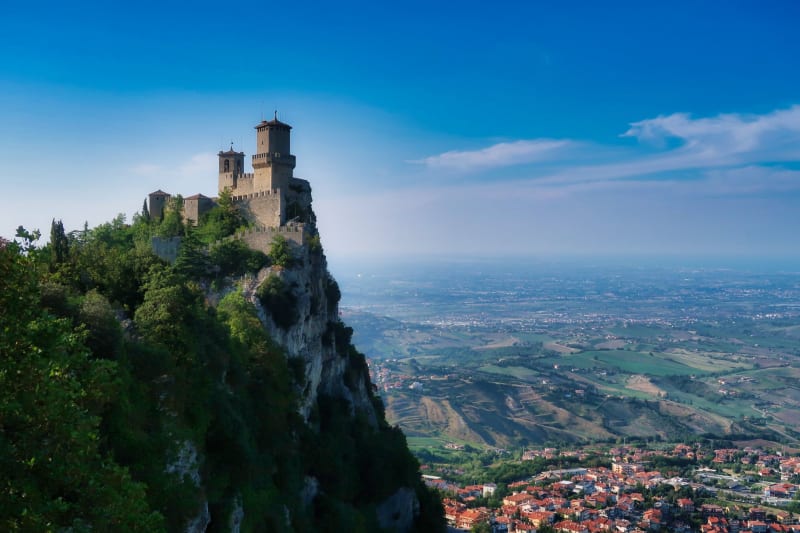 san-marino
Passo delle Streghe
The Path of the Witches — the ancient cliff walk connecting San Marino's three towers along a limestone ridge with a hundred-meter drop on each side.
Explore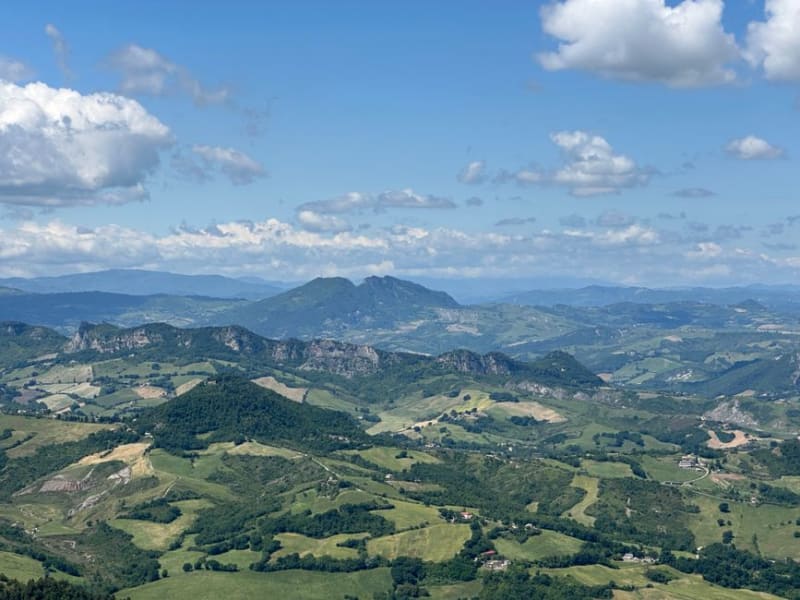 san-marino
Pianello
A rural hamlet in the castello of Chiesanuova where rutted farm tracks and grazing sheep matter more than any monument.
Explore san-marino
Piazza della Libertà
The crenelated heart of the world's oldest republic — where the government still meets, the guard still changes, and the view still earns its postcard status.
Explore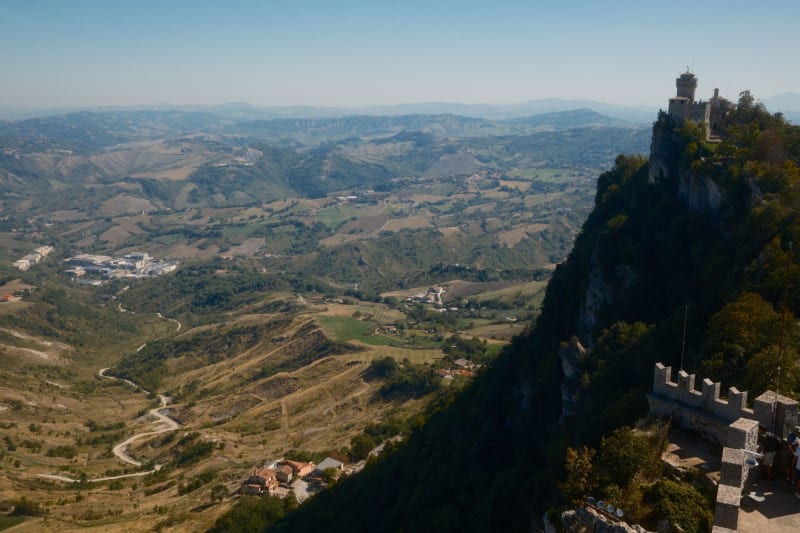 san-marino
Serravalle
San Marino's largest and most modern town — where the real population lives, shops, and quietly ignores the tourists on the ridge above.
Explore