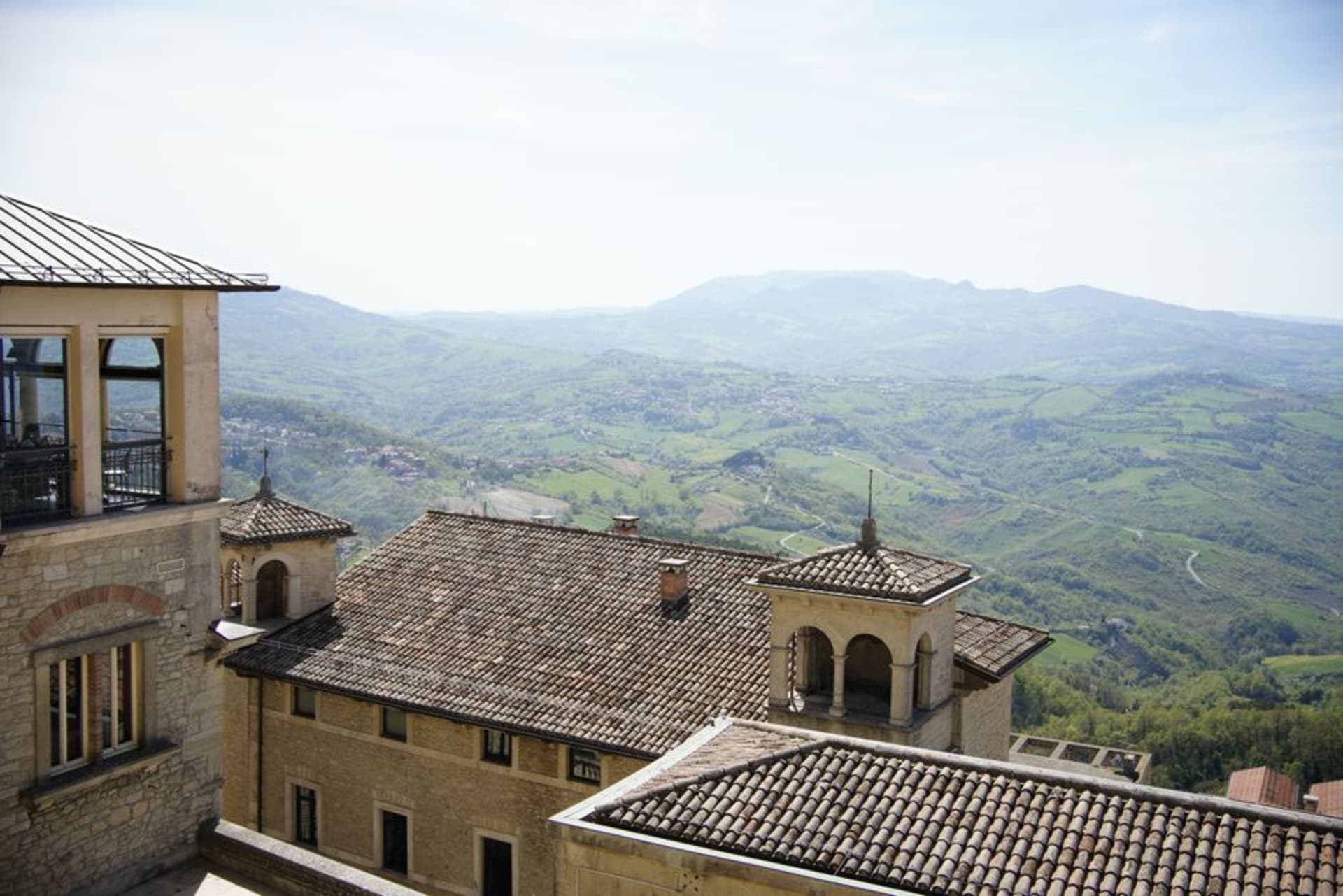
Domagnano
"I stood in a field outside Domagnano trying to picture a farmer's spade hitting gold, and the whole hillside went a little strange on me."
A quiet castello of olive groves and stone farmhouses, famous for a Gothic gold hoard dug up by a farmer in 1893.

Domagnano doesn’t announce itself. You come down from Monte Titano on the little SS31 and suddenly you’re in a scatter of farmhouses and cypress trees that could be Le Marche if it weren’t for the tiny flags. I’d read about the place for years before I actually went — the treasure hoard, obviously, the reason anyone outside San Marino has heard of Domagnano at all — and I half expected some kind of monument or museum. There isn’t one. There’s a church, a war memorial, a handful of trattorias that only really fill up on Sundays, and fields that, as far as I could tell, look exactly like they did when a farmer’s plough turned up a cache of Ostrogothic goldwork in 1893.
Lia had done more reading than me and kept correcting my facts as we walked, which is fair because I’d gotten the story slightly wrong — I thought the hoard had stayed in San Marino, and it hasn’t. Most of it scattered to museums in London, Nuremberg, and elsewhere, sold off piece by piece before anyone in the tiny republic could stop it, which apparently still needles people here a century later. Standing in the actual field where it happened, marked by nothing more than a modest plaque, felt like a strange kind of pilgrimage — paying respects to jewelry I’d only ever seen in photographs, buried in soil that’s now somebody’s vegetable patch.
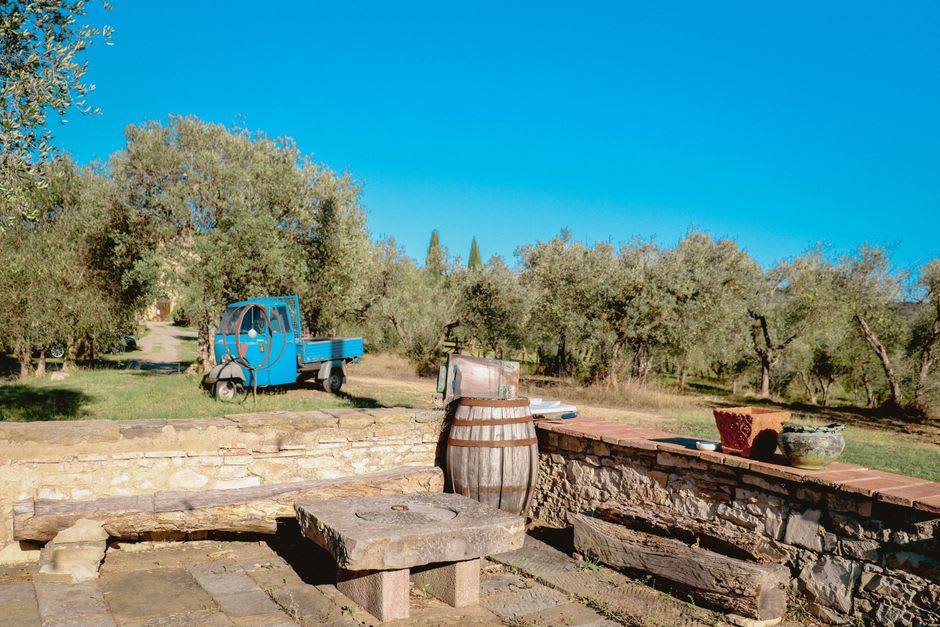
What struck me more than the history, honestly, was how ordinary the whole place felt after the crush of tourists up on Monte Titano. We’d left the towers that morning wading through school groups and selfie sticks, and twenty minutes later we were the only people on a lane, with a dog barking somewhere and someone’s laundry snapping on a line. San Marino gets reduced, in most people’s minds, to that one postcard view of the three towers — I did it myself before this trip — and Domagnano is the corrective. It’s the country’s actual texture: small-scale farming, a slower clock, neighbors who know each other’s business.
We stopped for lunch at a place with maybe six tables, where the owner recommended the piadina without asking what we wanted, and it turned out to be exactly right — thin, blistered, stuffed with squacquerone and rocket. From the terrace you could see Monte Titano properly, not up close where it dominates everything, but as a single grey tooth on the horizon, which somehow made more sense of the whole country’s geography than actually climbing it had.

I don’t think Domagnano rewards a special trip on its own — nobody flies to San Marino for a farming hamlet, treasure hoard or not. But if you’re already there for the towers, giving it half a day flips something. You stop seeing San Marino as a novelty micro-nation and start seeing it as a place people actually farm, eat, and bury things in, on purpose or by accident, for over a thousand years.
When to go: Late spring or early autumn, when the olive groves are green rather than dusty and the trattoria terraces are still comfortable at midday.
Keep exploring
More from San Marino
 san-marino
Faetano
San Marino's quiet agricultural southeast, where the Sangiovese vines run to the Italian border and the pace drops to something closer to still.
Explore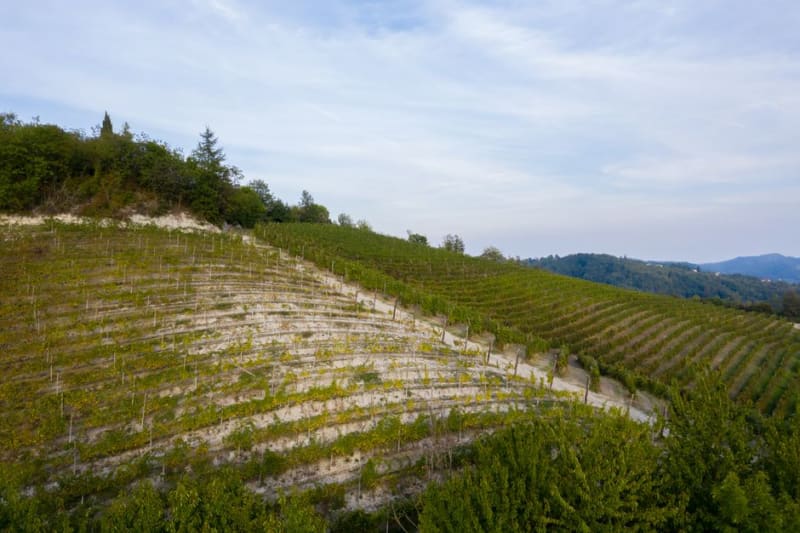 san-marino
Fiorentino
A hillside castello of terraced vineyards where the Adriatic shows up as a silver line on the horizon on clear days.
Explore san-marino
La Guaita
The oldest fortress in the world's oldest republic, and still the one image you can't shake after leaving.
Explore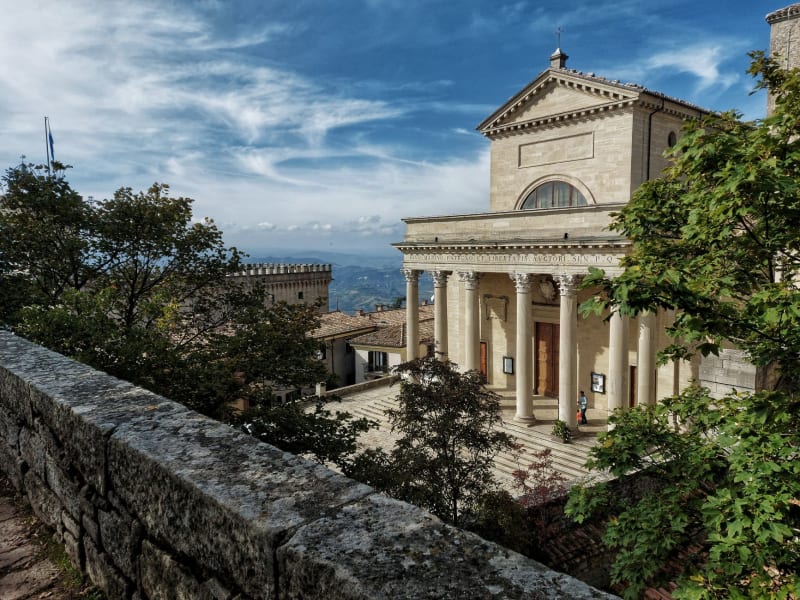 san-marino
Montale
The third and loneliest of San Marino's towers — you can't go inside, but the solitude of the walk there is its own reward.
Explore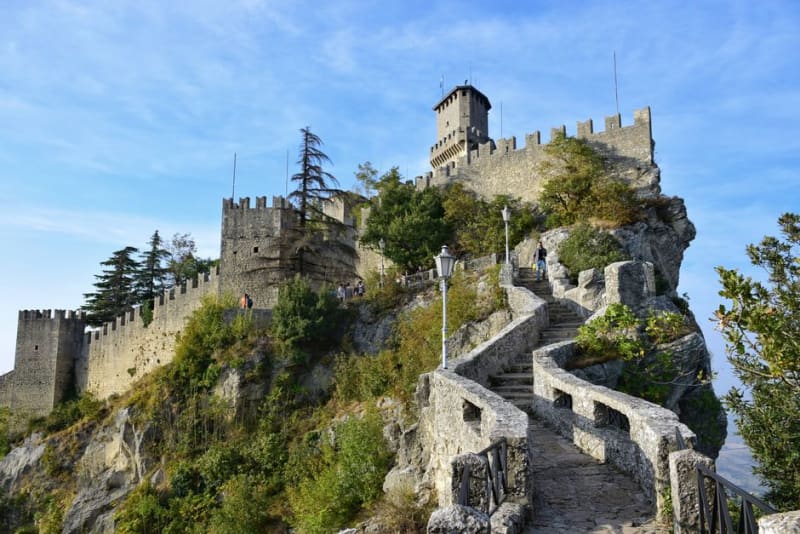 san-marino
Monte Titano
The limestone ridge crowned by three medieval towers, San Marino's UNESCO-listed centerpiece and the reason most people ever hear of the country.
Explore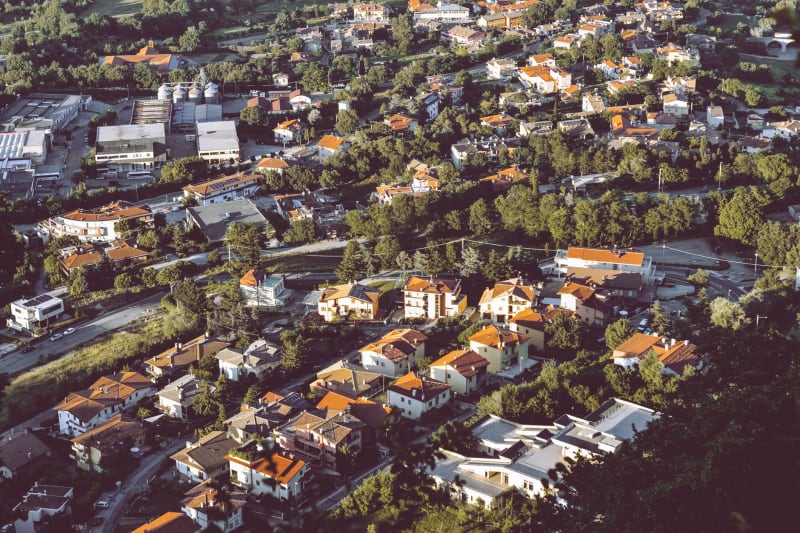 san-marino
Montegiardino
San Marino's smallest municipality — a hilltop village of stone and silence so compact it feels like a secret the republic keeps from its visitors.
Explore