
Fiorentino
"Someone poured us a glass of the local Sangiovese right there on the terrace, and I remember thinking the wine tasted a bit like the view."
A hillside castello of terraced vineyards where the Adriatic shows up as a silver line on the horizon on clear days.

We came to Fiorentino almost by accident, following a sign off the main road because Lia liked the sound of the name, and it turned out to be one of the better wrong turns I’ve taken in Italy’s orbit. San Marino’s nine castelli aren’t administrative curiosities so much as they are actual hills, each with its own slope and its own light, and Fiorentino’s whole identity is built around the vines that terrace down from the village toward the coast. You feel it before you see a single grape — the road narrows, curves along contour lines instead of cutting straight through them, and every switchback opens onto another stripe of vineyard.
The village itself is small — a cluster of stone houses, a church, a handful of old men on a bench who watched us with the specific amusement reserved for tourists who’ve clearly lost their bearings. But the reason to come is the terrace at the edge of town, where on a clear day the Adriatic turns up as a thin band of silver past the rooftops of Rimini. I’d been warned it wasn’t always visible — haze swallows it more often than not — and we got lucky, arriving right after a rain that had scrubbed the air clean. Lia spotted the sea line before I did and grabbed my arm, which is how I knew it was actually worth stopping for.

We ended up talking to a woman tending a roadside stand who, once she realized we weren’t in a hurry, walked us down toward one of the smaller family plots and explained, in a mix of Italian and patient hand gestures, how the Sangiovese here differs from what you’d find twenty minutes away in Emilia-Romagna — something about the altitude and the sea air doing something to the acidity, though I’ll admit I nodded along more than I fully understood. She poured us a taste straight from a bottle with no label, and it was rougher than anything I’d get in a restaurant but genuinely good, the kind of wine that tastes like it came from a specific hillside rather than a brand.
What I keep coming back to about Fiorentino is how little effort it makes to be a destination. There’s no visitor center, no curated wine trail with placards, just vines doing their thing on a slope that happens to have one of the best views in the whole country. We sat on a low wall for the better part of an hour, not talking much, watching light shift over the terraces as the afternoon went on, and I don’t think either of us checked the time once.

If Monte Titano is San Marino performing itself for visitors, Fiorentino is the country just going about its business, and I found that far more memorable. It’s not a long detour from the capital, maybe twenty minutes by car, but it asks you to slow down in a way the towers don’t.
When to go: September or early October, during harvest, when the vines are heavy and the coastal haze tends to lift by mid-morning.
Keep exploring
More from San Marino
 san-marino
La Guaita
The oldest fortress in the world's oldest republic, and still the one image you can't shake after leaving.
Explore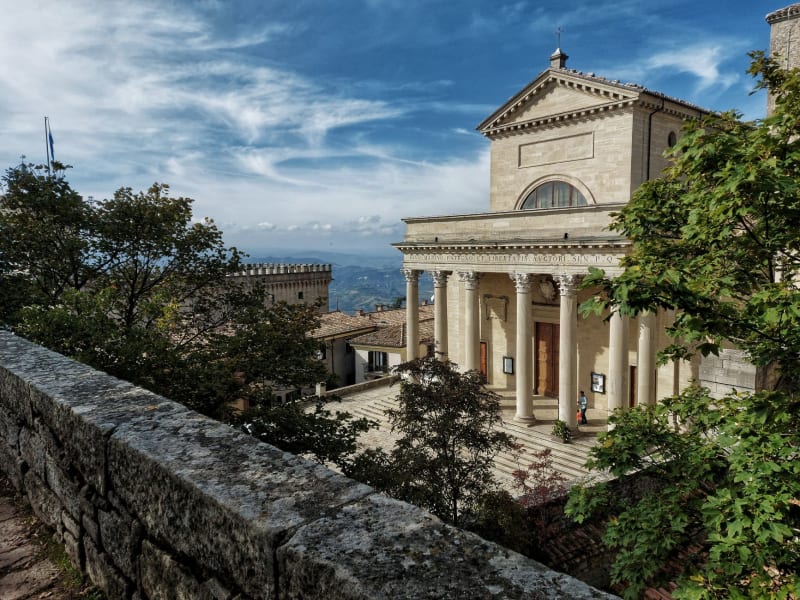 san-marino
Montale
The third and loneliest of San Marino's towers — you can't go inside, but the solitude of the walk there is its own reward.
Explore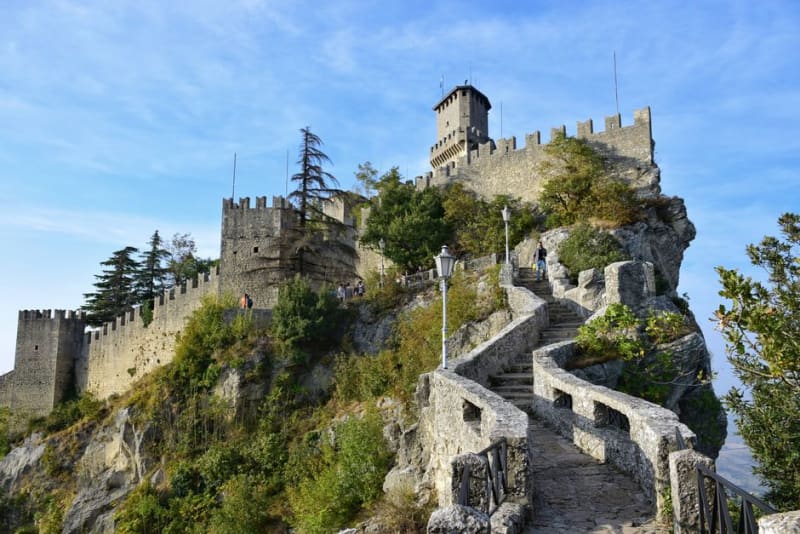 san-marino
Monte Titano
The limestone ridge crowned by three medieval towers, San Marino's UNESCO-listed centerpiece and the reason most people ever hear of the country.
Explore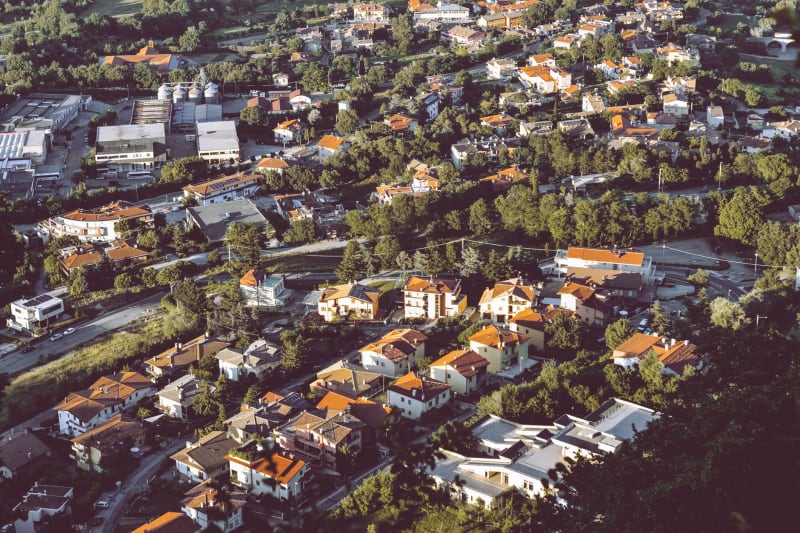 san-marino
Montegiardino
San Marino's smallest municipality — a hilltop village of stone and silence so compact it feels like a secret the republic keeps from its visitors.
Explore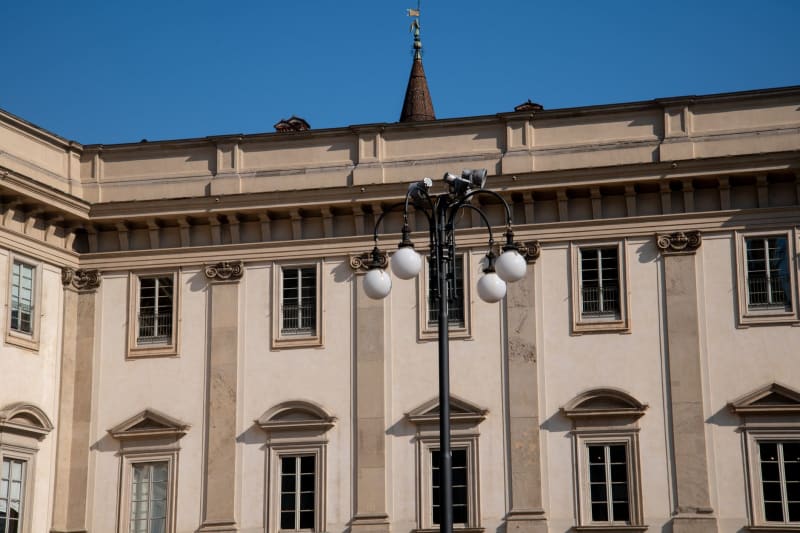 san-marino
Museo di Stato
The republic's state museum holds seventeen centuries of Sammarinese history in a palace that tourists walk past without realizing what's inside.
Explore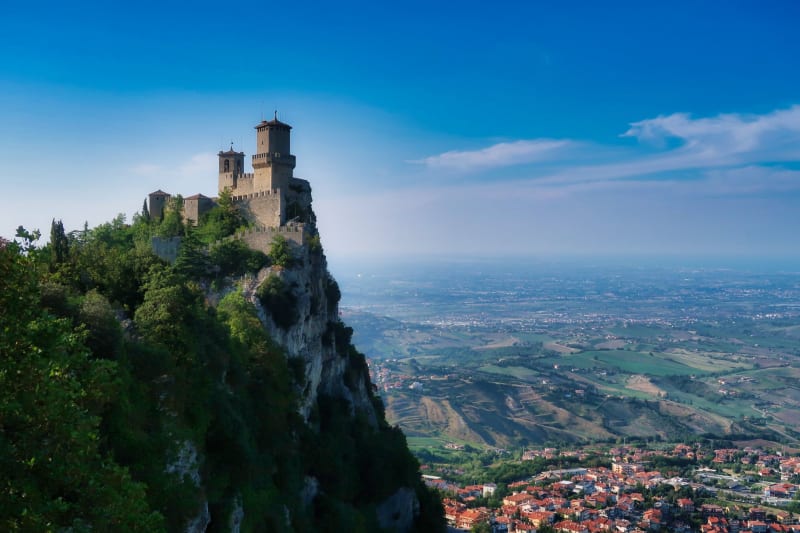 san-marino
Passo delle Streghe
The Path of the Witches — the ancient cliff walk connecting San Marino's three towers along a limestone ridge with a hundred-meter drop on each side.
Explore