Molfetta
"Molfetta smells like diesel and salt and grilled fish and I mean that as a compliment."
A working fishing port north of Bari with a Romanesque cathedral rising straight out of the harbour and a fleet that still puts out to sea before dawn.
I got to Molfetta by accident, chasing a recommendation from a waiter in Bari who insisted the fish was better up the coast and that I should go see “the old cathedral, the one with two towers, right on the water.” He was right on both counts. Molfetta is a working port before it is anything else — there is no pretense of resort life here, the harbour is thick with actual working trawlers, nets piled on the quay, men in rubber boots hosing down crates at six in the morning while the rest of the town is still asleep.
The Duomo Vecchio, the old cathedral, sits at the tip of the harbour peninsula like it grew there — a squat, powerful Apulian-Romanesque structure with two truncated bell towers and a dome that from certain angles looks almost Byzantine, built between the twelfth and thirteenth centuries when Molfetta was a stop for Crusaders heading east. Unlike Trani’s cathedral, which performs a kind of stately beauty, Molfetta’s old duomo is stockier and stranger, less photogenic in a conventional sense and somehow more moving for it — a building that has clearly spent eight centuries getting rained on and salt-blasted by the sea and doesn’t care how it looks.
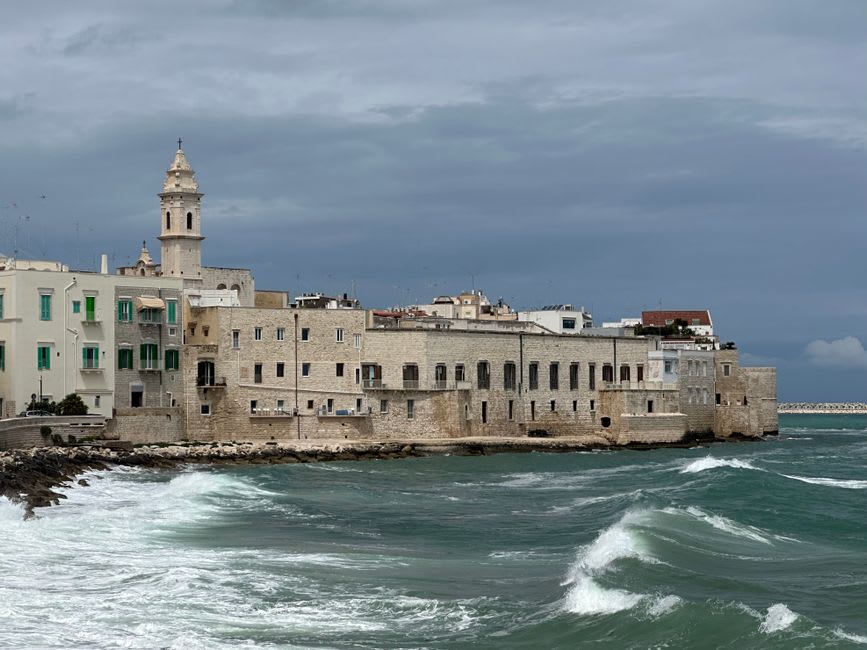
I walked the harbourfront in the early morning, which is the correct time to be in Molfetta, watching the boats come back in with the night’s catch — the auction at the fish market a controlled chaos of dialect and hand signals I could not follow but found completely absorbing to watch. Afterward I found a bar that opened absurdly early to serve the fishermen and ordered an espresso standing at the counter among men still in their work clothes, smelling of the sea, talking with the particular tiredness of people who had been awake since well before anyone reasonable should be.
The old town behind the harbour, the Borgo Antico, has a rawer texture than the more restored centers further south — some buildings clearly still lived in by families who have been there for generations, others crumbling gently, laundry strung between them regardless of which category applied. There is a version of Puglia’s coast that has been polished for visitors and a version that has not gotten around to it, and Molfetta belongs firmly to the second, which I found more interesting than I expected to.
Lunch was at a place near the new port serving whatever had come in that morning, unadorned and grilled, with a local white wine that nobody bothered naming for me beyond “della zona” — of the area — and it was one of the better fish meals I’ve had in Puglia precisely because nothing about it was designed for a photograph.
When to go: Early morning, any time of year, if you want the working harbour at its most alive. Late spring through early autumn for pleasant weather without the peak-season crowds that mostly bypass Molfetta in favor of the coastal resorts further south.
Keep exploring
More from Puglia
 puglia
 Monopoli
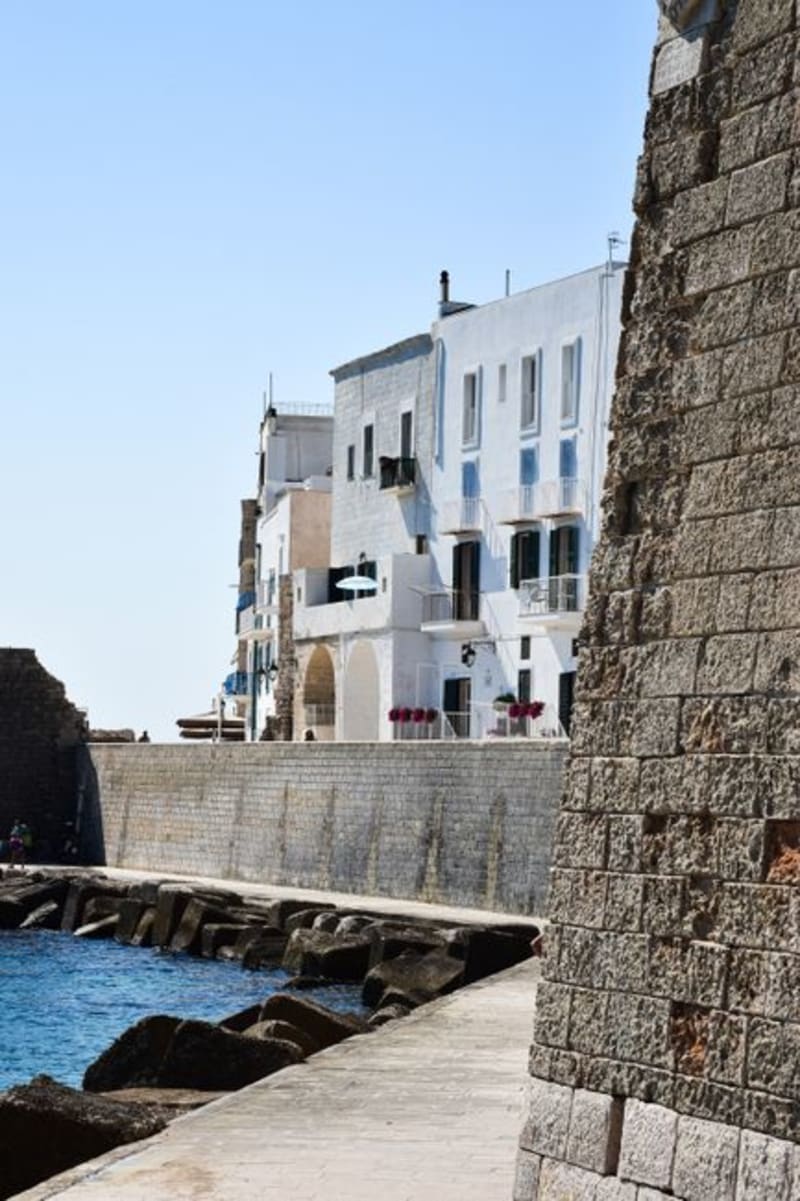
A working Adriatic port with a walled old town, hidden coves, and none of the crowds that made its neighbour Polignano a Mare famous.
Explore puglia
 Monte Sant'Angelo
A UNESCO-listed pilgrimage town on the Gargano's southern slope, built around a fifth-century sanctuary where the Archangel Michael is said to have appeared in a cave.
Explore puglia
 Mottola
Known as the balcony of the Murgia — a hill town with a view stretching from the plateau to the Gulf of Taranto, and a cluster of rock churches even the guidebooks skip.
Explore puglia
 Nardò
A Baroque inland town in the Salento with a cathedral square as ornate as Lecce's but a fraction of the visitors, plus a wild limestone coast a short drive away.
Explore puglia
 Noci
A Valle d'Itria town with its own scattering of trulli, a Saturday market that draws farmers from across the Murgia, and almost no other tourists to share it with.
Explore puglia
 Noicàttaro
A quiet wine town in the Terra di Bari countryside, ringed by vineyards growing the local Nero di Troia grape and dotted with the low white masserie that define this stretch of inland Puglia.
Explore