
Noci
"Noci has trulli too — nobody just tells you that, because nobody who isn't from here seems to come."
A Valle d'Itria town with its own scattering of trulli, a Saturday market that draws farmers from across the Murgia, and almost no other tourists to share it with.

We found Noci because the GPS took us there by accident on the drive between Alberobello and Putignano, and Lia said, half-joking, “wait, are those trulli?” as we passed the outskirts. They were — a whole countryside of them, the same conical stone roofs scattered across olive groves as everywhere else in the valley, except here nobody had put up a sign or a gift shop. Noci sits on the same limestone plateau as Alberobello, fifteen minutes away, and shares the same building tradition, but the trulli here are still mostly agricultural — storage huts and small farmhouses rather than boutique hotels — which meant we could walk right up to one without an entry fee changing hands.
The town itself is a compact grid of whitewashed streets around a Baroque church, unremarkable in the specific way that means it has never had to perform for anyone. We arrived on a Saturday, which turned out to be the correct day by pure luck — the weekly market takes over several streets with farmers from across the Murgia bringing produce, cheese, and secondhand goods, and it had none of the staged quality of markets I’ve seen catering to visitors. An old woman sold us a kilo of cherries from a crate at her feet and undercharged us, then noticed and made us take an extra handful rather than correct the price.

We ate lunch at a place just off the main square that had no menu translated into English and a waiter who simply told us what was good that day — orecchiette with a rich meat ragù, then a plate of grilled local sausage that arrived still spitting from the grill. Noci is known regionally for its capocollo too, in friendly rivalry with Martina Franca’s version, and we bought a vacuum-sealed piece to bring home that survived exactly as long as it took to get back to the car.

There is nothing in Noci that demands you come specifically — no cathedral floor mosaic, no famous belvedere — and that is more or less the point. It is what the Valle d’Itria looks like when nobody has decided to market it yet.
When to go: Saturday morning, for the market, is worth planning your route around. Spring and early autumn keep the surrounding countryside green rather than sun-scorched, which matters more here than in the towns built for photographs.
Keep exploring
More from Puglia
 puglia
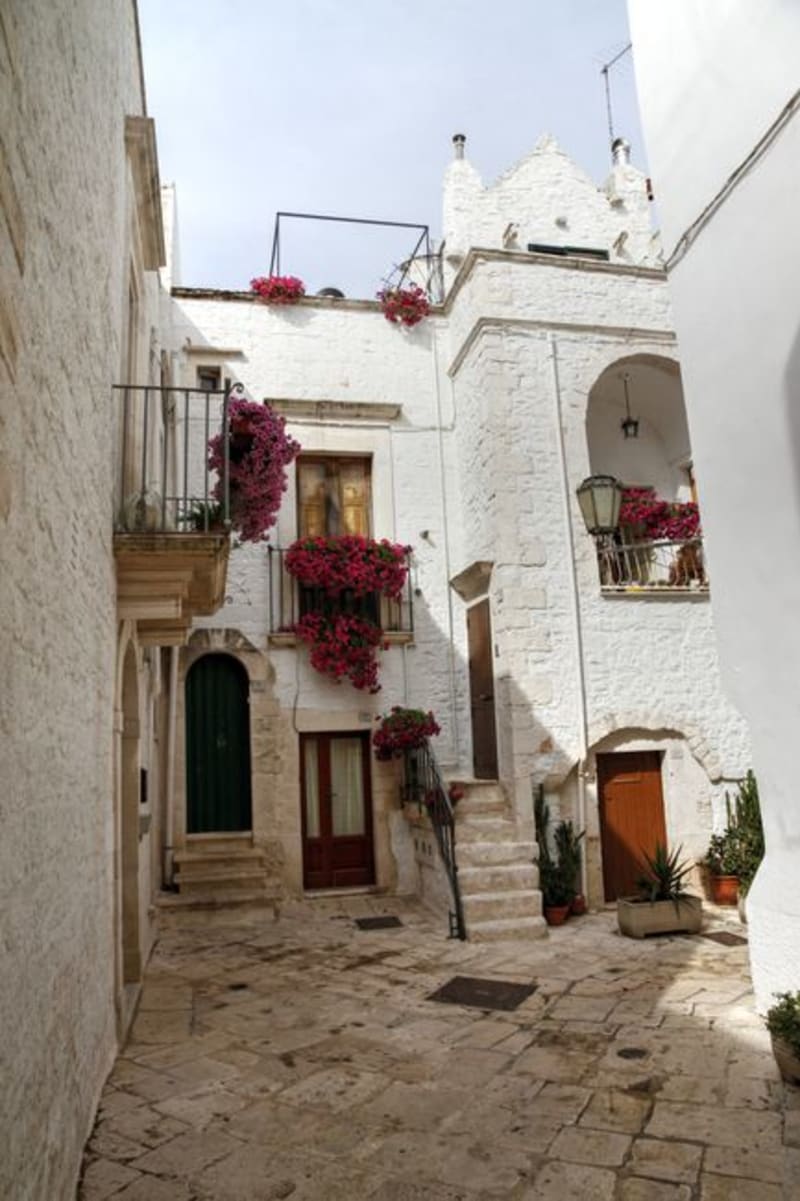
Noicàttaro
A quiet wine town in the Terra di Bari countryside, ringed by vineyards growing the local Nero di Troia grape and dotted with the low white masserie that define this stretch of inland Puglia.
Explore puglia
Orsara di Puglia
A small Daunian hill town famous for its Fanoie bonfire festival and Notte di Zeta pilgrimage through the woods — pagan ritual and Christian devotion fused so seamlessly nobody bothers separating them.
Explore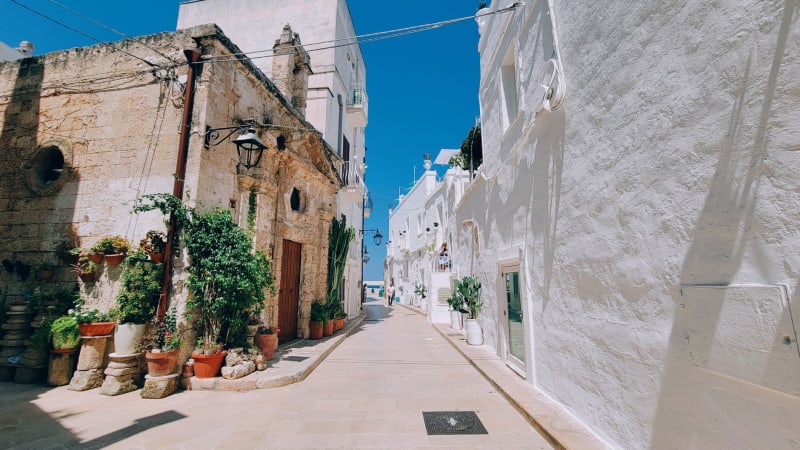 puglia
Ostuni
A whitewashed hilltop city that turns blinding in direct sun and almost blue in the evening light — and the olive groves below go on forever.
Explore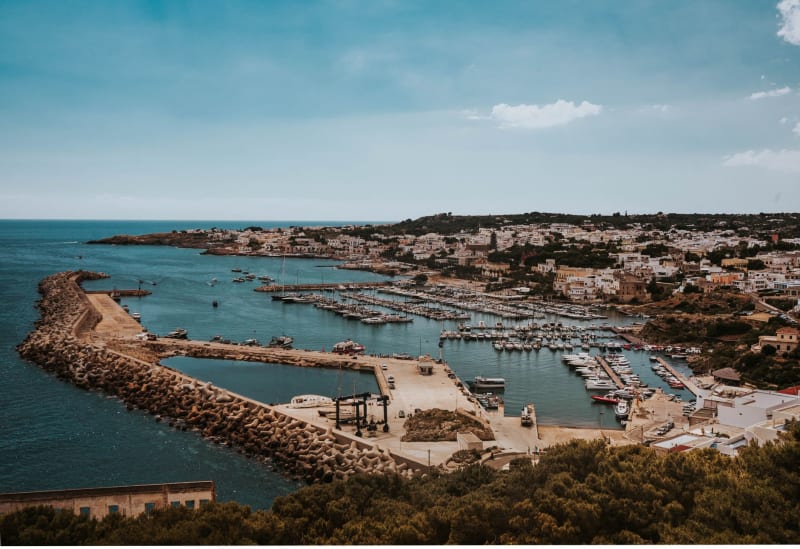 puglia
Otranto
The easternmost town in Italy, where a cathedral floor holds a twelfth-century map of the universe and the coast faces Albania across fifty kilometres of dark water.
Explore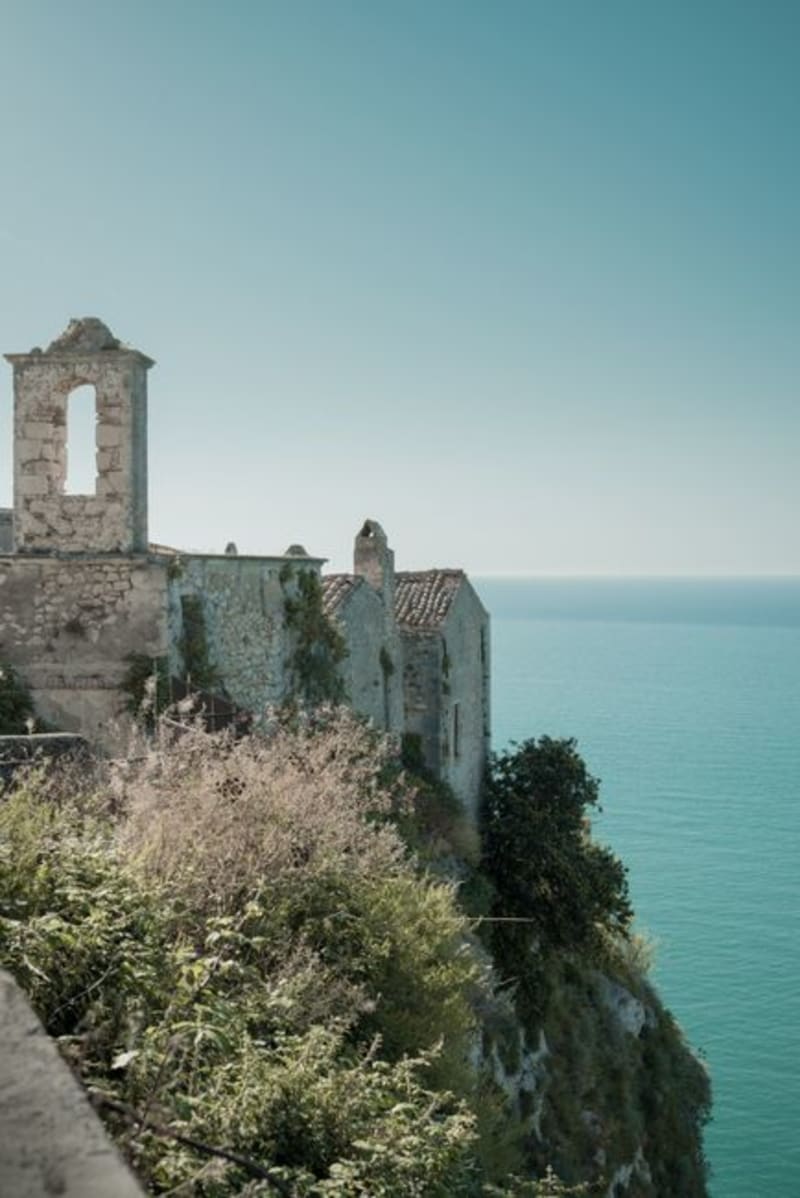 puglia
Peschici
A whitewashed hill town stacked above its own beach, trabucchi fishing machines silhouetted along the cliffs, and one of the prettiest approach roads on the entire Gargano coast.
Explore puglia
Pescoluse
A stretch of pale sand and impossibly clear shallow water on the Ionian coast that locals nicknamed the Maldives of Salento, and the nickname is not really an exaggeration.
Explore