
Olhão
"Olhão smells like the sea because the sea is still the entire point of the town, not a backdrop for it."
A working fishing port with cubist Moorish-style rooftops and a market that still runs on the tides, largely untouched by the tourism a few kilometers down the coast.

I got to the Mercado Municipal in Olhão at seven in the morning on the advice of a friend, and it was already loud — fishermen unloading crates straight off boats moored behind the two twin market buildings, women arguing cheerfully over the price of clams, ice being shoveled by hand over trays of sardines that had been swimming a few hours earlier. This is not a market performing “authentic” for visitors; it’s the actual supply chain for half the restaurants on this stretch of coast, and I stood there with a coffee watching it work like clockwork, unbothered by my presence and unconcerned with it too.
The Cubist Town
Olhão’s old town, the Bairro dos Pescadores, looks unlike anywhere else on the Algarve — flat-roofed, whitewashed houses stacked at odd angles with external staircases and rooftop terraces, a style locals call “cubist” that historians link to trading contact with North Africa; fishermen here reportedly brought back building ideas from Morocco and Tunisia in the 18th and 19th centuries, when Olhão grew rich enough on the Atlantic sardine trade to send its own ships across to Brazil during the Napoleonic occupation, apparently the first Portuguese town to declare independence from French rule off its own initiative. I climbed onto one of the market building’s rooftop terraces at dusk and understood the shape of the town properly for the first time — a jumble of flat white cubes tumbling toward the Ria Formosa, laundry lines instead of monuments strung between them.

From the waterfront, small boats run out to Ilha da Culatra and Ilha da Armona, the barrier islands sheltering this whole coast, and I took the ten-minute crossing to Armona for lunch — grilled octopus at a shack with plastic chairs and a view of nothing but dunes and ocean. It struck me how little effort Olhão puts into being a destination; there’s no promenade of souvenir shops, no beachfront hotel strip, just a working port town that happens to sit beside genuinely excellent beaches most tourists never learn about.

When to go: Go early morning for the fish market regardless of season — it’s liveliest before 9am — and pair it with a summer weekday crossing to Armona, when even July crowds haven’t found their way there.
Keep exploring
More from Portugal
 portugal
 Peneda-Gerês
Portugal's only national park in the northern Minho region, with wild Garrano ponies, Bronze Age granite carvings and thermal pools.
Explore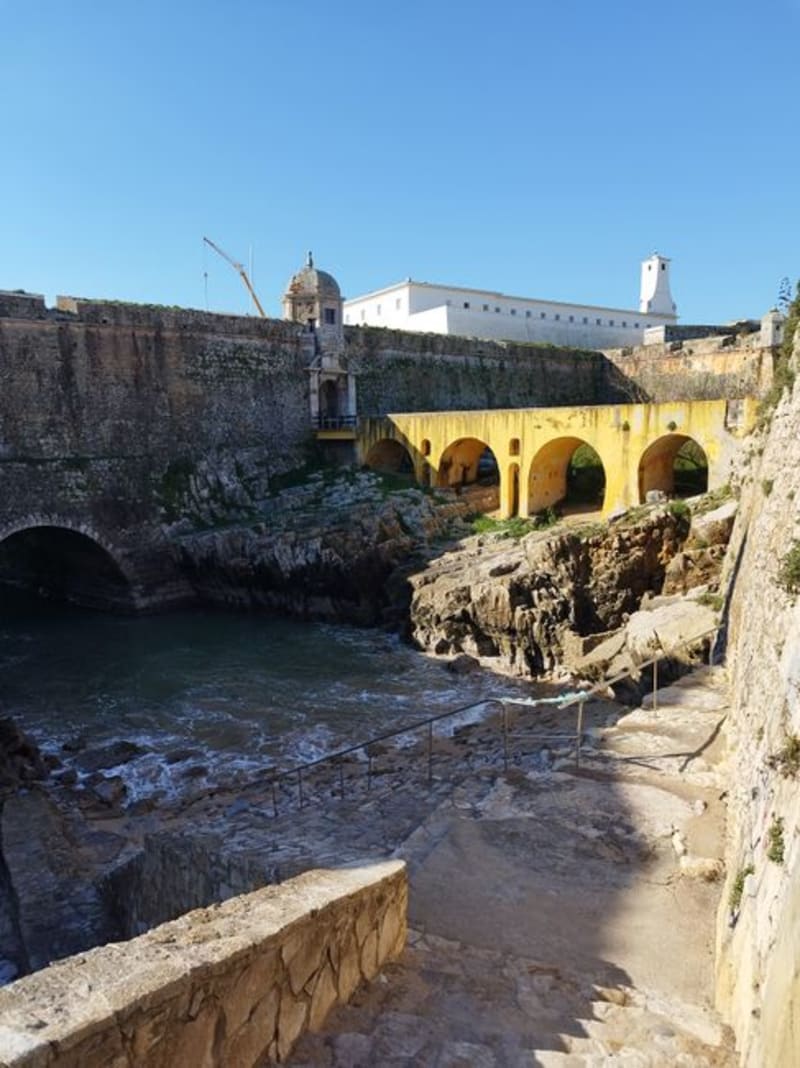 portugal
 Peniche
A blunt, working fishing town turned surf pilgrimage site, where a former political prison stares down at the same waves that made Supertubos world-famous.
Explore portugal
 Peso da Régua
The working heart of the Douro wine trade, where terraced vineyards drop straight into the river and flat-bottomed rabelo boats once carried every barrel of port toward Porto's cellars.
Explore portugal
 Pico Island
Portugal's tallest peak rises straight out of the Atlantic on Pico, above a black lava coastline gridded with stone-walled vineyards that somehow coax wine out of solid rock.
Explore portugal
 Pinhão
A one-street village where the Douro river bends around terraced vineyards so steep they look hand-drawn, and the train station's blue tiles tell the whole story before you've unpacked.
Explore portugal
 Piódão
A schist village stacked into a fold of the Serra do Açor, every slate house trimmed in the same cobalt blue, so isolated it wasn't electrified until the 1970s.
Explore