
Manteigas
"Manteigas sits at the bottom of a valley a glacier carved, and you can feel that scale the second you look up."
A wool-mill town tucked into the deepest, most dramatically glacial valley of the Serra da Estrela, where the Zêzere river carves a U-shaped trench straight through Portugal's highest mountains.

Manteigas sits so deep inside the Serra da Estrela that the drive in feels like descending into a bowl — hairpin turns dropping through pine forest until the town appears below, tucked along the Zêzere river with mountain walls rising steeply on both sides. It’s the lowest point in the highest range in mainland Portugal, and that contradiction is the whole character of the place: a warm, sheltered little town surrounded by some of the country’s harshest terrain.
Wool, Water, and Ice Age Geometry
Manteigas grew up on wool. The Serra da Estrela’s cold winters made it prime sheep country for centuries, and several old lanifícios — wool mills — still stand along the river, some now converted into small museums or guesthouses, their heavy machinery preserved as a record of the industry that funded this valley before tourism did. I toured one, all iron looms and carding machines gone quiet, and the guide, whose family had worked wool for three generations, explained how the mills used the fast Zêzere current for power long before electricity reached this remote corner of Portugal. But the real geological headline here is the valley itself: the Vale Glaciar do Zêzere, a textbook U-shaped valley gouged out by a glacier during the last ice age, one of the very few clearly glacial landscapes in mainland Portugal, its steep symmetrical walls unmistakable once you know to look for the shape.
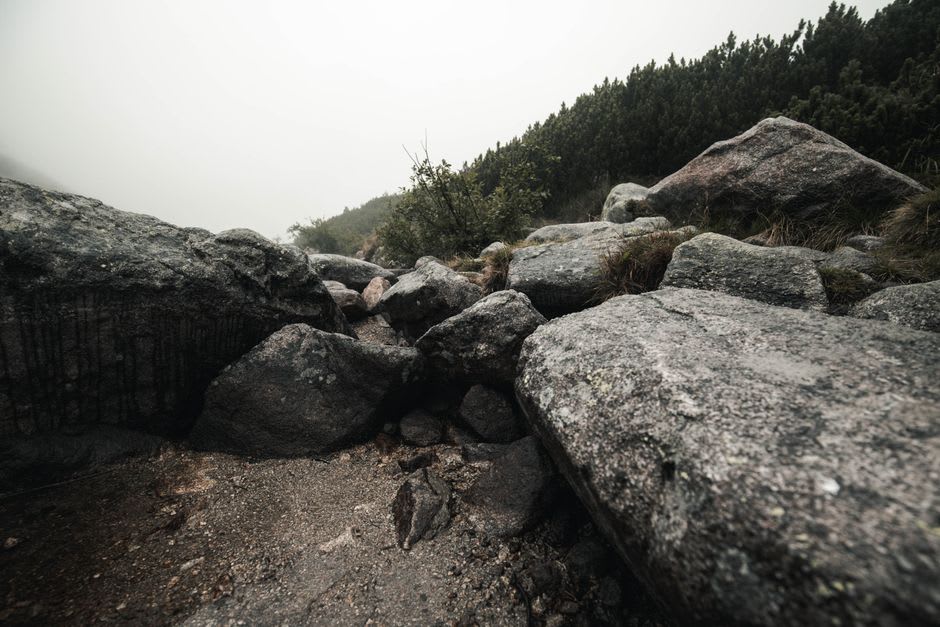
I hiked a stretch of the glacial valley trail from Vale do Rossim toward the Nave de Santo António, granite boulders scattered across alpine meadows like something dropped from a great height, which, geologically, is more or less exactly what happened. Sheep grazed unbothered by hikers, and at higher points I could see the whole U shape laid out below, unmistakably carved rather than eroded.
A Slower Kind of Mountain Town
Back in Manteigas itself, evenings are quiet — a handful of restaurants serving Serra da Estrela cheese so soft you eat it with a spoon, cured meats, and trout pulled straight from the cold river running through town.
When to go: Early autumn, after the summer hiking crowds thin out but before winter snow closes the high mountain roads, when the valley’s colors turn and the cheese is at its richest from the last of the summer grazing.
Keep exploring
More from Portugal
 portugal
 Marialva
A crumbling schist village wrapped inside a ruined castle on a granite spur, so thinly populated that goats seem to outnumber people among the roofless houses.
Explore portugal
 Marvão
A walled village balanced on a granite crag in the Alentejo, so high and so close to the border that on a clear day you can watch Spain from the ramparts.
Explore portugal
 Melides
A one-street Alentejo coast village between a lagoon and the dunes, quietly colonized by designers and off-duty celebrities without ever quite admitting it's changed.
Explore portugal
 Mértola
A riverside village stacked on a hill above the Guadiana, where a mosque became a church without anyone tearing the mihrab out, and three thousand years of layers show through in one afternoon's walk.
Explore portugal
 Miranda do Douro
A windswept plateau town above a canyon-cut river, holding onto its own language and a stick-dance nobody else in Portugal performs, as if it forgot to join the rest of the country.
Explore portugal
 Monção
The unofficial capital of Alvarinho wine country, where the vines grow high on pergolas above the vegetable patches and every terrace overlooks the Spain-facing Minho river.
Explore