
Albufeira
"Albufeira makes it easy to forget it was ever a fishing town, but the old quarter still remembers."
A whitewashed fishing town swallowed whole by mass tourism, where the old quarter still survives in fragments if you know to look past the strip.

I’ll admit I went to Albufeira expecting to dislike it, and for the first hour I did — the Strip is exactly what everyone warns you about, English breakfast signs, karaoke bars advertising two-for-one sangria at eleven in the morning, a version of the Algarve built for stag parties rather than for Portugal. But I’d booked a room in the old quarter rather than the resort zone, and walking up from there at sunset, past the Praia dos Pescadores where actual fishing boats still get hauled up onto the sand beside the sunbathers, I found a different town underneath the one everyone complains about.
What Survived the Boom
Albufeira was a Moorish stronghold — its name comes from the Arabic “Al-Buhera,” meaning castle of the sea — and a working fishing port for centuries after, until the 1960s and 70s brought package tourism that transformed it faster and more completely than almost anywhere else on this coast. Much of the original old town was leveled by the 1755 earthquake and rebuilt, and much of what came after was rebuilt again for tourism, but a compact core around the Rua 5 de Outubro tunnel and the clifftop miradouros still has the bones of the fishing town: narrow whitewashed lanes, a small municipal museum, and a fish market where I watched locals — not tourists — buying the day’s catch, seemingly indifferent to the resort sprawl a few streets over.

I climbed to one of the clifftop miradouros above the old town at golden hour, and for a few minutes the view erased everything I’d resented about the place — orange cliffs, a scatter of small coves, fishing boats returning against the light. It’s a genuinely beautiful stretch of coastline; it’s just been asked to carry an enormous amount of tourism weight, and it shows in the bars and the high-rises ringing the center. The trick, I decided, is to treat Albufeira like a beautiful old woman wearing too much makeup — look past the surface and the bone structure is still there.

When to go: Visit the old quarter in the shoulder months of May or October, when the resort crowds thin and you can actually appreciate the original fishing town without competing with the Strip’s peak-summer chaos.
Keep exploring
More from Portugal
 portugal
 Alcobaça
A colossal Cistercian abbey holding one of Europe's greatest doomed love stories in stone, in a small town that otherwise smells overwhelmingly, wonderfully, of egg-yolk pastry.
Explore portugal
 Vizinha Aldeia do Xisto
A network of restored schist villages in the Serra da Lousã, their stone houses blending into the mountain like natural formations.
Explore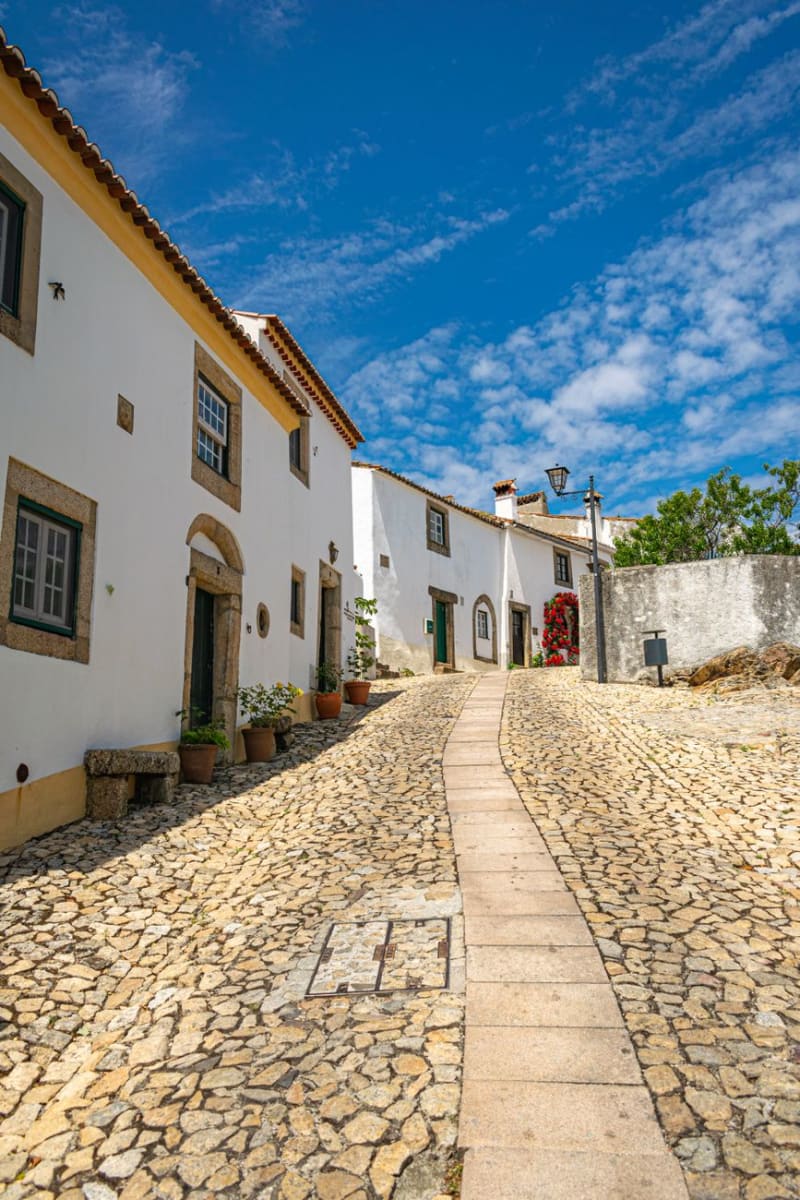 portugal
 Alentejo
Cork oaks, white villages, wild Atlantic coastline, and the most underrated wine region in Europe.
Explore portugal
 Algarve
Sea caves, ochre cliffs, and a coastline that ranges from resort-polished to genuinely wild — depending on how far west you are willing to drive.
Explore portugal
 Alijó
A hilltop Douro wine town built more for growers than for tourists, where the port houses are family names on cellar doors rather than brands, and the plateau views stretch over vines in every direction.
Explore portugal
 Almada
The unglamorous side of the Tejo, where a giant Christ statue watches over Lisbon and a rickety panoramic lift drops you straight onto a working riverfront.
Explore