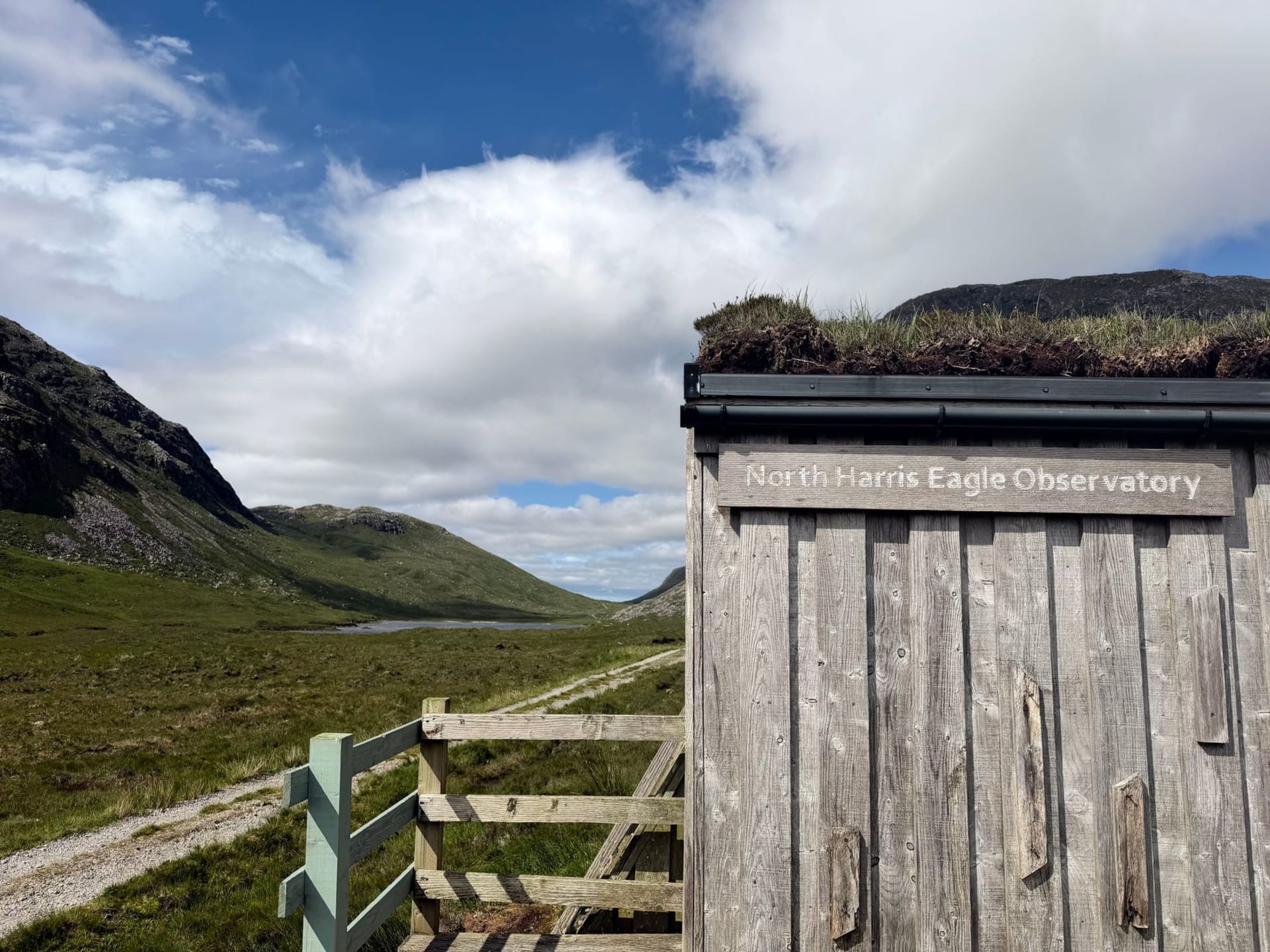
Tarbert, Harris
"Harris Tweed from a weaver's shed — still warm from the loom and smelling of hill and sheep."
A ferry village pinched between mountains and two sea-lochs where Harris Tweed is still woven in domestic sheds and the road south is the most dramatic single-track in the British Isles.

The ferry from Uig on Skye crosses the Minch in about ninety minutes and docks at Tarbert on the east coast of Harris, where the village climbs the hillside from the jetty in a stack of white and coloured houses that look, in the right light, almost Nordic. The mountains behind are bare rock — no tree cover, no softening — and the loch in front runs back toward the open sea with a dark, pewter calm. I arrived on a Tuesday morning with the ferry disgorging perhaps forty passengers and two lorries loaded with supermarket goods, and the village absorbed us all without any visible effort. Within twenty minutes I was alone with the harbour.
Tarbert is small enough to walk in an hour but large enough to have a hotel, a tourist office, a Harris Tweed shop, and a café serving fish soup thick enough to stand a spoon in. It sits at the narrow isthmus — the tairbeart in Gaelic — that separates North and South Harris, and there’s a small road that crosses it where you can stand with East Loch Tarbert on one side and West Loch Tarbert on the other, separated by perhaps three hundred metres of rock and hill. The geography here is so pinched it seems like geological mischief.

The Harris Tweed experience is worth the time it takes. The shops sell the fabric and the finished garments — caps, jackets, bags — with the orb trademark certifying it was woven by hand, on a treadle loom, in the Outer Hebrides. The fabric itself is unlike anything commercially produced: dense, slightly rough, carrying the lanolin of the original wool in a way that makes your hand smell of hill and sheep for an hour after you’ve touched it. I found a weaver through the tourist office — his shed was behind his house five minutes from the ferry — and watched him work the loom for twenty minutes in a noise of wooden percussion. He’d been doing it for thirty years and the speed of his hands was somewhere between craft and instinct.

But the thing you come to Tarbert to do, perhaps more than anything else, is leave it on the road south. The B887 west toward Hushinish and the Golden Road along the east coast of South Harris are both routes that demand you stop every mile: the Golden Road because of the moonscape of gneiss and lochan and the way the road negotiates it in hundreds of tiny bends, the B887 because the views open onto Atlantic beaches and sea-stacks at each headland. I went west on a grey afternoon and came back in the dark having stopped eleven times. I counted.
When to go: The ferry from Skye runs year-round but the roads in late spring and summer are when the driving is most rewarding — the light stays long, the wildflowers hit the roadside verges, and the visibility across the Minch allows you to watch weather systems building over the mainland. September is excellent and noticeably less busy.
Keep exploring
More from Outer Hebrides
 outer-hebrides
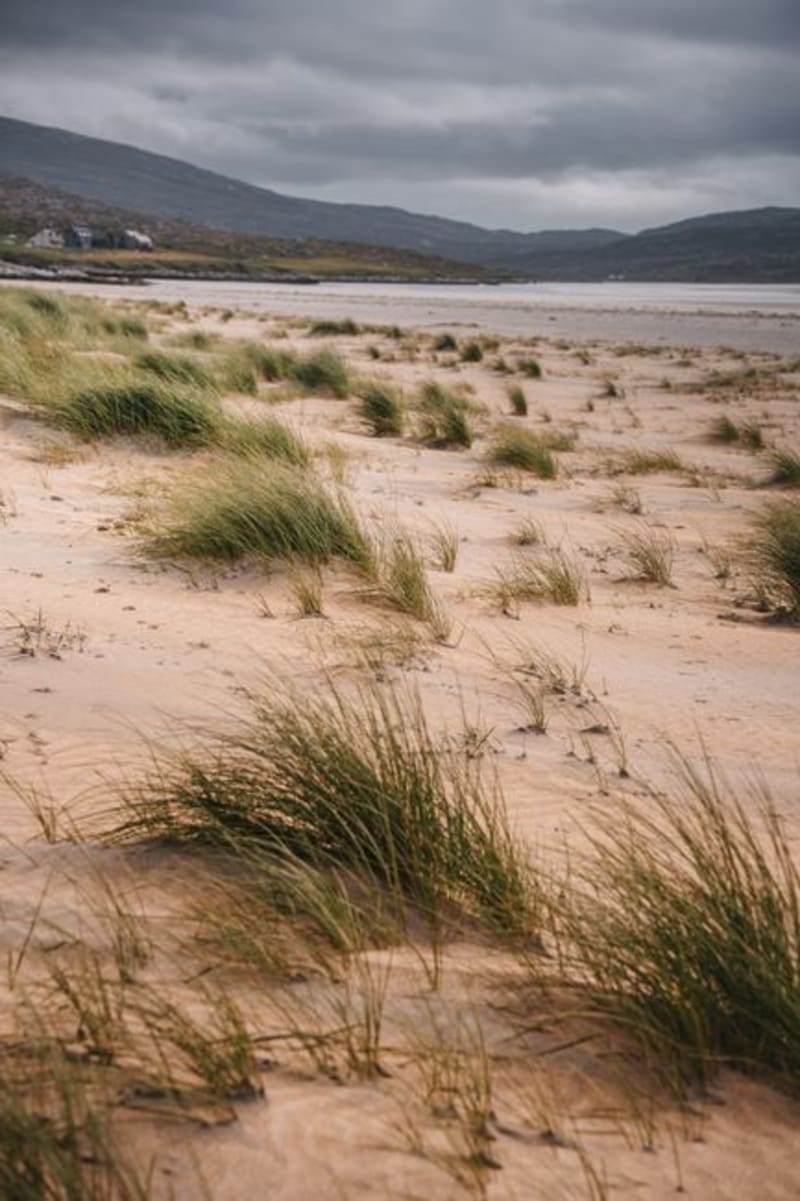
 Uig, Isle of Lewis
A remote crofting district on Lewis's west coast, where a 12th-century chess hoard once lay buried beneath the sand.
Explore outer-hebrides
 Barra
The island where planes land on a beach and the whole of island life fits inside a bay ringed by a castle that rises from the sea at low tide.
Explore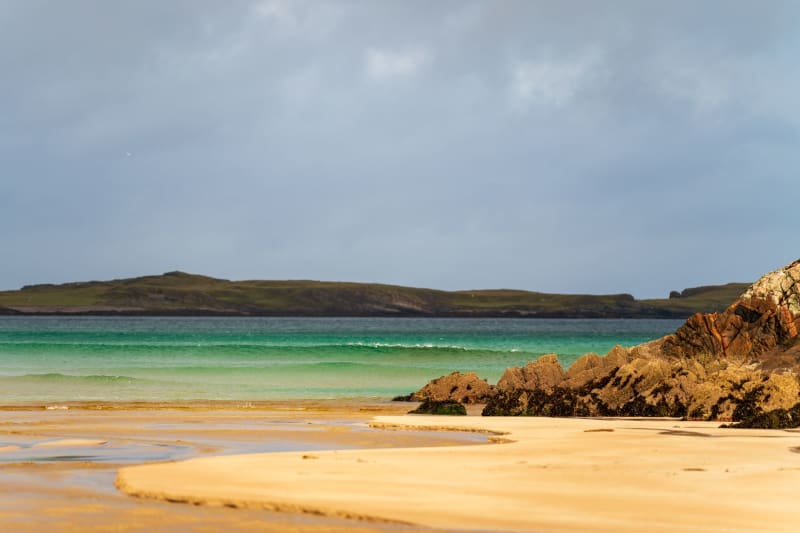 outer-hebrides
 Berneray
A causeway island barely wider than its machair with a west-facing beach so perfect it feels curated by someone with impossibly high standards.
Explore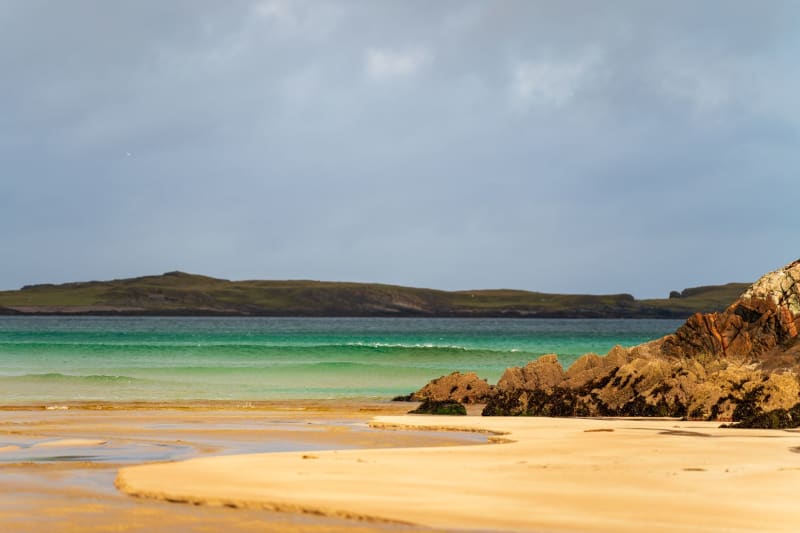 outer-hebrides
 Butt of Lewis
The northernmost point of the Outer Hebrides where a red-brick lighthouse marks the edge of Britain and gannets work the updrafts below the cliffs.
Explore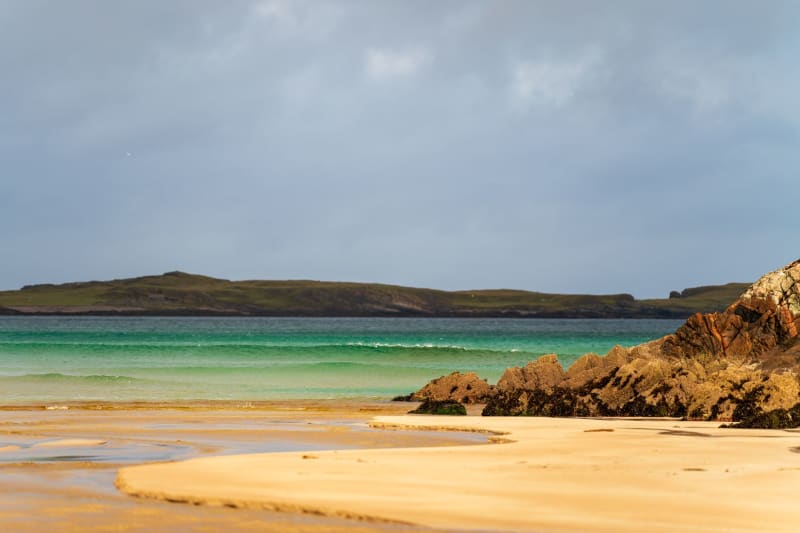 outer-hebrides
 Callanish Standing Stones
Four thousand years of silence held together by a circle of standing stones that somehow still command the Atlantic sky.
Explore outer-hebrides
 Carloway
A Lewis village where an Iron Age broch stands so intact above the loch that you need a moment to accept two thousand years have actually passed.
Explore