Europe
Outer Hebrides
"I came for a week and stayed three, waiting for a ferry I kept missing on purpose."
A chain of wind-battered Atlantic islands where ancient standing stones, white-sand beaches, and the last speakers of Scottish Gaelic exist in a light unlike anywhere else on earth.

The ferry from Ullapool crosses the Minch in about three hours, and by the time Lewis appears through the rain — a dark ridge of peat and rock with no obvious invitation — you already understand this is not a place that wants to be visited. It wants to be earned. I arrived on a Tuesday in early October, waterproof packed, half my Spanish still tangled in my head from the month before. The Hebrides don’t ease you in. The wind hits the harbour like a flat hand.
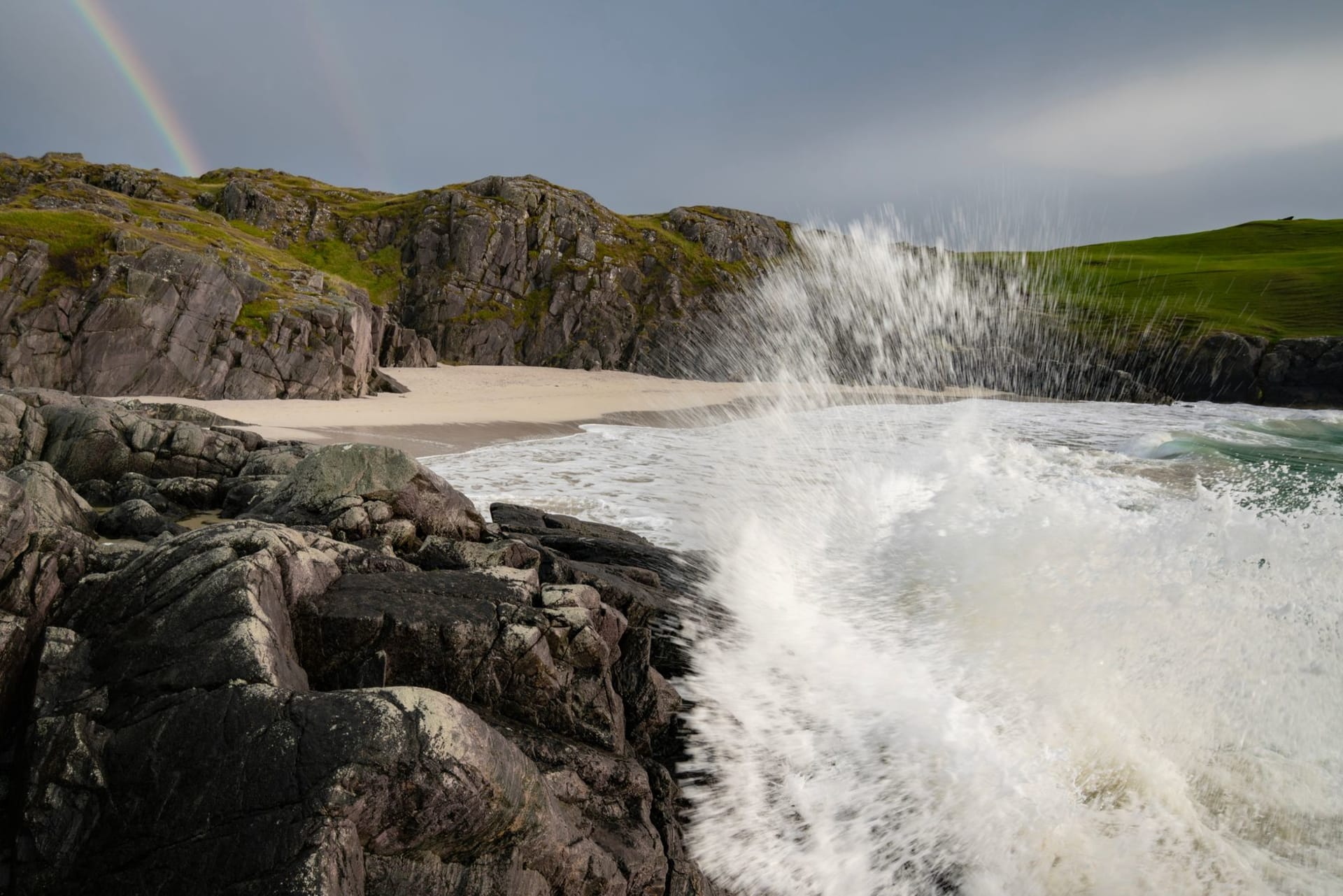
What I wasn’t prepared for was the light. After years in Mexico, where the sun is a permanent fact, the Outer Hebrides offer something I’d forgotten existed: a light that changes every twenty minutes. At Luskentyre on Harris, the sand is so fine and white it looks borrowed from the Caribbean, except it’s framed by peat-black hills and a sky doing six things at once. I stood there in my waterproof watching the tide pull back across a kilometre of sand that turned from cream to silver to gold in the space of a cigarette. Nobody else was there. Nobody. I’ve been to beaches in Mexico with signs and ropes keeping you fifty metres from the actual water. Here I had the whole Atlantic.
The food is not the point — that much is honest. You eat smoked salmon from a shack near Stornoway, and you drink too much whisky in pubs where the barman has the same last name as the street. But the machair in June, if you go then, is one of Europeinely botanical moments: meadows of wild orchids and clover and buttercups rolling right to the dune edge, kept alive by the same Atlantic wind that makes you eat dinner at four in the afternoon to avoid the gales. I missed it by a season but found the ghost of it in the colours of the lichen on the Callanish stones — that prehistoric ring on Lewis where people were doing something important four thousand years before anyone thought to write it down.
When to go: May and June for the machair flowers and the longest days — light until nearly midnight. September and October if you want solitude and drama without caring much about warmth. Avoid July and August unless midges are your idea of local culture.
What most guides get wrong: They sell the Outer Hebrides as a “remote wilderness escape” as if emptiness is the main attraction. The real thing is the culture — Gaelic is still spoken here as a first language, the Sunday ferry to Harris only started running in 2009, and the rhythm of these islands is genuinely different from the rest of Britain. Go to a cèilidh. Learn three words of Gaelic. Eat the black pudding. The landscape is spectacular, yes, but it’s the people who make it make sense.
Explore
Places in Outer Hebrides
 outer-hebrides
 Barra
The island where planes land on a beach and the whole of island life fits inside a bay ringed by a castle that rises from the sea at low tide.
Explore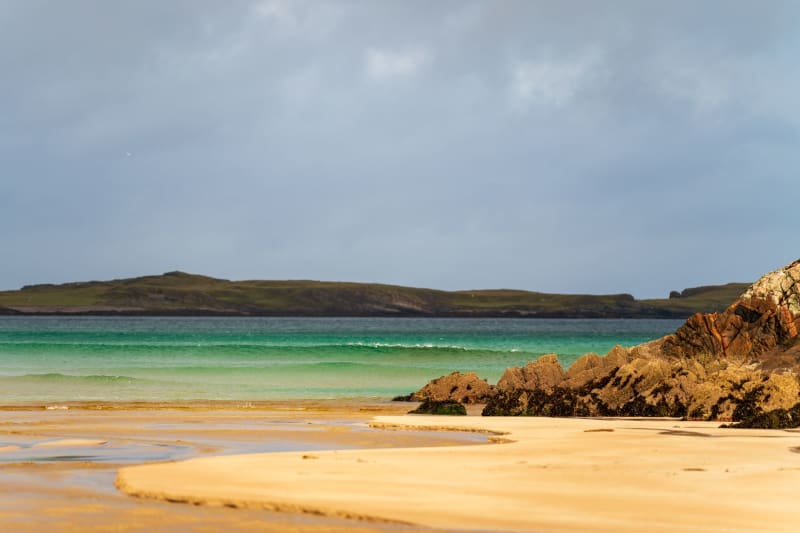 outer-hebrides
 Berneray
A causeway island barely wider than its machair with a west-facing beach so perfect it feels curated by someone with impossibly high standards.
Explore outer-hebrides
 Butt of Lewis
The northernmost point of the Outer Hebrides where a red-brick lighthouse marks the edge of Britain and gannets work the updrafts below the cliffs.
Explore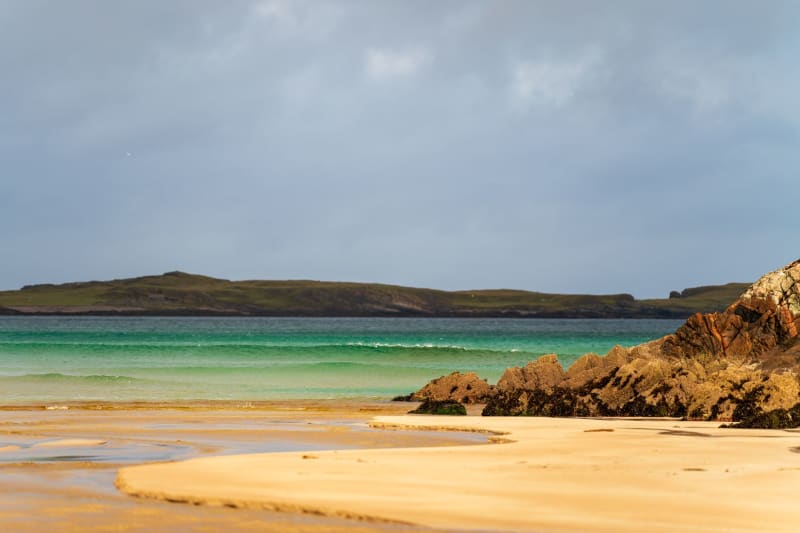 outer-hebrides
 Callanish Standing Stones
Four thousand years of silence held together by a circle of standing stones that somehow still command the Atlantic sky.
Explore outer-hebrides
 Carloway
A Lewis village where an Iron Age broch stands so intact above the loch that you need a moment to accept two thousand years have actually passed.
Explore outer-hebrides
 Eriskay
A tiny island of Jacobite history and shipwrecked whisky, where wild ponies still graze the machair above a pale-sand strand.
Explore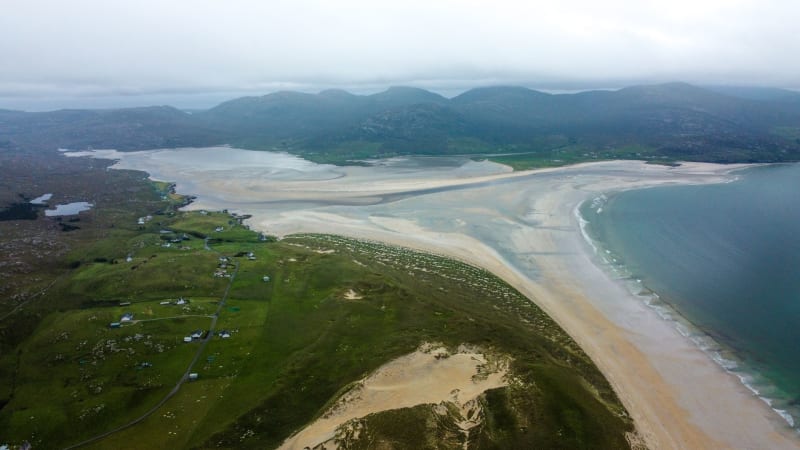 outer-hebrides
 Luskentyre
The most improbably Caribbean beach in northern Scotland, where the sand turns from cream to silver with each tide and the silence belongs entirely to you.
Explore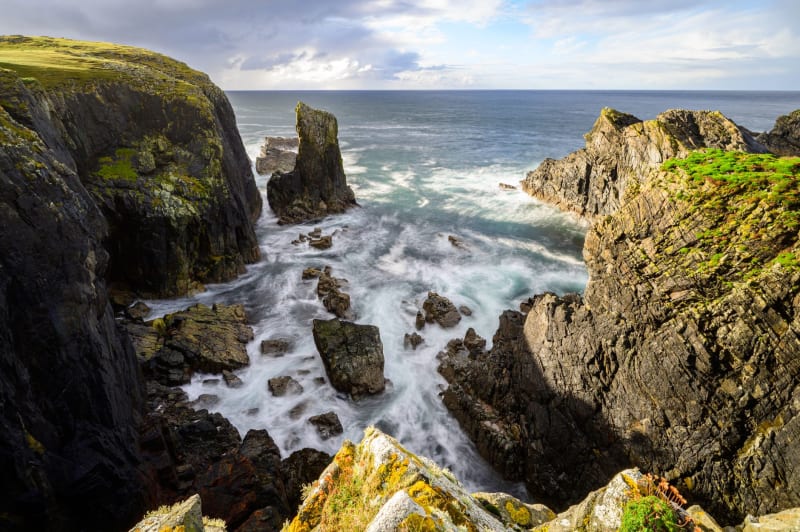 outer-hebrides
 Rodel
A medieval church at the southern tip of Harris holds carved stone tombs so detailed they stop your thinking and start you asking unanswerable questions.
Explore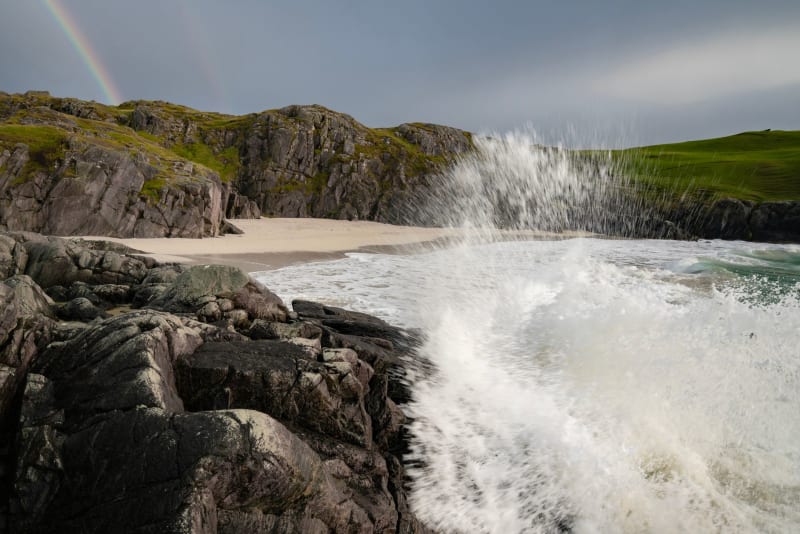 outer-hebrides
 South Uist
A long Atlantic island where thirty miles of machair runs in full flower and a hillside statue watches over the lochs with the patience of the permanent.
Explore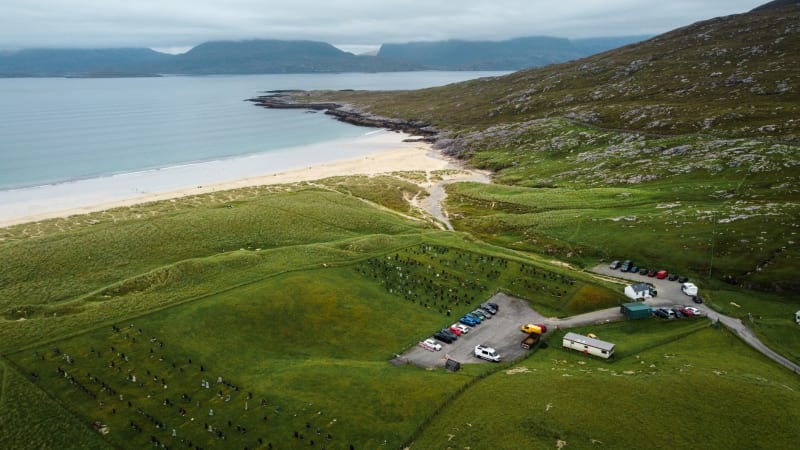 outer-hebrides
 St Kilda
The remotest fragment of the British Isles, an abandoned island world of sea stacks and a million seabirds, fifty miles out into the wild Atlantic.
Explore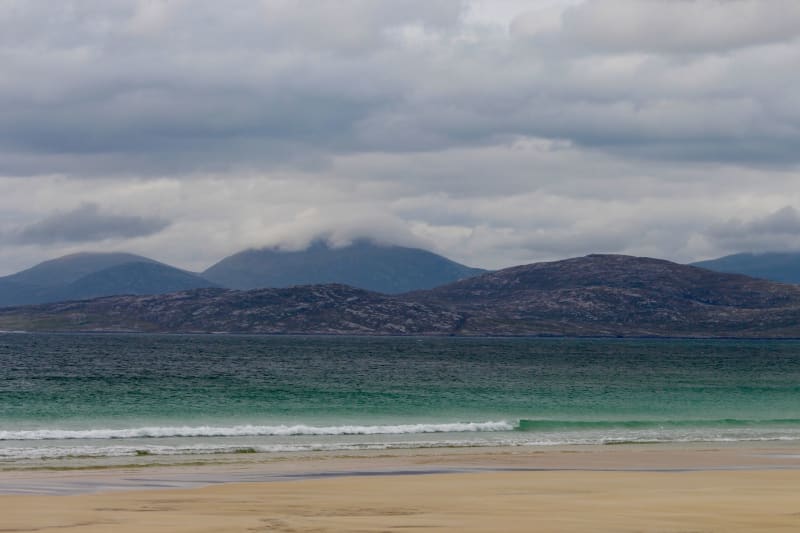 outer-hebrides
 Stornoway
The only town in the Outer Hebrides large enough to have a traffic light, and still the kind of place where the barman knows your grandfather's name.
Explore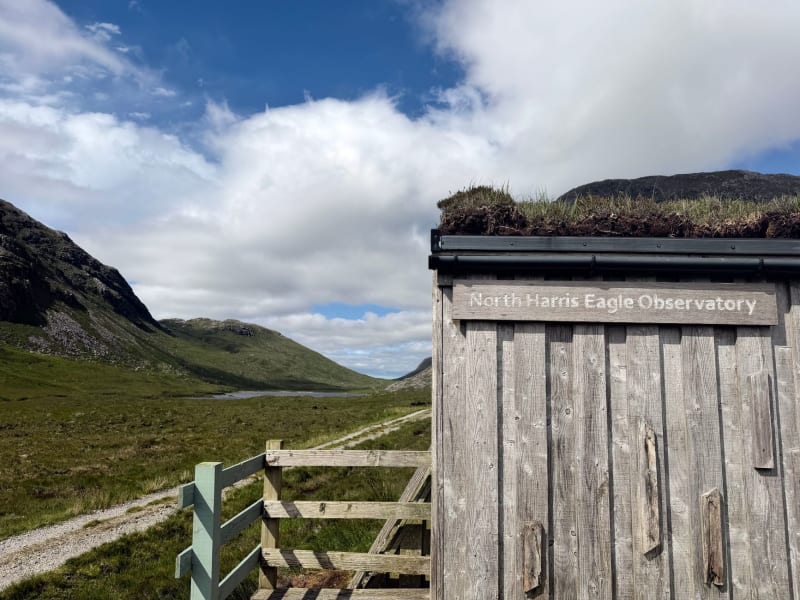 outer-hebrides
 Tarbert, Harris
A ferry village pinched between mountains and two sea-lochs where Harris Tweed is still woven in domestic sheds and the road south is the most dramatic single-track in the British Isles.
Explore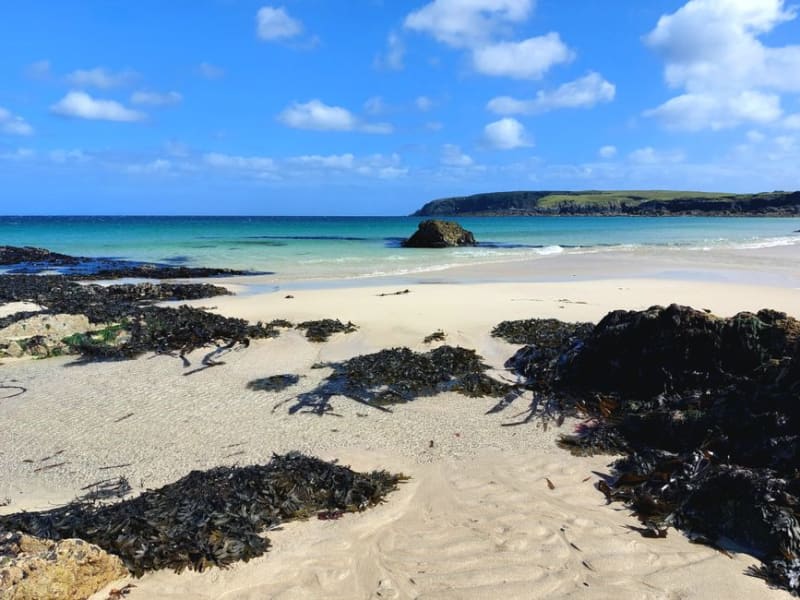 outer-hebrides
 Uig, Isle of Lewis
A remote crofting district on Lewis's west coast, where a 12th-century chess hoard once lay buried beneath the sand.
Explore