
Barra
"The plane lands on the sand and the pilot helps with the bags. That's Barra's entire personality, right there."
The island where planes land on a beach and the whole of island life fits inside a bay ringed by a castle that rises from the sea at low tide.

The Twin Otter banks low over the Atlantic and the pilot announces the descent to Barra with the same casual tone used at major airports, except the runway is a beach and the landing time depends on the tide. Traigh Mhòr — the Big Beach — is the only tidal scheduled airport in the world, and the announcement board at Glasgow updates each flight time as the tides dictate. I had a window seat. Watching the sand come up through the rain-streaked glass, the white cockle shells visible in the shallows as we touched down, was one of the stranger arrivals I’ve made anywhere. The pilot helped a woman with a pushchair across the sand to the terminal, which is a small white building not much bigger than a nice shed.
Castlebay is the only village of any size on Barra and its arrangement is almost too perfect to be real: a crescent of harbour lined with painted stone houses, the ferry terminal at one end, a couple of hotels, a pub, a Co-op, and in the middle of the bay, appearing at low tide on its own tidal islet, Kisimul Castle. The seat of the MacNeils of Barra, occupied and contested for seven hundred years and still improbably intact. I took the small ferry over for the cost of a pound and walked around the walls feeling the castle’s implausibility from the inside. The water was cold green around the black walls. A heron stood on the harbour steps below as if waiting for the same boat.

The smallness of Barra — perhaps twelve hundred people, about fourteen kilometres end to end — creates a particular intimacy. The woman in the post office mentioned my rental car by name: “Are you in the red one?” She wasn’t being intrusive. Everyone just knew the red one was a rental today. I cycled the main road around the island in about three hours, stopping at the Atlantic-facing beaches where the surf came in long lines from the southwest and the sand was as clean as anything I’ve seen. The Traigh Eais beach on the northwest coast was empty when I arrived and still empty when I left an hour later.

The community Gaelic is stronger here than almost anywhere on the islands — perhaps because the island’s size makes assimilation less inevitable. The school teaches through Gaelic. The pub conversations I understood none of. At dinner the table next to mine spoke a mix of Gaelic and English that switched mid-sentence with a fluency that made me feel the poverty of my own one-language existence. The food was simple and good: scallops dived from the bay, local lamb, bread from that morning. Nobody photographed it. It was just dinner.
When to go: Summer is the practical choice — Barra’s roads and ferry services are most reliable from May through September, and the beach landings at the airport are best appreciated in daylight. June and July are warmest. The CalMac ferry from Oban takes five to six hours and is itself an experience worth not hurrying through.
Keep exploring
More from Outer Hebrides
 outer-hebrides
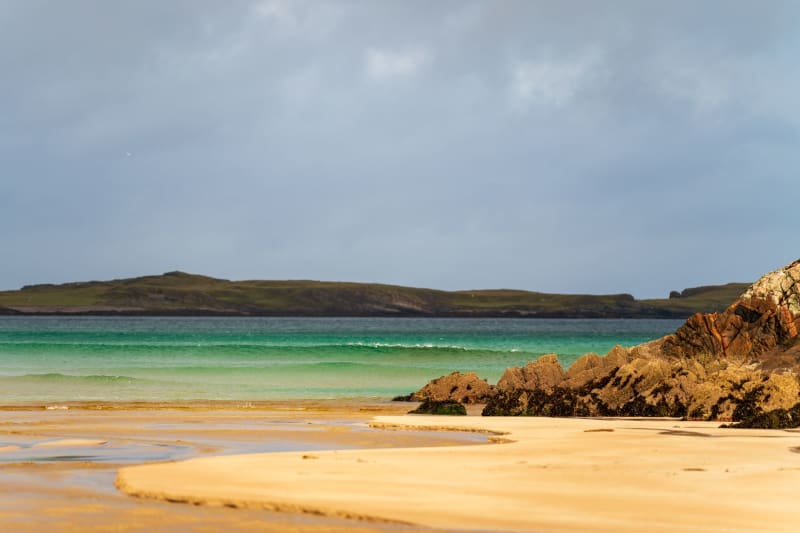
 Berneray
A causeway island barely wider than its machair with a west-facing beach so perfect it feels curated by someone with impossibly high standards.
Explore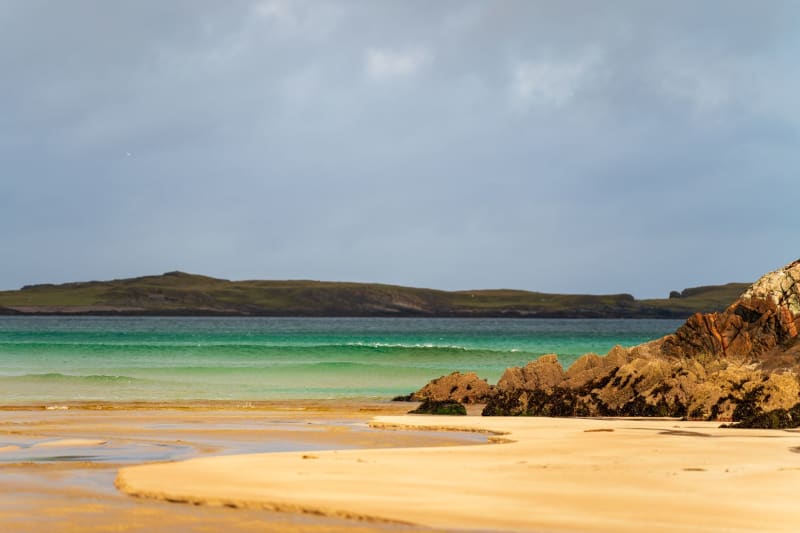 outer-hebrides
 Butt of Lewis
The northernmost point of the Outer Hebrides where a red-brick lighthouse marks the edge of Britain and gannets work the updrafts below the cliffs.
Explore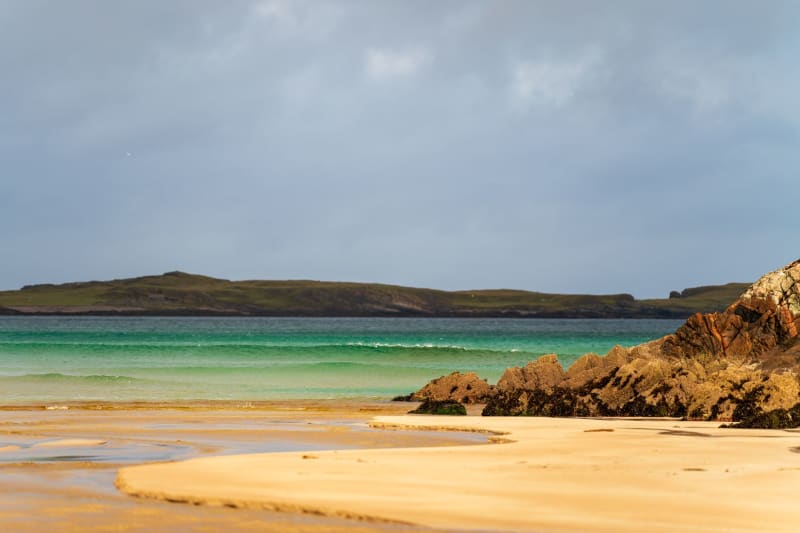 outer-hebrides
 Callanish Standing Stones
Four thousand years of silence held together by a circle of standing stones that somehow still command the Atlantic sky.
Explore outer-hebrides
 Carloway
A Lewis village where an Iron Age broch stands so intact above the loch that you need a moment to accept two thousand years have actually passed.
Explore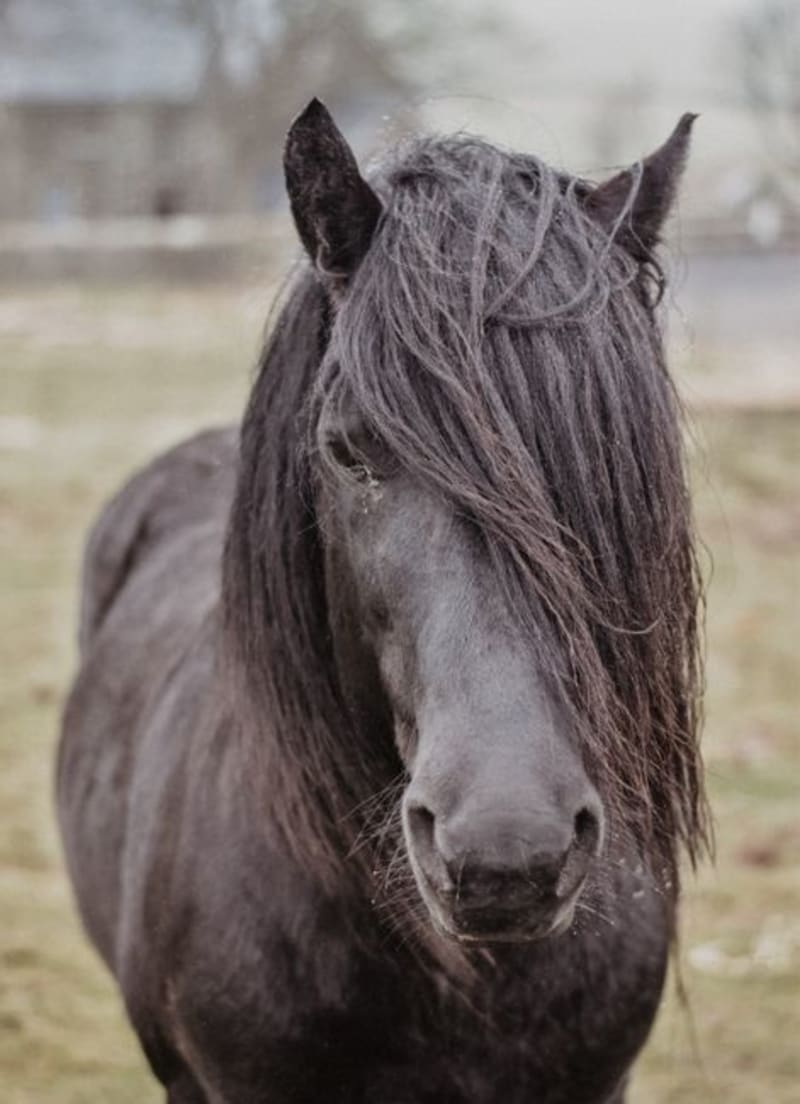 outer-hebrides
 Eriskay
A tiny island of Jacobite history and shipwrecked whisky, where wild ponies still graze the machair above a pale-sand strand.
Explore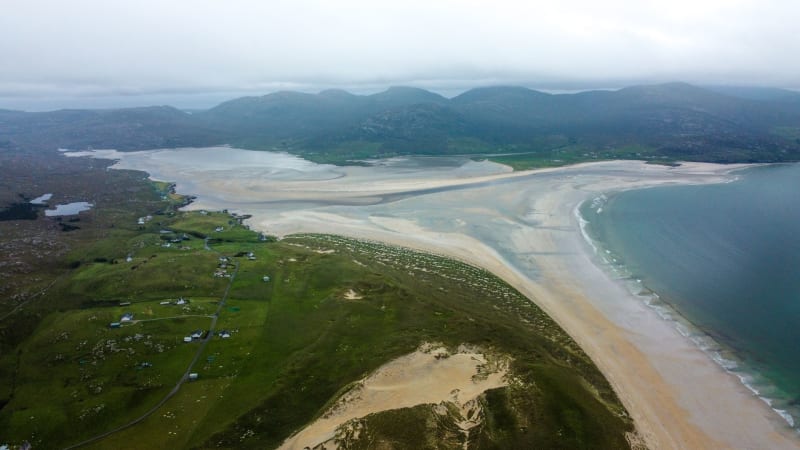 outer-hebrides
 Luskentyre
The most improbably Caribbean beach in northern Scotland, where the sand turns from cream to silver with each tide and the silence belongs entirely to you.
Explore