Luskentyre
"I've been to the beaches of Tulum, Sayulita, Holbox. Then I stood at Luskentyre and quietly revised every ranking."
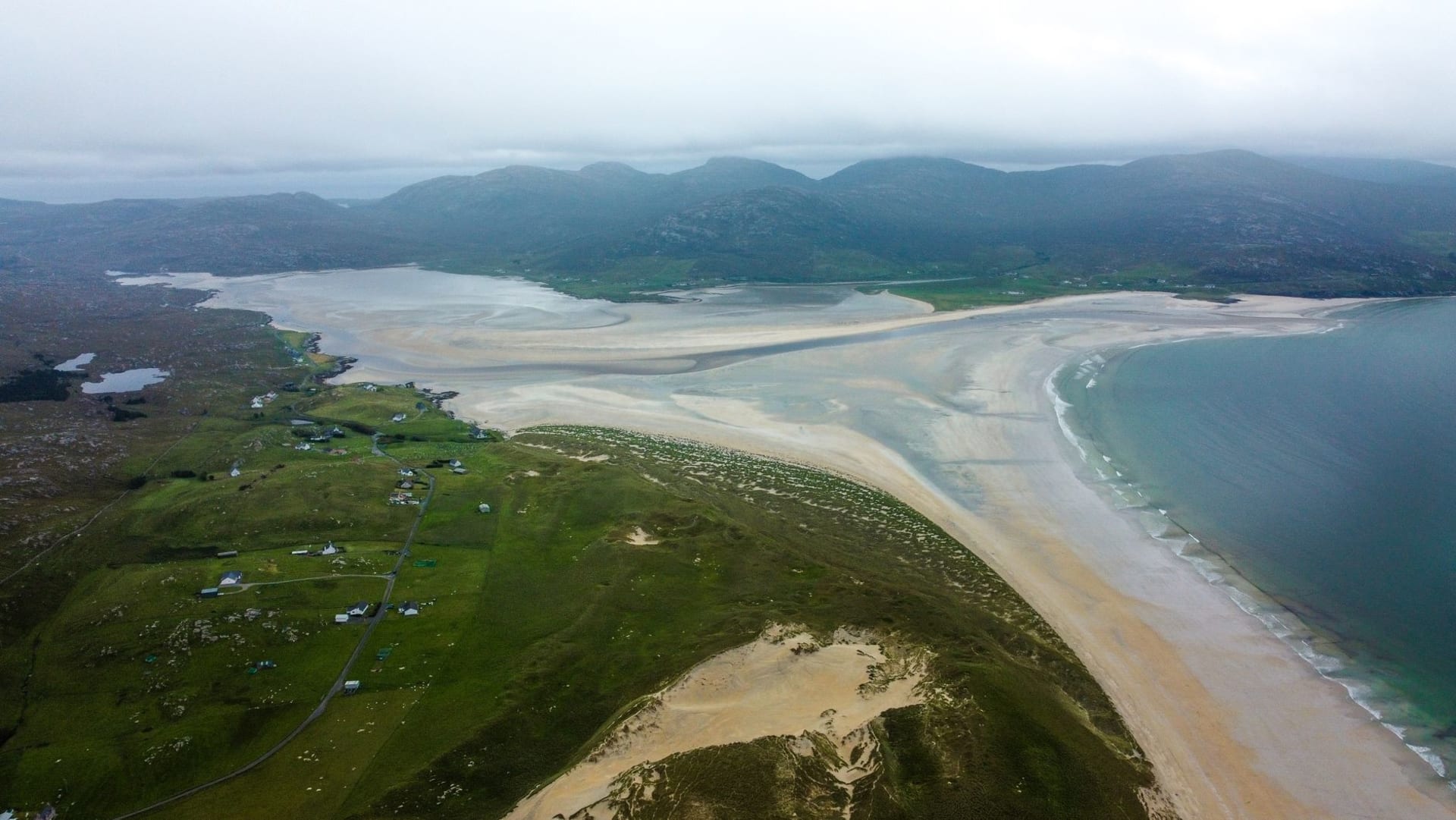
The most improbably Caribbean beach in northern Scotland, where the sand turns from cream to silver with each tide and the silence belongs entirely to you.

The road to Luskentyre runs single-track along the east coast of Harris, the mountains pressing close on one side and the sea-lochs offering glimpses on the other, and then it swings west and you see it from above before you’ve arrived: that impossible pale green and blue and white that your brain reads as Caribbean until the hill comes back into frame, peat-black and December-grey even in July. I pulled over where the road bends highest, just to look, and a sheep regarded me from three metres away with what I can only describe as professional indifference.
The walk down to the beach takes ten minutes from the small car park. There’s no fanfare, no sign explaining what makes this beach special. You walk through dune grass bent by the wind, over a low ridge, and then you’re on it — a stretch of sand running two kilometres along the south shore of Harris with the tidal flats extending out into a sea that changes colour as you watch. The sand is so finely ground it squeaks underfoot. I’d read that. I hadn’t believed it until I walked, and then I stood very still listening to my own footsteps like a child.

The water colour comes from the depth — or rather the lack of it. At low tide the bay becomes a vast shallow mirror where two metres of water disperses the light into something you associate with the Maldives and not with a Scottish island in October where your breath is visible. I walked the tidal flats for an hour, the mainland hills of North Harris to my north, the Atlantic channel to my south, no other person in either direction. A couple of oystercatchers worked the wet sand near the river mouth, entirely uninterested in me. This is the thing about Luskentyre: it is genuinely uncrowded for something genuinely stunning. The road is long and single-track and the distances from anywhere are real.

Inland from the beach, the village of Luskentyre itself is tiny — a scatter of houses on the hill, a few crofts, smoke from a chimney. The sense of human scale is complete. Nobody is performing anything. The couple I saw walking the far end of the beach came prepared with two dogs and a flask and didn’t glance once in my direction. I ate my sandwich on the dune edge with the wind behind me, watching the tide begin its slow return across the flats. After Mexico, after its crowds and its noise and its beautiful loud sunshine, this was like drinking cold water slowly.
When to go: June and July give you the best combination of light and temperature — warmth enough to sit on the sand and evenings that barely darken before midnight. September and October bring storms and drama and the flats in a pewter light that is, if anything, even more beautiful. Avoid peak July and August weekends if navigating a single-track road for twenty minutes in a passing-place standoff is not your preferred arrival experience.
Keep exploring
More from Outer Hebrides
 outer-hebrides
 Rodel
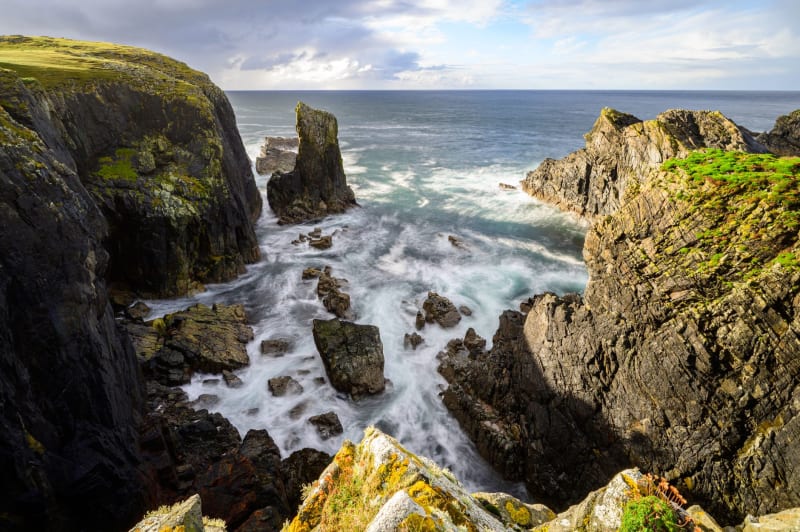
A medieval church at the southern tip of Harris holds carved stone tombs so detailed they stop your thinking and start you asking unanswerable questions.
Explore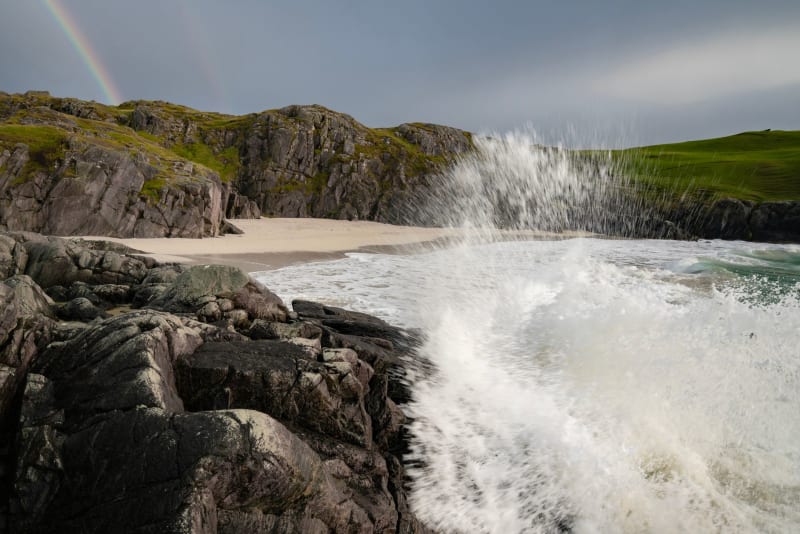 outer-hebrides
 South Uist
A long Atlantic island where thirty miles of machair runs in full flower and a hillside statue watches over the lochs with the patience of the permanent.
Explore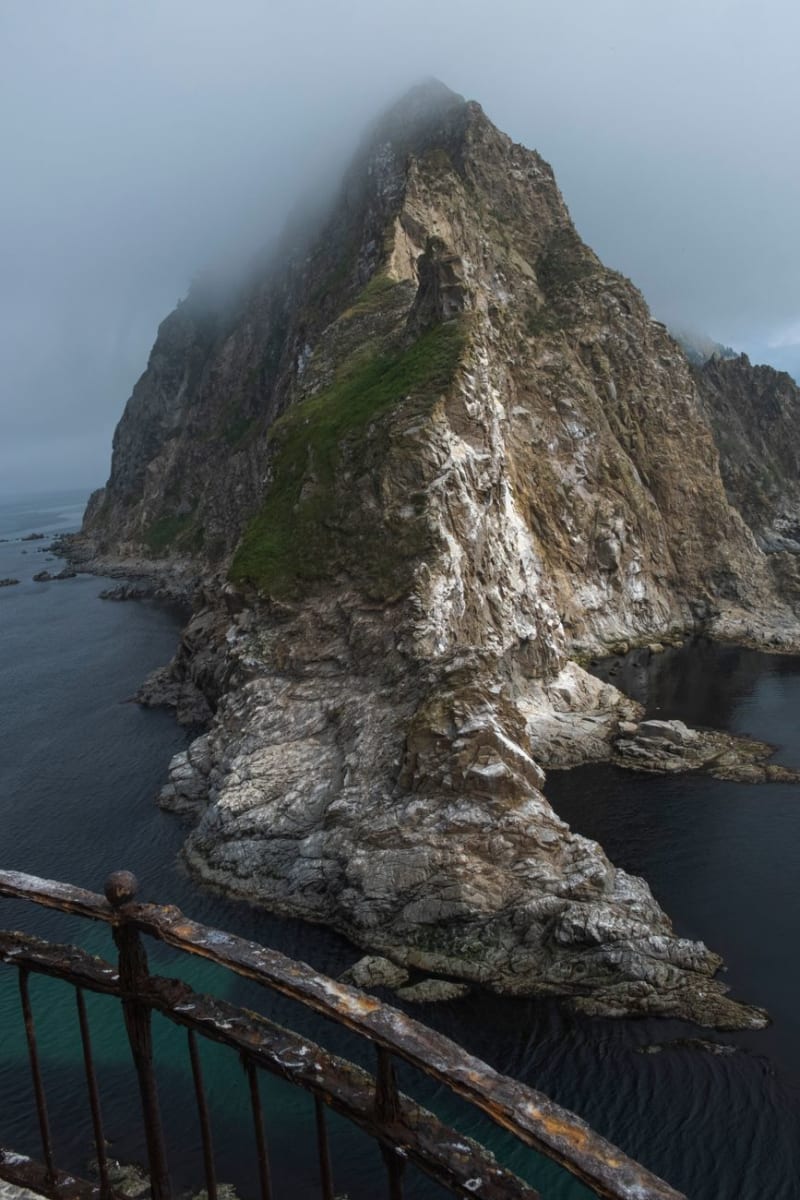 outer-hebrides
 St Kilda
The remotest fragment of the British Isles, an abandoned island world of sea stacks and a million seabirds, fifty miles out into the wild Atlantic.
Explore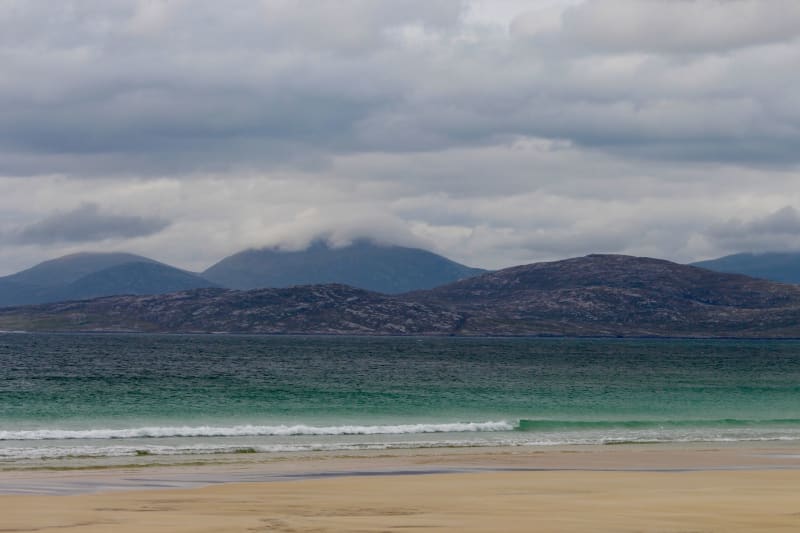 outer-hebrides
 Stornoway
The only town in the Outer Hebrides large enough to have a traffic light, and still the kind of place where the barman knows your grandfather's name.
Explore outer-hebrides
 Tarbert, Harris
A ferry village pinched between mountains and two sea-lochs where Harris Tweed is still woven in domestic sheds and the road south is the most dramatic single-track in the British Isles.
Explore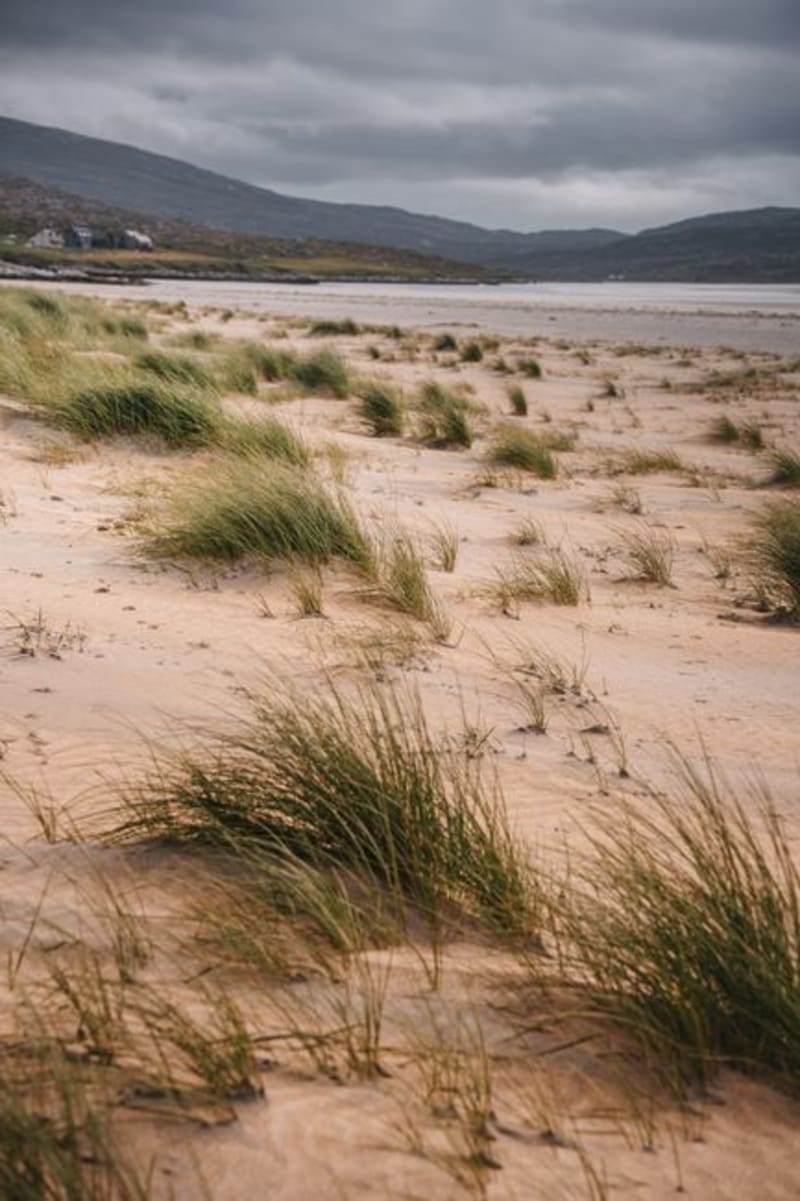 outer-hebrides
 Uig, Isle of Lewis
A remote crofting district on Lewis's west coast, where a 12th-century chess hoard once lay buried beneath the sand.
Explore