
Armagh
"Two cathedrals, two hills, the same name — and somehow the city between them is the most gracious place in Ulster."
The ecclesiastical capital of Ireland, where two cathedrals face each other from opposite hilltops and the orchards bloom every April.

Armagh announces itself from the approach roads: two hilltops, each with a spire, one on the north side of the valley and one on the south, facing each other across the intervening streets. The Catholic St Patrick’s Cathedral sits on one hill; the Church of Ireland St Patrick’s Cathedral sits on the other. Both claim the original site of Patrick’s fifth-century stone church. Both are called the Cathedral Church of St Patrick. The city between them is small — twenty thousand people — and occupies this dual claim with a grace that I suspect took several generations of effort.
I arrived in April, which turned out to be the right accident. The orchard country around Armagh — County Armagh is the apple-growing centre of Ireland, its drumlin landscape running with old varieties, Bramley predominant — was in blossom. Entire hillsides had gone white and pale pink overnight, the trees low and gnarled and covered. The smell of apple blossom in the Armagh countryside on a warm April day is something I had not anticipated and would plan future trips around.

The Church of Ireland cathedral is the older structure — some of its stone dates to the twelfth century, though it has been extensively rebuilt — and contains the burial slab of Brian Boru, the High King of Ireland who defeated the Vikings at the Battle of Clontarf in 1014 and died on the same day. The slab is in a corner of the nave with a modest marker. I stood beside it for a while, thinking about the gap between historical significance and physical evidence — the stone is completely unremarkable and the man buried beneath it shaped Irish history for a century afterward.
The Mall is Armagh’s centrepiece: a long Georgian promenade flanked by brick townhouses, a courthouse, and what is now used as a cricket ground, the only surviving cricket ground of note on an Irish Mall. On the afternoon I walked it, two men were practising in the nets at the far end, and the Georgian houses looked across at them from behind their sash windows with the composed dignity of buildings that have watched many things happen and expect to watch more.

The food and drink scene in Armagh is built around the apple. Armagh cider is a regional product with genuine character — made from Bramley apples that are too sharp to eat raw but ferment into something complex and dry that tastes like the landscape smells in April. I drank a glass at a restaurant on English Street and ate a dish of braised shoulder of Mourne lamb with roasted root vegetables and thought about how provincial in the best sense this place is: entirely grounded in where it is, making no argument for anywhere else.
When to go: April is the answer, unambiguously — the Bramley blossom is in full flower and the landscape around the city is transformed. The Armagh Apple Blossom Festival runs in late April and early May. Summer is pleasant and the long evenings are suited to the Mall. Autumn brings the apple harvest and the Bramley Festival in October, with cider tastings and orchard walks. The city is year-round but April and October are the seasons with their own specific personality.
Keep exploring
More from Northern Ireland
 northern-ireland
Belfast
A post-conflict city rewriting its own story in real time — the murals are still up, but so are the Michelin stars.
Explore northern-ireland
Carrick-a-Rede
A rope bridge over a twenty-metre chasm between the Antrim cliffs and a basalt island — vertiginous, exhilarating, genuinely not for everyone.
Explore northern-ireland
Cushendun
A handful of whitewashed Cornish cottages, red sandstone caves, and a river mouth where the Glens of Antrim meet the sea.
Explore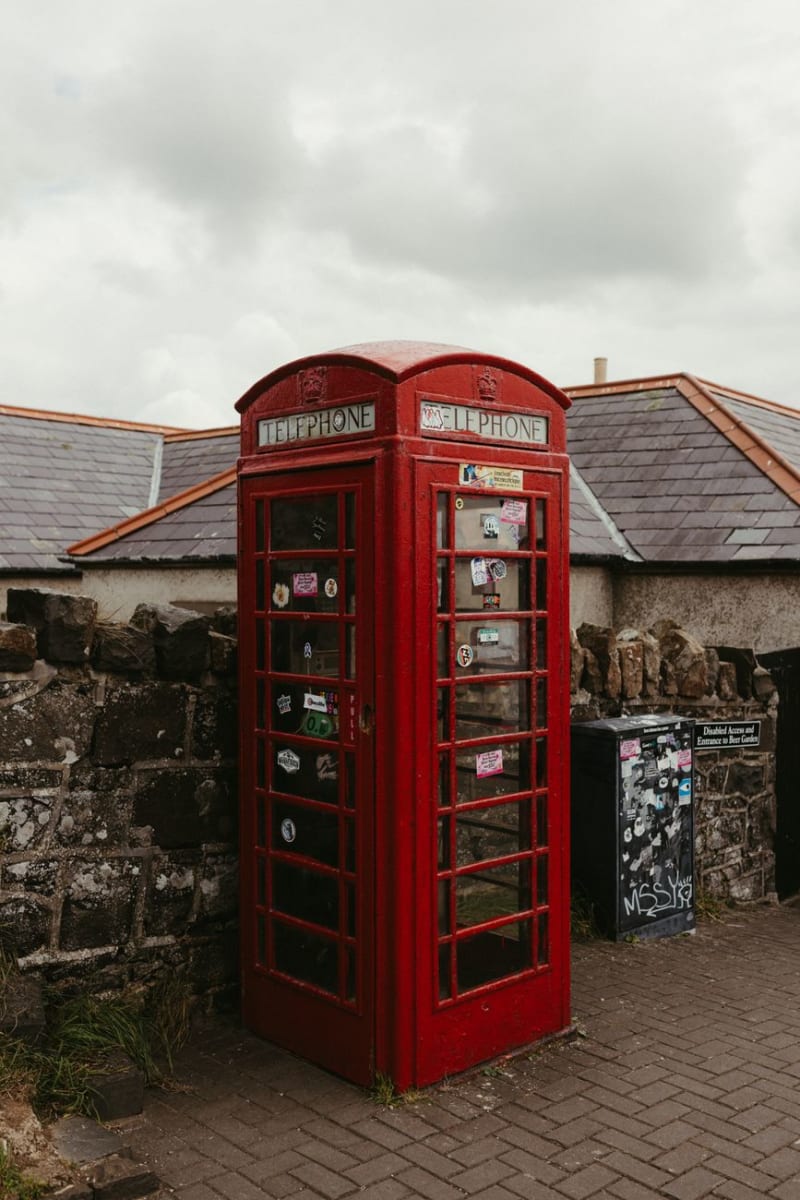 northern-ireland
The Dark Hedges
An avenue of beech trees in County Antrim planted by a vain eighteenth-century family that has, through no fault of its own, become the most photographed road in Ireland.
Explore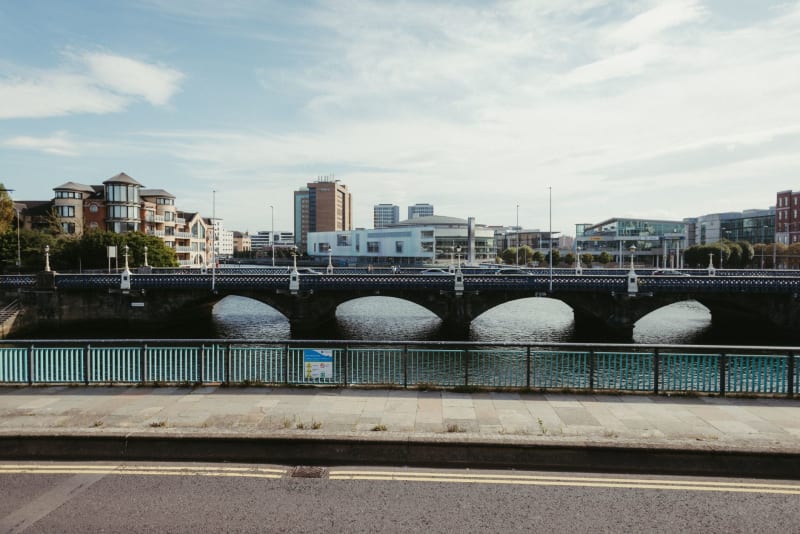 northern-ireland
Derry
A walled city where even the name is contested — and that tension, held lightly by its people, is what makes it unforgettable.
Explore northern-ireland
Downhill Demesne and Mussenden Temple
A domed library balanced on an Atlantic cliff edge, and the ghost of a bishop's mansion crumbling into the grass behind it.
Explore