
Europe
Northern Ireland
"Peace made it possible. Curiosity makes it worth it."
Where hexagonal basalt columns meet a ceasefire generation rewriting what their cities mean — Northern Ireland is a place still becoming itself.

I arrived in Belfast on a Tuesday in late October, stepping out of the Europa Hotel — Europe’s most bombed hotel, they mention this casually, like a selling point — and into a city that looked nothing like the place I had been reading about. The murals on the Falls Road and Shankill are still there, vivid and political, but what surrounds them now is coffee shops, microbreweries, a food market on a Saturday that would hold its own in any European capital. The transformation is not cosmetic. You feel it in how people move through the streets — with the easy confidence of a place that has decided it has somewhere to be.
The coastline is where Northern Ireland becomes unreasonable in its beauty. The Causeway Coastal Route from Belfast to Derry runs past sea cliffs so vertical they look rendered, past the ruins of Dunluce Castle balanced on a basalt stack above the water, past tiny harbour villages where the catch of the day is chalked on boards outside pubs that smell of woodsmoke and turf. The Giant’s Causeway itself is legitimately extraordinary — forty thousand hexagonal basalt columns packed together like some architect’s fever dream, the result of volcanic cooling sixty million years ago. Everyone tells you the crowds ruin it. They are not wrong, but you go at eight in the morning, before the coach parties, and you stand on the columns with the Atlantic spray in your face and understand why people kept inventing legends to explain it.
Derry, or Londonderry, or whatever its name depending on who you ask — the contested name is itself a map of the conflict — is one of the finest walled cities in Europe and still criminally undervisited. Walk the walls at dusk. Eat a pasty supper. Talk to anyone who will talk back.
When to go: May and June bring long Atlantic evenings and the gorse on the clifftops burns yellow against the grey sea. September is quieter and the light is lower and better. Winter is brutal on the coast but the Causeway without crowds is a different experience entirely. Avoid July for the marching season unless you specifically want to observe it — the parades and bonfires are culturally significant but can complicate logistics in certain parts of Belfast.
What most guides get wrong: They treat Northern Ireland as a day trip from Dublin or an afterthought to the Republic, and they focus almost entirely on the Troubles as context. The history matters and cannot be ignored — the murals, the peace lines, the Bogside — but reducing Northern Ireland to its thirty years of conflict is like summarizing France by the Occupation. The food scene in Belfast is quietly excellent. The Glens of Antrim, nine river valleys dropping from plateau to sea, are among the most beautiful landscapes in the British Isles and almost no one goes. The Causeway Coast is not a detour. It is the reason to come.
Explore
Places in Northern Ireland
 northern-ireland
 Armagh
The ecclesiastical capital of Ireland, where two cathedrals face each other from opposite hilltops and the orchards bloom every April.
Explore northern-ireland
 Belfast
A post-conflict city rewriting its own story in real time — the murals are still up, but so are the Michelin stars.
Explore northern-ireland
 Carrick-a-Rede
A rope bridge over a twenty-metre chasm between the Antrim cliffs and a basalt island — vertiginous, exhilarating, genuinely not for everyone.
Explore northern-ireland
 Cushendun
A handful of whitewashed Cornish cottages, red sandstone caves, and a river mouth where the Glens of Antrim meet the sea.
Explore northern-ireland
 The Dark Hedges
An avenue of beech trees in County Antrim planted by a vain eighteenth-century family that has, through no fault of its own, become the most photographed road in Ireland.
Explore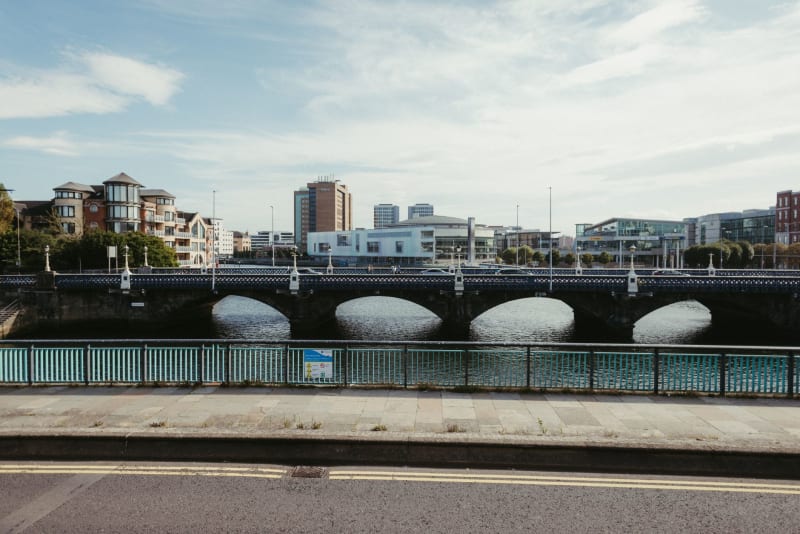 northern-ireland
 Derry
A walled city where even the name is contested — and that tension, held lightly by its people, is what makes it unforgettable.
Explore northern-ireland
 Downhill Demesne and Mussenden Temple
A domed library balanced on an Atlantic cliff edge, and the ghost of a bishop's mansion crumbling into the grass behind it.
Explore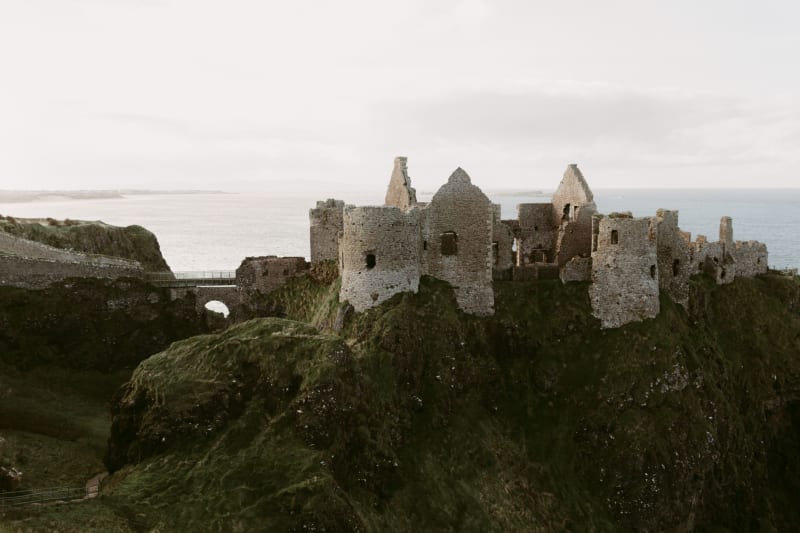 northern-ireland
 Dunluce Castle
A medieval stronghold balanced on a basalt sea-stack above crashing surf — ruins that look more dramatic than most intact castles.
Explore northern-ireland
 Giant's Causeway
Forty thousand hexagonal basalt columns descending into the Atlantic — geology so precise it looks like deliberate construction.
Explore northern-ireland
 Glens of Antrim
Nine river valleys cut from the Antrim plateau to the sea, dripping with waterfalls and almost completely overlooked by the tour coaches.
Explore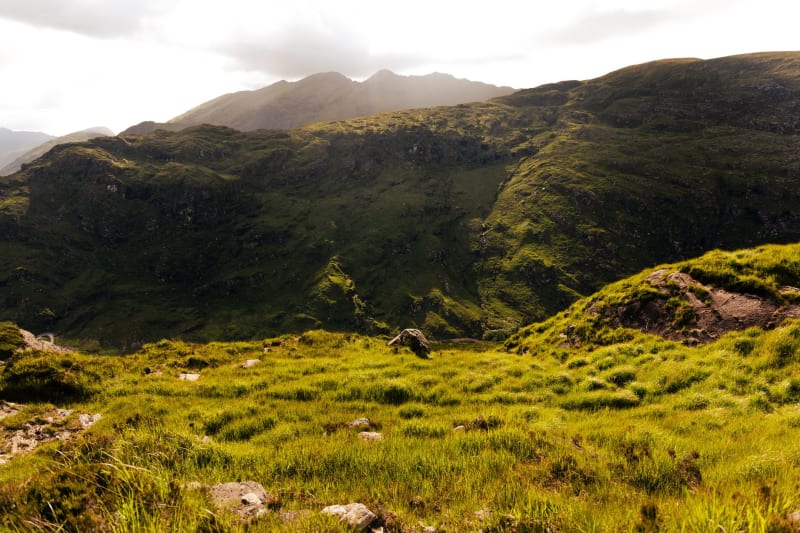 northern-ireland
 Mourne Mountains
Granite peaks rising from the sea in County Down — the mountains that C.S. Lewis said 'taught him longing' and still do that to people.
Explore northern-ireland
 Rathlin Island
Northern Ireland's only inhabited island — a boomerang of basalt five miles off the Antrim coast where puffins outnumber people by a thousand to one.
Explore northern-ireland
 Strangford Lough
A sea inlet so tidal and alive with seals and wading birds that it operates at a rhythm entirely independent of the mainland around it.
Explore