
Omaha Beach
"I stood where the tide line meets the dry sand and realized the walk from the water to the bluffs takes about four minutes, and that's the four minutes that killed so many men."
A vast stretch of pale sand in Normandy where the weight of June 6, 1944 still presses into every quiet, wind-scoured morning.

I went to Omaha Beach on a grey October afternoon, the kind of light that Normandy specializes in, flat and colorless, and I think that’s actually the right light to see it in. No sun glinting off the water to distract you. Just this enormous flat expanse of sand, wider than I’d imagined from photos, with the bluffs rising up maybe four hundred meters back from the water. I’d read about the landing for years before I stood there, but reading doesn’t prepare you for the scale of the open ground. On June 6, 1944, American troops came off their landing craft into that emptiness with German machine guns dug into the high ground, and there was nowhere to hide until you reached the shingle bank near the base of the bluffs. I walked that distance myself, at an easy pace, and it took me about four minutes. Four minutes, unarmed, no one shooting at me, and it still felt long.

What struck Lia more than the beach itself was the American Cemetery up on the bluff above Colleville-sur-Mer. Nine thousand three hundred and something white marble crosses and Stars of David, in rows so precise they line up no matter which angle you look from, and below it, through a gap in the trees, you can see the beach and the water. We didn’t say much walking through it. There’s a temptation to describe cemeteries like this as beautiful, and it is, in a manicured, deliberate way, but that word felt wrong standing there. It felt more like a held breath. An older American man near us was crying quietly by one particular row, and nobody around him made a sound or looked away awkwardly — everyone just gave him the space you’d want if it were your own grief.
Down at beach level, away from the memorials and the visitor center, Omaha Beach in summer is, oddly, just a beach. French families set up windbreaks and let their kids run at the tideline, there are a couple of casual restaurants along the seafront in Vierville and Saint-Laurent, and I ate a plate of moules-frites about two hundred meters from where the first wave landed. That contrast unsettled me at first — how does a place hold both grief and a totally ordinary Tuesday lunch — but I came around to thinking it’s not disrespect. It’s what the men who died there were actually fighting to make possible again: a boring, sunlit, unremarkable day at the beach.

If you have the time, walk down to the water at low tide, when the beach exposes itself almost completely and you can see remnants of the old German bunkers up on Pointe du Hoc a bit further west, cratered and half-collapsed into the cliff edge from the naval bombardment. It’s a short drive from Omaha and worth the detour, though bring good shoes — the ground up there is uneven and the drop to the sea is closer than it looks.
When to go: Visit outside peak summer (May, June around the anniversary, or September) for smaller crowds and calmer light for photos, though June 6 itself draws veterans’ ceremonies worth witnessing if you don’t mind sharing the beach with a few thousand other visitors.
Keep exploring
More from Normandy
 normandy
Pays d'Auge
Apple orchards, bocage hedgerows, and the farmhouses where calvados and camembert were invented — Normandy's most delicious interior.
Explore normandy
Pointe du Hoc
A 30-meter cliff still scarred with craters, where American Rangers climbed under fire on D-Day and where the silence today feels almost unbearable.
Explore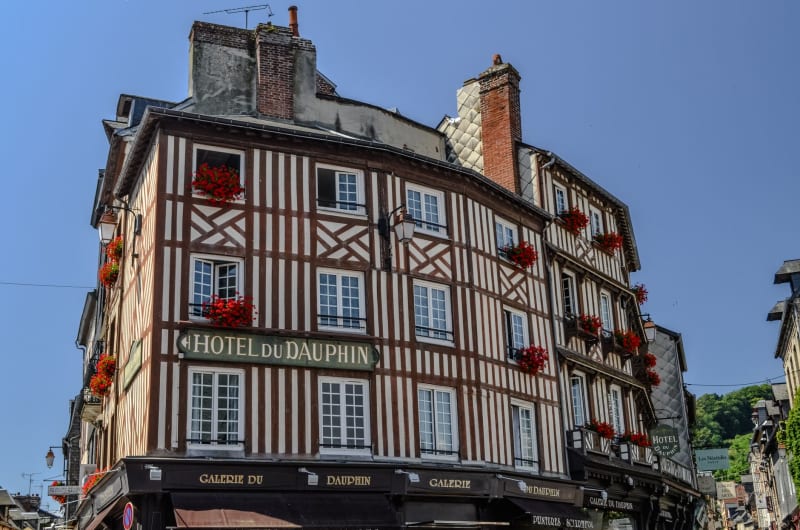 normandy
Rouen
A Gothic cathedral Monet painted thirty times and streets of half-timbered houses that survived a war — Normandy's most underrated city.
Explore normandy
Sainte-Mere-Eglise
A small Normandy village where a dummy paratrooper still hangs from the church steeple, marking the night the town became the first liberated in France.
Explore normandy
Trouville-sur-Mer
A working fishing port turned seaside resort in Normandy, watching its glamorous twin Deauville across the narrow Touques estuary.
Explore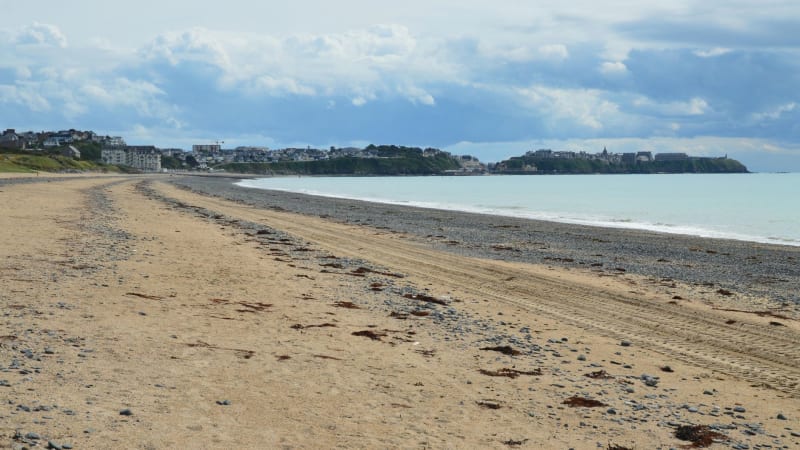 normandy
Arromanches
The concrete caissons of the artificial harbour built overnight in June 1944 still sit in the bay — the most extraordinary engineering ruin on any European beach.
Explore