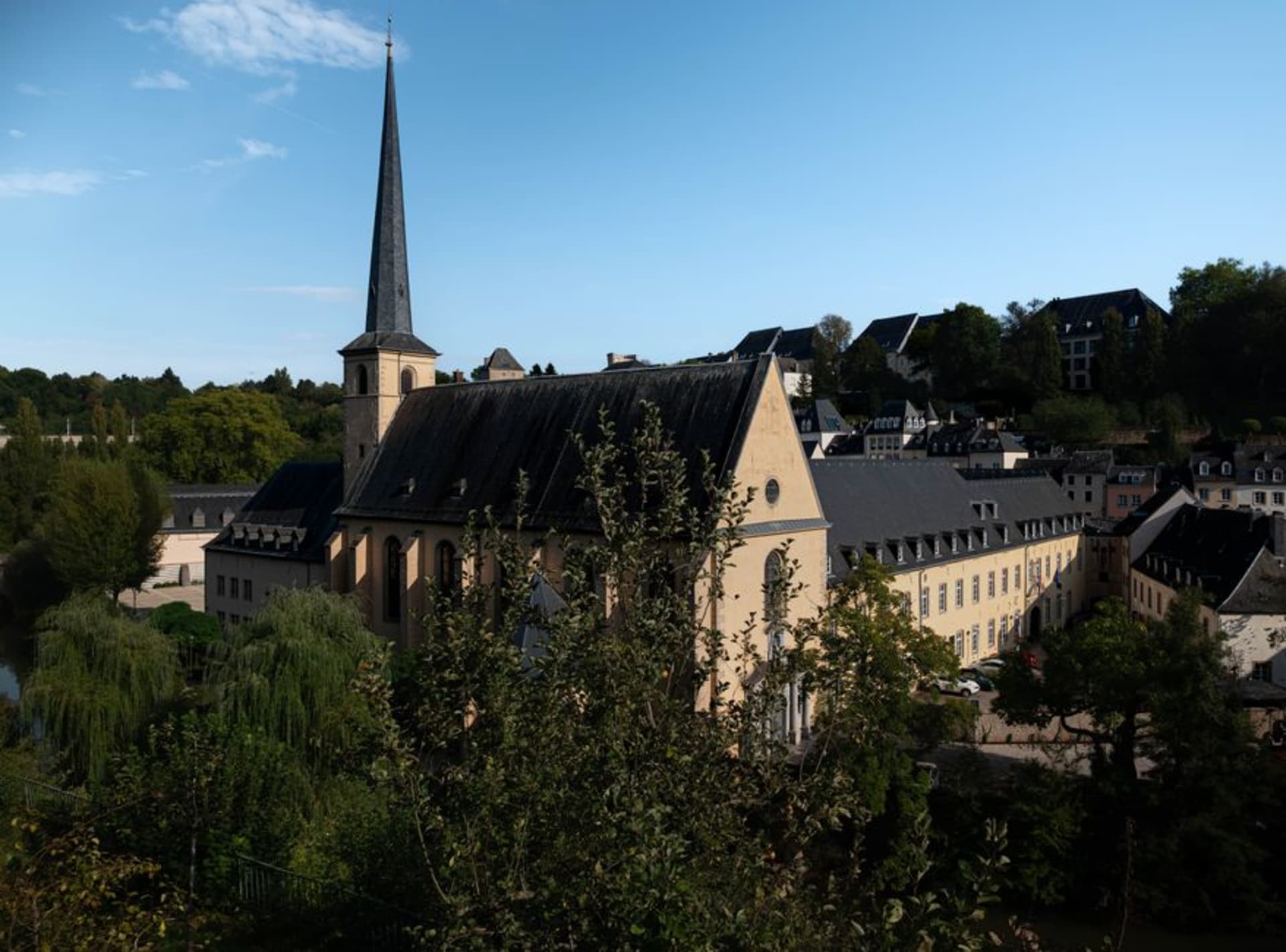
Sainte-Mere-Eglise
"I stood in the square looking straight up at the mannequin dangling off the church roof and thought, someone actually survived that, hanging there for two hours pretending to be dead."
A small Normandy village where a dummy paratrooper still hangs from the church steeple, marking the night the town became the first liberated in France.

The first thing you see coming into Sainte-Mère-Église’s main square is the church, and the first thing you see on the church is a parachute and a soldier’s effigy caught on the steeple, permanently, deliberately left there. It’s a bit theatrical for my taste at first glance — a mannequin in a paratrooper uniform dangling off a medieval church roof — but then you learn it’s a real recreation of what happened to Private John Steele of the 82nd Airborne on the night of June 5 into June 6, 1944, whose parachute snagged on the spire during a botched night drop, and he hung there, playing dead, for close to two hours while fighting raged in the square below him. Once you know that, the mannequin stops feeling like a gimmick. It’s the town’s whole identity distilled into one object.
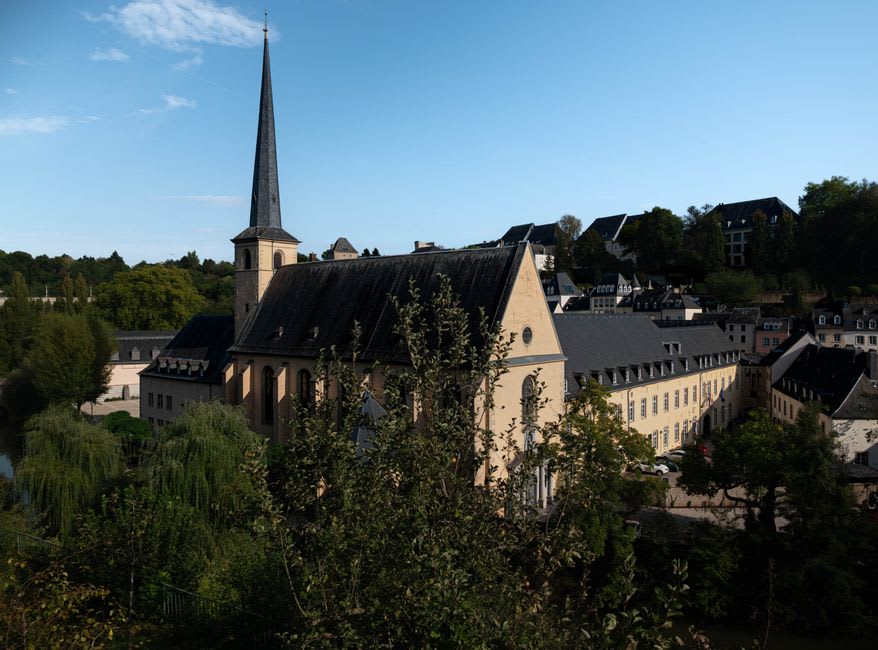
Sainte-Mère-Église is often called the first French town liberated on D-Day, and walking the square you get why the Americans made it a symbol early — it’s compact, centered, almost stageable, with the church anchoring everything else around it. Lia and I had lunch at a café right on the square, and I kept glancing up at that steeple through the whole meal, which I don’t think was an accident on the town’s part. The Airborne Museum sits just off the square too, and it’s better than I expected for a small-town museum — they’ve got an actual Waco glider inside one of the domed buildings, and standing under it gives you a sense of how flimsy and improvised those landings really were, plywood and canvas frames dropping men into occupied farmland in the dark.
Outside the museum and the square, the town itself is unhurried in a way that feels almost deliberate, like it’s decided its historical weight is enough and it doesn’t need to try harder than that. There are a couple of gift shops selling reproduction helmets and dog tags that veer a little close to kitsch, and I get mixed feelings about that commercialization, but I also understand a small agricultural town needs some way to sustain the tourism that its history brings it. The surrounding bocage countryside, all those tight hedgerows the paratroopers got tangled and lost in during the actual invasion, is still there too, and driving through it you start to understand why the airborne drops went so wrong that night — the fields are small, boxed in, disorienting even now with a GPS.

What stayed with me longest wasn’t the museum pieces but just standing under that steeple at dusk, when the square empties out and the tour buses have left, and the mannequin is still up there, silhouetted, and the church bells still ring the same as they did that night.
When to go: Early June around the D-Day anniversary brings reenactors, period vehicles, and a genuinely moving atmosphere, but expect crowds; for a quieter visit, aim for a weekday in shoulder season.
Keep exploring
More from Normandy
 normandy
Trouville-sur-Mer
A working fishing port turned seaside resort in Normandy, watching its glamorous twin Deauville across the narrow Touques estuary.
Explore normandy
Arromanches
The concrete caissons of the artificial harbour built overnight in June 1944 still sit in the bay — the most extraordinary engineering ruin on any European beach.
Explore normandy
Bayeux
An intact medieval town with a seventy-metre tapestry that rewrites what you thought you knew about the year 1066.
Explore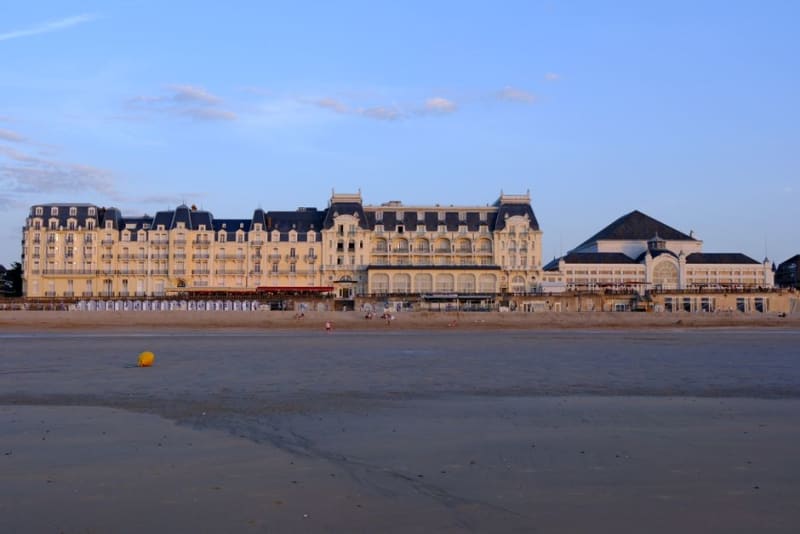 normandy
Cabourg
A grand Belle Époque resort on the Normandy coast that Marcel Proust reimagined as the fictional Balbec in his novels.
Explore normandy
Caen
William the Conqueror's capital was bombed to rubble in 1944 and rebuilt without self-pity — its Memorial is one of Europe's essential museums.
Explore normandy
Colleville-sur-Mer
The American Cemetery above Omaha Beach — 9,387 white markers in rows so precise they carry their own form of grief.
Explore