
Cabourg
"I sat on a bench along the Promenade Marcel Proust watching the light change over the Channel and understood, for the first time, why he never stopped writing about this beach."
A grand Belle Époque resort on the Normandy coast that Marcel Proust reimagined as the fictional Balbec in his novels.

I went to Cabourg mostly because of Proust, which I’ll admit is a slightly pretentious reason to visit a beach town, but it’s the honest one. He spent summers here as a young man and later as an established writer, staying at the Grand Hôtel, and turned the town into Balbec in In Search of Lost Time — not a direct copy, more a composite, but Cabourg leans hard into the connection now, and the seafront path is literally named Promenade Marcel Proust. Walking it in the early evening, watching the light do that flat silver thing it does on this coast, I got it. There’s something about the particular quality of boredom and beauty in a place like this that makes you want to write four thousand pages about a madeleine.

The town itself was purpose-built in the mid-1800s as a resort, and you can feel that planned quality in how it’s laid out — streets fanning out from the Grand Hôtel like spokes on a wheel, all leading back to the beach. The hotel itself is still operating, still grand, white facade and mansard roofs, and you can go in for a drink even if you’re not staying there, which we did, mostly to see Proust’s old room from the outside hallway (you can’t go in, but the staff will point you to the door if you ask nicely). The beach in front of it is enormous and flat, good for long walks, less good for actually swimming comfortably since the water stays cool even in August and there’s often a stiff onshore wind that Lia complained about the entire first afternoon.
What I liked best wasn’t the Proust pilgrimage stuff, honestly, it was the casino and the bandstand and the general sense that this town decided a hundred and fifty years ago to be a certain kind of elegant and has mostly stuck to the plan without turning into a museum piece. Families still rent the striped beach tents, there’s a market a few mornings a week selling Norman cheese and cider, and the old wooden villas behind the seafront, with their turrets and fretwork balconies, are lived in, not preserved behind glass. It doesn’t feel frozen, just unhurried.

We ended the day with cider and a plate of local cheese at a café near the market, which felt like the right, unliterary way to close out a day spent chasing a novelist’s ghost.
When to go: Late spring or September gives you the Belle Époque calm without the peak-summer crowds; if you want the literary atmosphere at its most vivid, go on an overcast, windy day rather than a bright one.
Keep exploring
More from Normandy
 normandy
Caen
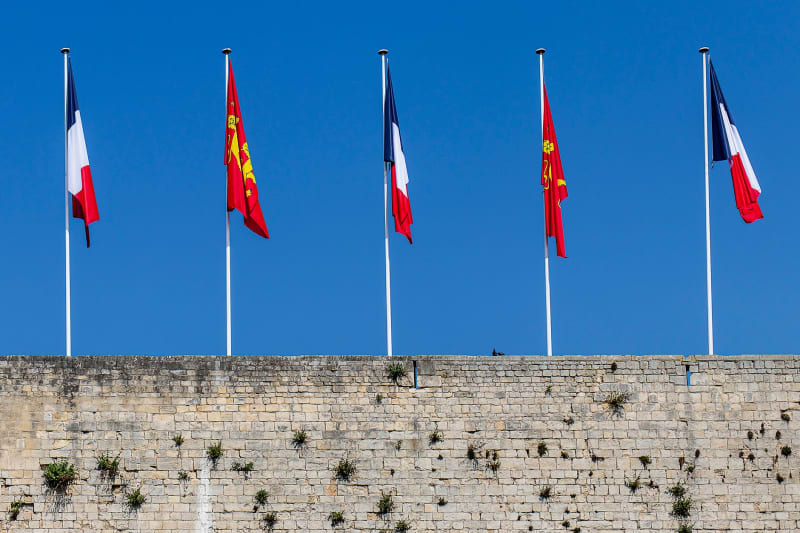
William the Conqueror's capital was bombed to rubble in 1944 and rebuilt without self-pity — its Memorial is one of Europe's essential museums.
Explore normandy
Colleville-sur-Mer
The American Cemetery above Omaha Beach — 9,387 white markers in rows so precise they carry their own form of grief.
Explore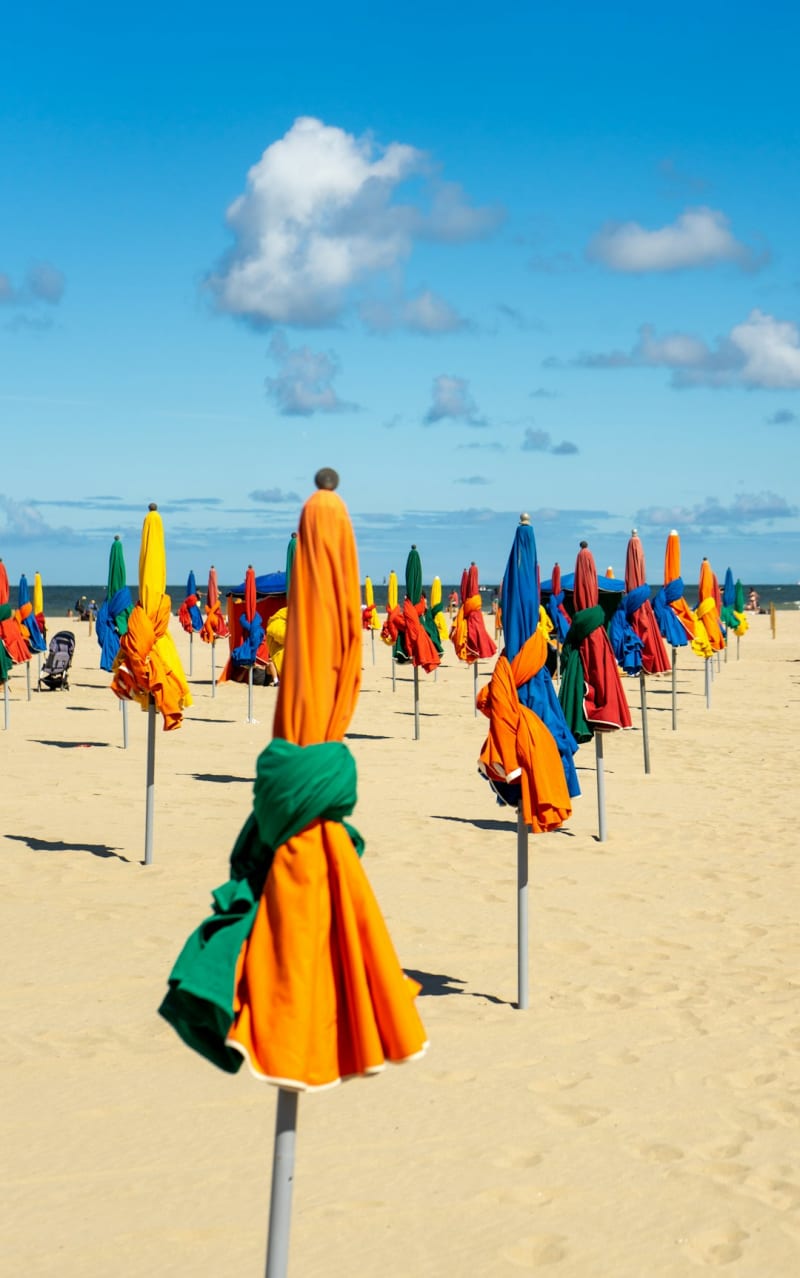 normandy
Deauville
A Belle Époque resort on the Côte Fleurie where Parisian glamour meets the Channel tide, one wooden plank at a time.
Explore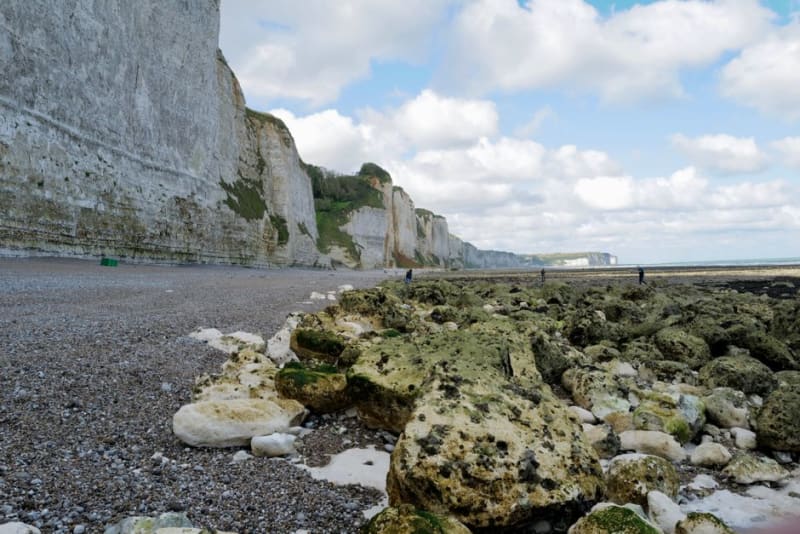 normandy
Dieppe
A weathered cross-Channel port on the Normandy coast, marked by white chalk cliffs and the memory of the disastrous 1942 Allied raid.
Explore normandy
Étretat
The chalk arches that drop into the Channel here have been painted a thousand times and still leave you wordless.
Explore normandy
Giverny
Monet's garden in the Eure valley, where the man spent forty years building the exact landscape he wanted to paint — and where, on a quiet morning, you can almost forgive the crowds.
Explore