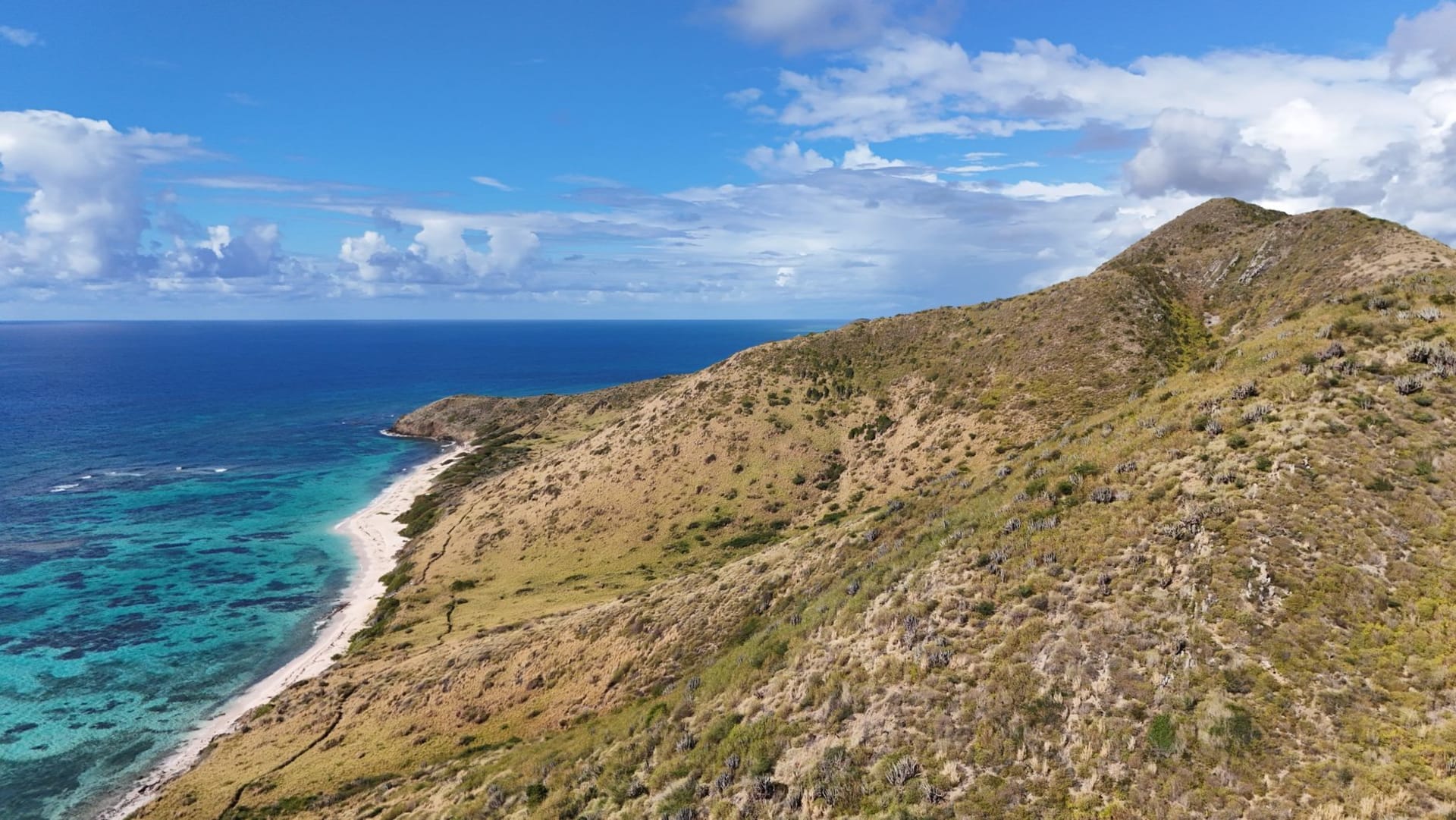
Bourail
"Bourail smells like red dust and cut grass — nothing like what you expect from an island in the Pacific."
A cattle town on Grande Terre's west coast where the land smells of red dust and dry grass and the sea is an hour's drive in the wrong direction.

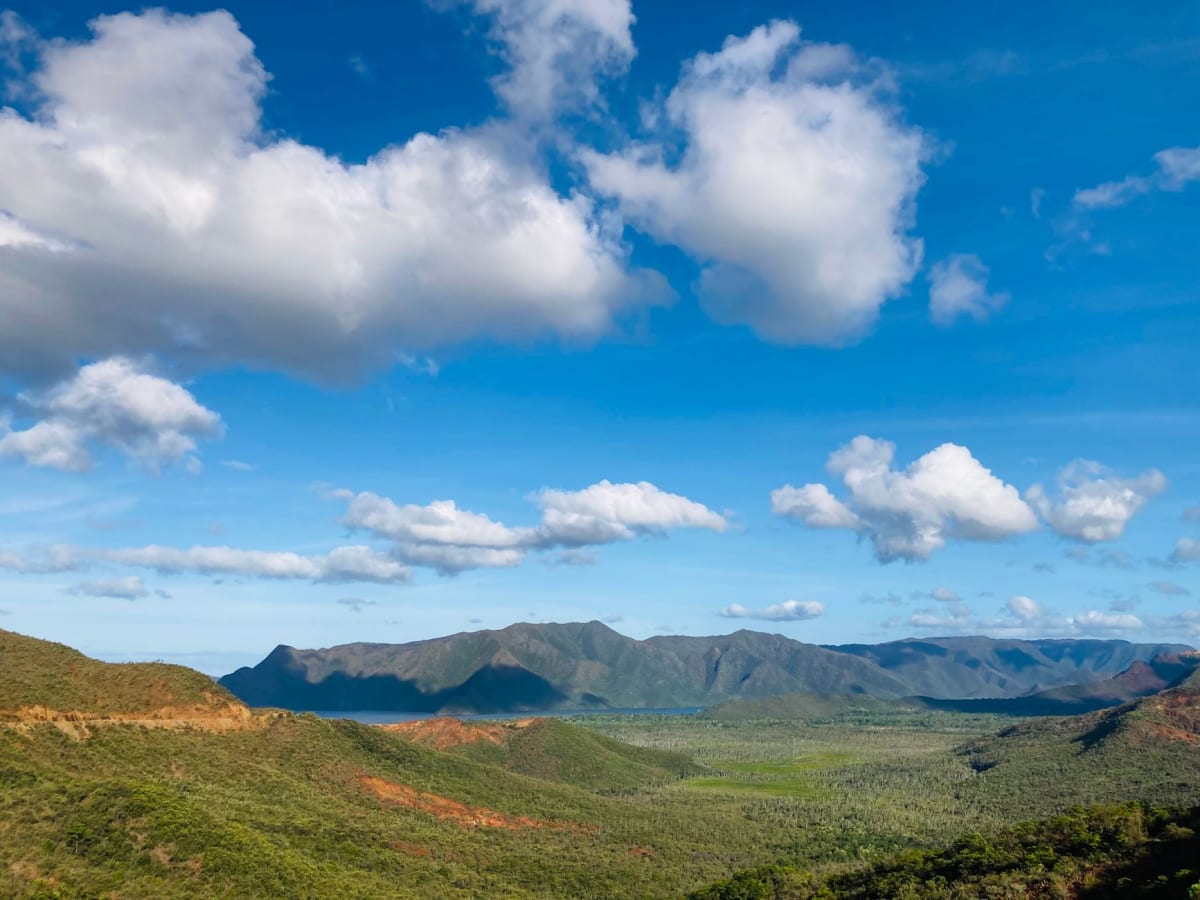
Bourail is not where most people go in New Caledonia. It sits inland on the west coast of Grande Terre, about 160 kilometres north of Nouméa, surrounded by ranch country — broad grassland valleys, red earth tracks, scattered cattle. The Pacific is technically close but invisible, hidden behind a coastal fringe that you have to drive through to reach. I stopped here for a night on my way north and extended my stay to three days, which is its own form of endorsement.
The town itself is modest and frontier in character — a main street with a supermarket, a pharmacy, a hardware store, a couple of bakeries serving actual decent croissants, and the Café du Commerce where the Caldoche ranchers drink cold Manta and the conversation is about cattle prices and rain. The Caldoche are the descendants of European settlers who have been here for four or five generations, and their relationship to this particular landscape is one of the more interesting cultural phenomena in New Caledonia — deeply attached to the land they farm in a way that has more in common with rural Australia than metropolitan France, yet retaining French as a first language and Bastille Day as a point of genuine celebration.
The ANZAC cemetery just outside town is small and immaculate, the graves of New Zealand and Australian soldiers who died in the Pacific campaign tended to a standard that reflects the distance people travel to visit it. I went in the early morning when the light was low and the dew was still on the grass, and sat there for a while reading the inscriptions — most of them very young, most of them far from anywhere they would have expected to end up. The silence there is a different quality of silence from the silence at the beach.
North of Bourail, the road winds through the Roche Percée and Poé beach corridor — a dramatic stretch of coast where a natural rock arch called the Roche Percée rises from the sand, and the beach at Poé extends for several kilometres in both directions. This is one of the better spots on the west coast lagoon for swimming: the water is calm, sheltered from open Pacific swells, and shallow enough that you wade a long way before it reaches your waist. On weekends, families from Bourail drive down to cook on the beach and stay until dark.

The venison here is exceptional. The feral deer population on Grande Terre is enormous — they were introduced in the nineteenth century, have no natural predators, and are hunted constantly without being significantly reduced — and in Bourail you find venison on almost every menu, braised or grilled, served with a sauce that varies by household but generally involves red wine and patience. I ate it at a pension run by a Caldoche family on the edge of town, and it was better than most venison I have had in France, which the cook received as the compliment I intended it to be.
When to go: April through October is the dry season, and the coastal beaches near Bourail are at their best from May through September when the lagoon is calm and the humidity is manageable. The Bourail Fair in August is a long-standing regional event — agricultural, rodeo-adjacent, genuinely local — and worth planning around if you want to see this version of New Caledonia at its most specific.
Keep exploring
More from New Caledonia
 new-caledonia
 Canala
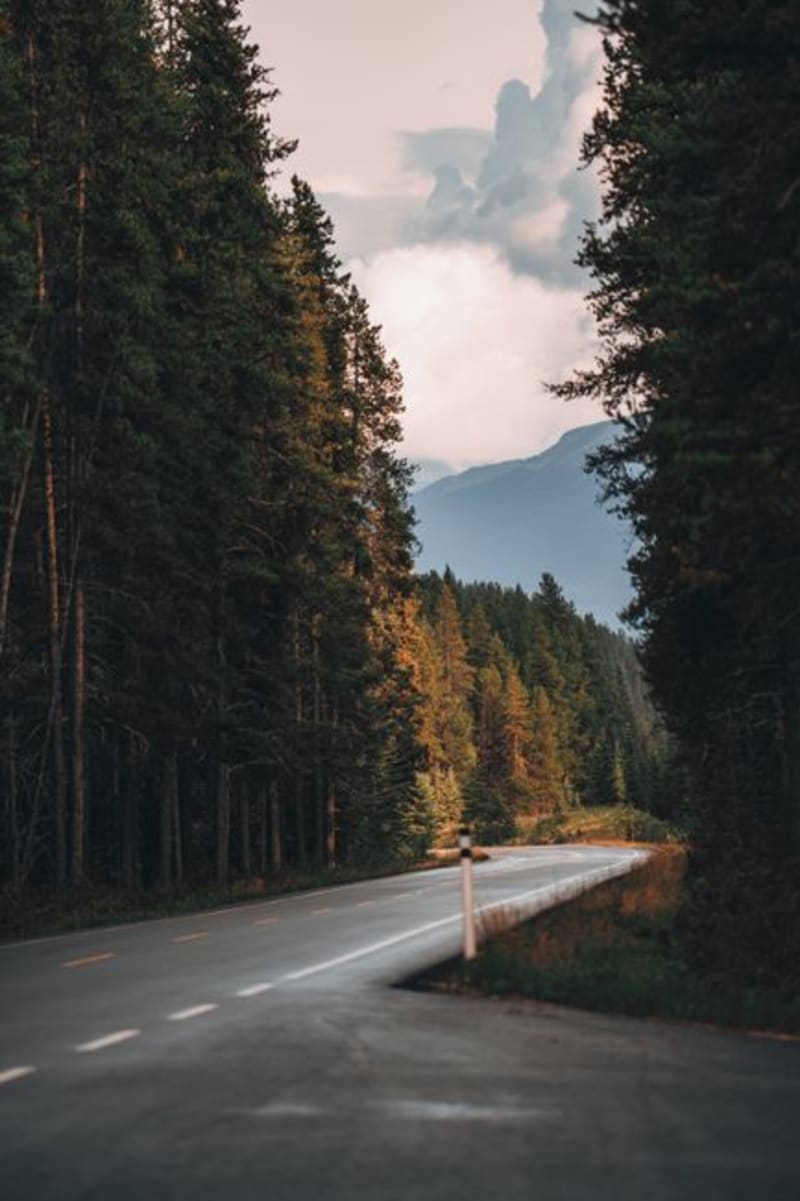
An east coast stronghold of Kanak custom and hot springs, reached by a mountain road that makes you understand why this side of the island stayed independent-minded longer than most.
Explore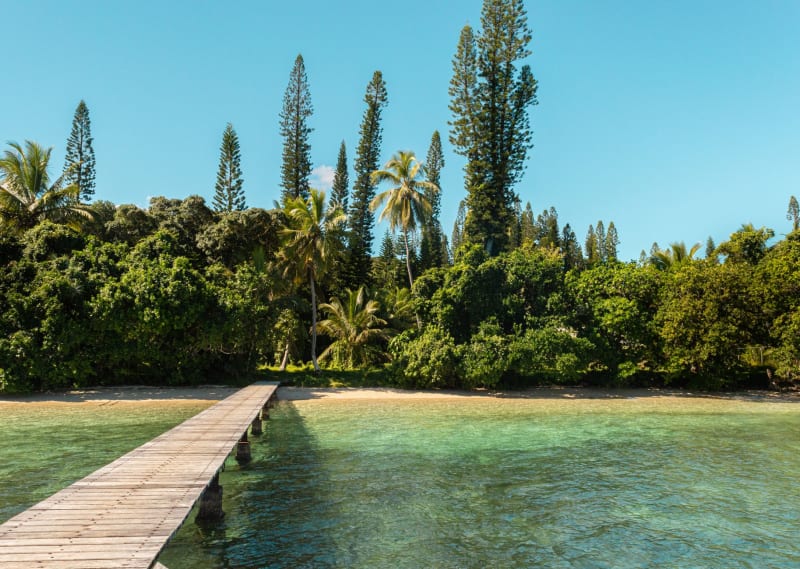 new-caledonia
 Hienghène
A northern village where black limestone towers rise from the water and Kanak culture feels less like history than the present tense.
Explore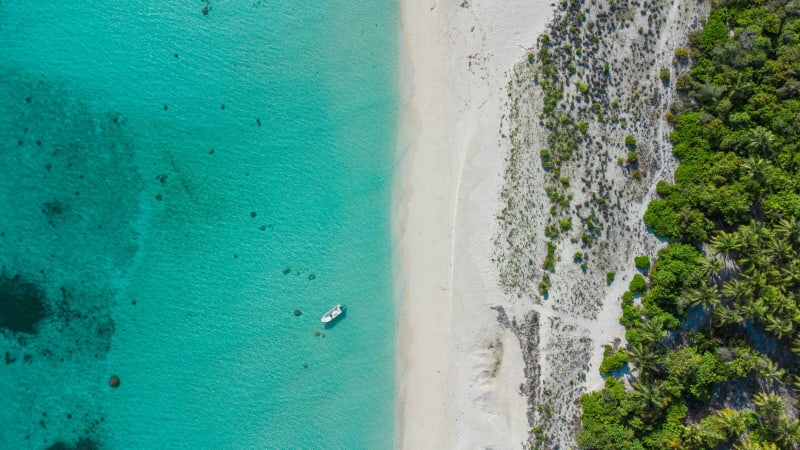 new-caledonia
 Isle of Pines
An island so improbably beautiful that the natural swimming pools feel more like hallucinations than geography.
Explore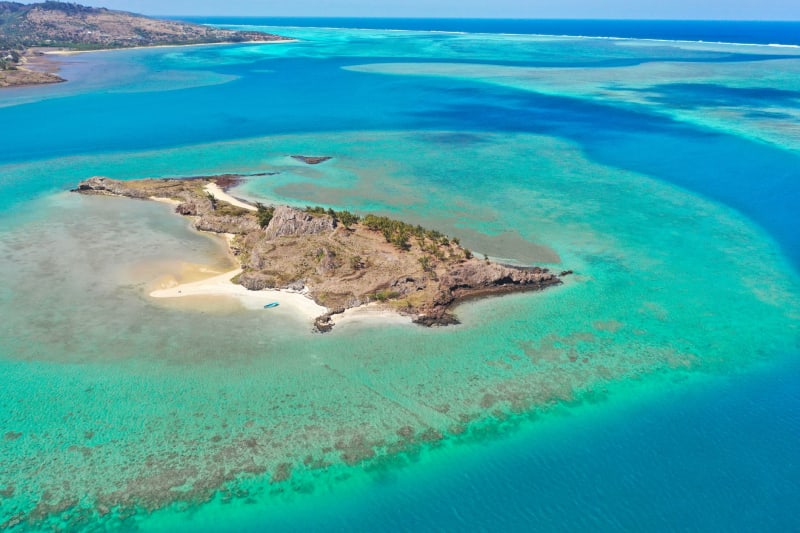 new-caledonia
 Koné
The quiet provincial capital of the north, a crossroads town where the road to the tribal territories begins and the Pacific finally feels far from France.
Explore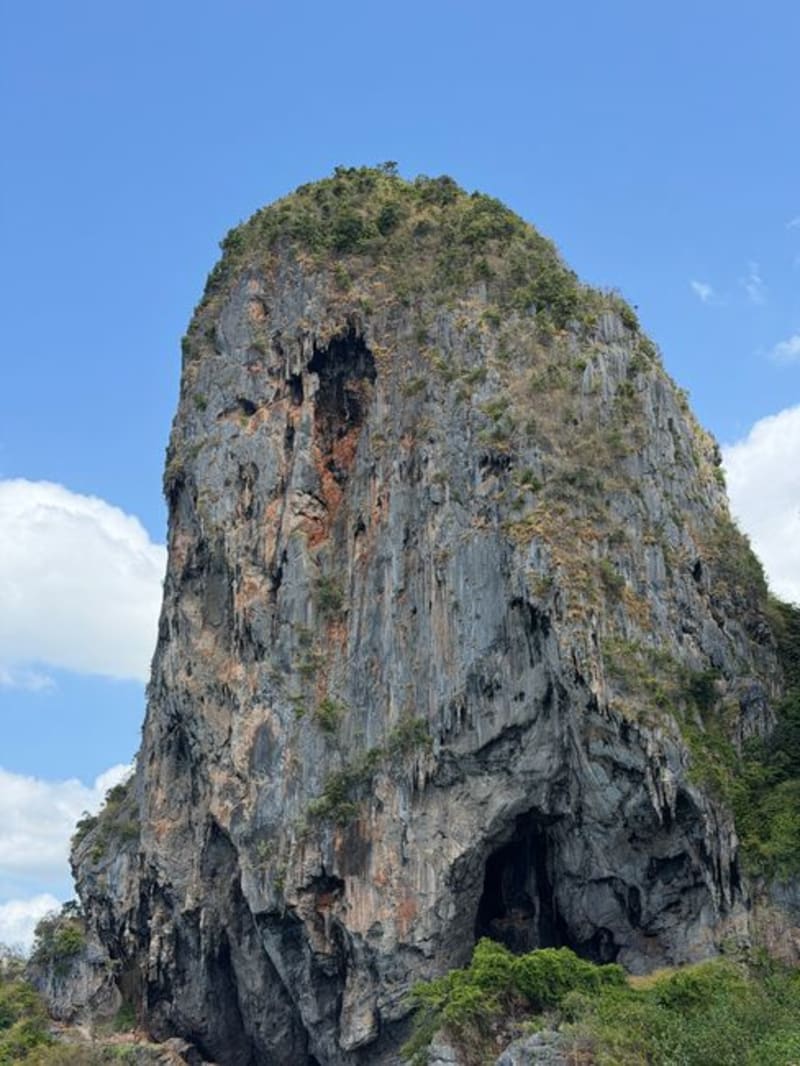 new-caledonia
 Koumac
A far-north mining town where the road finally starts to feel remote, and where a cave system underneath the limestone hills nobody mentions until you ask.
Explore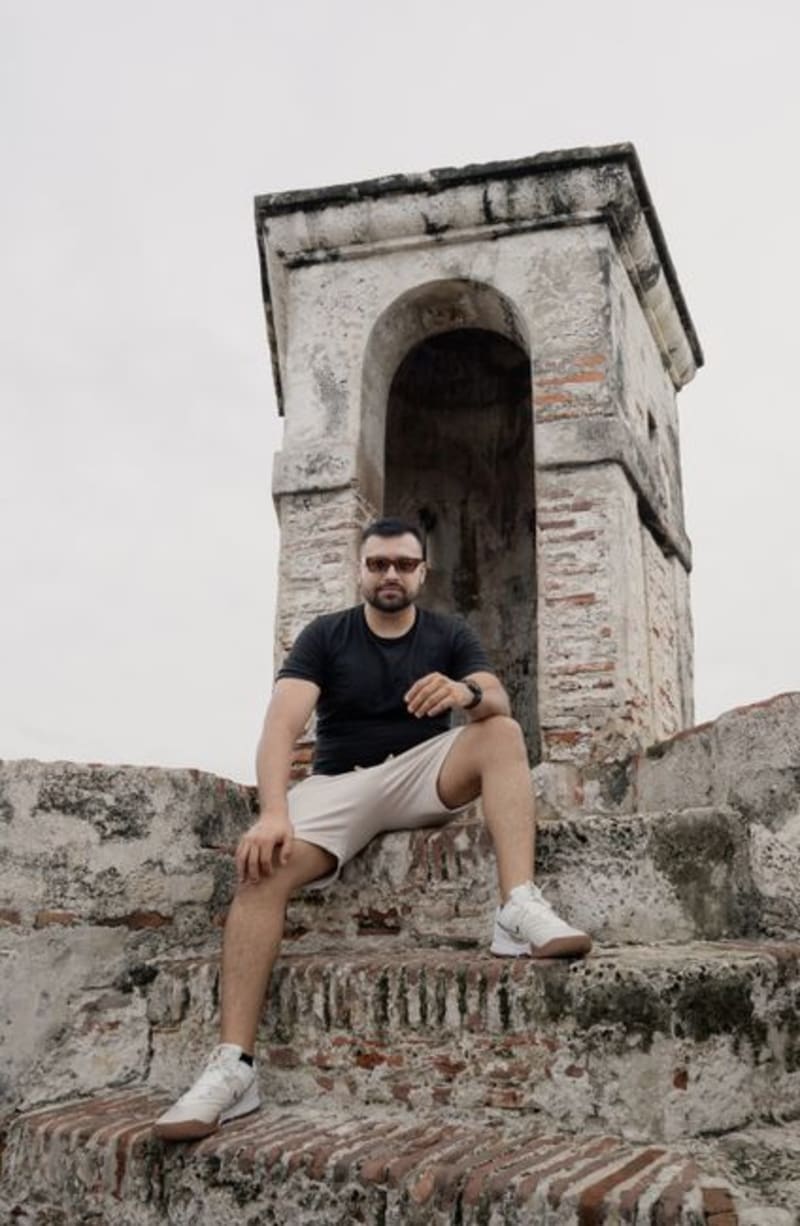 new-caledonia
 La Foa
A west coast river town where a restored penal-colony fort sits quietly in a paddock, telling a version of New Caledonia's history most visitors never hear.
Explore