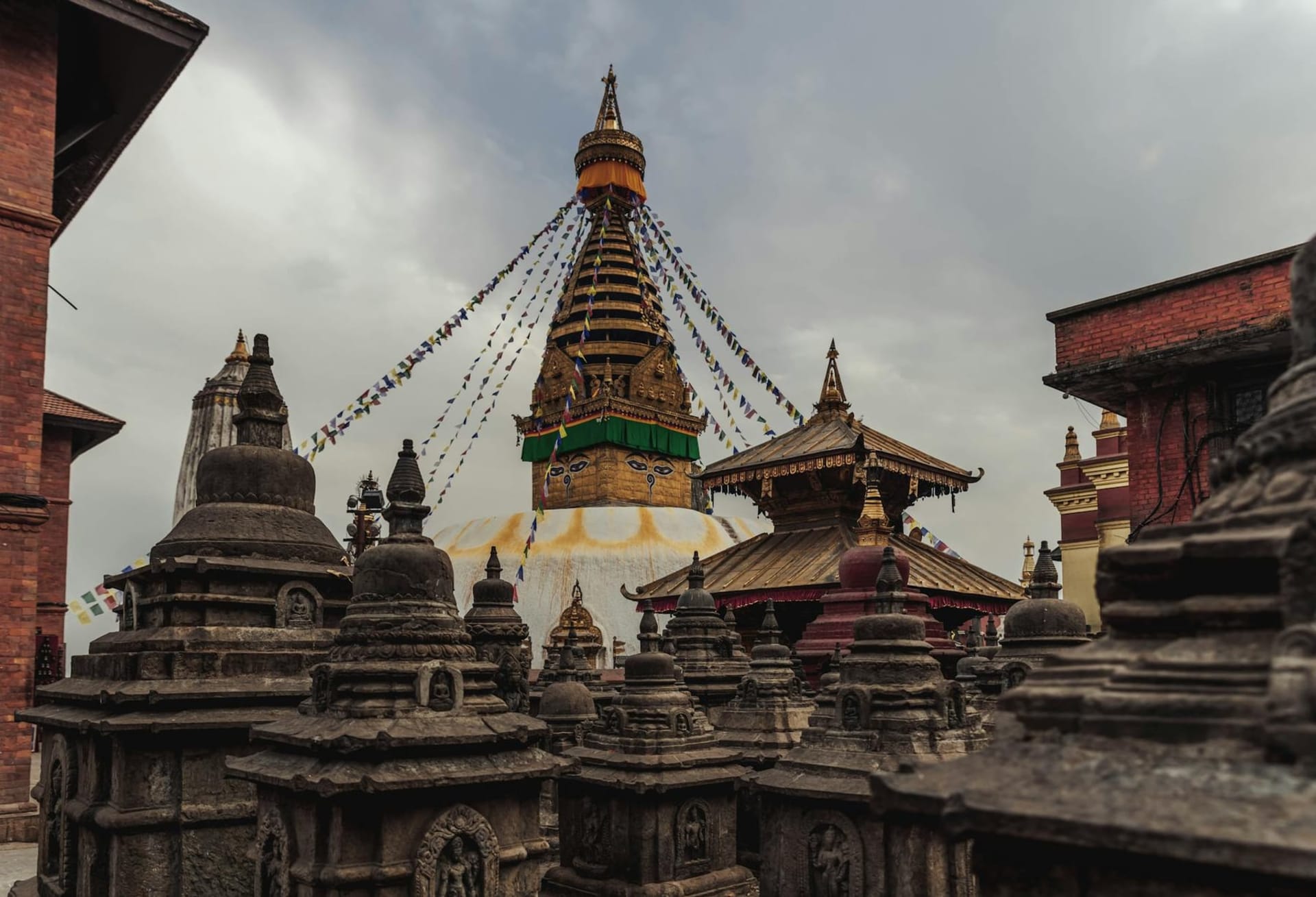
Kathmandu
"Kathmandu is the only city where the traffic, the temples, and the pilgrims all occupy the same square metre."
A labyrinth of medieval alleys, spinning prayer wheels, and the Boudhanath stupa's all-seeing eyes.

I arrived in Kathmandu at dusk, when the Bagmati Valley traps the day’s last light in a gauze of exhaust and incense smoke. The taxi from Tribhuvan airport inched through Thamel with the resigned patience of a river finding its course around stones — motorbikes threading between rickshaws, a cow standing in the middle of Chhetrapati Chowk as if holding a meeting nobody had the authority to adjourn. I had been warned about Kathmandu. I had not been prepared for how immediately it pulls you under.
Boudhanath at First Light
Lia and I woke before five to reach the Boudhanath stupa as the monasteries opened their heavy wooden doors. The mandala-base is enormous — 120 metres across — and you walk its outer kora with a loose crowd of Tibetan pilgrims, elderly women in chubas spinning hand-held prayer wheels, and monks in claret robes checking their phones between circumambulations. The eyes of the Buddha are painted above the spire in a shade of gold that looks freshly applied every morning. I counted seven full circuits before I noticed I had stopped thinking entirely, which is, I suspect, the point.
Stop for butter tea at one of the low-slung cafés on the ring road. It tastes like someone added salt and a slight grievance to hot milk. I drank two cups and found it oddly correct for the hour.
Losing Ourselves in Asan
The old city quarter of Asan is where Kathmandu does its actual living. The narrow lanes around Asan Tole smell of marigold garlands, fenugreek, and diesel in a combination that should not work and somehow does. Traders sell lentils from sacks the size of children, and above the stalls, medieval wooden lattice windows lean out from four-storey brick buildings like curious faces. We wandered south toward Indra Chowk, and I turned a corner to find a man pressing brass prayer bowls with a tool that looked unchanged from the 14th century, surrounded entirely by the noise of a modern city — and felt, briefly, that time in Kathmandu is not linear so much as stacked.
The unexpected discovery came at a lunch stop near Freak Street: a plate of chatamari, the Newari rice crepe topped with minced buffalo and a fried egg, served on a banana leaf by a woman who seemed quietly amused that I had no idea what I had ordered. It was one of the best things I ate in Nepal.
Swayambhunath Before the Tour Groups
Climb the 365 stone steps to Swayambhunath early — before nine, ideally — and you share the hilltop temple with rhesus macaques and the handful of pilgrims who arrive regardless of the hour. The panorama across the valley is softened by morning haze, Kathmandu sprawling in every direction, and in the foreground, the same omniscient eyes as at Boudhanath, watching all of it with what I can only describe as affectionate indifference.
When to go: October through December offers the clearest skies after the monsoon washes the valley clean, with temperatures cool enough for walking all day. March and April are warmer and bring rhododendron colour to the surrounding hills — a fine second choice before the pre-monsoon haze thickens.
Keep exploring
More from Nepal
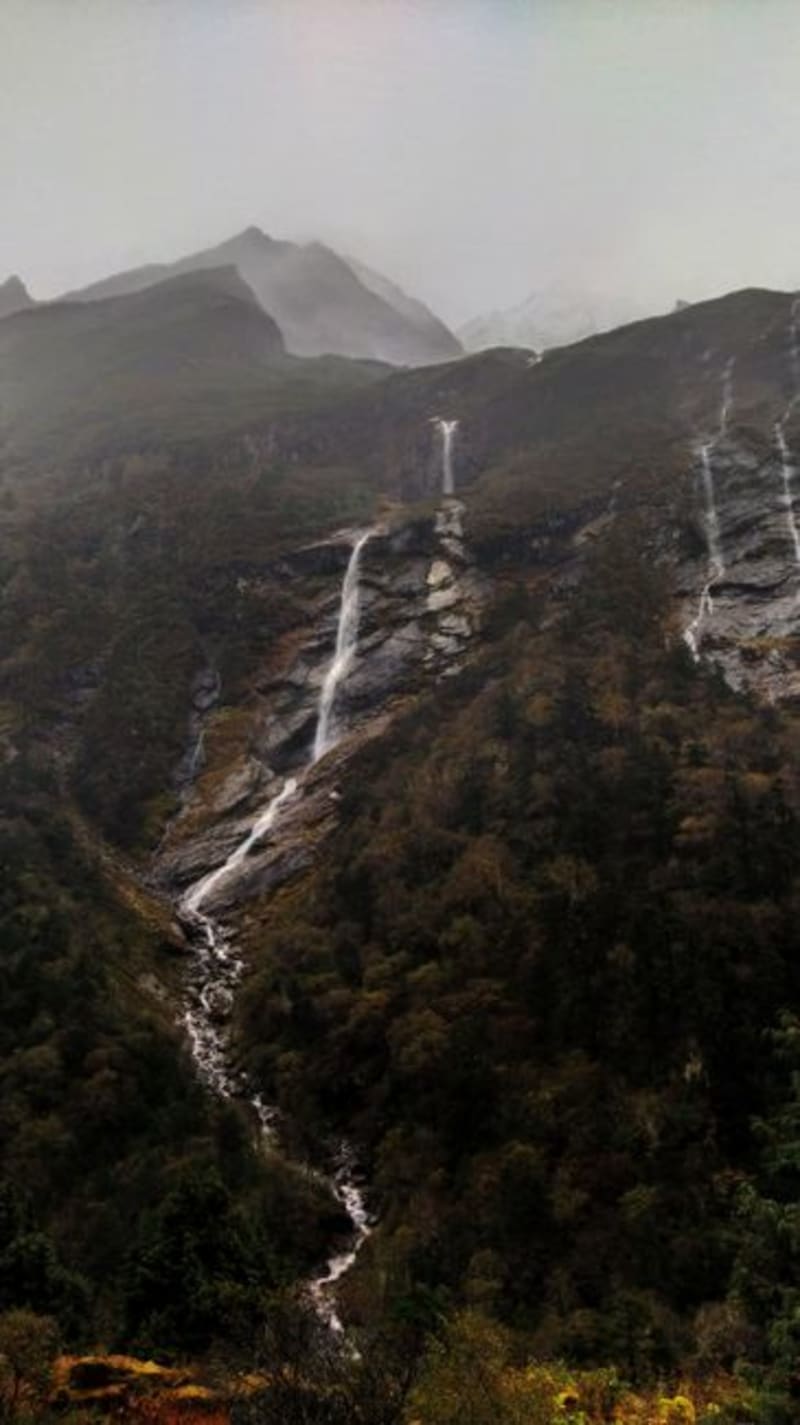 nepal
nepal Khaptad National Park
A high plateau of rolling meadows, oak forest, and hidden lakes in far-western Nepal, sacred to pilgrims and visited by almost no one else.
Explore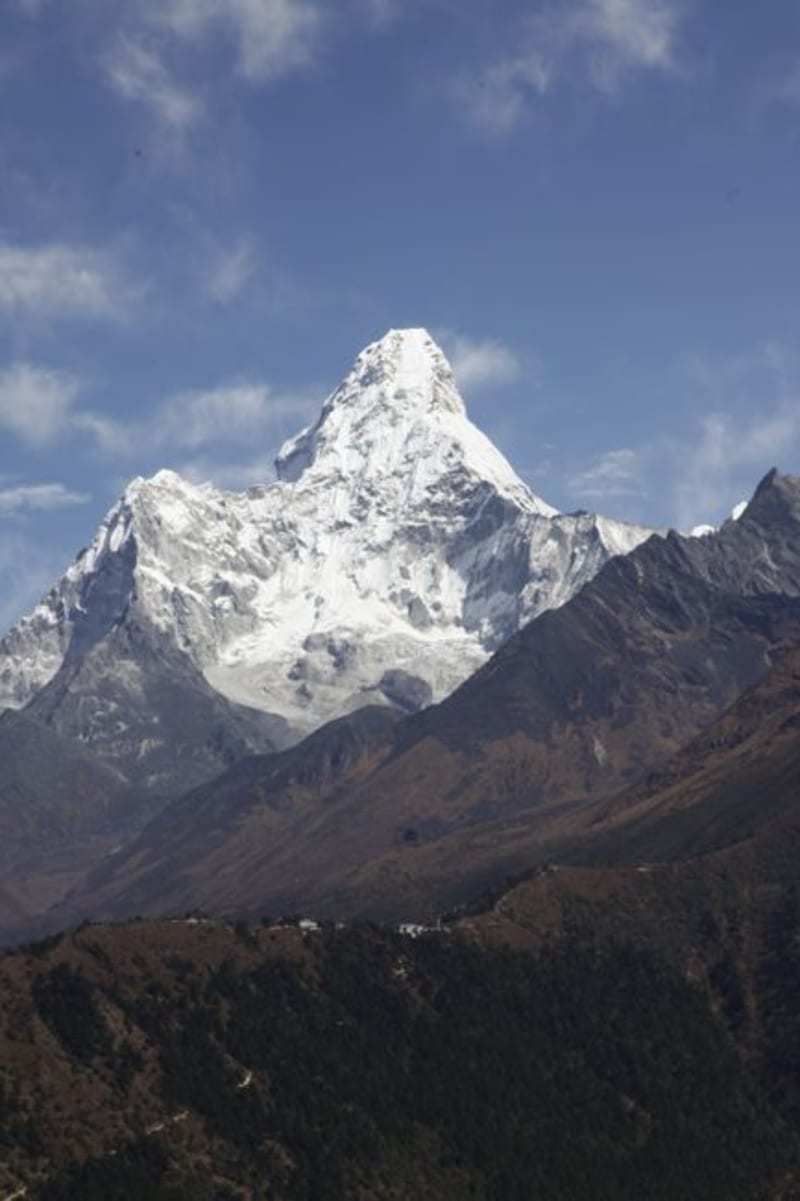 nepal
nepal Khumjung
A quiet Sherpa farming village above Namche, home to Edmund Hillary's oldest school and a monastery relic that draws its own peculiar kind of pilgrim.
Explore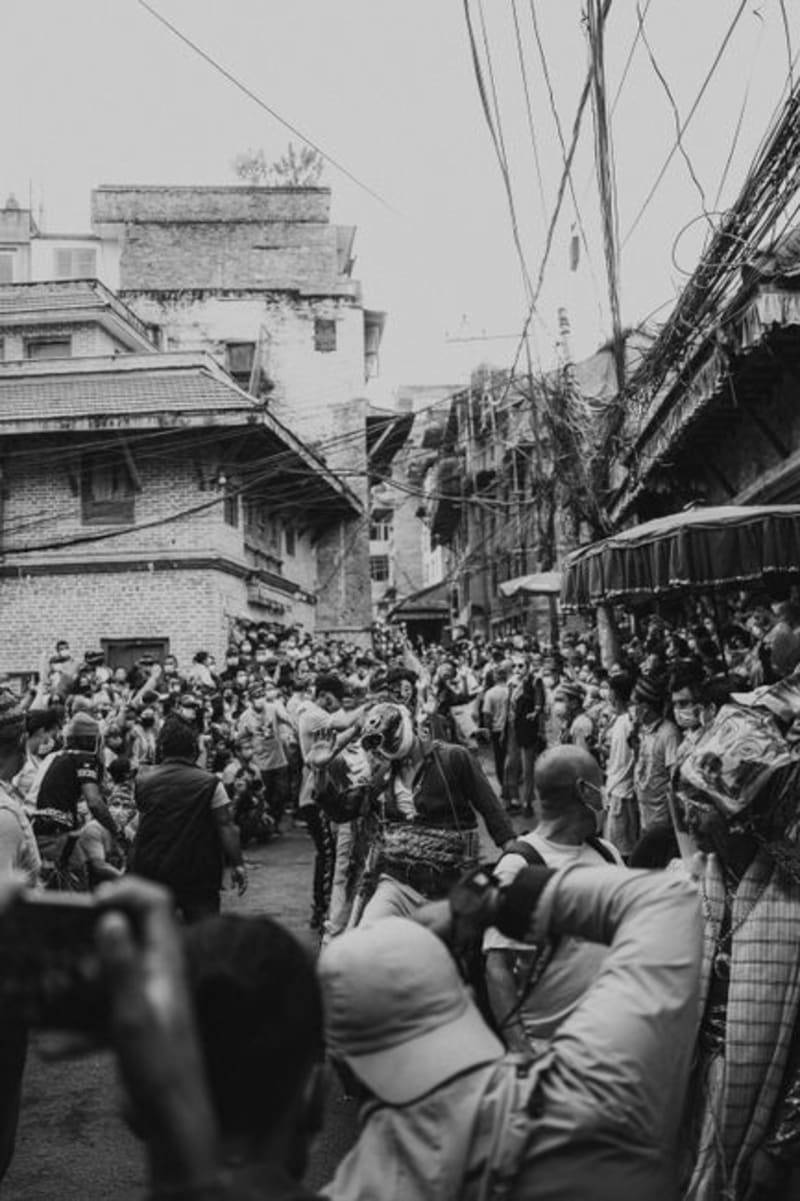 nepal
nepal Kirtipur
A hilltop Newari town on Kathmandu's edge that skipped the tourist economy entirely and kept its temples, weaving, and quiet.
Explore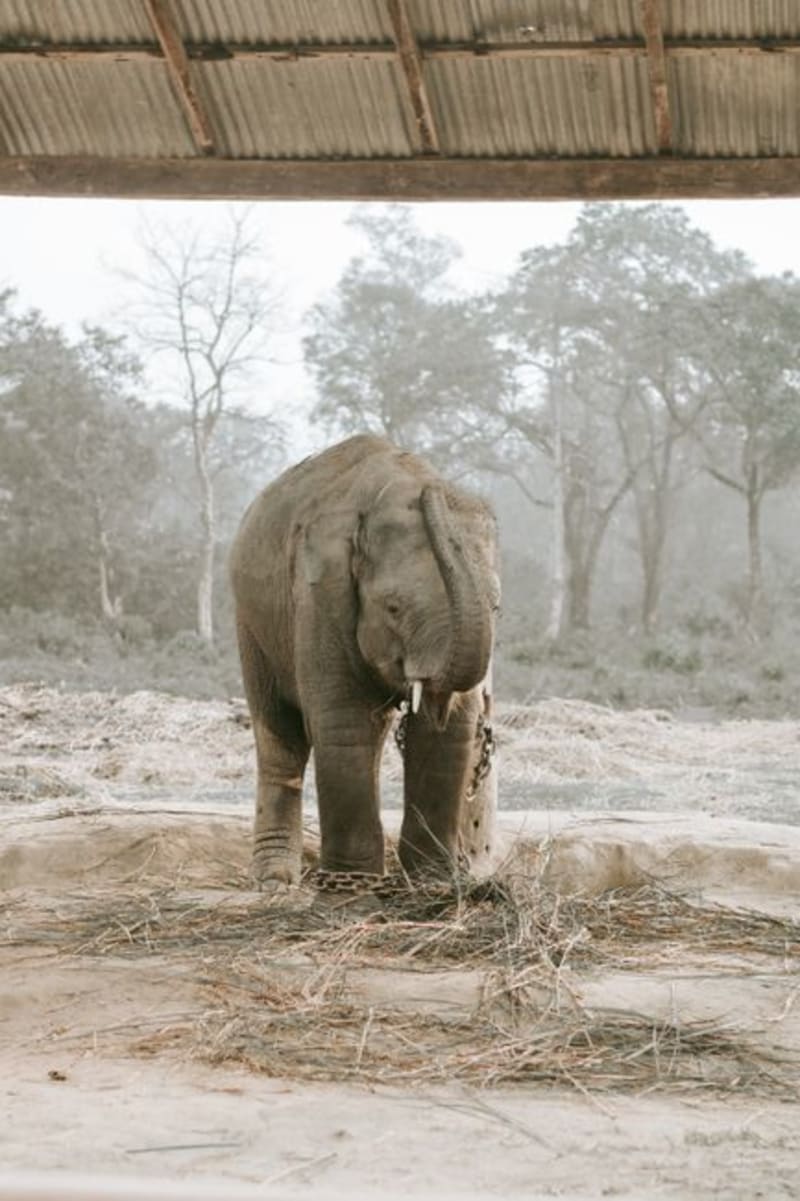 nepal
nepal Koshi Tappu Wildlife Reserve
A vast wetland reserve on the Koshi River holding Nepal's last wild water buffalo and some of the richest birdlife in South Asia.
Explore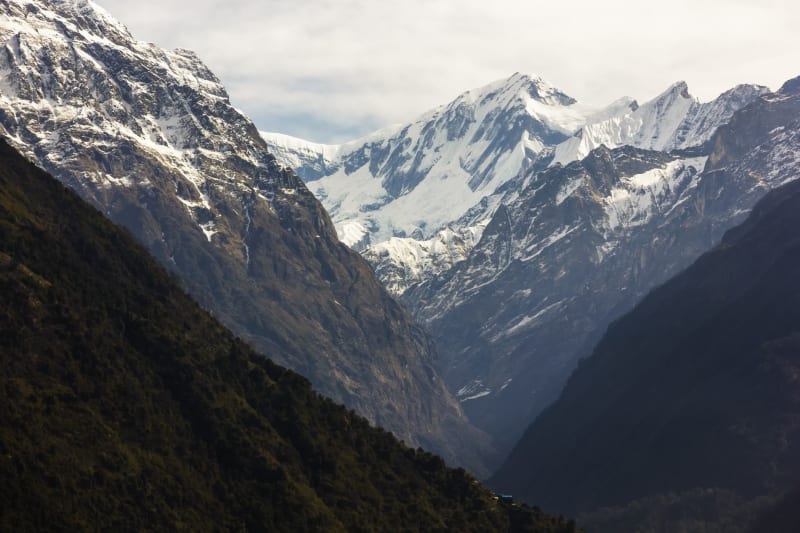 nepal
nepal Langtang Valley
A glacier-carved valley just north of Kathmandu that feels like the Himalayas at their most intimate — close enough to walk to from the capital, wild enough that you can go days without seeing another foreigner.
Explore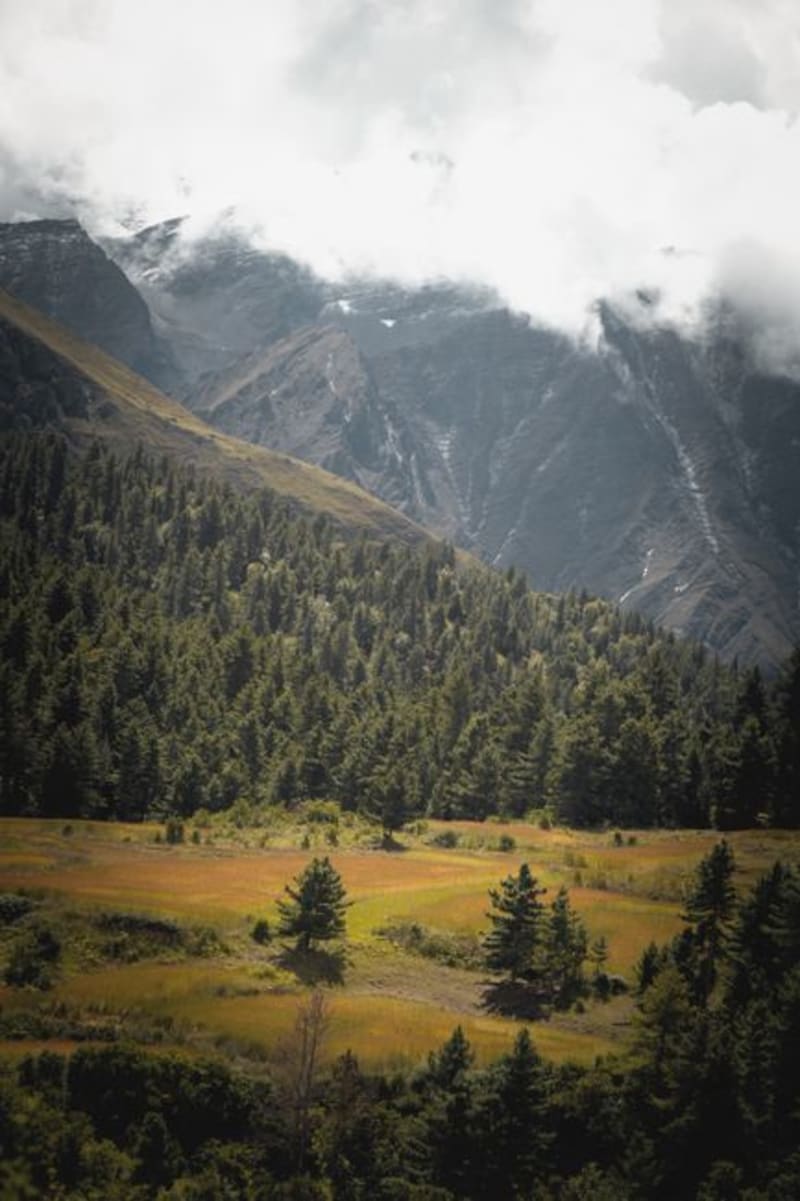 nepal
nepal Lukla
The mountain airstrip everyone flies into and nobody plans to enjoy — until the fog clears and you realize the town itself has its own strange charm.
Explore