
Colonia, Yap
"The whole town takes up less space than a shopping mall. This is not a complaint."
The smallest capital town in the Pacific, where stone money discs line the main road and the pace of life makes slow look rushed.

Colonia is the kind of place where you can walk the entire town in forty minutes and feel that you’ve been thorough. The population hovers around three thousand. The waterfront has a small harbor where fishing boats and the occasional dive vessel are moored alongside each other without hierarchy. There is one main road, a handful of secondary streets, a market that operates with consistent informality, and a general atmosphere of purposeful understatement. I arrived from Guam on an early flight with no accommodation booked, and found a room at the first guesthouse I asked about, and was eating lunch — taro, fish in coconut milk, cold rice from a Styrofoam container — within an hour of landing. The ease of it was almost suspicious.

The stone money is everywhere you don’t expect it. Not just at the designated “stone money banks” — the cleared areas along paths where large discs are displayed on low platforms — but also propped against guesthouse walls, listed beside government buildings, standing at roadsides in contexts that suggest their presence is simply normal, which it is. The discs range from the size of a dinner plate to the size of a small car. The largest ones are classified by name and ownership and held in communal memory the way other societies hold title deeds. Colonia’s surrounding villages maintain this system with what strikes an outsider as casual certainty — the certainty of people who have never had reason to doubt a structure that has worked for eight hundred years.
At the market, women sell betel nut, cigarettes, local produce, and fresh fish caught that morning. The older women in particular carry themselves with the composed authority of people who have run things for a long time and don’t require validation for it. My Yapese was nonexistent and my interlocutor’s English was limited, but she sold me a piece of breadfruit that she indicated should be eaten with the small container of what turned out to be fresh coconut cream, and this instruction was clear enough and the result was good enough that it functioned as complete communication.

The evenings in Colonia move slowly and with purpose. Men gather in the O’Keefe building area and in open spaces near the harbor. The sound of conversation in Yapese — a tonal language that sounds, to an untrained ear, like water moving over different surfaces — mixes with outboard motor noise from the harbor and, occasionally, the sound of music from somewhere I never located. I sat on the harbor wall one evening watching the sun go down across the water toward Tomil and Gagil and thought that the strange satisfaction I felt in this most unremarkable of small towns might have something to do with the absence of the feeling that I should be elsewhere.
When to go: December through April offers the best weather and diving conditions. United Airlines connects Guam to Yap regularly; inter-island boats serve the outer islands. Yap has limited accommodation — book guesthouses in advance. The Yap Day festival in early March involves traditional dance and ceremony.
Keep exploring
More from Micronesia
 micronesia
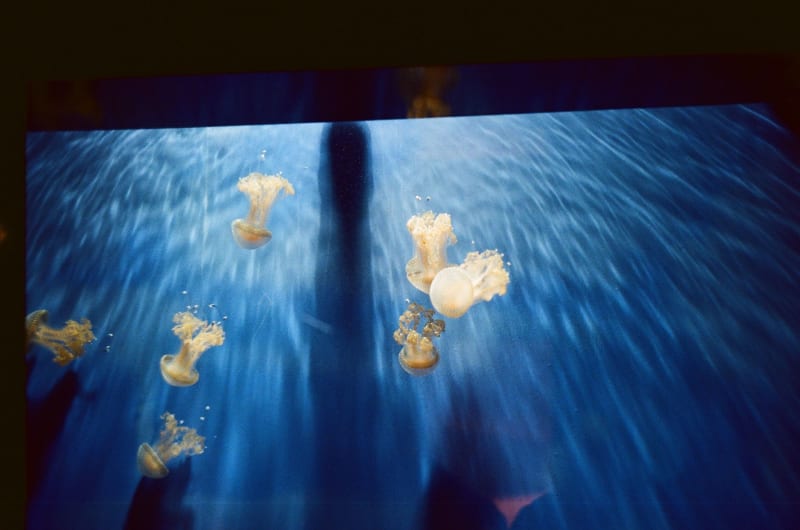
Jellyfish Lake
A landlocked lake in Palau where millions of golden jellyfish have evolved to lose their sting — and swimming among them is genuinely surreal.
Explore micronesia
Kepirohi Waterfall
A wide jungle waterfall in Pohnpei's Kitti municipality, quietly outshining better-known sights on the same island for the price of a muddy walk.
Explore micronesia
Koror
Palau's compact, scooter-noisy former capital, where every dive boat, ferry, and cold beer in the country eventually passes through.
Explore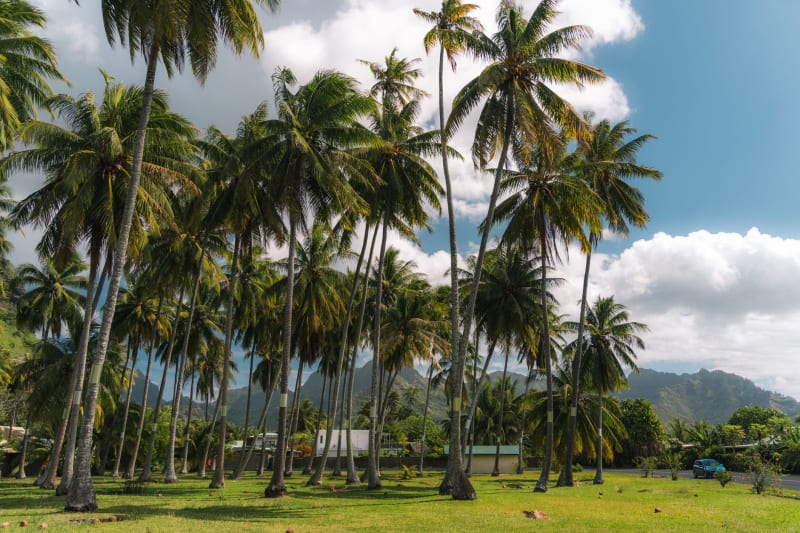 micronesia
Kosrae
The forgotten island of Micronesia — no cruise ships, no dive crowds, just an impossible reef and a jungle that swallows everything.
Explore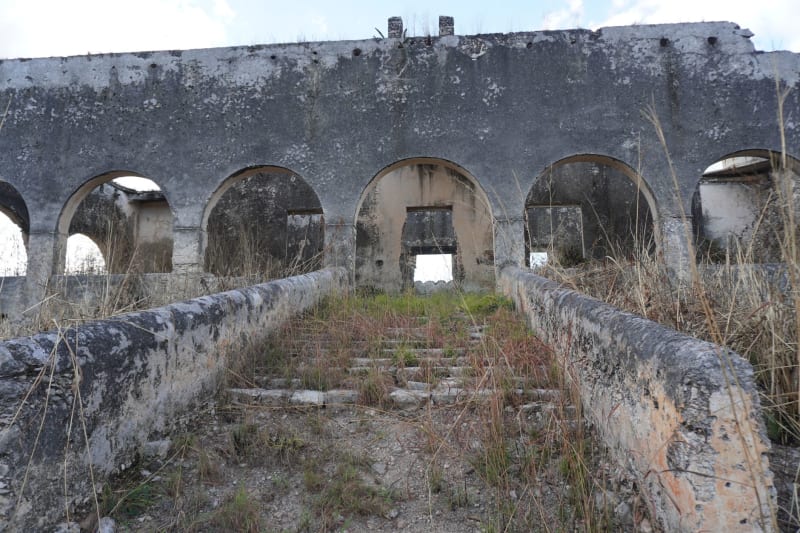 micronesia
Lelu Ruins
Kosrae's ancient stone city — a cousin to Nan Madol, built from basalt, reclaimed by jungle, and almost entirely unvisited.
Explore micronesia
Majuro Atoll
A thirty-mile ring of sand barely wider than its one road in places, and the improbable capital of a nation staring down its own disappearance.
Explore