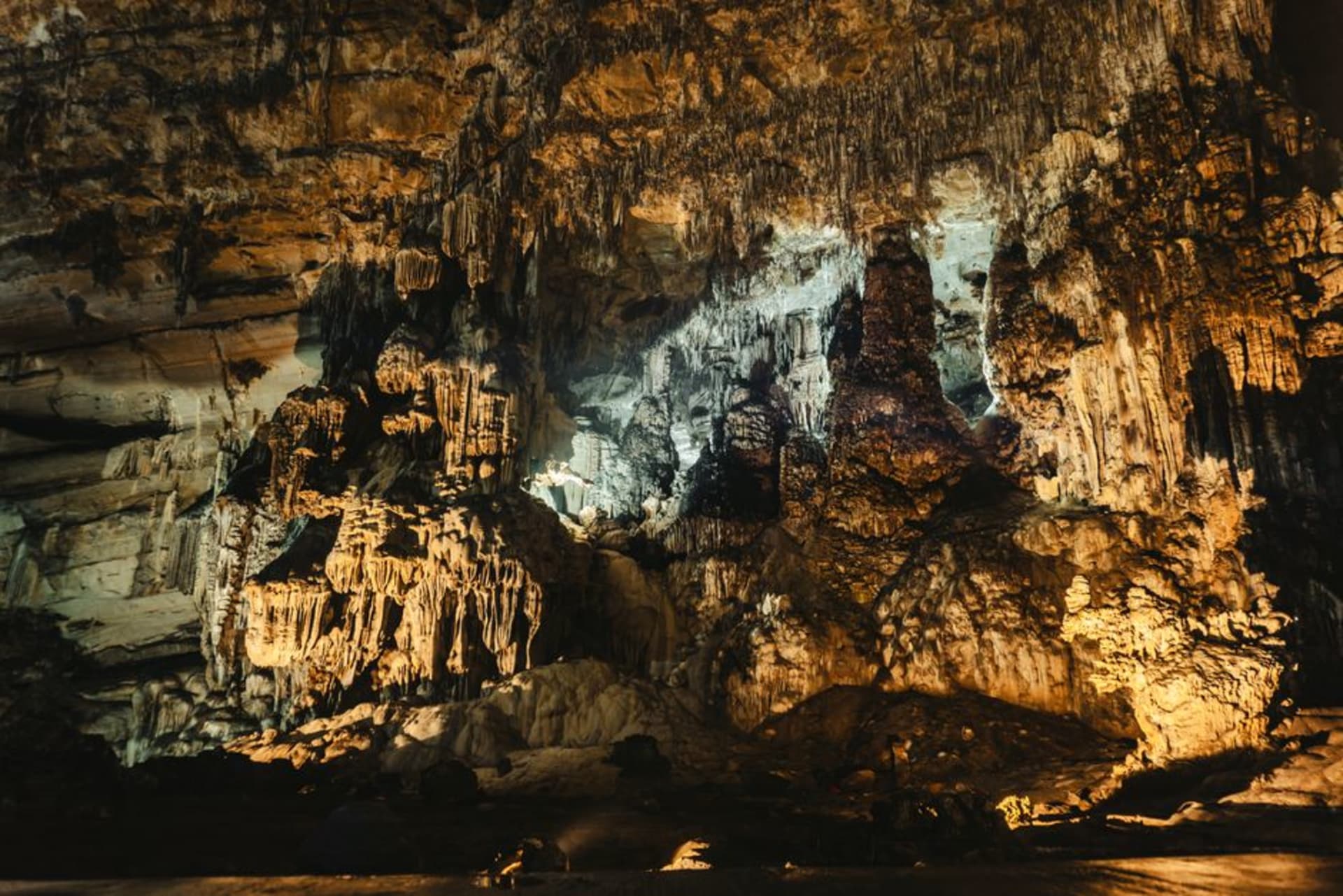
Loltún
"A guide struck the cave wall and it rang like a bell — some of these passages have been sung in for three thousand years, and you can feel it."
The Grutas de Loltún are an ancient cave system in the Puuc hills of Yucatán, occupied since the Pleistocene and used by the Maya for millennia — their walls hold mammoth bones, bas-relief carvings, and the kind of silence that feels actively inhabited.

I came to Loltún on a Tuesday in February, which turned out to be good timing. The first guided tour leaves at 9:30, and I arrived just in time to join a small group — seven of us plus a guide named Rodrigo, who spoke precise, unhurried Spanish and had clearly been inside these caves a thousand times without becoming bored by them. The air changed the moment we stepped off the surface. Not just cooler — different, older, with a weight that has nothing to do with humidity alone. Whatever you expect from the word “cave,” revise it upward.
What the Chambers Hold
Loltún is not a cave you walk beside. It is a cave you walk inside of, and then farther inside, until the idea of the surface world becomes slightly theoretical. The system stretches nearly two kilometers, and the guided route takes roughly ninety minutes through chambers named Ix Chel, Nahkab, Hunacab — names earned over millennia of use. The Maya quarried stone here, collected water, sheltered, and performed ceremonies in rooms so large that Rodrigo’s flashlight couldn’t reach the ceiling. On the walls, evidence layers: handprints stained in dark pigment, bas-relief carvings of a warrior figure that may date to 900 BCE, geological formations shaped over millions of years. Near the entrance, behind a protective rail, sits a femur that belonged to a Pleistocene mastodon. The paleontological and the sacred exist here without hierarchy — they simply share the same dark room, as they have for thousands of years.

The Stone That Sings
About midway through the route, Rodrigo paused at a particular column of stone and struck it once with his palm. The chamber rang — genuinely rang, a low resonant tone that held for several seconds. He explained, without particular drama, that these formations had been used as percussion instruments since at least the Preclassic period, that ceremonies involving sound were conducted in these exact passages. Standing in the half-dark, the information lands differently than it would on a page. Acoustic properties in caves are not accidental — the Maya understood the relationship between underground chambers and sound in ways that researchers are still mapping. I am not given to mysticism, but there was something in that moment I found genuinely difficult to articulate: three thousand years of intentional sound, absorbed into the same limestone I was standing next to. The cave keeps going.

Going In Right
The caves open only with a guide, which is the correct approach — not for ceremony but because Rodrigo’s narration genuinely altered what I was seeing. Tours run several times daily (9:30, 11:00, 12:30, 14:00, 15:00, 16:00), and the earlier ones tend to run smaller and cooler. Bring a light layer; the interior holds around 18°C regardless of what the Yucatán surface is doing. The path involves uneven ground and occasional low passages, so shoes with grip are worth thinking about in advance. Afterwards, the small restaurant at the entrance serves decent aguas frescas, and there are vendors selling honey from the surrounding orchards. I bought a small jar and ate half of it in the car on the way back to Oxkutzcab, which felt like the right thing to do.

Getting There
Loltún sits about 110 kilometers southeast of Mérida, near the town of Oxkutzcab. The most practical approach is a rental car along the Puuc route — Uxmal, Kabah, Sayil, and Loltún make a reasonable single long day. From Oxkutzcab, the entrance is roughly 7 kilometers west toward Labná. No direct public transit runs there; colectivos from Oxkutzcab get you close, but the final stretch requires a taxi or a driver willing to wait.
Keep exploring
More of Yucatán
Keep exploring
More from Yucatán
 mexico
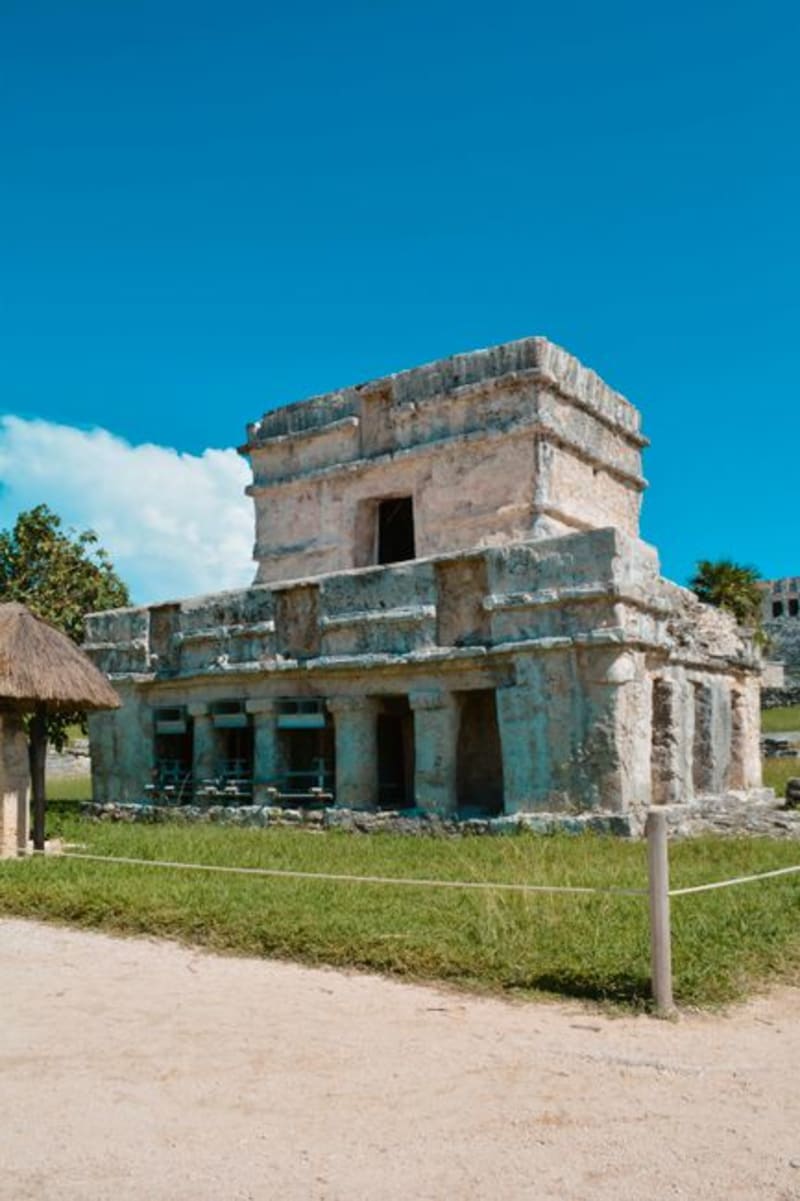
 Kabah
Twenty kilometres south of Uxmal on the Puuc Route, Kabah holds one of the most unsettling facades in Mesoamerica: the Codz Poop, a palace whose every surface is covered in carved Chaac rain god masks, each limestone face staring outward with a hooked, scrolling nose. The site sees a fraction of the traffic Uxmal does, which means that on most mornings you can stand in front of 250 stone faces with no one else in the frame.
Explore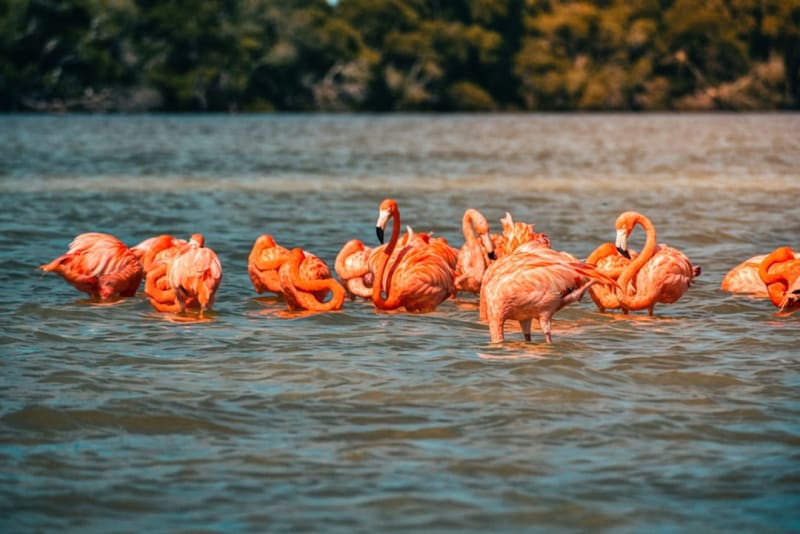 mexico
 Celestún
A remote Yucatán fishing village at the edge of a biosphere reserve where thousands of flamingos wade in a shallow estuary the color of old rose — the largest flamingo colony in North America.
Explore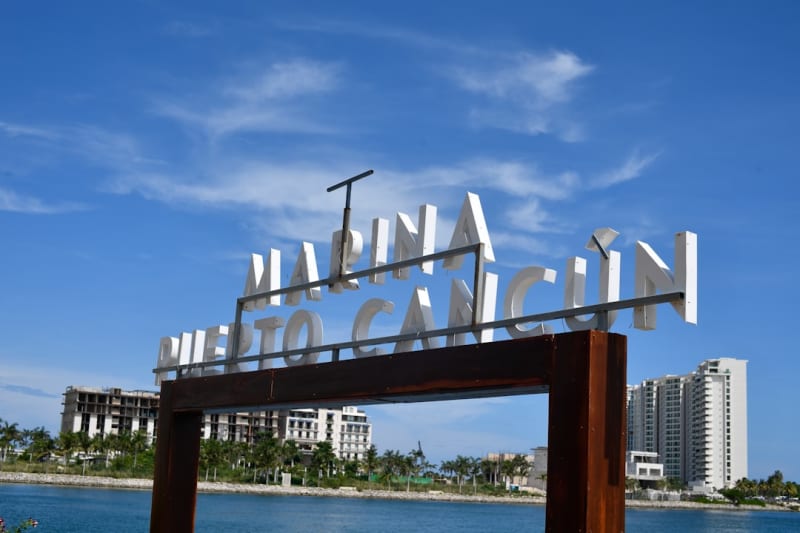 mexico
 Sisal
A forgotten Yucatán port where the henequen trade built a customs house and an 18th-century fort, the flamingos fly in from the Celestún lagoon at dusk, and the fishing boats unload octopus on a beach that hasn't changed since the henequen ships stopped coming.
Explore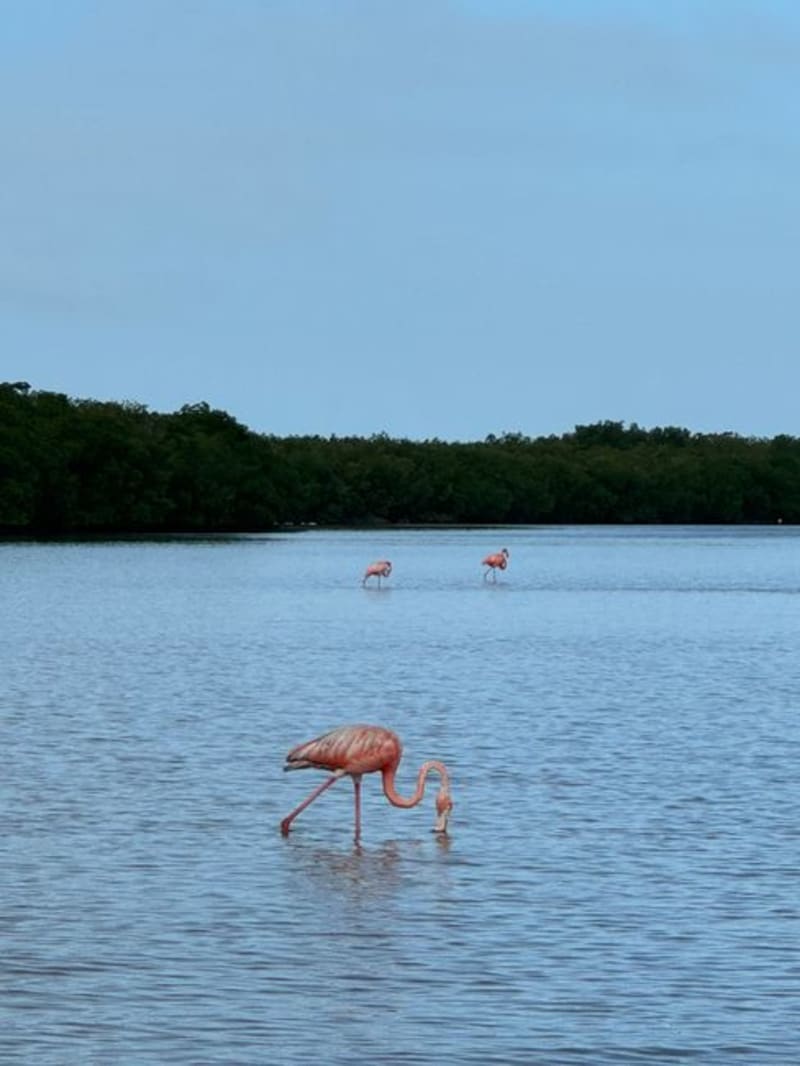 mexico
 Sisal
A forgotten colonial port on the Yucatán coast where henequen once shipped to the world and time has graciously stood still since. A crumbling 19th-century fort, flamingos wading in the estuary at dusk, and almost nobody else around to notice any of it.
Explore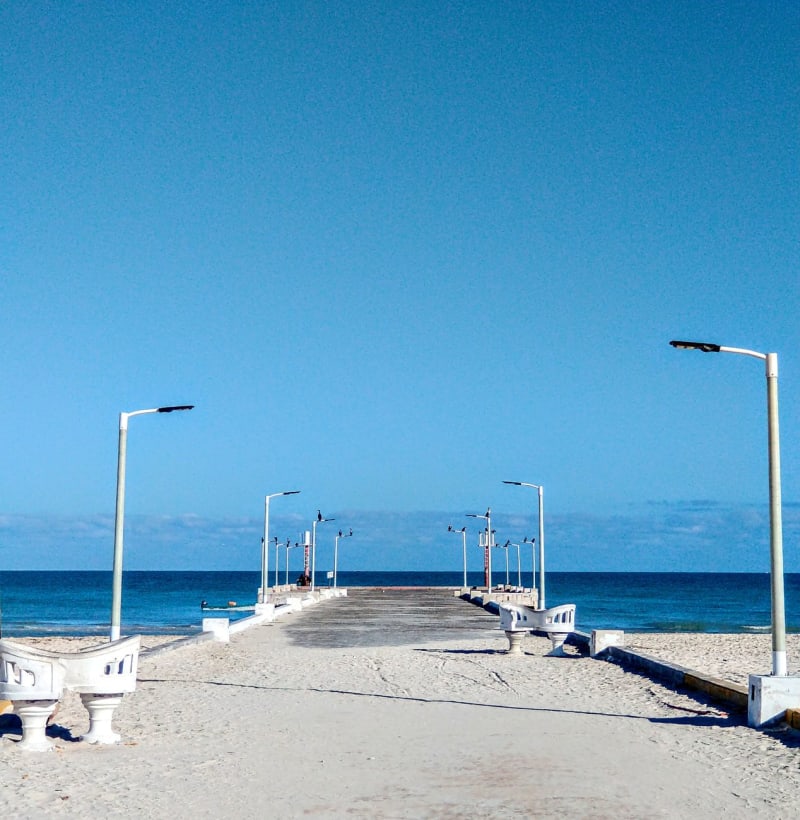 mexico
 Progreso
Mérida's seaside escape sits at the end of a long, flat causeway jutting into the Gulf of Mexico, where the water turns an improbable shade of jade-green and the pier stretches so far into the shallows it feels like a walking dare. The town runs on fish, salt air, and the seasonal rhythm of Meridanos fleeing the inland heat. I came for one afternoon and stayed two days.
Explore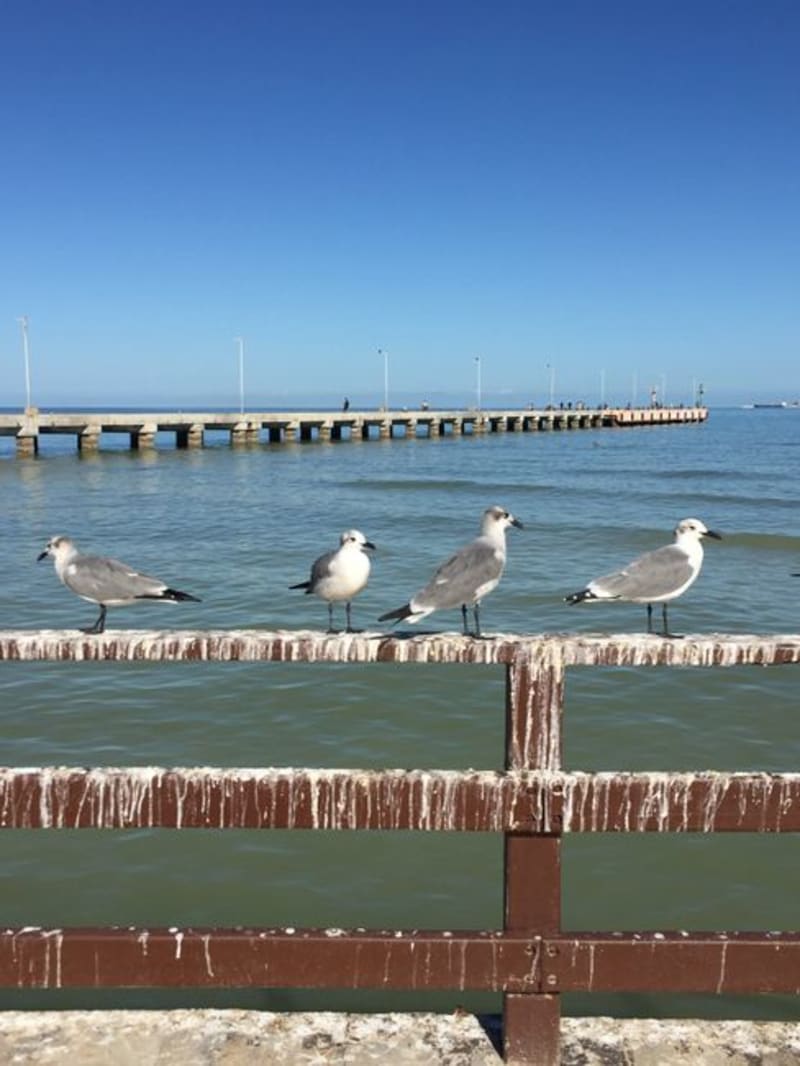 mexico
 Progreso
Mérida's beach escape sits on a flat, windswept stretch of Gulf coast where the water stays shallow and warm and the pier stretches six kilometers into the horizon. Meridanos have been coming here for generations to eat ceviche, wade in the sea, and do absolutely nothing at a pace the rest of the peninsula can't quite match.
Explore