Hierve el Agua
"Lia called it a frozen waterfall, then corrected herself — it was a waterfall that had decided, slowly, over centuries, to stop."
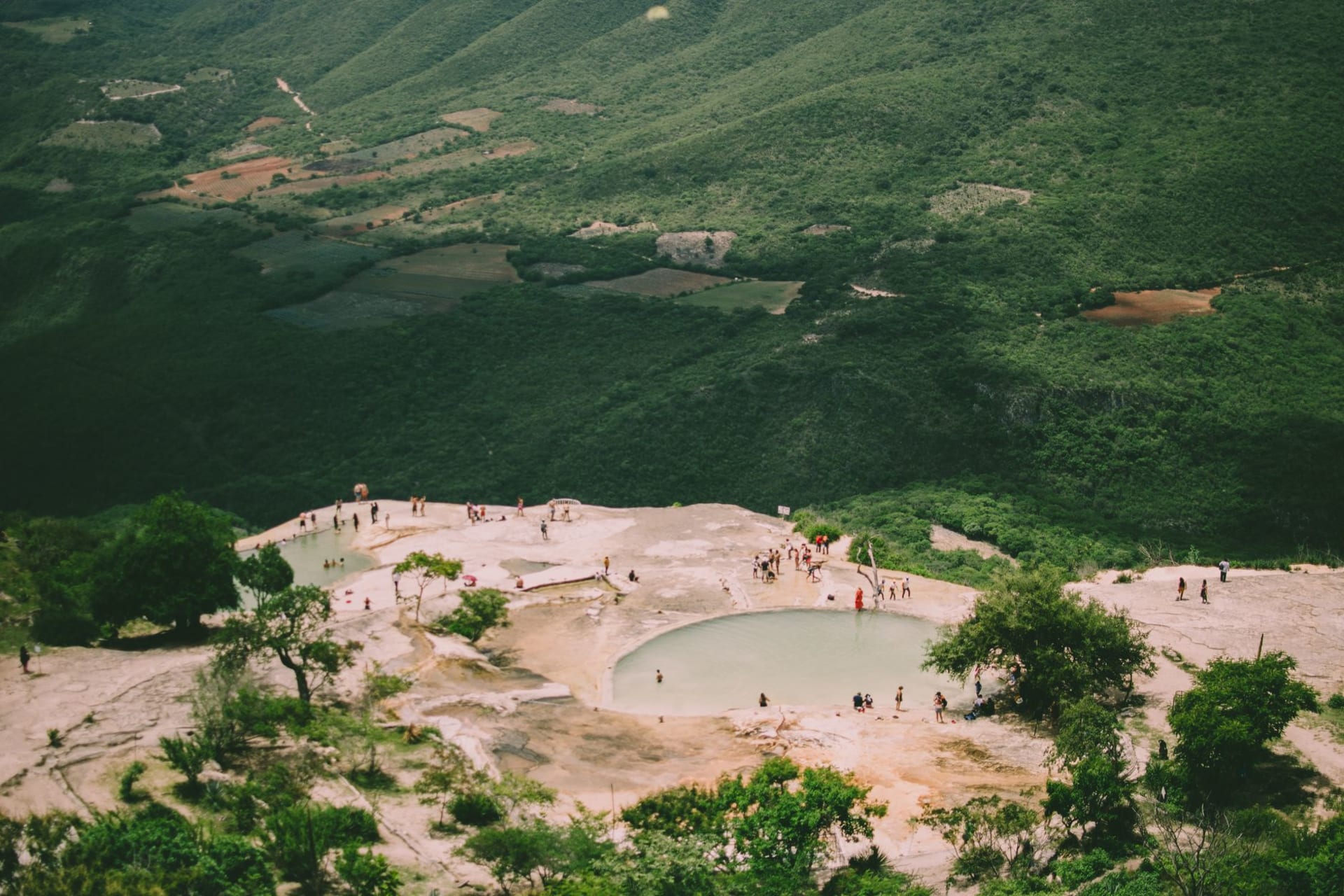
A pair of petrified waterfalls and mineral springs perched on a cliff edge in the Oaxacan mountains, where you swim in pools that hang over a valley two thousand years deep.

The road to Hierve el Agua is the kind that makes you question every life decision that led to renting a small car. From Mitla it climbs in switchbacks through agave fields, the asphalt giving way to gravel and then to something that is gravel only in the most generous interpretation. Lia gripped the door handle for the last twenty minutes and said nothing, which from her is a form of screaming. We arrived dusty and slightly rattled, and then we walked to the edge and forgot all of it.
The name means the water boils, which is a lie, or at least a poetic exaggeration. The water does not boil. It bubbles up cold and heavily mineralized from springs at the top of the cliff, and over thousands of years the calcium carbonate it carries has built two enormous formations that look exactly like waterfalls turned to stone mid-fall. The larger one drops some fifty meters down the mountainside in frozen white cascades. Standing below it later, I understood why people once thought the place was sacred. It does not look like geology. It looks like intention.
The pools at the edge
At the top, the springs feed a series of shallow pools that someone long ago shaped into something you can swim in. The Zapotec built irrigation channels here more than two thousand years ago, and you can still trace some of them in the white crust, but the swimming is the modern draw. The pools sit right at the lip of the cliff, so when you wade out and the water goes still, the surface seems to merge with the valley far below. It is not an infinity pool built by a hotel. It is an infinity pool built by a mountain, which is a different and better thing.

I floated on my back in the lower pool for a long time. The water was cool but not cold, faintly metallic on the lips, and so clear that I could see the mineral deposits fanning out beneath me like coral. A group of teenagers from Oaxaca City had claimed the upper pool and were doing what teenagers do everywhere, which is take photographs of themselves looking unbothered. Lia, who had recovered from the drive, declared the whole thing worth it. High praise from a woman who had recently been gripping a door handle for her life.
Down to the foot of the falls
The thing most day-trippers miss is the trail that drops below the rim. It is steep and loose and takes maybe forty minutes round trip, and almost nobody bothers, which is precisely why you should. From the bottom you look up at the underside of the petrified cascade, fifty meters of white stone hanging over your head, dripping and very slowly growing. There is a strange intimacy to it. Up top it is a swimming hole; down here it is a cathedral that built itself.
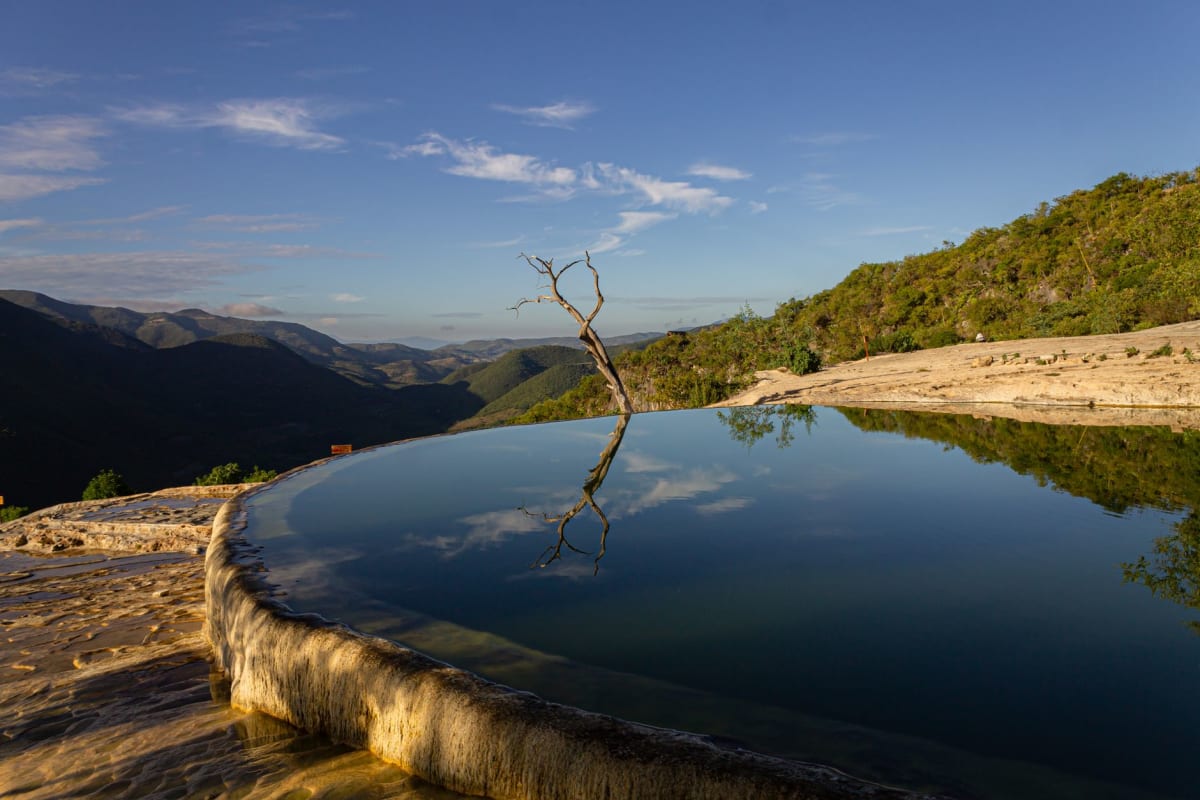
The site sits on communally owned land, and over the years there have been disputes between local communities over who controls access, which has occasionally closed it without warning. Check before you commit to the drive. We were lucky. We had it gentle and golden in the late afternoon, the tour buses gone, the light turning the white stone faintly pink.
When to go
Come early in the morning or stay until the late afternoon, after the organized tours from Oaxaca City have cleared out around midday. The dry season from November to April gives the most reliable road conditions, and the swimming is best when the sun is high enough to warm the pools. Bring water and cash for the entrance fee, and do not trust the parking lot food unless you enjoy surprises. The drive is genuinely rough, so go slow and forgive the car.
Keep exploring
More of Oaxaca
Keep exploring
More from Oaxaca
 mexico
 Mitla
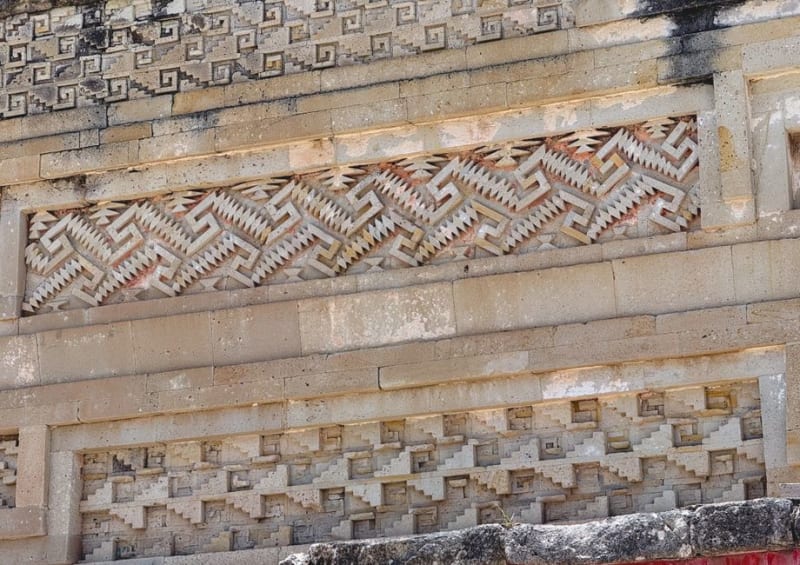
The Zapotec city of the dead — intricate geometric stone mosaics covering every interior wall, mezcal distilleries in the village, and a Sunday market that has been operating on the same site for a thousand years.
Explore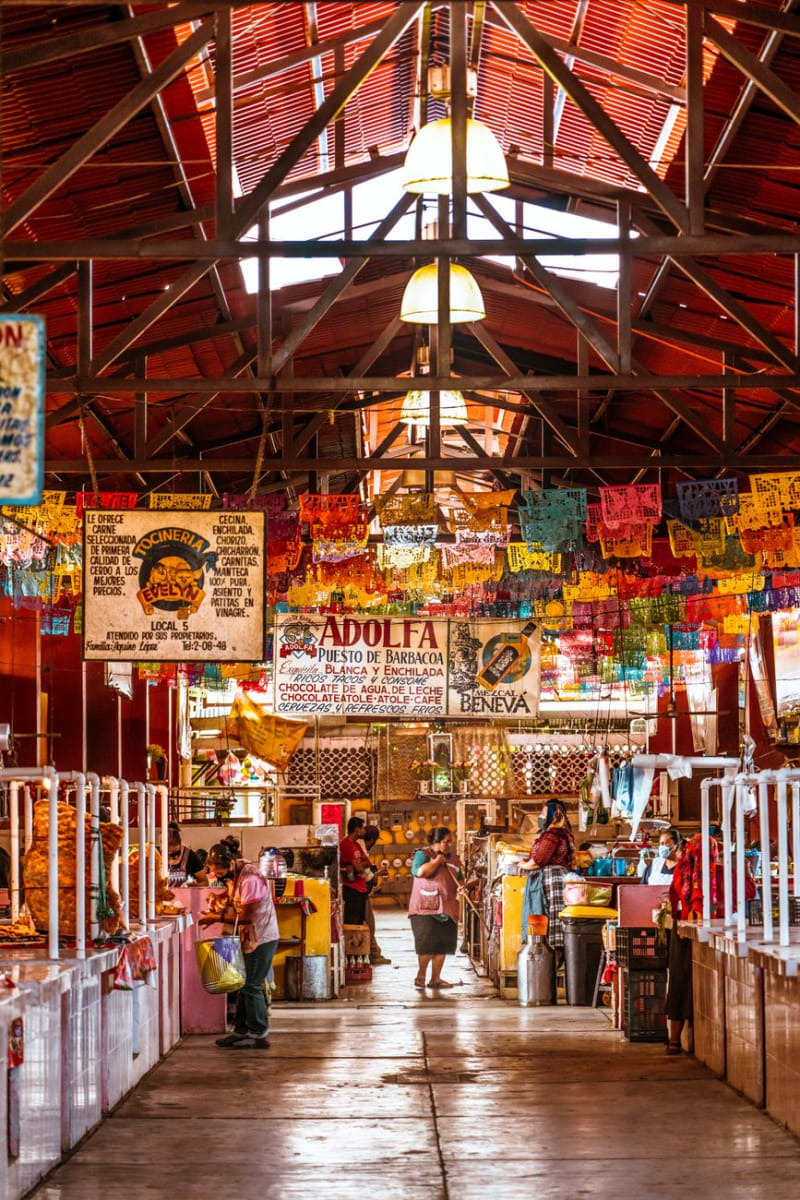 mexico
 Tlacolula de Matamoros
A Zapotec market town 30km east of Oaxaca city where the Sunday market — the largest in the Central Valleys — operates as the real commercial engine of the valley, with mezcal producers, chapulines by the kilo, and more people in a covered building than you thought was physically possible.
Explore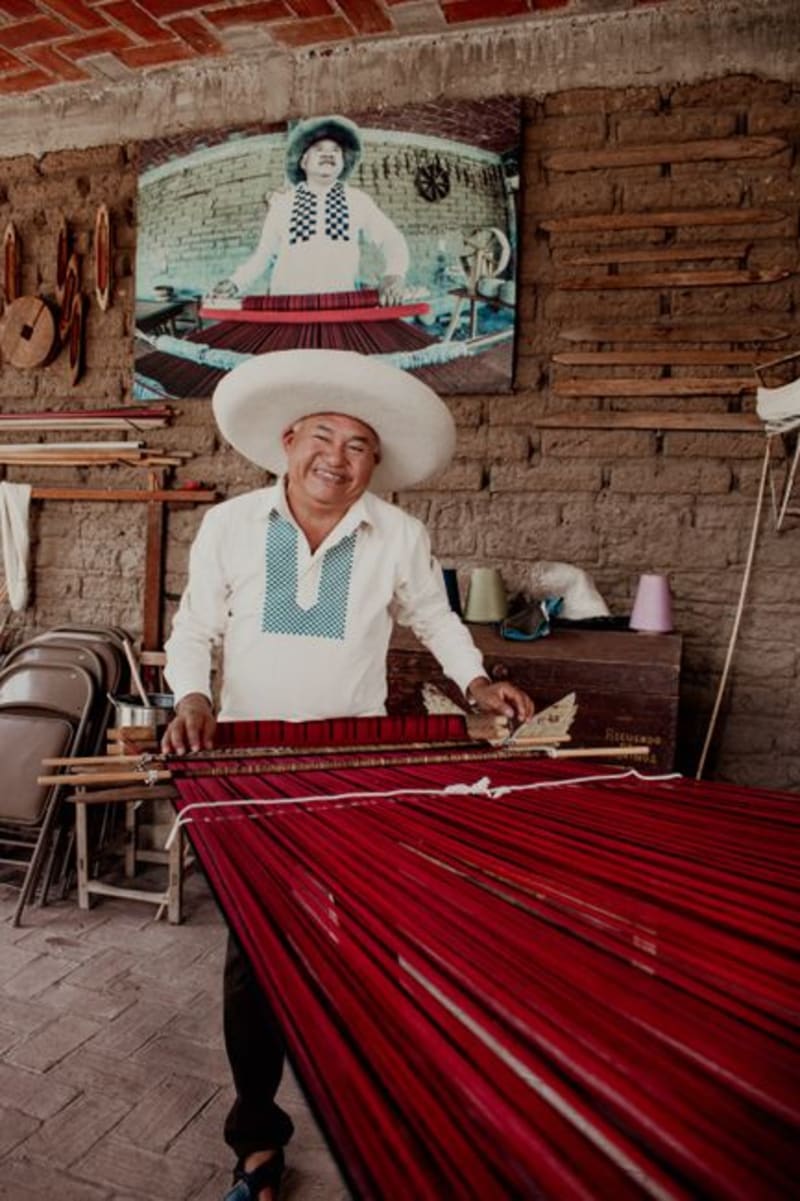 mexico
 Teotitlán del Valle
A Zapotec weaving village in the valley east of Oaxaca City where every household has a loom and the natural dyes — cochineal, indigo, marigold — produce colors I have not found replicated anywhere. The craft is not a performance for tourists; it is how this place earns its living and always has.
Explore mexico
 Villa Hidalgo Yalalag
A Zapotec village in the Sierra Juárez that has spent centuries developing its own customs, its own carnival, and its own particular relationship with the outside world. The road there is half the experience — two hours of cloud forest before a town that keeps its own counsel.
Explore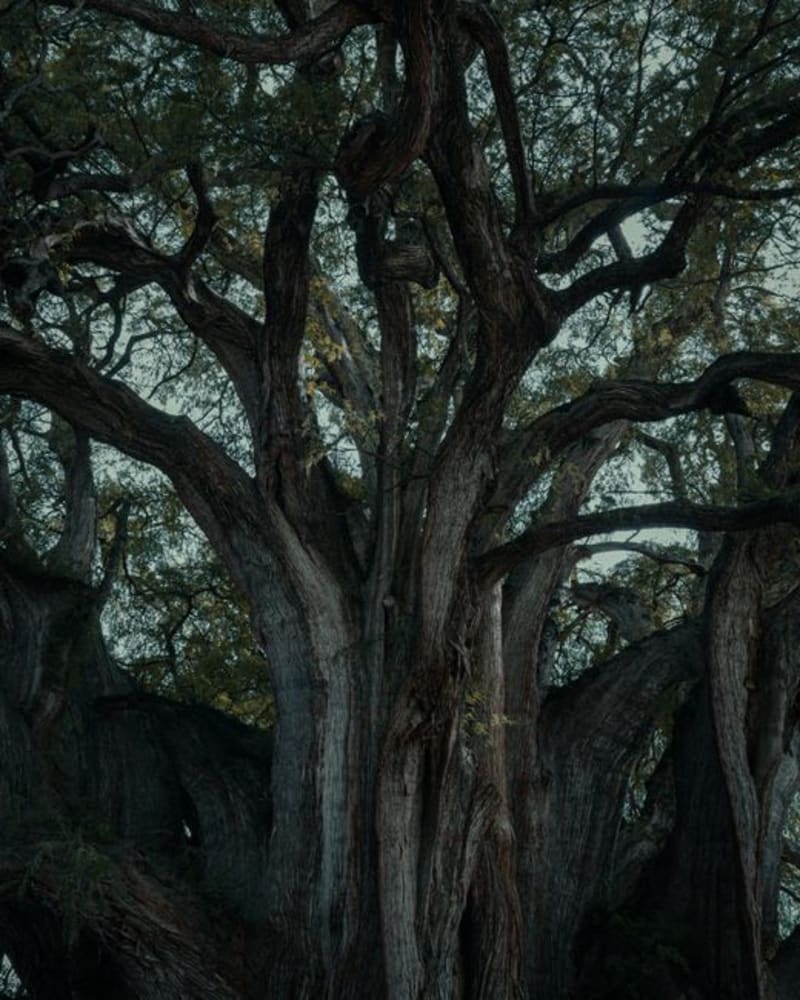 mexico
 Santa María del Tule
Nine kilometers from Oaxaca City on the road to Mitla, Santa María del Tule exists almost entirely around a single tree — a Montezuma cypress over 2,000 years old with the widest trunk on earth. The village has a church, vendors selling tejate and chapulines in the atrium, and a teenager who will walk you through the animal shapes in the bark for a few pesos. I went around the tree twice and still wasn't sure I'd processed it.
Explore mexico
 Ocotlán de Morelos
Ocotlán de Morelos comes alive on Fridays, when the valley market fills with tasajo, black clay pottery, and dried chiles stacked higher than your head. The town is also the home of the Aguilar family, whose ceramic figurines — skeletons in aprons, women mid-dance — have quietly landed in museum collections around the world.
Explore