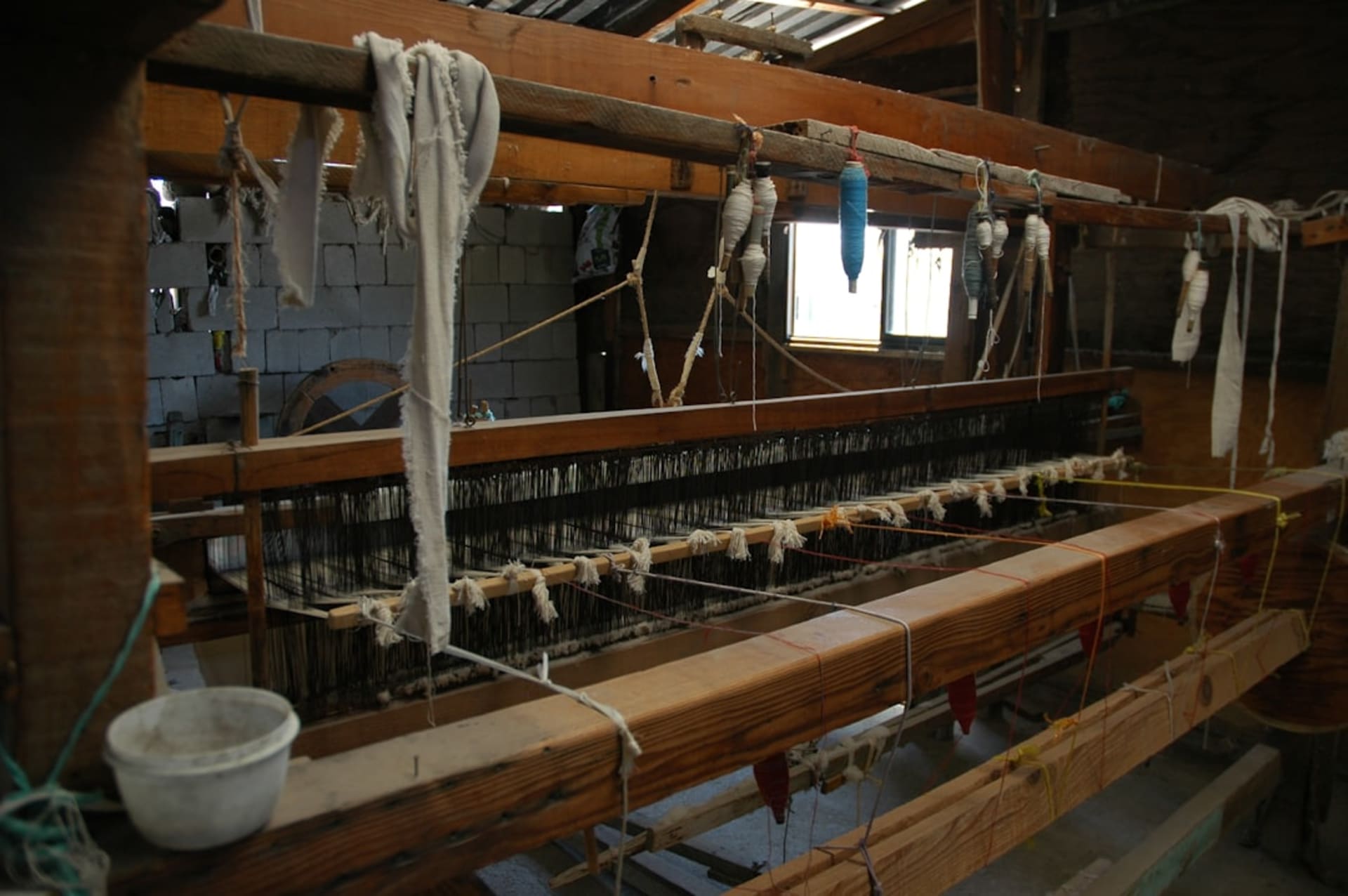
Teotitlán del Valle
"The red comes from dried bugs crushed on a cactus leaf — I watched it happen with my own eyes, and the color is still more vivid than anything synthetic."
A Zapotec weaving village in the valley east of Oaxaca City where every household has a loom and the natural dyes — cochineal, indigo, marigold — produce colors I have not found replicated anywhere. The craft is not a performance for tourists; it is how this place earns its living and always has.

I took a colectivo from Oaxaca’s second-class terminal on a Tuesday, which turned out to be the right day: market day in Teotitlán. The van dropped me on the highway and I walked the kilometer into the village along a road flanked by agave and dry hills. Before I reached the market I had already stopped twice — once to watch a woman beating wool against a stone, and once because a doorway was open and I could hear the rhythmic clack of a loom inside. Nobody invited me in. I went in anyway. Nobody seemed surprised.
The Dyes Are the Point
I had read that cochineal was a big deal here, but reading about it and watching doña Rosa scrape dried insects off a nopal pad with a knife are different experiences. She set a small cluster of them on her palm, crushed them between her fingers, and the smear was immediately, almost aggressively red — a red that looked slightly unreal, like someone had turned up the saturation on a photograph. Mixed with lime juice it shifts toward orange; with baking soda it goes purple. The indigo comes from a fermented paste, and the yellow from dried marigold flowers boiled down in clay pots. None of this is demonstration-for-tourists. This is Thursday. This is how it works. Her grandson Santiago, maybe twelve, was at the backstrap loom in the same room, pulling the weft through with a confidence that made clear he had been doing it since he was eight. I stayed longer than I planned. I always say that and I always mean it.

The Market and the Tlayudas
The Tuesday market near the church sells mostly produce and household goods — not a craft fair. A few weavers set up rugs on plastic tarps, but the real commercial life happens from the workshops themselves, many of which have a front room that doubles as a showroom. I ate lunch at one of the fondas near the Mercado de Artesanías: a tlayuda with tasajo and a soup of black beans and hierba santa that I did not want to finish because finishing meant it was over. The village also makes its own mezcal, sold unmarked from refilled bottles at some of the market stalls. I had a small glass with lunch. I did not need another, but I thought about it.

Buying a Rug
I spent more time in workshops than I had planned, which is easy to do here. The prices are not low if the piece is good, and the good pieces are immediately distinguishable from the ones made with synthetic dyes: the colors have a depth that is harder to describe than to see in person. I bought a medium-format rug, about sixty by ninety centimeters, in natural undyed wool with a cochineal border. It cost nine hundred pesos and I would pay three times that now without hesitation. The weaver rolled it tight and tied it with twine. It has been on the floor of my apartment in Puerto Escondido ever since.

Getting There
Colectivos to Teotitlán del Valle leave from Oaxaca City’s second-class bus terminal on Prolongación de Díaz Ordaz, near the Mercado de Abastos. They fill quickly and cost around fifteen pesos. The ride takes about forty-five minutes. A taxi runs roughly two hundred fifty pesos each way. Come on a Tuesday if you want the market, but the workshops are open every day.
Keep exploring
More of Oaxaca
Keep exploring
More from Oaxaca
 mexico
 Tlacolula de Matamoros
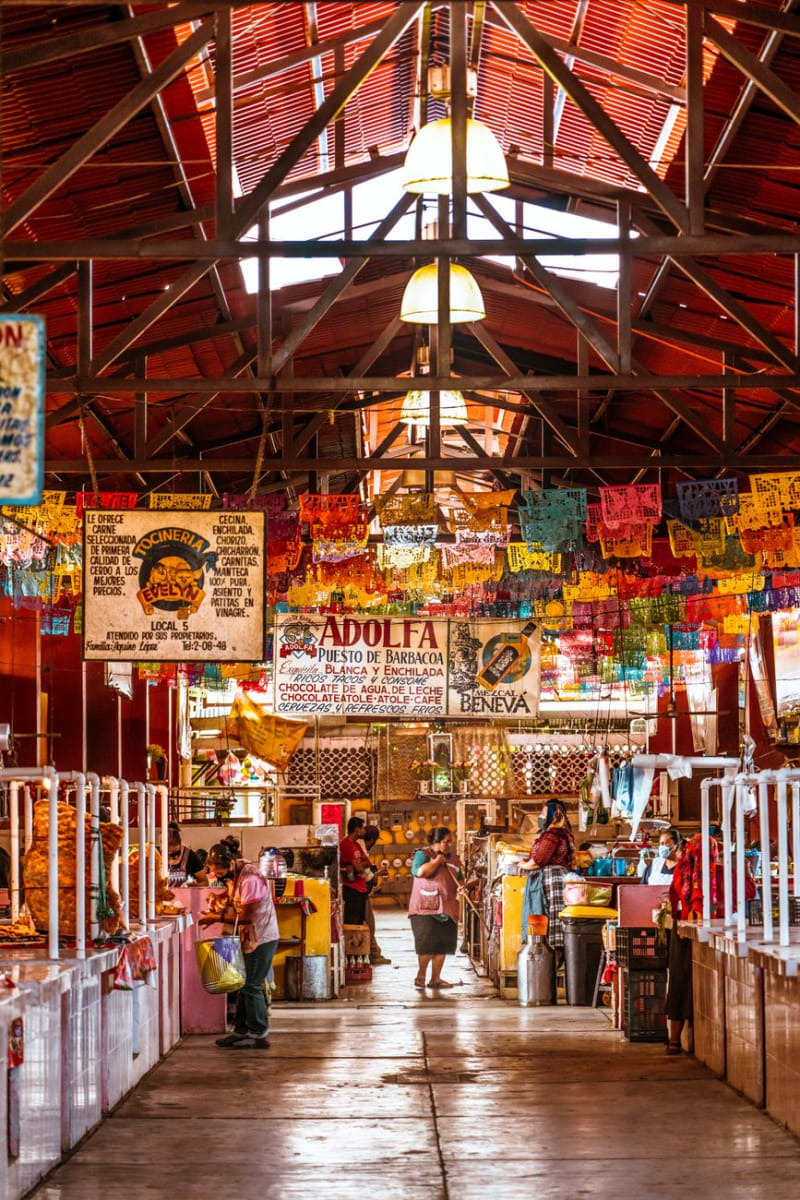
A Zapotec market town 30km east of Oaxaca city where the Sunday market — the largest in the Central Valleys — operates as the real commercial engine of the valley, with mezcal producers, chapulines by the kilo, and more people in a covered building than you thought was physically possible.
Explore mexico
 Santa María del Tule
Nine kilometers from Oaxaca City on the road to Mitla, Santa María del Tule exists almost entirely around a single tree — a Montezuma cypress over 2,000 years old with the widest trunk on earth. The village has a church, vendors selling tejate and chapulines in the atrium, and a teenager who will walk you through the animal shapes in the bark for a few pesos. I went around the tree twice and still wasn't sure I'd processed it.
Explore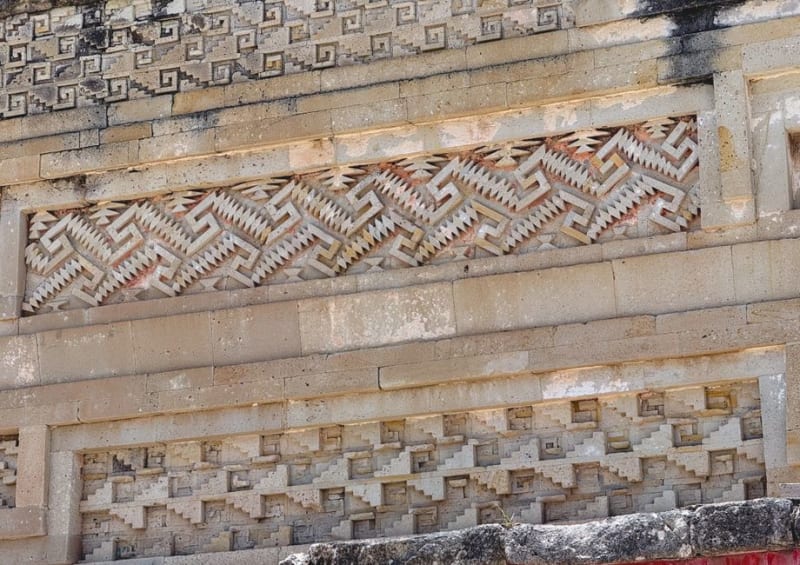 mexico
 Mitla
The Zapotec city of the dead — intricate geometric stone mosaics covering every interior wall, mezcal distilleries in the village, and a Sunday market that has been operating on the same site for a thousand years.
Explore mexico
 San Bartolo Coyotepec
San Bartolo Coyotepec is twelve kilometers south of Oaxaca City and is the home of barro negro — black clay pottery made from a clay specific to this valley, fired in a way that produces a metallic sheen, hand-built without a wheel and polished with a quartz stone. The technique was refined in the 20th century by Doña Rosa Real de Nieto, whose descendants continue in the family workshop. I bought a small vessel for too much money and consider it the most worthwhile thing I have bought in Mexico.
Explore mexico
 Oaxaca City
The colonial capital of Oaxaca state, where mole negro is a civic religion, mezcal is poured from unlabeled bottles at market stalls, and the Santo Domingo church glows gold at dusk in a way that still catches me off guard after a dozen visits. Seven hours from the coast — a commitment I keep making anyway.
Explore mexico
 Yagul
Yagul is a Zapotec and Mixtec archaeological site in the Tlacolula Valley 36 kilometers east of Oaxaca City, on a cactus-covered hillside with the largest known pre-Columbian ballcourt in Oaxaca and a hilltop fortress with views of the entire valley. It receives perhaps one-tenth the visitors of Monte Albán, and in the late afternoon, when the light goes horizontal and the valley floor turns gold, it is one of the places in Mexico where I have felt most clearly why a specific hill was chosen.
Explore