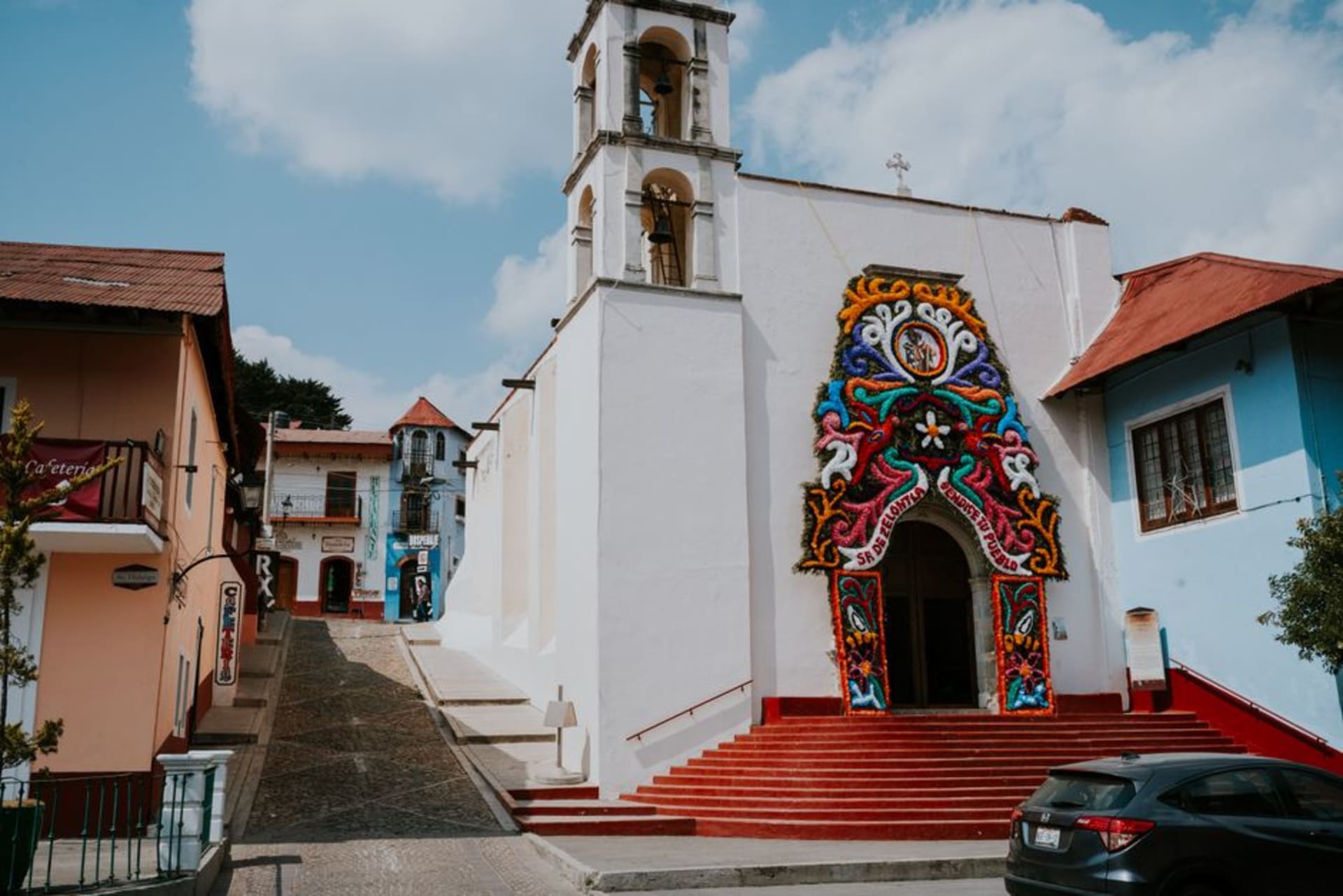
Real del Monte
"In 1827, Cornish miners introduced the pasty to the Mexican highlands. The local version is now called a paste and comes in mole negro. The English version of this story is incomplete."
A Hidalgo mining town where English Cornish miners brought pasties in the 1820s, taught the locals to play football, and left behind the most improbable food tradition in Mexico — every bakery sells pastes, the Mexican version of the Cornish pasty.

Real del Monte sits at 2,672 meters in the Hidalgo highlands, three hours north of Mexico City, in silver country that the Spanish worked from the 16th century and the English restructured in the 1820s. When the British company Real del Monte Mining Company arrived to modernize the mines after the disruptions of the independence war, they brought Cornish hard-rock miners with them — specialists in the tin and copper mines of Cornwall who brought their techniques, their language, and their lunch.
The lunch was the pasty: a semicircular pastry filled with meat and vegetables, portable and robust enough to survive a shift underground without a plate. The Cornish miners called theirs a “pasty” and the Mexican miners who ate alongside them called theirs a “paste.” One hundred and ninety-five years later, every bakery in Real del Monte — and throughout the surrounding Hidalgo region — sells pastes in a catalogue of fillings that has expanded to include mole negro, rajas with cream, tinga, and cheese with jalapeño. The original savory meat version is still available. It is very good.
The Pastes
The paste tradition is specific enough to the region that it has become the defining culinary identity of Real del Monte: walking the main commercial street, every third shop is a paste bakery, and the varieties on offer range from the traditional tinga de pollo to the innovative (guava with cream cheese, Nutella). The most interesting are the mole negro paste — a preparation that requires the mole to be reduced to a density that doesn’t soak through the pastry — and the frijoles charros paste, which is the most Mexican interpretation of the form.
La Especial de Real del Monte — the oldest paste bakery in the town, on Avenida Hidalgo — makes them to order throughout the day. The crust is slightly thicker than the Cornish original (an adaptation to the filling varieties that benefit from structural support) and the crimping on the edge is done in the Cornish method, which the current bakers learned from previous generations who learned from miners who learned from the Cornish.
The Feria Internacional del Paste — an annual festival in October celebrating the hybrid food tradition — brings paste makers from across Hidalgo and has begun attracting participants from Cornwall, completing a circle that started with the arrival of Cornish miners in 1824.

The Football
The English miners also introduced football to Mexico. The first recorded football match in Mexico was played in Real del Monte in 1900, between teams of British and Mexican miners. The plaque commemorating this event in the town center is the kind of historical detail that requires a moment to process: the sport that is Mexico’s passion arrived on a hillside in Hidalgo because Cornish miners brought a rubber ball.
The Panteón Inglés (English Cemetery) on the hillside above the town is the resting place of the Cornish miners who died in Real del Monte and whose families remained. The graves carry English names and inscriptions, some in Cornish English dialect, all in the Catholic tradition that the miners adopted. The cemetery is maintained and accessible; the graves date from the 1820s through the early 20th century.
The Town and the Mines
Real del Monte’s architecture reflects its mining wealth: the main street has 19th-century commercial buildings of a scale unusual for a town of this size, and the church — the Parroquia de San Pedro Apóstol — is disproportionately grand for the current population. The town’s position on a steep hillside (buildings on one side of the main street are two stories on the street level and four stories on the valley side) gives it a visual drama that the mist — which arrives most afternoons from the cloud forest above — amplifies.
The Minas de Real del Monte operated continuously from 1552 to 1979. The mine infrastructure — the Cornish beam engine house that the British company brought from Cornwall and installed on the hillside in the 1840s, still standing — is visible on the slopes above the town. Tours of the mine workings are available; the accessible section goes 300 meters into the hillside.

Getting there: Buses from Mexico City’s TAPO (3h) or from Pachuca (30 minutes — and Pachuca itself merits a stop for the excellent Museo de Minería and the Reloj Monumental, a clock tower built with metal from Las Vizcaínas mine). Real del Monte is an easy day trip from Pachuca or a standalone overnight destination.
When to go: Year-round. The town is cool and often misty (the altitude and the cloud forest proximity ensure this); bring a layer regardless of season. October for the paste festival. The weekend market has the best paste variety.
Keep exploring
More of Hidalgo
Keep exploring
More from Hidalgo
 mexico
 Omitlán de Juárez
A small reservoir town tucked into the pine forests of Hidalgo, just outside the Mineral del Chico national park. The lake changes color through the day in ways that feel deliberate, and the village operates on a rhythm that has nothing to do with the city two hours south.
Explore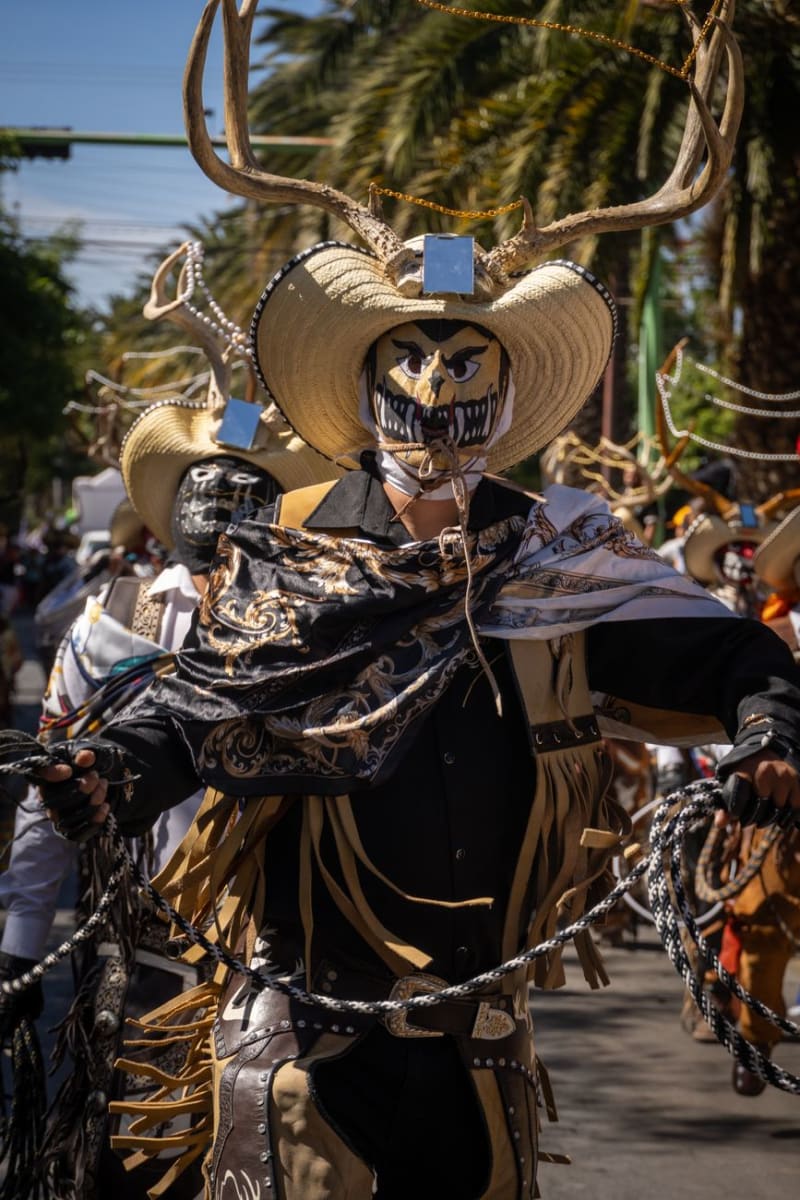 mexico
 Pachuca
The highest state capital in Mexico at 2,400 meters — a former silver city where Cornish miners brought pasty-making in the nineteenth century, and where the resulting paste (a minerally, savory stuffed pastry) became a regional food identity — with a monumental clock tower and Mexico's finest photography museum.
Explore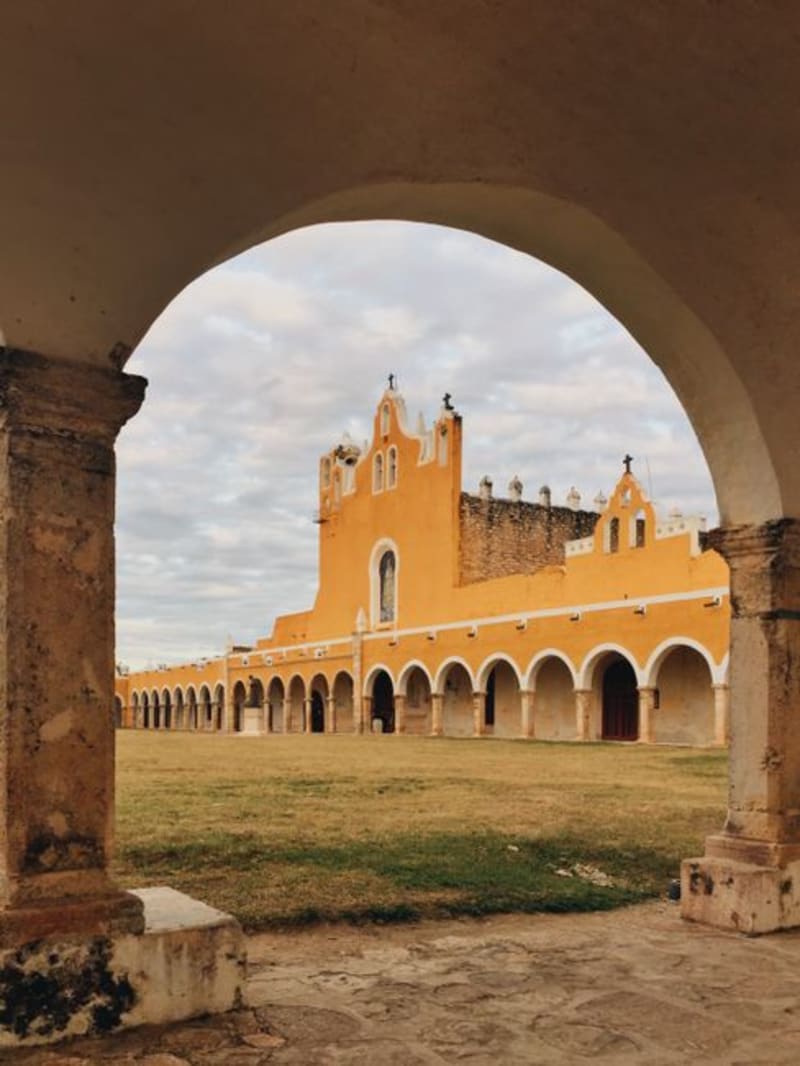 mexico
 Epazoyucan
A small colonial town sixteen kilometers from Pachuca, Epazoyucan holds one of the oldest Dominican monasteries in Mexico — built in the 1540s, frescoed, and still quietly going about its business. The kind of place you plan to see in an hour and leave two hours later.
Explore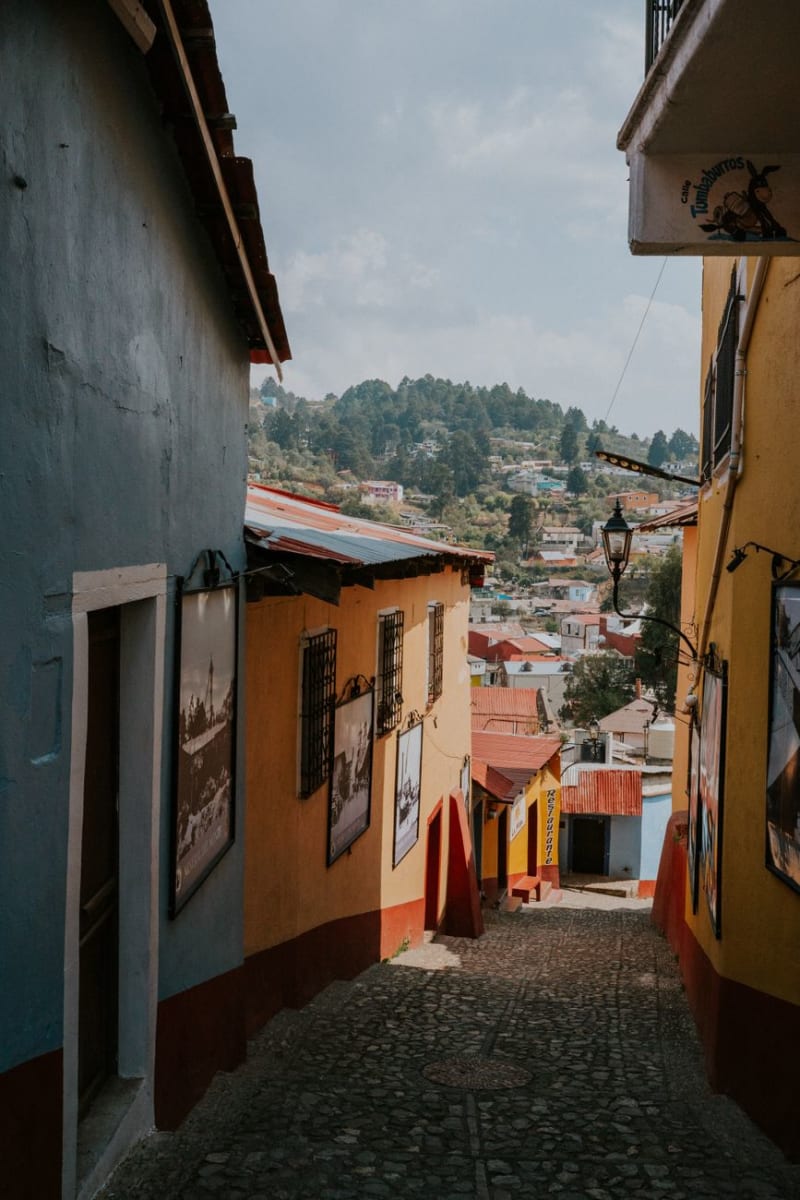 mexico
 Mineral del Chico
A former silver mining town folded into the pine and oyamel forests of El Chico National Park, where volcanic rock formations rise out of the trees like something geologic and deliberate. Quieter than Mineral del Monte, with its own colonial bones intact and trails that empty out by afternoon.
Explore mexico
 Huasca de Ocampo
Mexico's first Pueblo Mágico — a Hidalgo village of restored silver haciendas surrounded by dramatic basalt prism formations that look like the Giant's Causeway scaled up to thirty meters and painted in ochre and black.
Explore mexico
 Atotonilco el Grande
A sixteenth-century Augustinian fortress-convent anchors one of Hidalgo's most underappreciated colonial towns, perched at the edge of the Barranca de Metztitlán. It draws a fraction of the visitors that nearby Huasca de Ocampo receives, despite being architecturally more ambitious — the open chapel alone justifies the detour.
Explore