Omitlán de Juárez
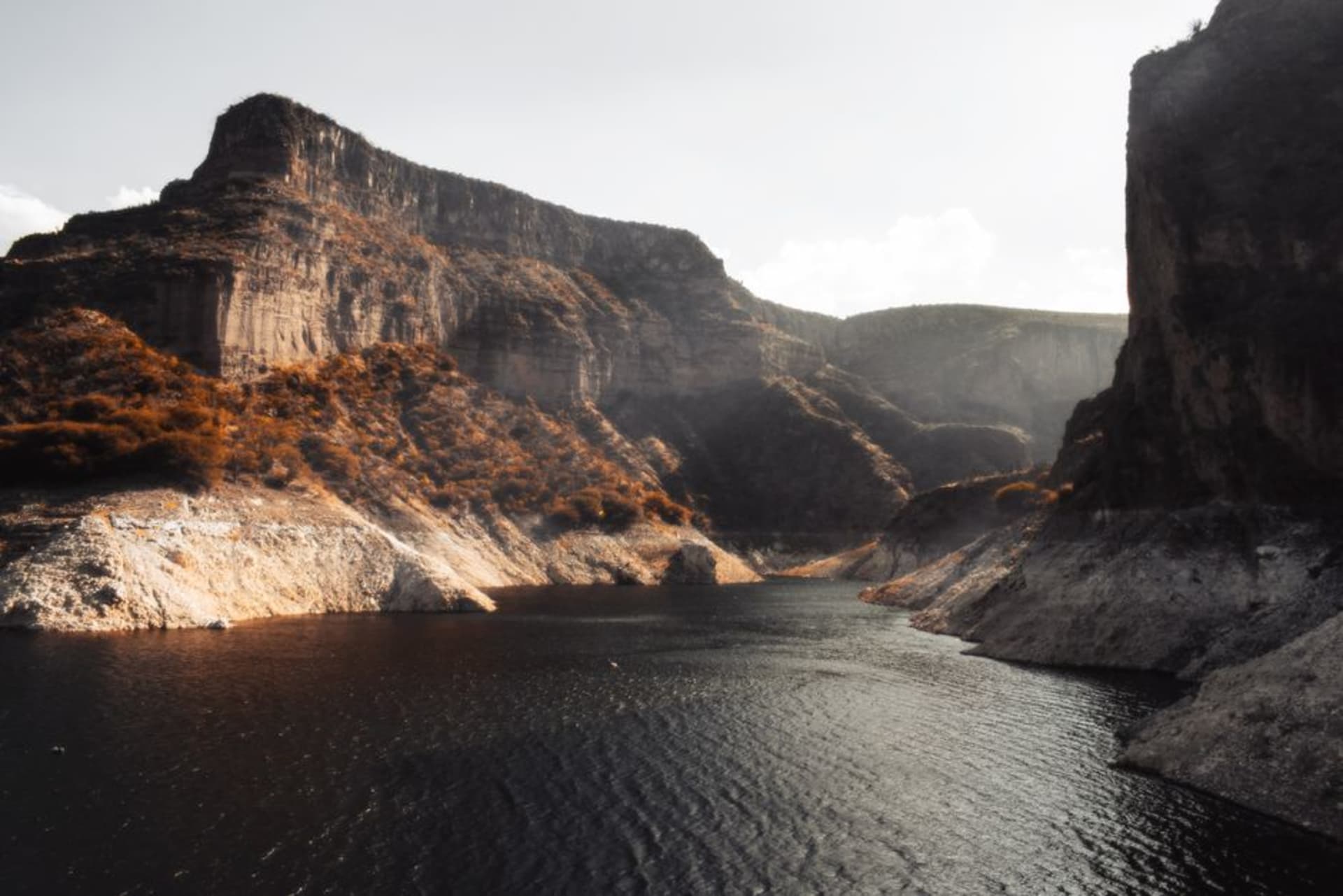
"The lake was the color of slate in the morning and the color of jade by noon. I didn't find a reasonable explanation for either."
A small reservoir town tucked into the pine forests of Hidalgo, just outside the Mineral del Chico national park. The lake changes color through the day in ways that feel deliberate, and the village operates on a rhythm that has nothing to do with the city two hours south.

I took the colectivo from Pachuca on a Saturday with no plan beyond arriving before the light went flat. The driver dropped me at the edge of the village and I walked the remaining ten minutes to the reservoir on a dirt path that smelled of pine resin and wet earth. It was early enough that the water was still dark and a dog was asleep on the dock. Nobody else was there. I stood for a while and felt the specific relief of a place that asks nothing of you.
The Reservoir and the Light
The Presa Omitlán is the reason people come, and it earns the attention. In the morning the water holds a grey-blue that looks almost cold enough to hurt, and by late morning it shifts — something to do with the angle of sun through the tree line — into a deep, watery green. I watched the change from a flat rock above the western bank and still couldn’t say exactly when it happened. The surrounding hills are dense with oyamel fir and pine, and on still days the reflection is clean enough to read upside-down. There are a handful of wooden lanchas for rent near the main access point, and an hour on the water costs almost nothing. The man who rented me one was listening to a radio novela and didn’t interrupt it to explain the controls. I appreciated that.

Sunday Market and the Village Pace
On Sundays the tianguis spreads along the main street beside the church, and it is, without exaggeration, the main event. Vendors set up before seven — chipilín tamales wrapped in corn husks, tlayudas de frijol negro for a few pesos, a woman selling gorditas de nata from a clay comal balanced on a gas burner. I ate two gorditas standing up and then ate a third sitting on a curb. The market is small enough to walk in ten minutes but I stayed two hours. At the far end someone was selling herb bundles, dried chiles from the Mezquital valley, and what appeared to be an entire cardboard box of chiles chipotles a granel. The pace of the place on a Sunday — unhurried, unhassled, oriented entirely toward the people who live there — is the kind of thing that’s hard to describe without it sounding like a complaint about every other place.

Into the Forest Edge
The road north from the village climbs quickly into the Parque Nacional El Chico buffer zone, and within twenty minutes on foot the tree cover closes overhead. The trails aren’t marked in any systematic way, but the main path along the ridge above the reservoir is obvious enough. I walked for about an hour before the clouds came down and the temperature dropped five degrees in the span of a kilometer. By the time I turned back, the lake below had gone silver again, matching the sky exactly. I had soup at a comedor on the main square afterward — caldo de res, very good, served with a stack of tortillas and a look from the owner that said she had not been expecting anyone.

Getting There
Colectivos to Omitlán de Juárez leave from the Mercado Nicolás Flores in Pachuca, roughly every thirty to forty minutes during the day. The ride takes about forty-five minutes and costs almost nothing. Pachuca itself is two hours from Mexico City by bus from TAPO or the Norte terminal. There is no direct service from the capital. Come with cash.
Keep exploring
More of Hidalgo
Keep exploring
More from Hidalgo
 mexico
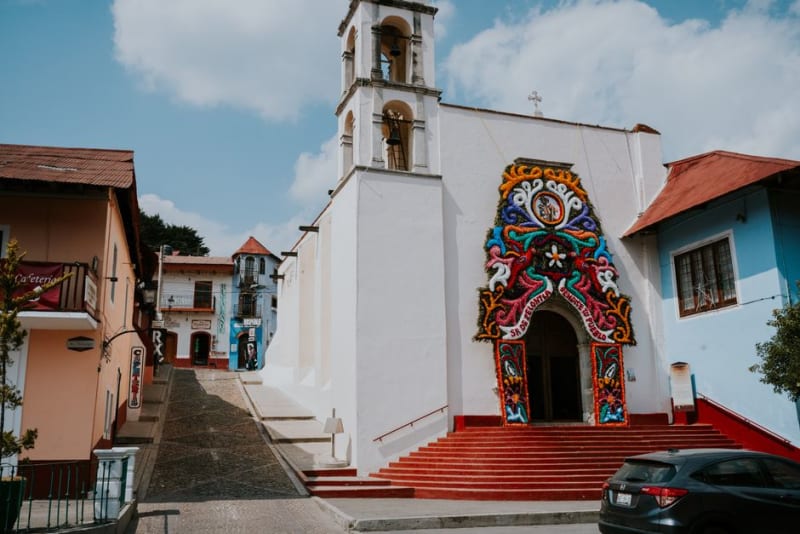
 Real del Monte
A Hidalgo mining town where English Cornish miners brought pasties in the 1820s, taught the locals to play football, and left behind the most improbable food tradition in Mexico — every bakery sells pastes, the Mexican version of the Cornish pasty.
Explore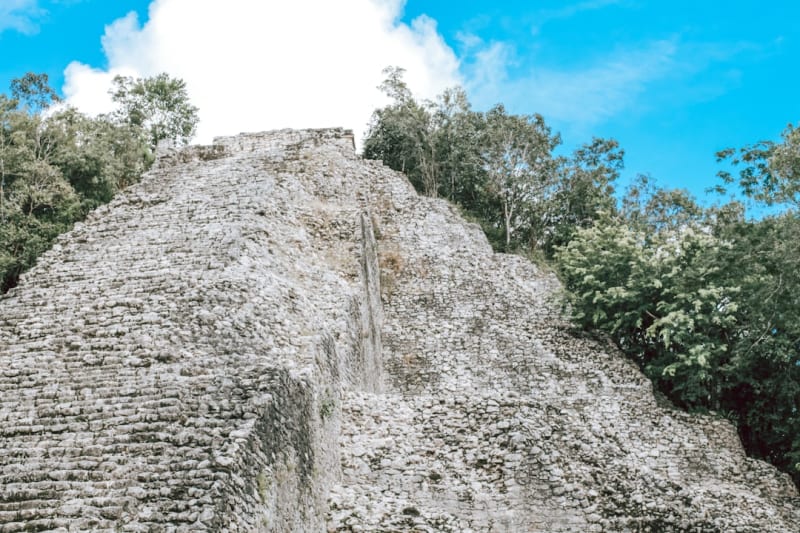 mexico
 Huasca de Ocampo
Mexico's first Pueblo Mágico — a Hidalgo village of restored silver haciendas surrounded by dramatic basalt prism formations that look like the Giant's Causeway scaled up to thirty meters and painted in ochre and black.
Explore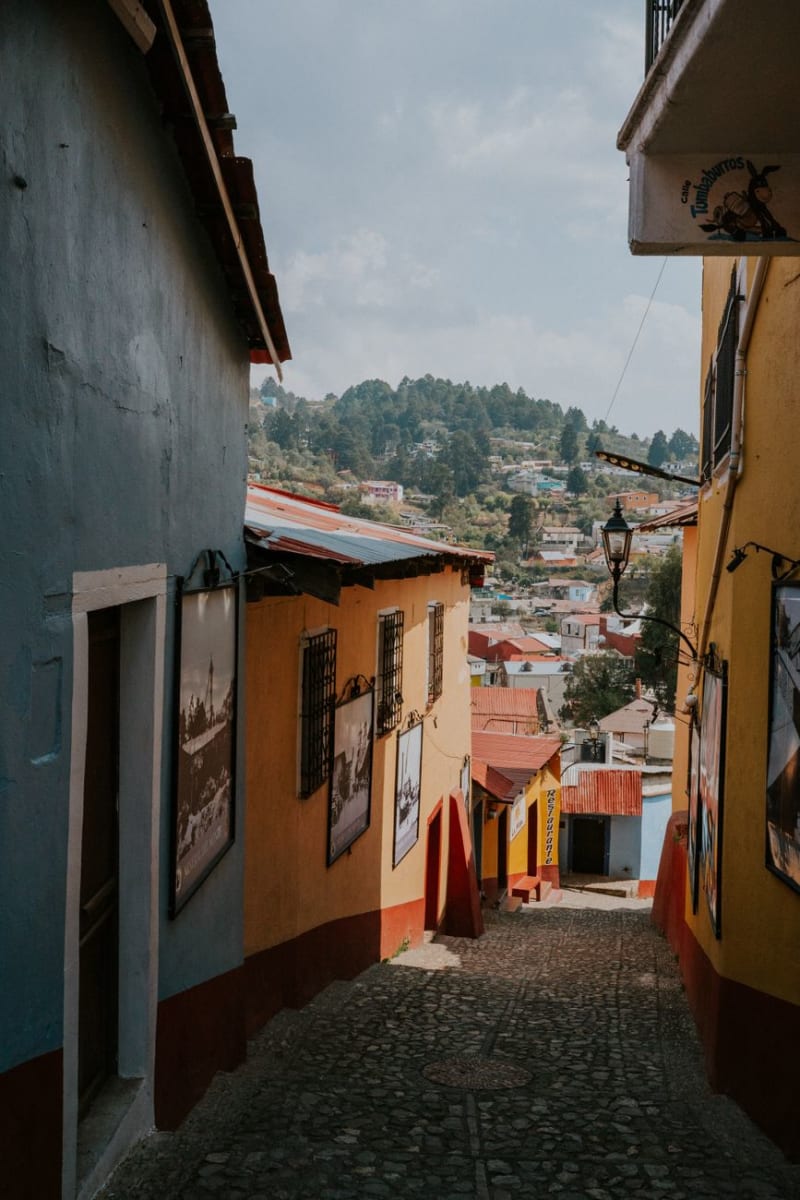 mexico
 Mineral del Chico
A former silver mining town folded into the pine and oyamel forests of El Chico National Park, where volcanic rock formations rise out of the trees like something geologic and deliberate. Quieter than Mineral del Monte, with its own colonial bones intact and trails that empty out by afternoon.
Explore mexico
 Pachuca
The highest state capital in Mexico at 2,400 meters — a former silver city where Cornish miners brought pasty-making in the nineteenth century, and where the resulting paste (a minerally, savory stuffed pastry) became a regional food identity — with a monumental clock tower and Mexico's finest photography museum.
Explore mexico
 Epazoyucan
A small colonial town sixteen kilometers from Pachuca, Epazoyucan holds one of the oldest Dominican monasteries in Mexico — built in the 1540s, frescoed, and still quietly going about its business. The kind of place you plan to see in an hour and leave two hours later.
Explore mexico
 Atotonilco el Grande
A sixteenth-century Augustinian fortress-convent anchors one of Hidalgo's most underappreciated colonial towns, perched at the edge of the Barranca de Metztitlán. It draws a fraction of the visitors that nearby Huasca de Ocampo receives, despite being architecturally more ambitious — the open chapel alone justifies the detour.
Explore