
Huichapan
"Standing in the plaza at dusk, watching an abuela haggle over embroidered cloth while the convent bell rang overhead, I thought: this is what Querétaro probably felt like fifty years ago."
A compact Pueblo Mágico in Hidalgo's highlands where a 16th-century Augustinian convent, hand-painted Talavera ceramics, and a Thursday market unchanged in decades coexist with an unhurried ease that larger colonial towns lost long ago.

I drove into Huichapan on a Thursday morning, more or less by accident. The plan had been a pass-through on the way from Tula toward the Sierra Hidalguense — pull over, photograph the convent facade, continue north. Instead, I parked on the Calle Hidalgo side of the plaza, heard the particular din of a weekly market in full swing, and went to investigate. Two hours later I was eating a bowl of caldo de pollo from a stall near the church steps, my jacket still on in the highland chill, making a phone call to push my evening plans by a day.
What the Augustinians Left Behind
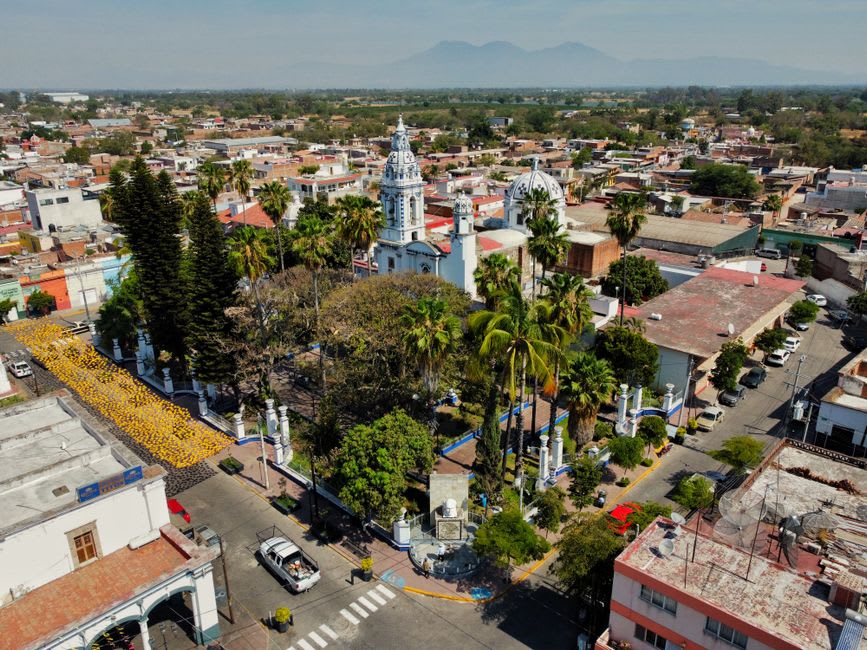
The Convento de San Mateo Apóstol has been dominating Huichapan’s skyline since the mid-sixteenth century, and it wears its age with more confidence than most. Construction began around 1548, placing it squarely in that first wave of Augustinian building projects that remade the Hidalgo highlands after the Conquest — massive stone complexes designed as much to impress as to convert. The open chapel on the north side is the part that catches you off guard: a vaulted arch facing the atrium where outdoor masses could be held for thousands, a reminder that this was once a frontier town administering a newly-converted population counted in the tens of thousands. Inside the cloister, the corridors are cool even at midday and the stonework worn smooth where centuries of hands have touched it. The adjoining church is active and lived-in — candles burning, fresh flowers before the altar, an old man in the front pew with his hat in his lap. It does not feel like a museum.
Thursday at the Tianguis
The weekly market fills the streets around the plaza every Thursday and, to a lesser extent, Sunday. What distinguishes Huichapan’s tianguis from the generic handicrafts markets in higher-traffic Pueblos Mágicos is its workaday character: vendors selling mostly to each other and to townspeople. Dried chiles by the kilo, fresh nopales stacked in green fans, hand-stitched otomí blouses that nobody has inflated for tourist consumption. Talavera ceramics — Huichapan produces its own regional variation, painted in characteristic cobalt and terracotta — appear on folding tables alongside plastic buckets and packaged cookies. The price differential between a ceramic plate here and the same piece in a Querétaro gift shop is roughly four to one. I ate at a comedor near the corner of Juárez and Morelos: tasajo con enchiladas and an agua de tuna that was absurdly good for the altitude. Nobody was in a hurry.
The Extra Night You Did Not Plan For
The plaza mayor changes character depending on the hour. At midday it belongs to schoolchildren and vendors. By five in the afternoon, when the market has packed up and the highland light turns gold, it belongs to everyone else — couples on benches, old men walking slow circuits, the odd dog stretched across the cobblestones. There are a couple of small hotels within walking distance of the zócalo; I stayed at a posada on Calle Morelos whose breakfast included fresh tlayudas and decent café de olla served in clay cups. For dinner, look for the fondas that stay open after dark on the Calle Hidalgo side — the one with the hand-lettered sign does a consomé de carnero that I still think about.
Getting There
The nearest major hub is Querétaro, roughly 80 kilometers south via the cuota highway — about an hour’s drive. From Mexico City, figure two and a half hours on the MEX-45D. Local buses run from Querétaro’s Central de Autobuses with reasonable frequency. Huichapan sits above 2,000 meters, so bring a layer even in summer; mornings here are cold year-round. Time your visit for a Thursday if you can.
Keep exploring
More of Hidalgo
Keep exploring
More from Hidalgo
 mexico
 Tecozautla
A Pueblo Mágico in the dry northwest corner of Hidalgo, where a geyser vents steam into a semi-arid valley and hot springs feed a string of balnearios. Agave and pulque country edging into young vineyards, warm dry days, and a plaza built for doing very little at a very pleasant pace.
Explore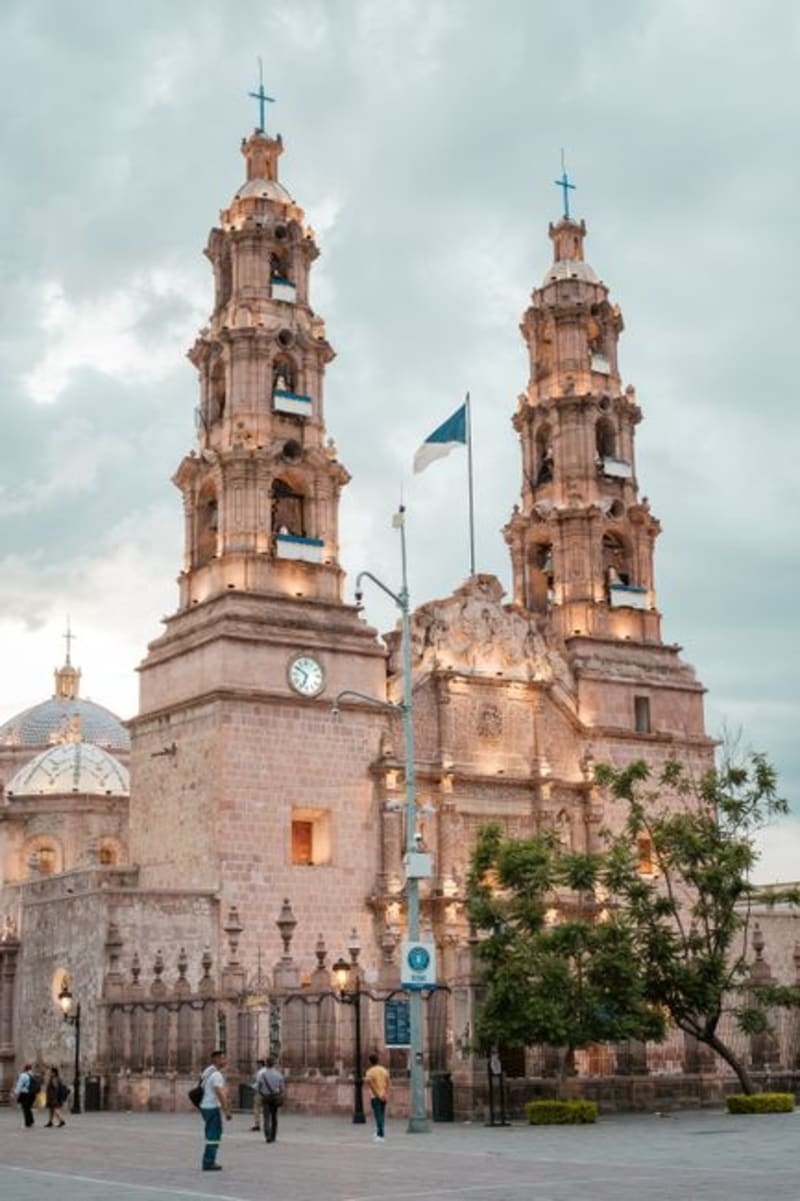 mexico
 Nopala de Villagrán
A town on the wide flat plains of southwestern Hidalgo, deep in agave and pulque country. Maguey rows to the horizon, farm fields, an old parish church, and a sky so big it flattens everything under it. Nothing to rush for, which is the whole appeal.
Explore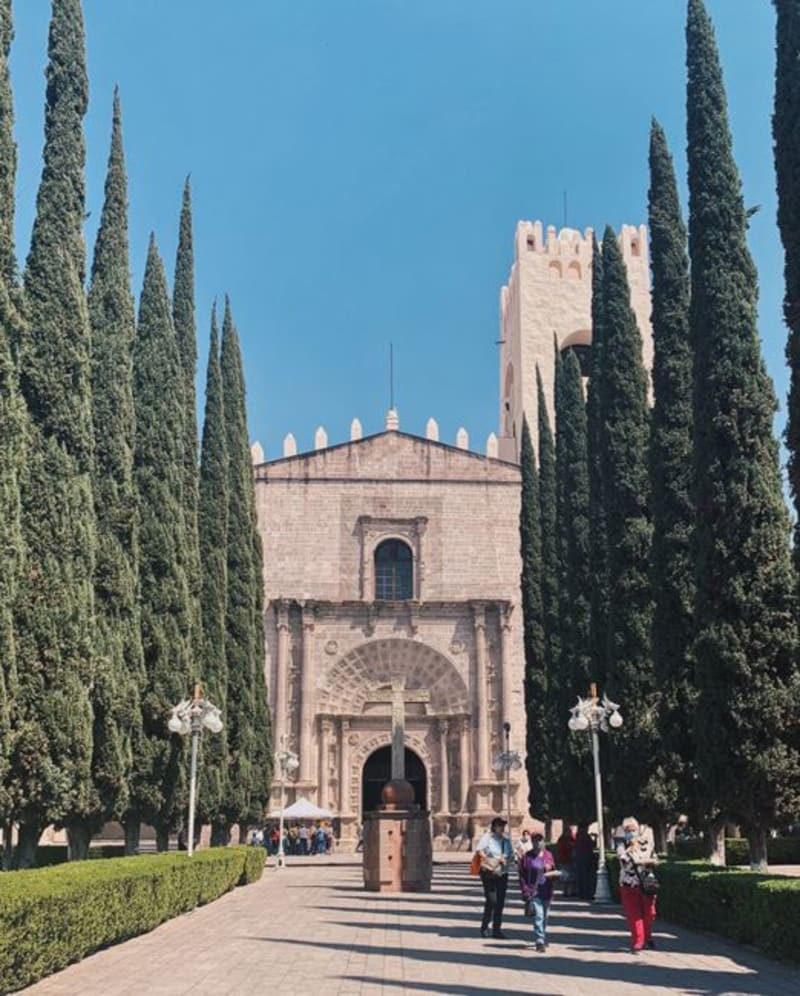 mexico
 Alfajayucan
Alfajayucan sits in the Mezquital valley where Otomi communities have tended agave, prickly pear, and stone-walled milpas for centuries. A 16th-century Augustinian monastery presides over the plaza in handsome disrepair, and the semi-arid landscape holds an austere, unhurried beauty that photographs never quite capture.
Explore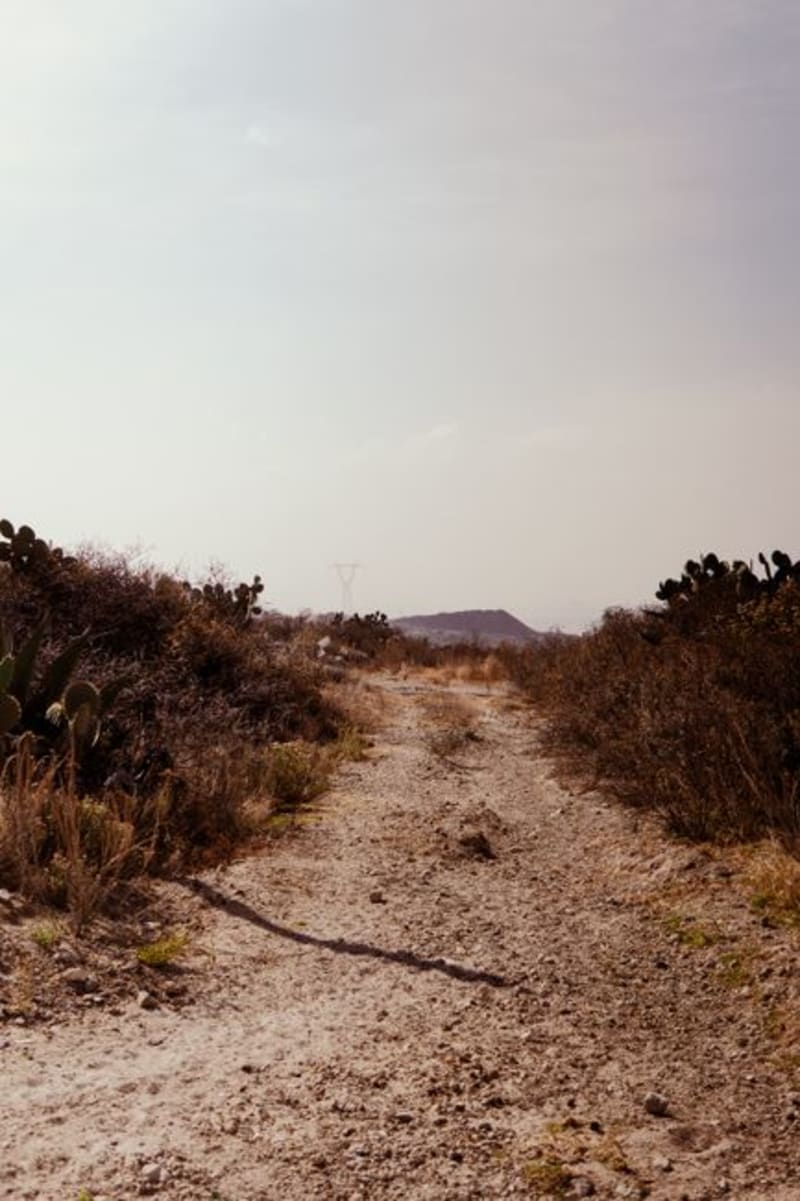 mexico
 Tasquillo
Tasquillo sits at the edge of the Presa Zimapán in the Mezquital Valley, where limestone ridges thick with organ pipe cactus drop into water that reads, implausibly, as turquoise. The Otomí communities of this valley maintain traditions older than the colonial record, and the road through here is among the most quietly dramatic in Hidalgo.
Explore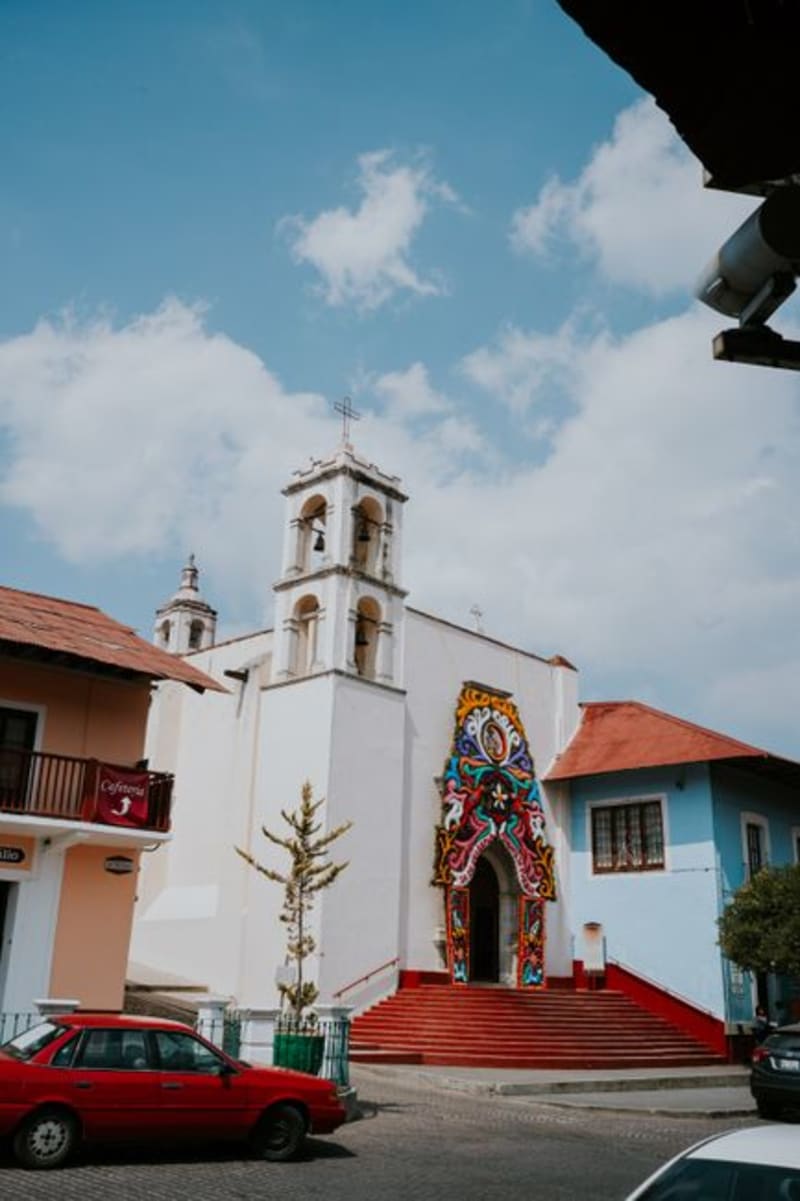 mexico
 Chilcuautla
A dusty Otomí town in the Valle del Mezquital of Hidalgo, where mezquite scrub meets irrigation canals and thermal water rises warm from an arid ground. This is resilience made landscape — a place that has learned to make a hard valley yield.
Explore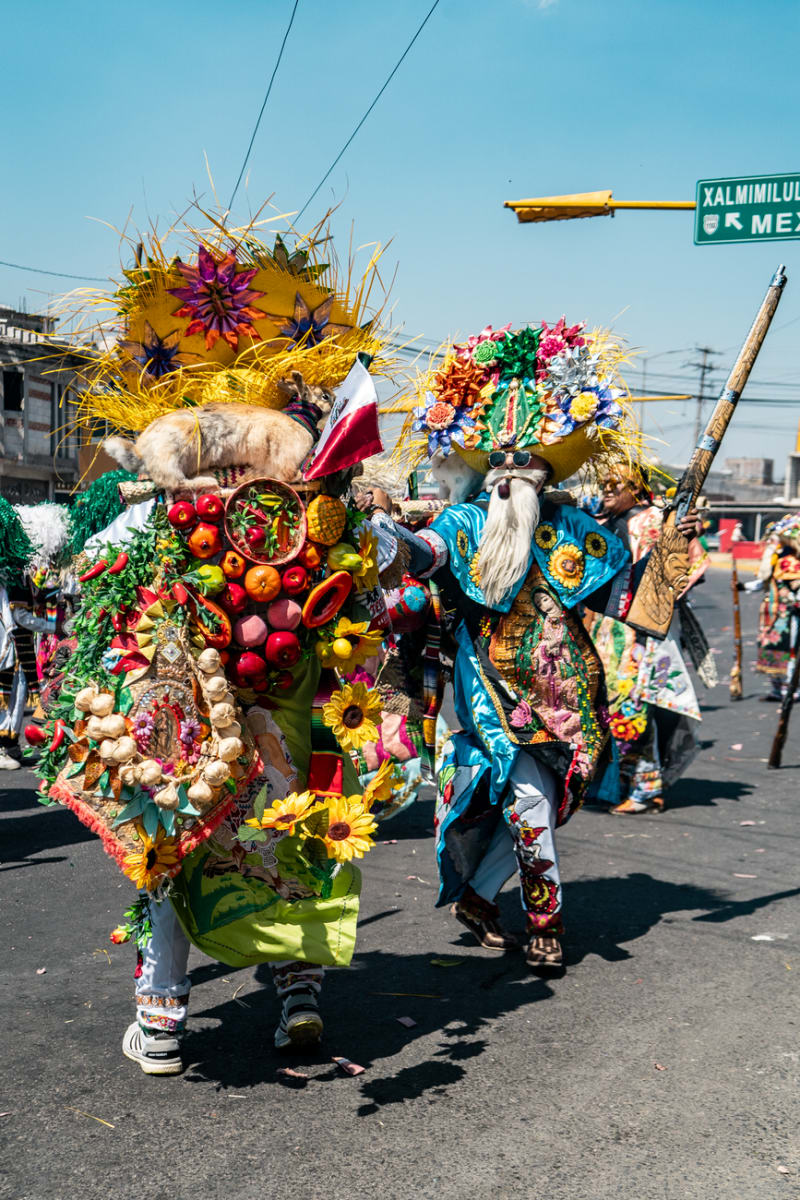 mexico
 Ixmiquilpan
Ixmiquilpan is the main Otomí city of the Valle del Mezquital, and its sixteenth-century Augustinian church contains murals so anomalous that art historians have been arguing about them for decades — warriors in feathered headdresses fighting monsters representing vices, painted in a style that owes far more to pre-Hispanic codices than to anything that belongs in a Catholic nave. The valley outside the town is semi-arid and extraordinary: maguey and cactus on thin volcanic soil, hot springs in the desert, Otomí communities whose language and textile traditions have survived four hundred years of being told they wouldn't.
Explore