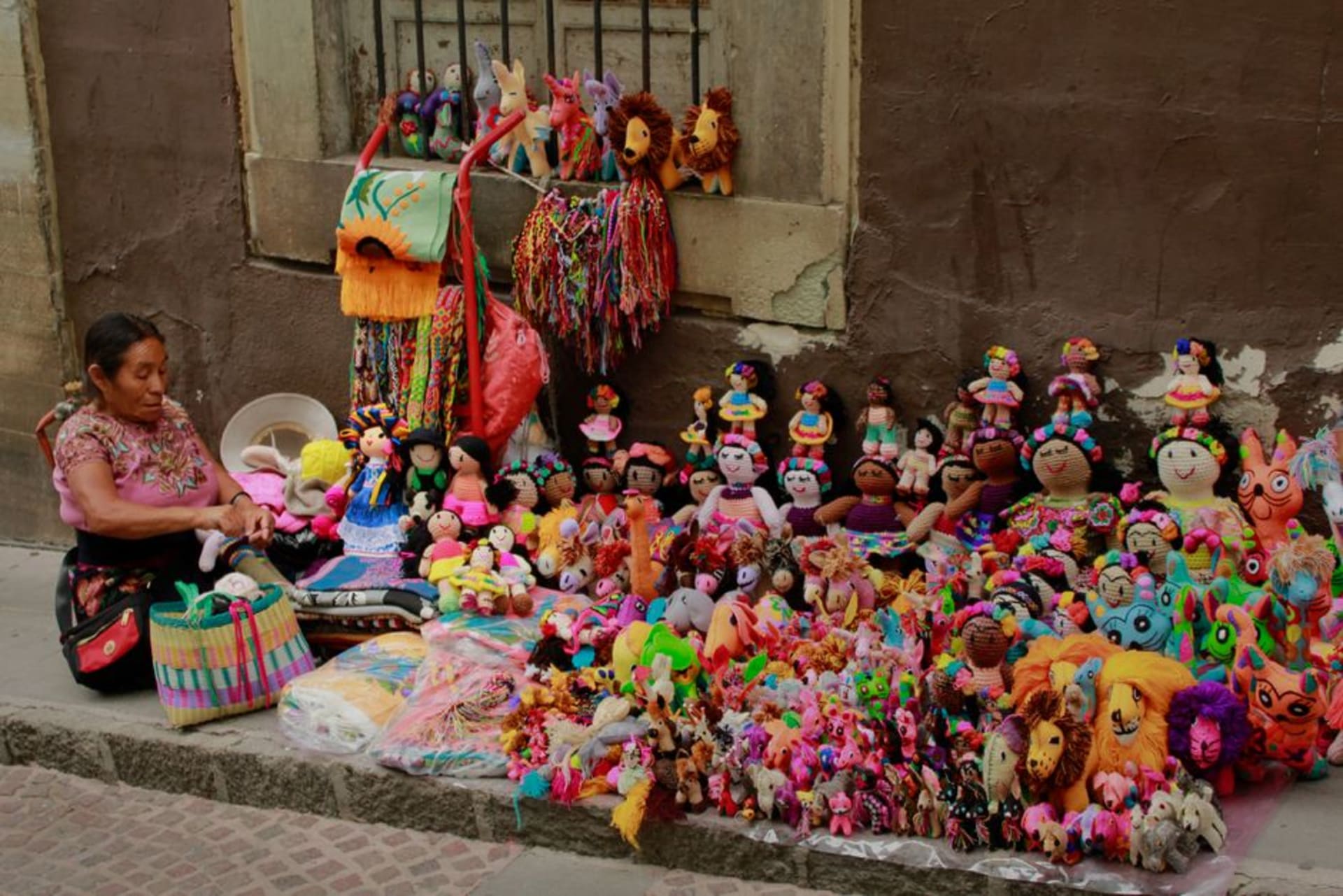
Apaseo el Alto
"You can hear Apaseo el Alto before you see it — the whine of a lathe, a mallet on a chisel, a whole town shaping wood."
A Bajío town in southeastern Guanajuato where the roads are lined with workshops turning out carved wooden furniture and crafts, the smell of sawdust and lacquer hanging over whole streets. Fertile farmland surrounds a colonial center, and the calendar is stitched together with festivals. Industrious, warm, and proud of what its hands can make.

I came to Apaseo el Alto looking for a table. That was the entire plan: a friend in San Miguel had shown me a carved parota-wood table she swore came from here, and I wanted to see where such a thing was born. What I found was not a shop but a street — and then another, and another — every doorway open onto a workshop, headboards and armoires and cedar chests stacked to the ceiling, men and women bent over them with sandpaper and brushes. I never did buy a table. I spent the whole afternoon watching instead, and a carpenter named Efraín handed me a chisel and let me ruin a small piece of pine so I’d understand how hard it actually is.
A Town That Carves for a Living
Apaseo el Alto sits in the fertile southeastern corner of Guanajuato, close enough to Querétaro that the two blur at the edges, and it has built its name on wood. The furniture trade here is not boutique or curated — it is an entire local economy, generations deep, run out of family workshops that line the roads leading in and out of town. You’ll see rustic ranch-style pieces in raw parota and cedar, carved doors, columns, religious figures, and headboards worked with vines and flowers so dense they look grown rather than cut. Efraín told me his father had done the same work, and his grandfather, and that the tools on his bench were older than he was. There’s no showroom lighting, no varnish of marketing over any of it — just sawdust, glue, patience, and the honest confidence of people who know exactly how good they are.

The Colonial Center and the Fields Beyond
Away from the workshop roads, Apaseo el Alto keeps a modest colonial heart — a plaza, a parish church, arcades that throw useful shade in the afternoon — surrounded by some of the most productive farmland in the Bajío. The countryside here is generous: broccoli, corn, sorghum, and greenhouses catching the light in long silver rows. I walked out past the last houses one evening and watched irrigation arcs sweeping over the fields while the church bells rang behind me, and it struck me that this is a town that makes things with both hands — food from the ground, furniture from the trees — and doesn’t consider either remarkable. The plaza filled up as the heat broke, families and vendors and kids kicking a ball against the church wall, and I bought an elote and joined the general drift.

Festivals and the Warmth of the Place
What I didn’t expect was how warm Apaseo el Alto is to a stranger. The town runs on festivals — patron saint celebrations, agricultural fairs, religious processions that shut the main streets and fill them with music, food stalls, and fireworks that go off at genuinely alarming proximity. I stumbled into the tail end of one: a band on a flatbed truck, women selling buñuelos dusted in cinnamon sugar, an old couple dancing on the cobbles as if the crowd weren’t there. Someone pressed a cup of ponche into my hand and asked where I was from, and when I said France, three separate people told me about a cousin in Paris. By the time I left I’d been invited to two weddings and a christening, none of which I could attend, all of which I meant sincerely to regret.

Getting There
Apaseo el Alto lies close to the Guanajuato–Querétaro line, about 40 minutes by road from the city of Querétaro and a little over an hour from Celaya. Regional buses run from both, and colectivos connect it to neighboring Apaseo el Grande. From Mexico City, the simplest route is a first-class bus to Querétaro (around three hours with ETN or Primera Plus) and a local connection from there. A car is worth having if you plan to visit the furniture workshops, which sprawl along the roads at the town’s edges rather than clustering in one walkable place.
Keep exploring
More of Guanajuato
Keep exploring
More from Guanajuato
 mexico
 Tarimoro
A quiet farming town in southeastern Guanajuato, set in the Lerma river country where agave rows and cornfields roll up against low hills. There is a modest plaza, a parish church, and the unhurried rhythm of Bajío ranch life going about its business, entirely uninterested in whether you came to watch.
Explore mexico
 Jerécuaro
A rural town in the far southeastern corner of Guanajuato, out near the Michoacán border, where farmland rolls into low green hills and a reservoir catches the sky. Purépecha and Otomí roots, working ranchos, a quiet plaza — the unpolished Bajío as it actually lives.
Explore mexico
 Celaya
Celaya is Guanajuato's most overlooked city — and one of its most rewarding. The neoclassical dome of the Templo del Carmen, the baroque extravagance of San Francisco, and the family workshops slow-cooking Mexico's finest cajeta in copper pots give this place a quiet depth that most travelers miss entirely.
Explore mexico
 Salvatierra
Salvatierra is a colonial town on the Laja River in southern Guanajuato, bypassed by the tourist circuit that runs between San Miguel and Guanajuato City, and better for it. A 17th-century baroque aqueduct with 43 intact stone arches runs along the edge of the centro, the Augustinian convent has faded frescoes better than most in towns with a proper tourist infrastructure, and the river in the evening reflects all of it in a way that deserves more witnesses than it currently gets. I was the only non-local I saw in four hours.
Explore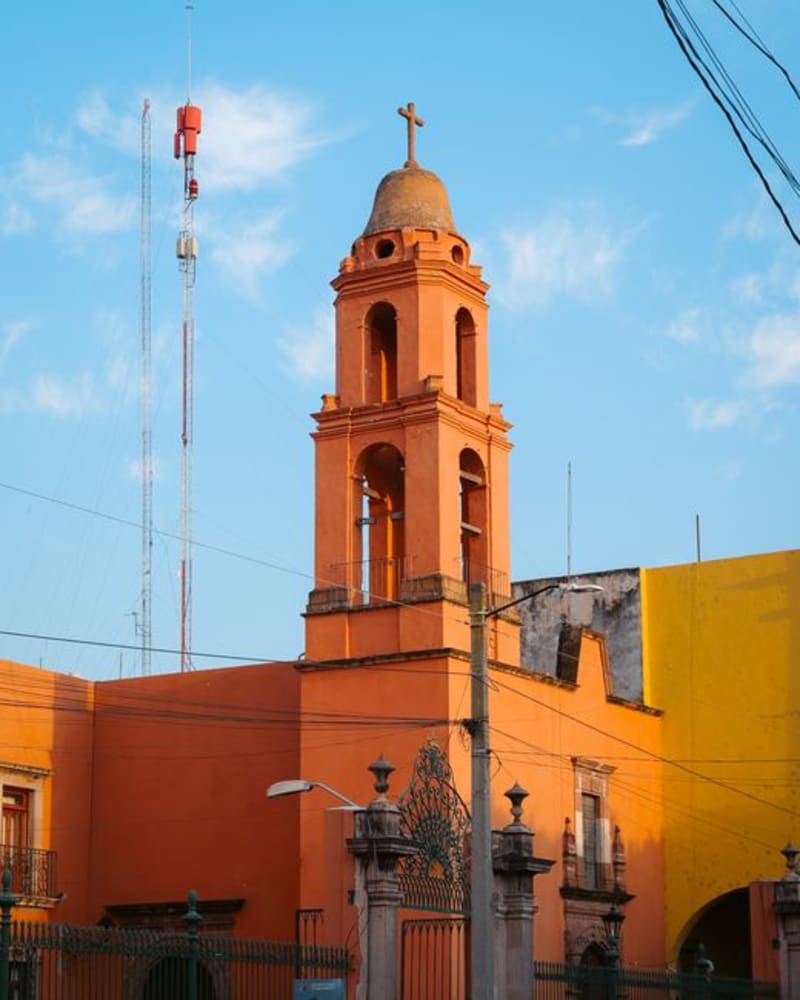 mexico
 Salvatierra
A colonial town on the Lerma River that most travelers drive past without slowing down, Salvatierra holds four convents, a remarkably intact historic center, and a Sunday market where Purépecha vendors cross from Michoacán with produce you will not find anywhere else in the Bajío. The local obsession is cajeta — goat's-milk caramel cooked in copper vats — and the town has enough of it to last you the rest of the year.
Explore mexico
 Comonfort
Comonfort is a colonial town on the Laja River between San Miguel de Allende and Celaya, known locally for its ceramics and known to very few people outside the region for the Cañada de la Virgen — a pre-Columbian pyramid complex on the edge of a river canyon 25km from town that was only opened to visitors in 2011. On a clear morning with the light coming low across the canyon, the site felt like a real discovery rather than an attraction.
Explore