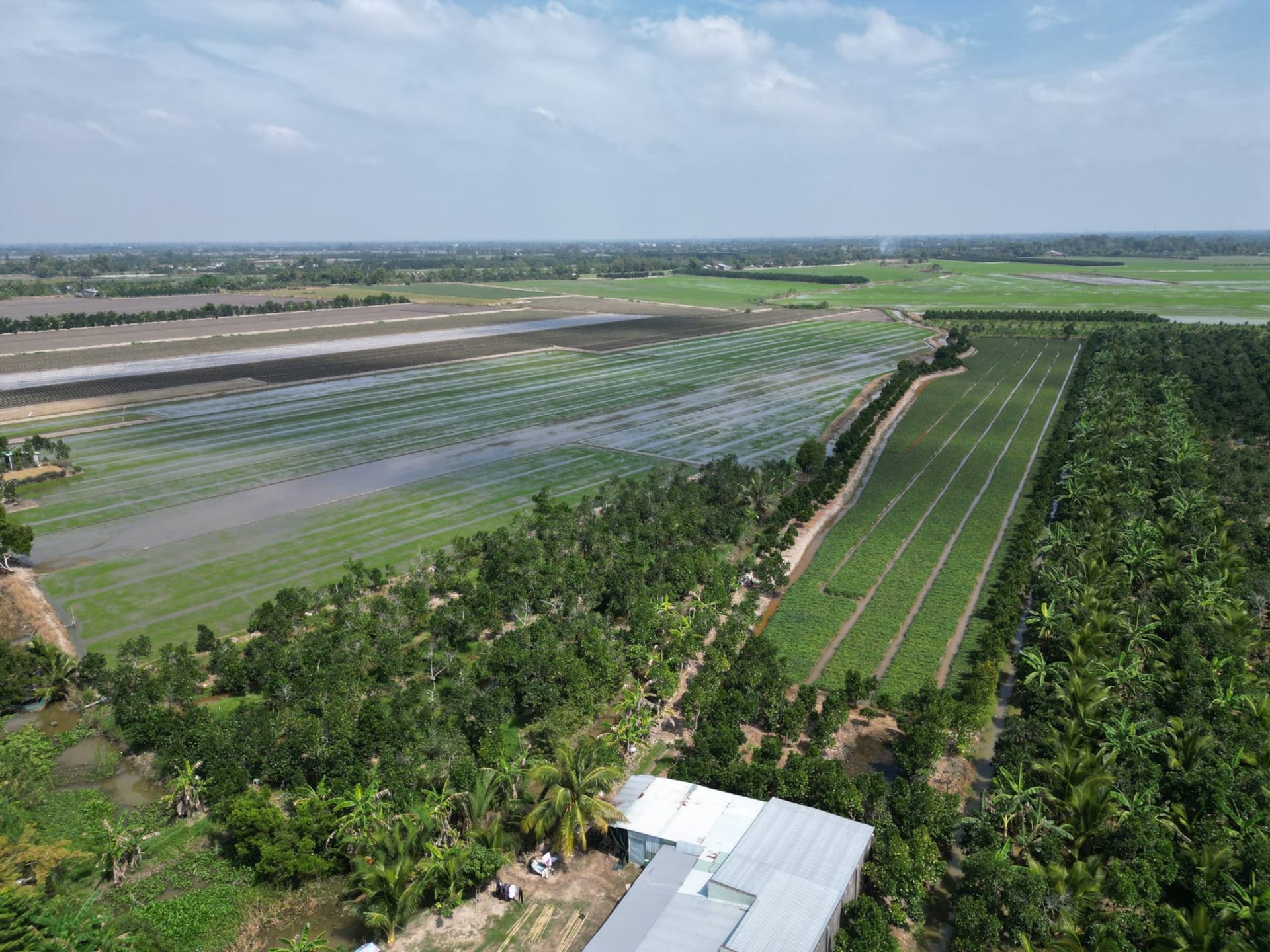
The Khmer Krom heartland of the delta, where ancient temple monasteries hide in banyan forests and the storks outnumber the tourists by a significant margin.

I got up at five-thirty to follow the monks. They leave the temple compound in single file, barefoot in saffron robes, carrying lacquered alms bowls, moving in silence along the lane between the banyan trees in the pale pre-dawn light. The community that makes offerings — laying food into the bowls without speaking, eyes down — waits for them along the route in a ritual that has been performed here longer than the current border between Vietnam and Cambodia has existed. Trà Vinh is Khmer Krom country, the homeland of the Khmer people who remained in the delta when the territory passed to Vietnamese administration in the eighteenth century. There are more than a hundred Theravada Buddhist temples in the province, many of them centuries old, and some of them are extraordinary.
Âng Pagoda, surrounded by a forest of enormous banyans whose aerial roots have grown into architecturally complex webs between the trees, is one of the most visually arresting temple compounds I’ve seen in Southeast Asia. The roots drape across the walls, the gateway, the stupas — not as damage but as something like partnership, the trees having agreed to incorporate the temple into their structure over several hundred years. The monks here are young, many of them teenagers from Khmer villages who board at the compound while studying. They were curious about where I came from in the way that people are curious when they rarely see foreign visitors.
The Ao Ba Om pond — a rectangular body of water of almost unnatural regularity, dating to the ninth century — sits at the edge of the city surrounded by old trees. The Khmer celebrate the Ok Om Bok festival here each November, racing longboats on the water and releasing moon cakes as offerings. Outside of festival season it’s a place where families picnic and children cycle along the banks and the light through the trees at late afternoon has a quality — thick, golden, filtered — that I kept trying to photograph and couldn’t adequately capture.
The food in Trà Vinh is distinct from the Vietnamese mainstream of the delta. Bún nước lèo — a noodle soup with a broth made from fish and mắm tôm, the pungent shrimp paste of the Khmer kitchen — is the local breakfast, eaten at low tables in restaurants that are really just someone’s front room. The freshwater fish here are excellent: I ate grilled snakehead in a lemongrass and galangal marinade that had the clean, precise flavors of the Khmer culinary tradition.

The white stork colony at Trúc Giang park in the city center is an improbable urban spectacle — hundreds of large white birds nesting in the trees of a public park, indifferent to the traffic and noise below.
When to go: November is ideal — the Ok Om Bok festival brings Khmer boat racing and traditional ceremonies to life, and the dry-season weather has just arrived. February and March are also excellent. Avoid the June–September monsoon period when some rural roads flood badly.
Keep exploring
More from Mekong Delta
 mekong-delta
 Tràm Chim National Park
A flooded grassland wilderness in Đồng Tháp where the last rare sarus cranes still dance at dawn and the boatmen read the wetland like a book they were born holding.
Explore mekong-delta
 Vĩnh Long
A river town whose real life hides on the islands south of the bridge — cycling distance, coconut distance, hammock distance.
Explore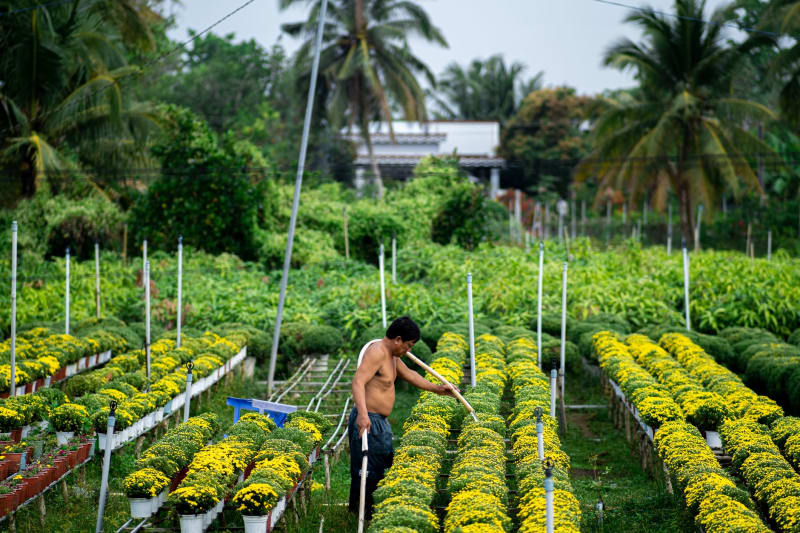 mekong-delta
 Bến Tre
The coconut province — where the waterways smell of palm sugar and every boat, bridge, and candy stall runs on the same tree.
Explore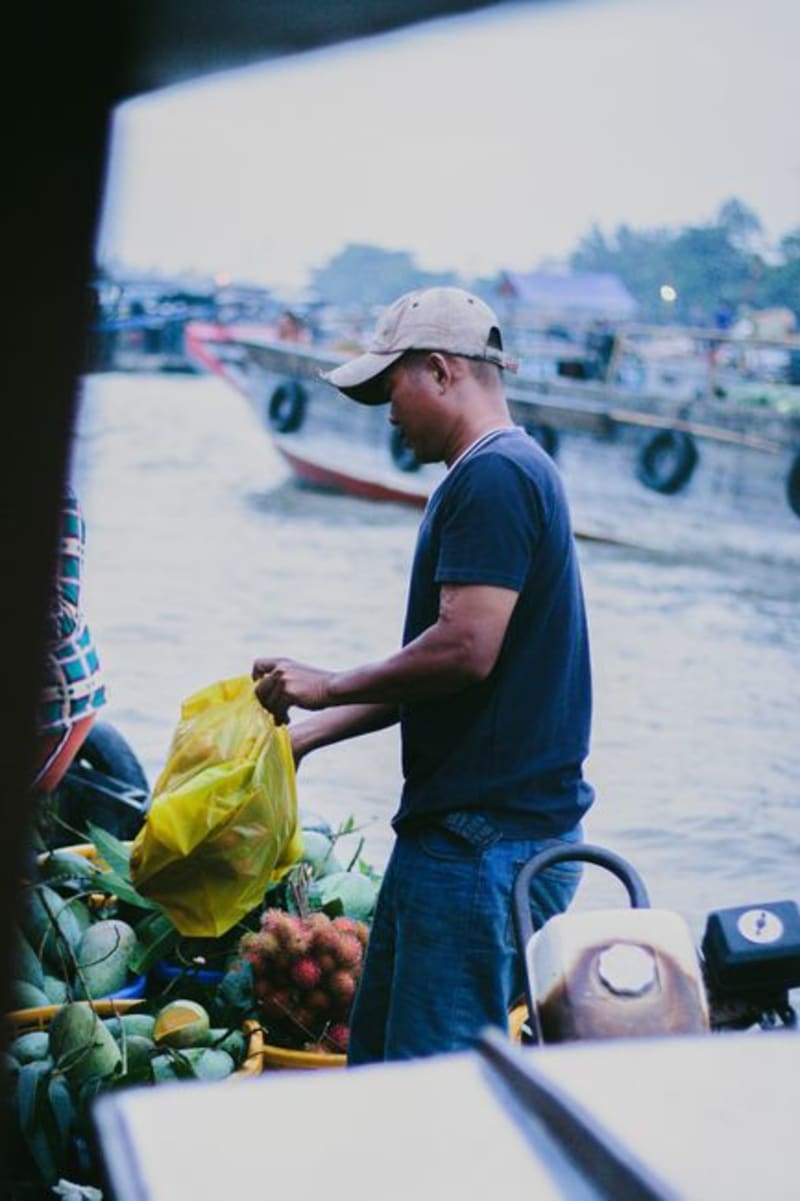 mekong-delta
 Cai Be Floating Market
A wholesale river market where fruit vendors hang samples from tall poles, older and quieter than the delta's famous tourist markets.
Explore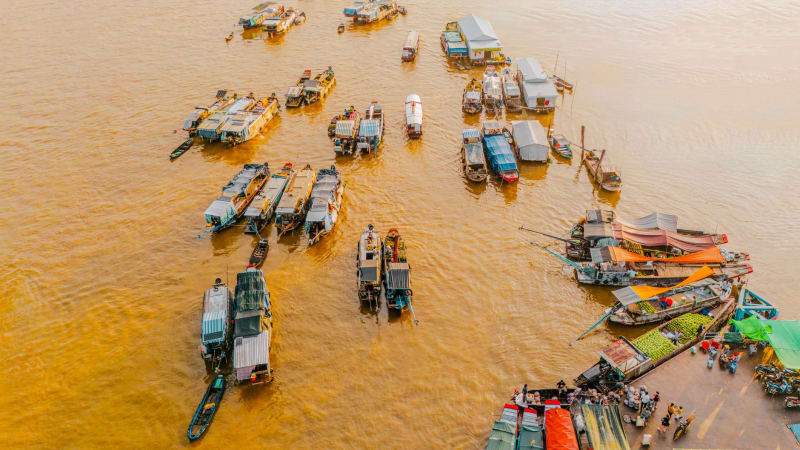 mekong-delta
 Cái Răng Floating Market
The delta's oldest floating market, where every boat carries a story and breakfast costs nothing and arrives by canoe.
Explore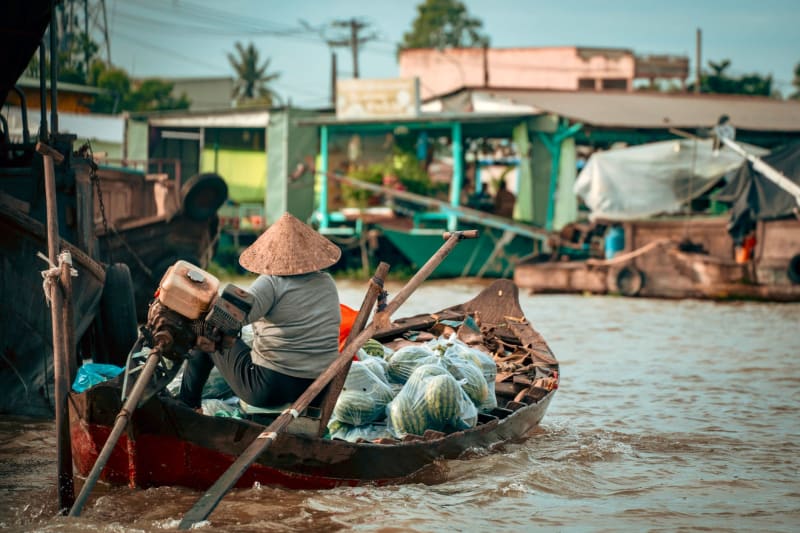 mekong-delta
 Cần Thơ
The delta's beating heart — a river city that runs on strong coffee and doesn't sleep until the floating market is already underway.
Explore