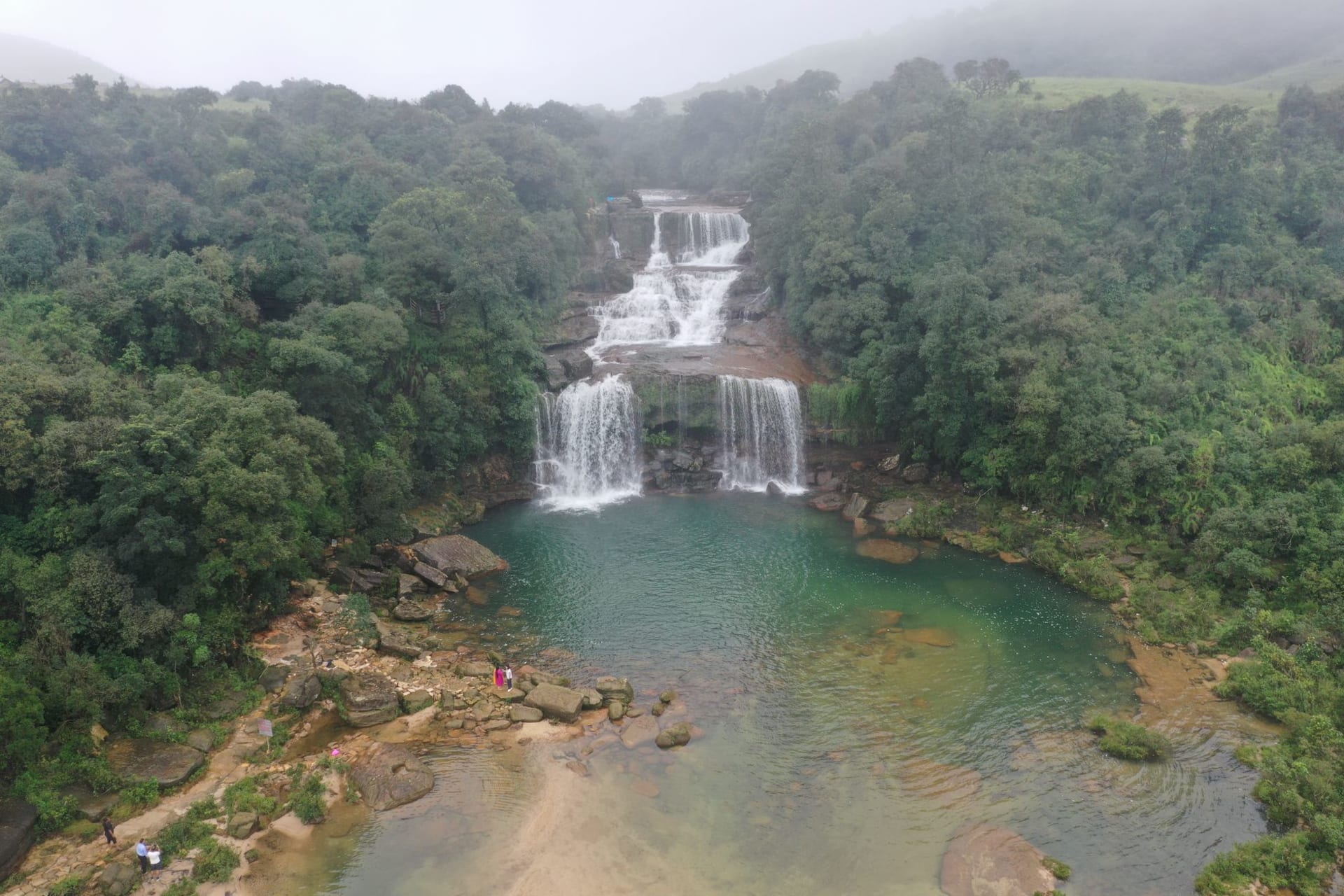
Jaintia Hills
"The sacred groves survived because nobody was allowed to take anything from them. Protection by prohibition — the oldest conservation strategy."
Meghalaya's eastern district, where coal mines scar the plateau and sacred groves hide older forest that the rest of the hills have already lost.

The Jaintia Hills don’t appear in many travel itineraries, which is partly why I went. The eastern third of Meghalaya, running toward the Assam border and Manipur beyond, is less spectacular than the Cherrapunji cliffs and less accessible than Shillong, and it carries the industrial heaviness of a region where coal extraction has been the dominant economic reality for decades. The ban on rat-hole coal mining — the technique unique to northeast India where individual families dig narrow shafts and extract coal without machinery — came in 2014, and the hills here are still processing what that means economically and ecologically. Some of the extraction has continued illegally. The water in certain rivers runs acidic orange with coal seep. It’s not a comfortable landscape to travel through without being aware of this.
But the Jaintia Hills also have something that the more-visited parts of Meghalaya have largely lost: their sacred groves. The Jaintia people have maintained patches of old-growth forest — called law kyntang — for generations as spaces dedicated to their traditional religion. Nothing is taken from these groves: no timber, no fruit, no plants, no birds. The result is islands of primary forest, some of them hundreds of years old, in a landscape otherwise heavily modified by agriculture and extraction. Walking into a law kyntang is walking into the forest that used to cover these hills before anyone decided it was a resource.
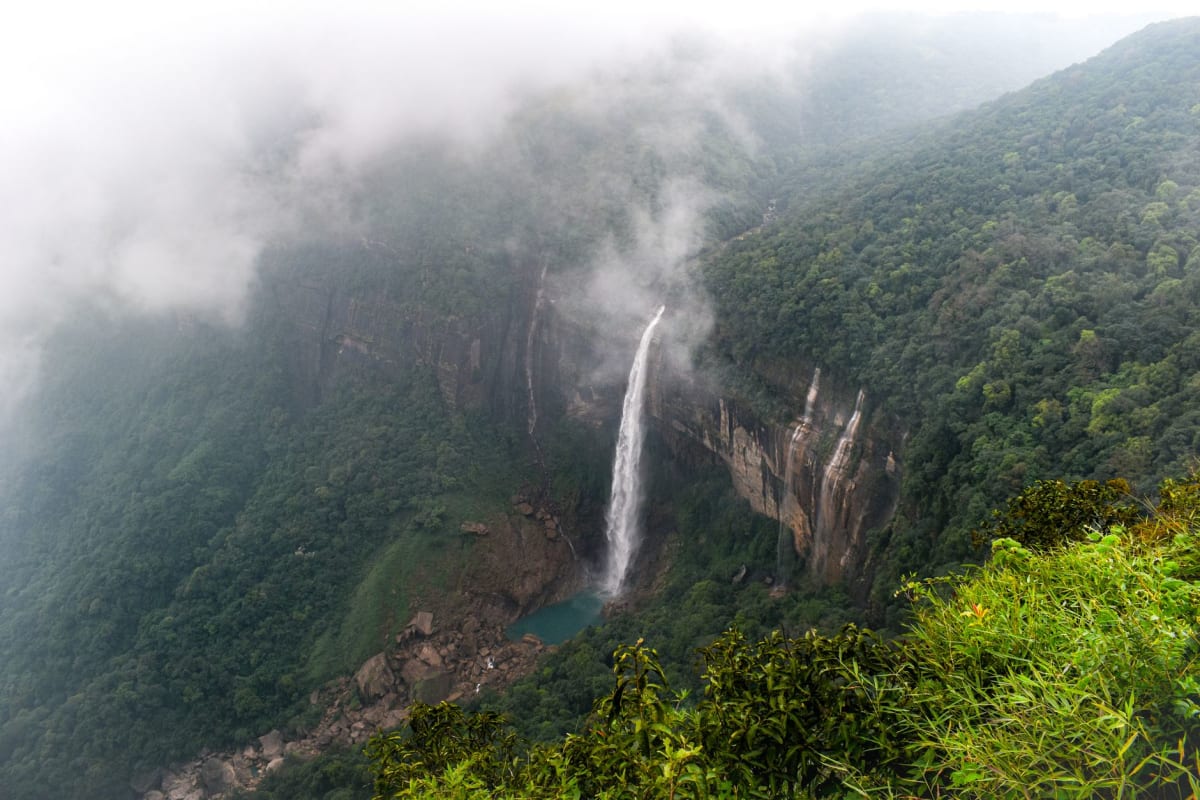
I found the grove near the village of Nartiang through a local teacher named Bainshisha who spoke careful English and had strong views about both conservation and tourism, neither of which he expressed directly but both of which shaped everything he said. We walked into the grove in the morning when the light came through the canopy in narrow columns. The trees were enormous — the kind of scale you only encounter in forest that has been left completely alone for a very long time — and the silence under them was different from the silence of younger forests. Denser. More inhabited. I stood inside it for ten minutes without moving or speaking, which Bainshisha seemed to consider the correct response.
The monoliths at Nartiang are a separate category of historical strangeness. The Jaintia kings erected standing stones here over several centuries — some of them four metres tall, rough-cut basalt arranged in lines and clusters in a field behind the village. The purpose was memorial and ritual: stones raised by warriors after victories, stones to honor the dead. The site has been preserved but not over-managed; the stones stand in grass that someone cuts occasionally, under trees that shade them unevenly, and you can walk among them and put your hand on them and feel the weight of whatever was intended when they were set upright several hundred years ago.
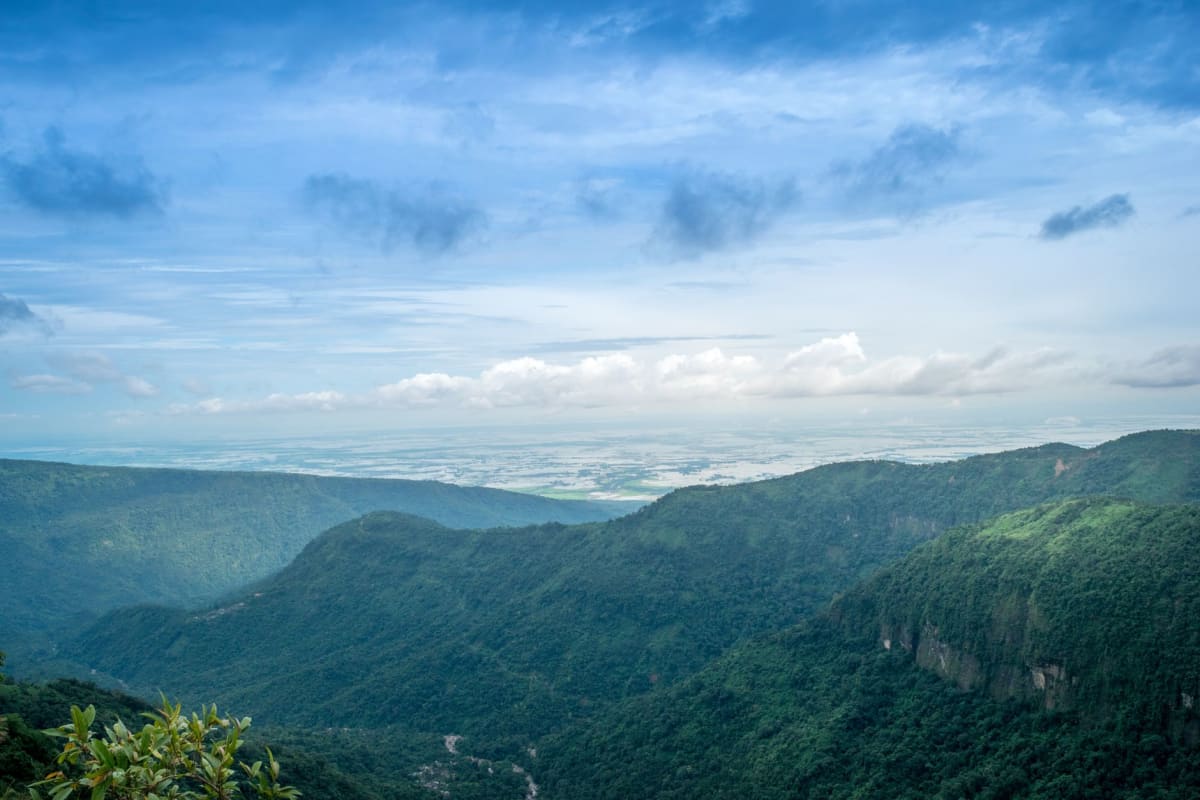
The food in the Jaintia Hills has its own register — sharper and more fermented than the Khasi kitchen, with a reliance on bamboo shoots fermented until they are genuinely aggressive and a smoked fish that comes wrapped in banana leaves and tastes of woodsmoke and the specific variety of stream it came from. I ate at a family’s house near Nartiang, sitting on a low stool while the woman of the house produced dishes from a back kitchen I couldn’t see, and the meal accumulated on the table in the manner of Khasi hospitality generally: more than expected, offered without enumeration, stopped only when I could credibly stop.
When to go: October through April, avoiding monsoon when the roads in the district become impractical for the kind of back-road driving that Jaintia exploration requires. November through January is the sweetest window. Combine with the drive east toward Dawki — the Jaintia Hills sit between Shillong and the Bangladesh border, making a logical through-route. Hire a local guide for the sacred groves; many are located on unmarked paths and the community context matters for understanding what you’re looking at.
Keep exploring
More from Meghalaya
 meghalaya
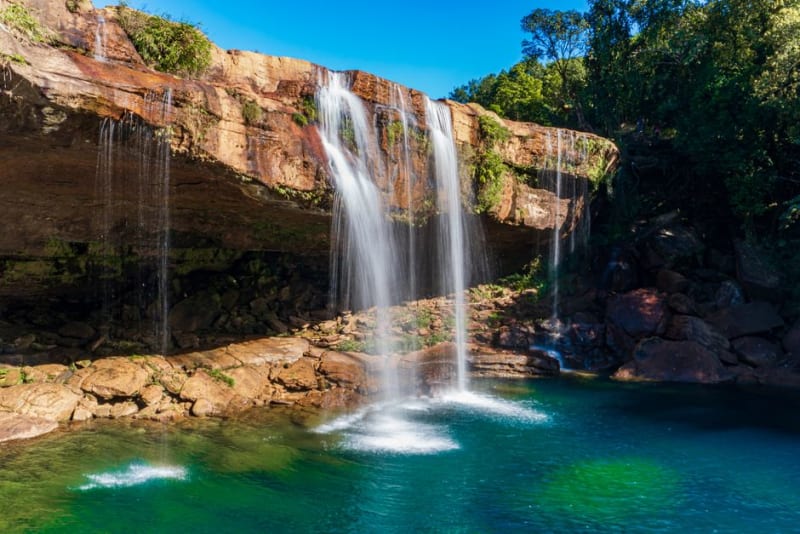
Krang Suri Falls
A turquoise waterfall tumbling into a swimming pool near Jowai, in the Jaintia Hills of eastern Meghalaya.
Explore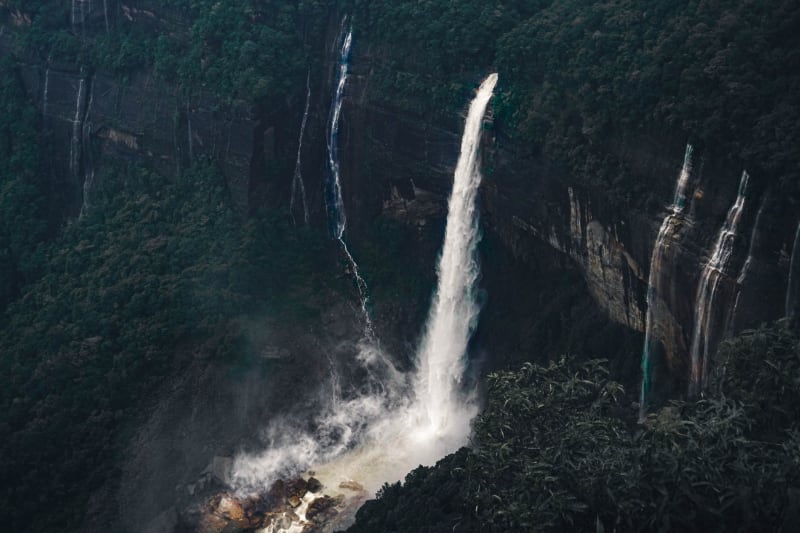 meghalaya
Laitlum Canyon
A canyon at the end of the Khasi Hills where the plateau drops into cloud-filled valleys and silence takes on a physical quality.
Explore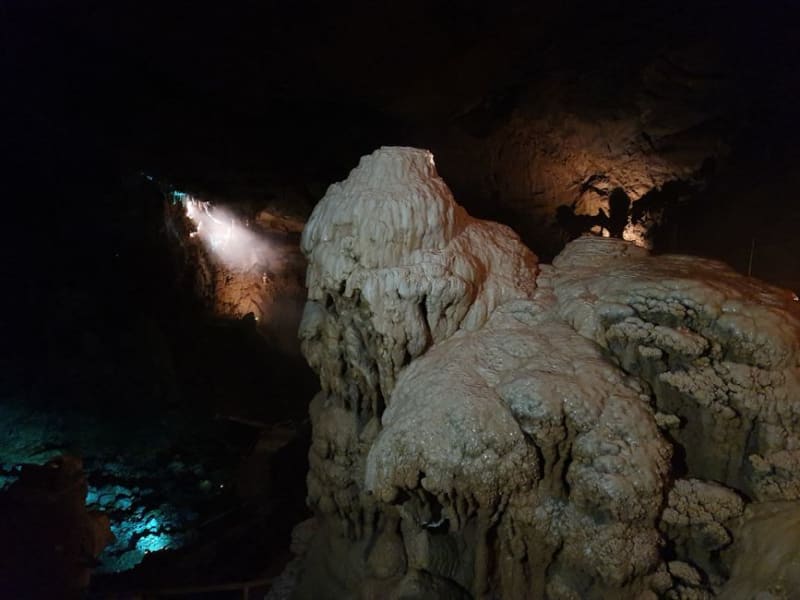 meghalaya
Mawjymbuin Cave
A limestone cave near Mawsynram where a natural stalagmite has long been worshipped as a Shivling.
Explore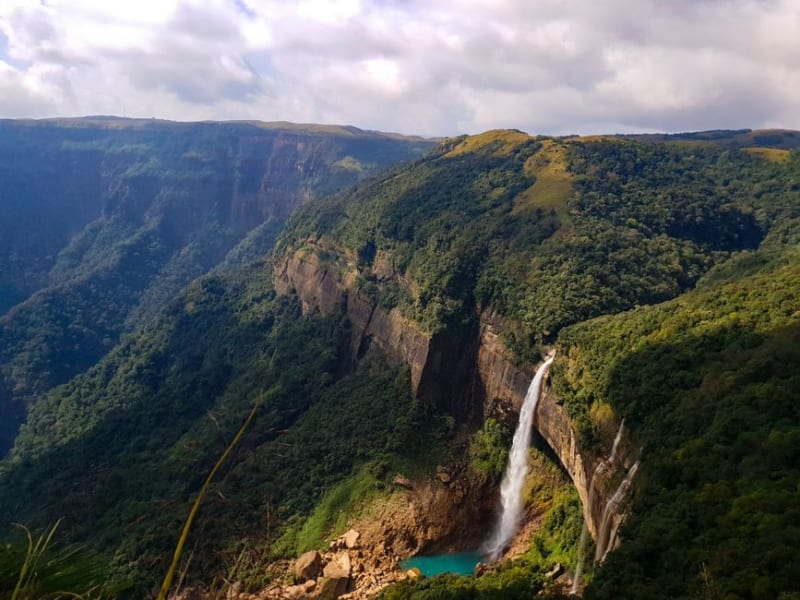 meghalaya
Mawkdok Dympep Valley
A sheer, mist-filled canyon along the Shillong-Cherrapunji road, locally nicknamed the Grand Canyon of Meghalaya.
Explore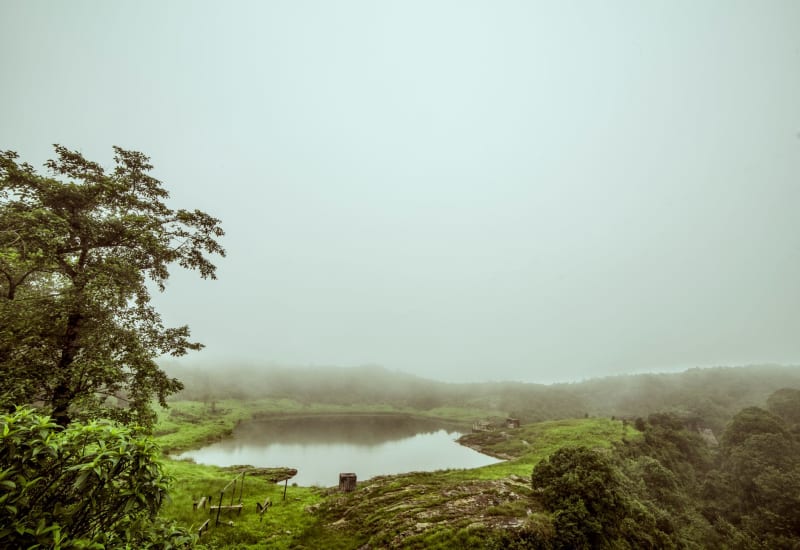 meghalaya
Mawlynnong
Asia's supposedly cleanest village, a community where bamboo brooms and collective pride have turned tidiness into identity.
Explore meghalaya
Mawphlang Sacred Forest
A Khasi sacred grove where you may take nothing, not a leaf nor a stone, and where the moss-buried monoliths feel older than any argument you could make against believing in them.
Explore