Krang Suri Falls
"I stood knee-deep in water so blue I kept checking my phone camera wasn't lying to me."
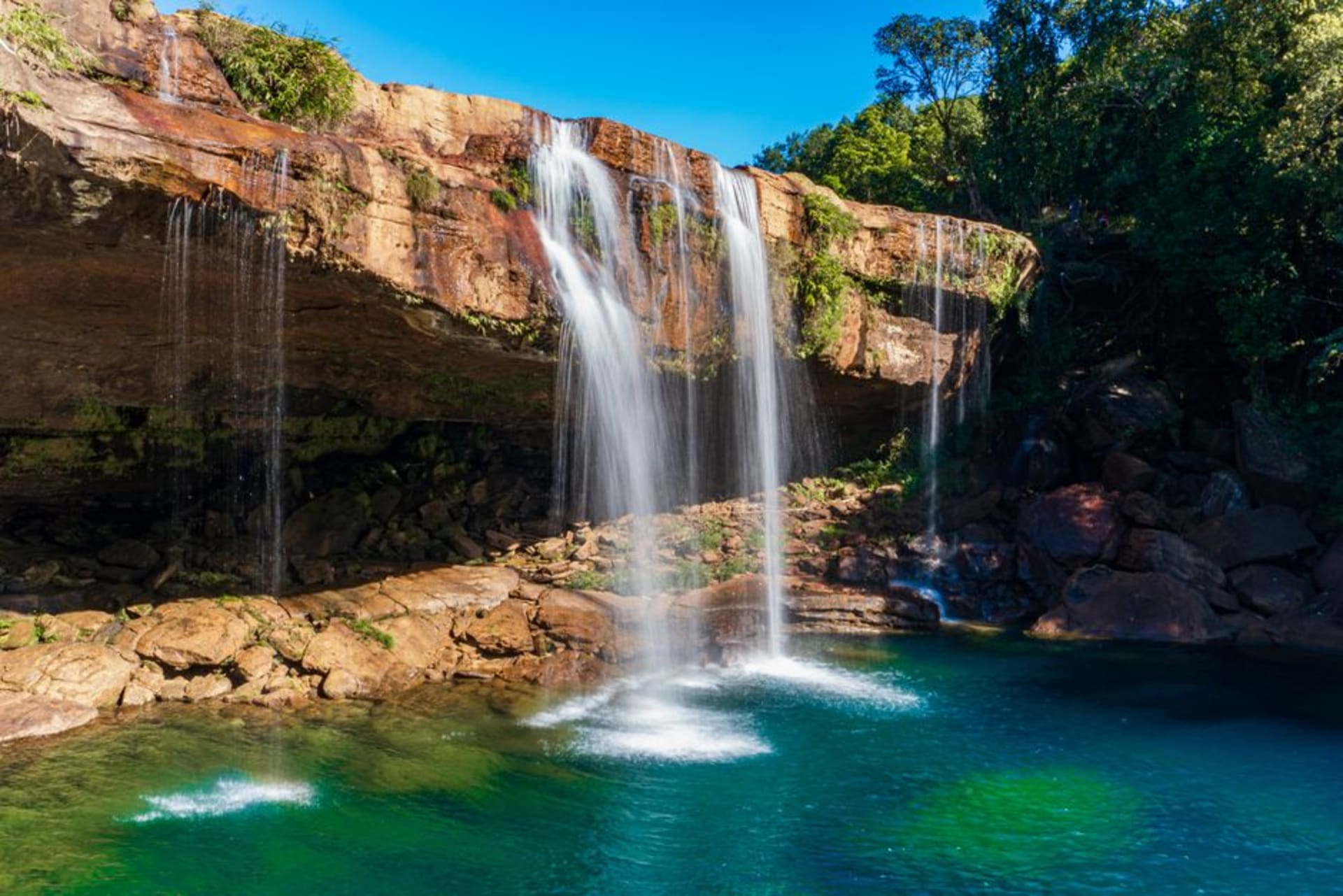
A turquoise waterfall tumbling into a swimming pool near Jowai, in the Jaintia Hills of eastern Meghalaya.

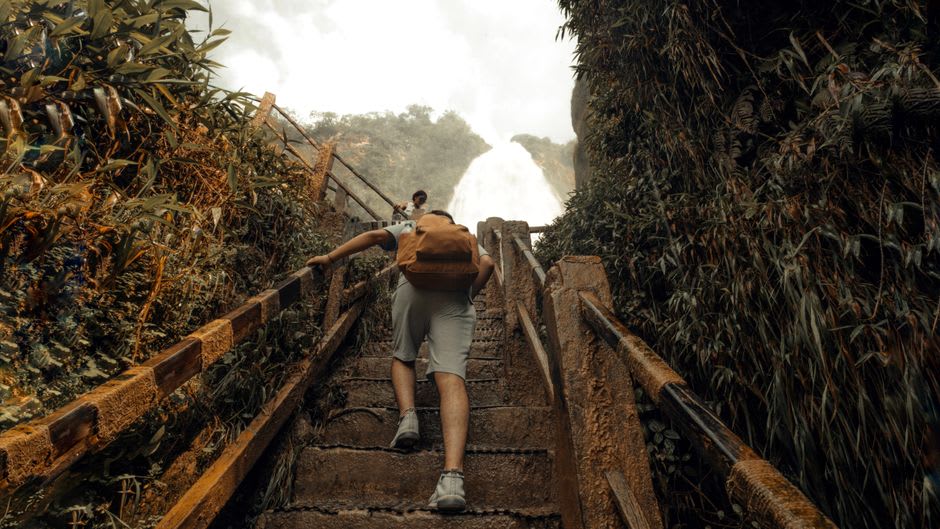
Lia found Krang Suri on some obscure Meghalaya forum three days before we were supposed to leave Jowai, and I almost talked her out of the detour because we’d already seen four waterfalls that week and I was, frankly, waterfalled out. I was wrong to hesitate. You descend maybe two hundred concrete steps cut into the hillside, past kids selling boiled eggs and packets of Kurkure, and then the jungle opens up and there’s this pool the color of a swimming-pool advertisement, except it’s real, and it’s fed by a waterfall crashing down from a limestone ledge above. My first thought, stupidly, was that someone had dyed it. It’s mineral content, apparently, something in the limestone bed. Whatever the reason, I’ve genuinely never seen water that shade outside of aquarium tanks.
We paid the small entry fee at the bottom, changed in a cramped little shed that smelled like chlorine tablets and damp wood, and got in. The water was colder than I expected for how tropical everything around it looked — sharp enough that Lia yelped and I laughed at her and then yelped myself thirty seconds later. There’s a rope strung across part of the pool for people who can’t swim well, and on the weekend we went, half of Jowai’s teenage population seemed to be there too, jumping off a low rock ledge into the deep end with a lot of screaming and zero hesitation, the way only nineteen-year-olds can.
What struck me most wasn’t even the color, it was how loud the place was and how that noise somehow made it feel more peaceful, not less — water hitting water, kids shrieking, some uncle blasting Khasi pop from a speaker propped on a rock. Back home near where I grew up, waterfalls like this would have a fence, a sign, a lifeguard whistle. Here nobody was managing the experience for you. You just showed up and figured out where it was safe to jump, mostly by watching where the local teenagers were jumping from.
We stayed maybe two hours, ate the boiled eggs on the way back up because by then I was starving and the smell had worn me down, and climbed those two hundred steps sweating through my shirt in a way that made the eventual chai at the top taste like the best thing I’d had all trip. Lia bought a second round of eggs for the walk to the car. I still think about that blue.
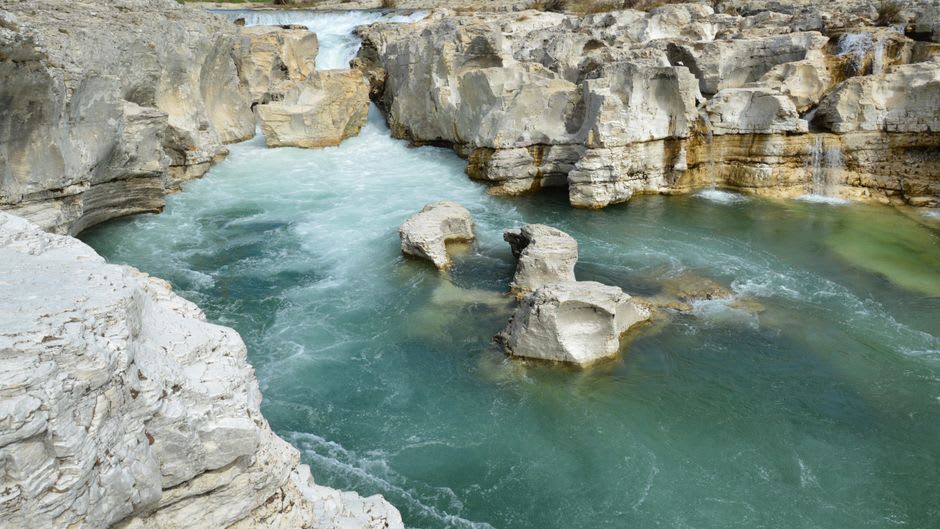
When to go: Visit between October and April, after the monsoon has passed — the water is at its clearest and most turquoise then, and the steps down aren’t as treacherous underfoot.
Keep exploring
More from Meghalaya
 meghalaya
Laitlum Canyon
A canyon at the end of the Khasi Hills where the plateau drops into cloud-filled valleys and silence takes on a physical quality.
Explore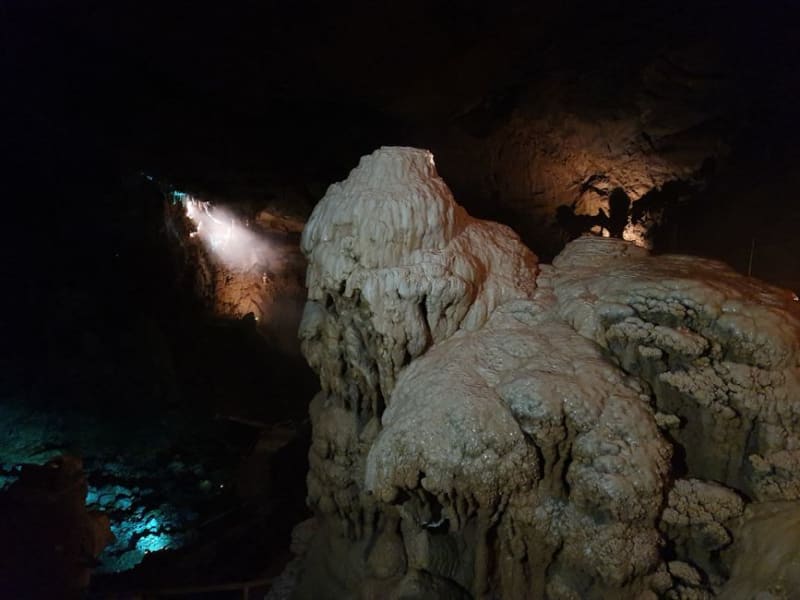 meghalaya
Mawjymbuin Cave
A limestone cave near Mawsynram where a natural stalagmite has long been worshipped as a Shivling.
Explore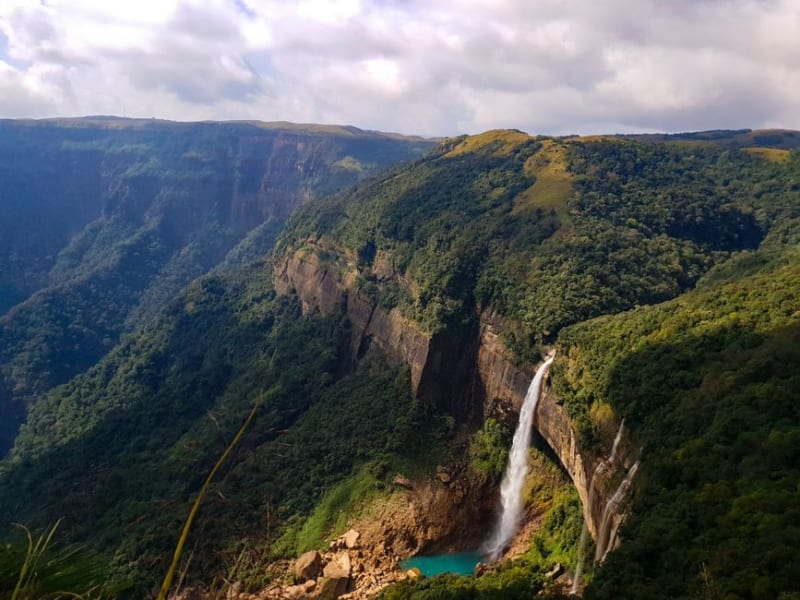 meghalaya
Mawkdok Dympep Valley
A sheer, mist-filled canyon along the Shillong-Cherrapunji road, locally nicknamed the Grand Canyon of Meghalaya.
Explore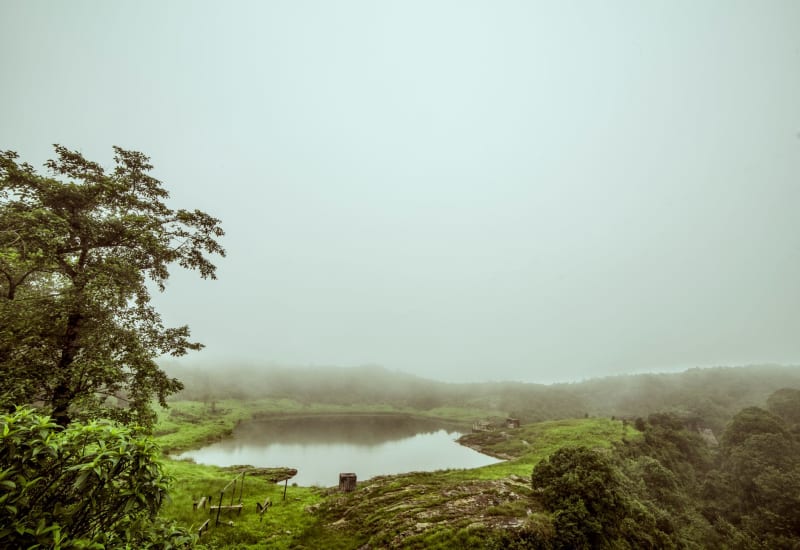 meghalaya
Mawlynnong
Asia's supposedly cleanest village, a community where bamboo brooms and collective pride have turned tidiness into identity.
Explore meghalaya
Mawphlang Sacred Forest
A Khasi sacred grove where you may take nothing, not a leaf nor a stone, and where the moss-buried monoliths feel older than any argument you could make against believing in them.
Explore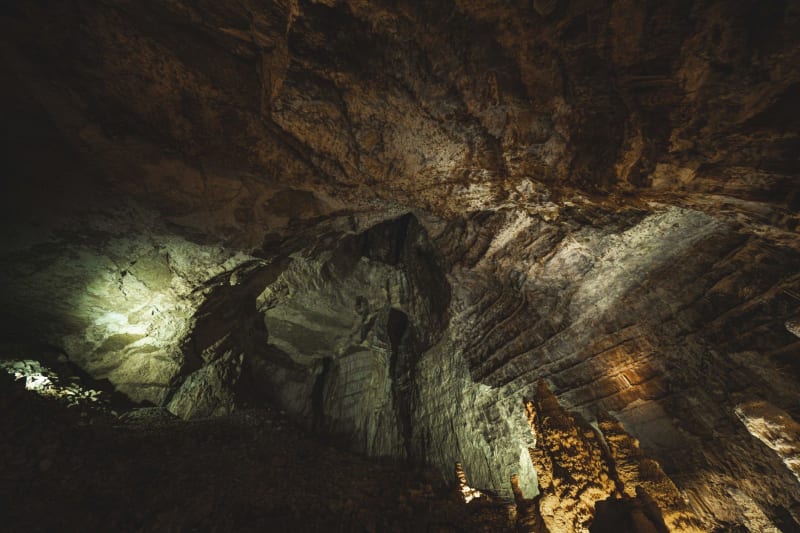 meghalaya
Mawsmai Caves
A limestone cathedral underground near Cherrapunji, where mineral-stained passages narrow until the mountain breathes on your shoulders.
Explore