
Macau Tower
"I stood on a glass floor 233 metres up and discovered the precise limit of my relationship with heights."
A 338-metre tower over the Pearl River delta with a glass-floored observation deck and the highest commercial bungee jump on earth, which I watched other people do.

I am not, by temperament, a tower person. They tend to be the most touristed and least interesting thing in any given city, a box you tick to look down on the actual city you should be walking through. Macau Tower nearly fit that description, and then it did something I genuinely did not expect, which is frighten me thoroughly and then make me glad it had.
The glass floor and the long way down
The tower stands 338 metres tall on the waterfront looking out over the Pearl River delta toward mainland China, and the main observation deck sits at 223 metres with a stretch of reinforced glass floor set into it. I have read all the engineering reassurances. I know the glass is thicker than I am wide and rated for crowds. None of this mattered when I actually stepped out onto it and my entire body understood, with total animal conviction, that I was standing on nothing above a two-hundred-metre drop. My knees did a thing. Lia walked straight to the center, lay down on the glass for a photo, and looked up at me with the serene cruelty she reserves for exactly these moments. I made it to the middle eventually, by a route that hugged the opaque sections, and the view — Macau’s casinos stacked against the brown sweep of the delta, Taipa bridge curving away — was genuinely worth the indignity.
What you cannot ignore, up there, is the bungee. AJ Hackett runs the world’s highest commercial bungee jump from the tower’s outer rim at 233 metres, and from the observation deck you watch, through the glass, as people in harnesses step off the platform and drop in a long silent plunge before the cord catches them somewhere far below. I watched perhaps a dozen jumps. I considered it for approximately four seconds. Then I considered it no further. There is a category of fear I am happy to walk through and another I am content to admire from behind glass, and the tower clarified exactly where that line falls for me.

Dinner that turns
We had booked, somewhat against my better judgment, the revolving restaurant on the floor below the deck — the kind of thing that sounds like a relic of 1970s futurism, because it is. The 360 Café rotates a full circle roughly once an hour, slowly enough that you don’t notice the motion except when you glance up from your plate and realise the view has entirely changed. The buffet was fine, unremarkable, the food beside the point. The point was watching the whole delta wheel past as the light went down — the casinos of Cotai flaring up neon, the lights of Zhuhai across the water on the mainland, the dark ribbon of the river holding it all together.
It is, I’ll admit, a deeply touristy thing to do, and I would normally talk myself out of it. But there is something to be said for sitting still while a city slowly presents itself to you from every angle, especially a city as strange and dense and historically improbable as Macau — Portuguese churches and Chinese temples and Las Vegas casinos folded into a few square kilometres.

I came up the tower expecting a box-ticking exercise and left having been frightened, fed, and quietly impressed against my own snobbery. That is more than most observation towers manage.
When to go: Visit late afternoon and stay through sunset to get both the daytime delta views and the neon coming up after dark. Visibility is best on clear winter days from November to February; summer haze can flatten the view. Book the restaurant or bungee ahead on weekends.
Keep exploring
More from Macau
 macau
Monte Fort
A 17th-century Portuguese fortress on the hill above the historic centre, offering the clearest view of how two architectures — colonial and casino — carved up this city.
Explore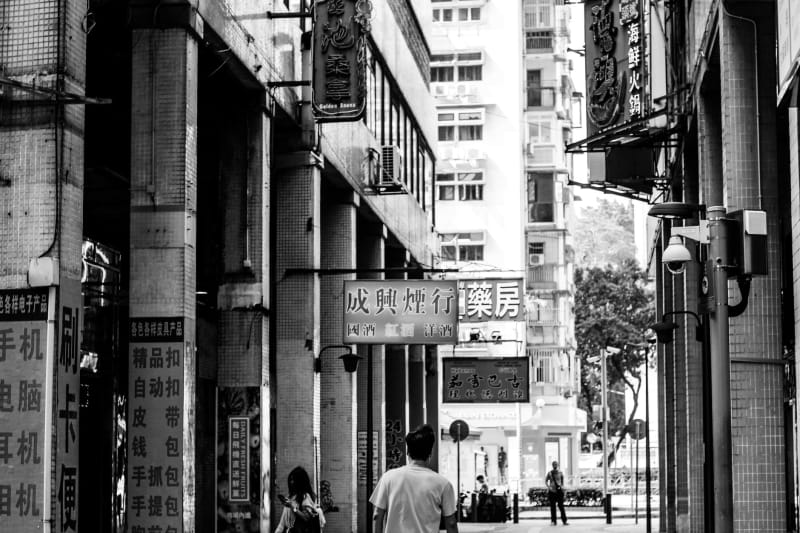 macau
Rua da Felicidade
The Street of Happiness — once a red-light district, now a pedestrian lane of red-shuttered shophouses where Macau's food culture is most concentrated.
Explore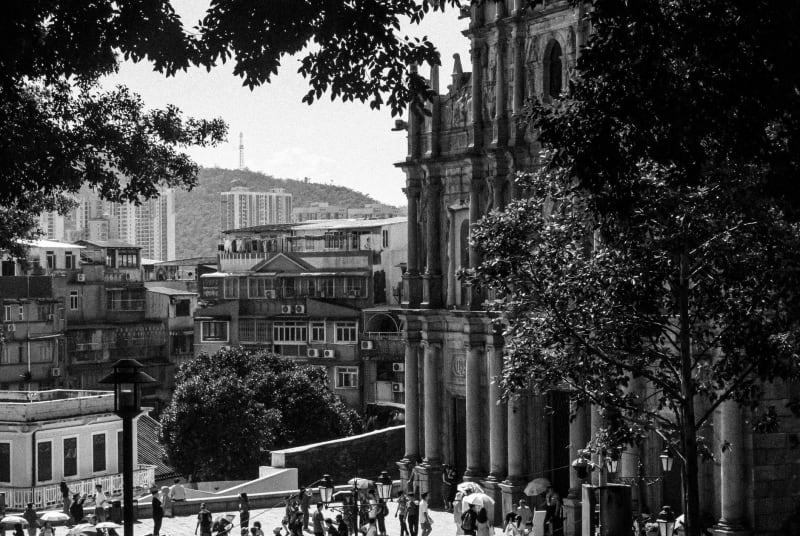 macau
Ruins of St. Paul's
A baroque stone facade standing alone against the sky — the church burned down two centuries ago, and what remains is somehow more powerful than the original.
Explore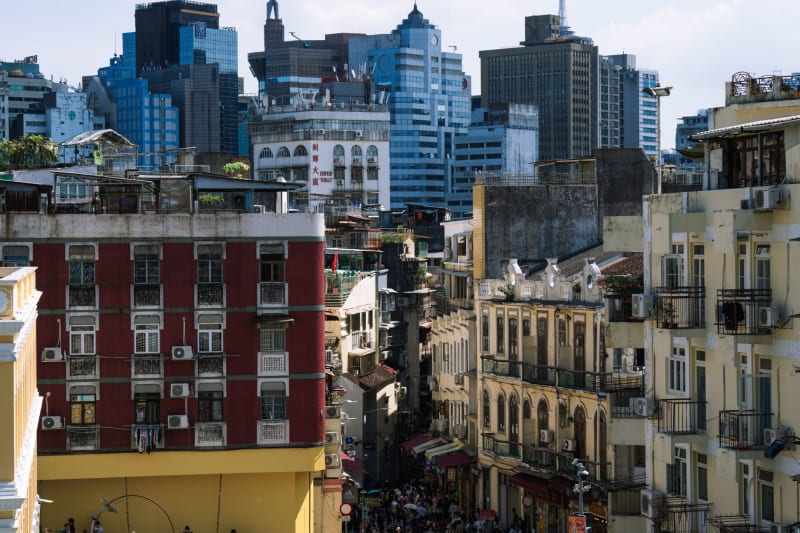 macau
Senado Square
A Portuguese mosaic plaza at the center of a Chinese city, where the past and the casino age coexist in uneasy, beautiful proximity.
Explore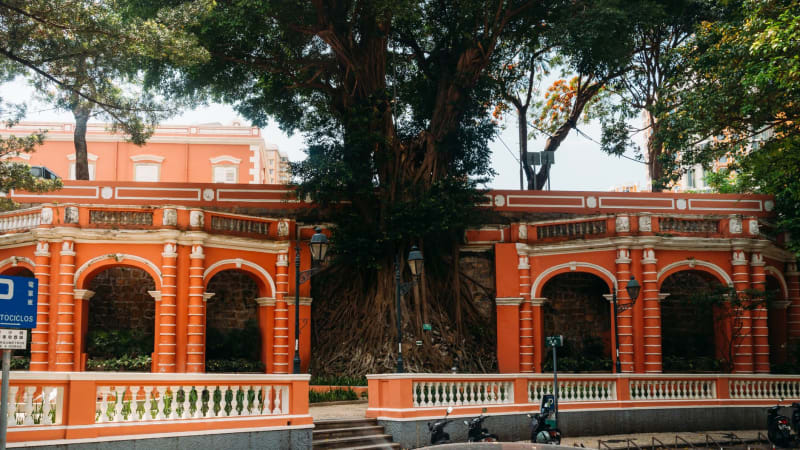 macau
Taipa Village
The quieter island village where Macanese food culture is most alive, and where colonial mansions painted in five colors line a street that earns the walk.
Explore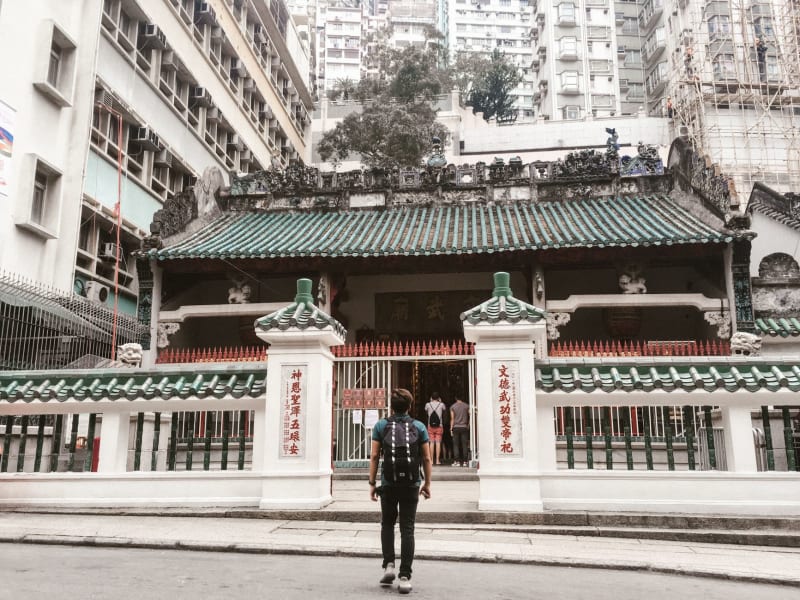 macau
A-Ma Temple
The oldest temple in Macau, built before the Portuguese arrived and dedicated to the sea goddess whose name became the city's — this is where Macau begins.
Explore