
Sabratha
"The Romans built their theater facing the sea, as if the audience needed reminding what all civilization was built upon."
A Roman theater whose three-storey stage backdrop faces the open Mediterranean — antiquity's most theatrical view has been waiting two thousand years for an audience.

I drove to Sabratha in the early morning, chasing the light that the guidebooks say hits the theater’s seaward face best before ten o’clock. The town itself is ordinary — a coastal road, petrol stations, white houses set back from the street with cats on the walls — and then the theater emerges from behind a low stone boundary like something from the wrong century, its three-storey scaena frons of carved columns and niches and friezes appearing so suddenly that I actually slowed the car. The theater was almost exactly the color of old ivory in that hour. The Mediterranean behind it was flat and pewter-gray in the early haze, and the combination — pale theater, pale sea, the slow brightening of the air between them — was the kind of thing that makes you feel slightly grateful to be alive and outside.

The Sabratha theater is one of the most complete in the world. Its stage backdrop rises in three tiers of columns in pink granite and white marble, with niches that once held statues of gods and emperors. Most of the statues are gone to the museum in Tripoli, but the architecture survives intact enough that you can understand the full visual logic of a Roman performance: the way the columns frame sight lines, the way the curved orchestra floor concentrates sound, the way the backdrop creates a hierarchy of divine and human space. I stood at the center of the orchestra and spoke at normal volume and heard my voice come back from three different directions at slightly different delays — not an echo exactly, but a multiplication. The Romans knew what they were doing with sound in a way that is easy to forget when you are looking at a ruin and thinking only about what it was, not how it worked.
The ruins extend beyond the theater in ways that take time to explore. A basilica. A forum. Several temples, including one to Liber Pater — the local wine god, adopted by the Romans — whose mosaic floor has been partially uncovered and left under a simple shelter. The mosaics are extraordinary: boats and sea creatures and theatrical masks and the faces of performers, the tesserae in greens and blues and ochres that have kept their color. They were the floor of a room where real performances were celebrated and the visual language is still legible two thousand years later. I crouched over them for a long time, looking at a face — a comic mask, the mouth pulled wide — that someone laid in stone before any European nation had been named.

Behind all of this, the sea. It is always there at Sabratha, visible between columns, audible in the pauses between gusts of wind off the coast. The Romans chose this site deliberately — Sabratha was a Phoenician trading post before it was Roman, and the theater faces toward the sea routes that connected it to Carthage, to Rome, to the whole ancient world. There is something quietly poignant about that orientation, all those columns looking out over water at a network of cities that mostly no longer exist, and a sea that continues regardless.
When to go: November through February. The theater is exposed and offers almost no shade; summer visits require either very early morning or very late afternoon. The morning light before ten o’clock, as the guidebooks promise, is genuinely worth chasing — the columns cast long shadows and the pink granite picks up a warmth that the midday sun burns out entirely.
Keep exploring
More from Libya
 libya
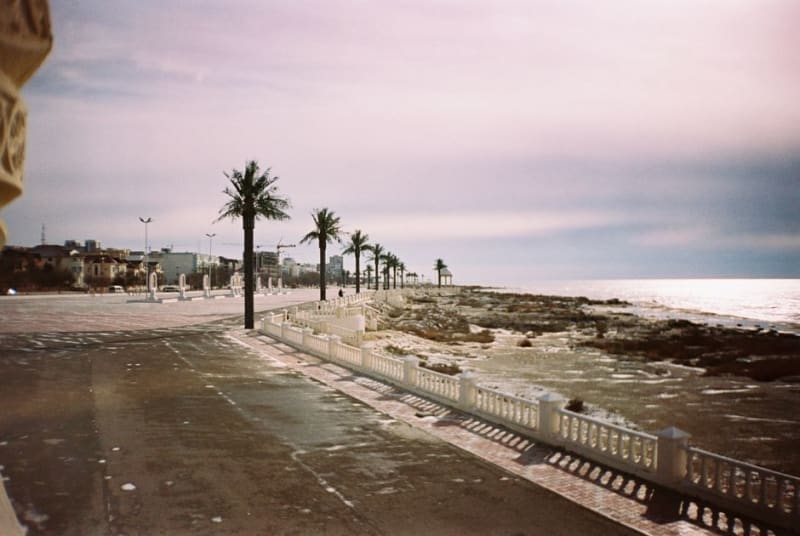
Sirte
A quiet, scarred city on the Gulf of Sirte that still carries the outsized shadow of the man who once ruled from here.
Explore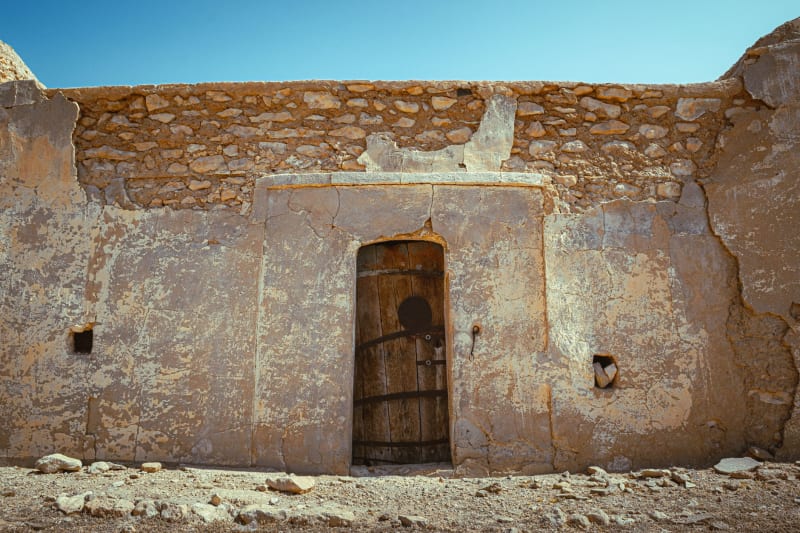 libya
Tobruk
A port city defined by the Second World War's most brutal siege, where three different armies left three different cemeteries on the clifftops — each facing the same sea.
Explore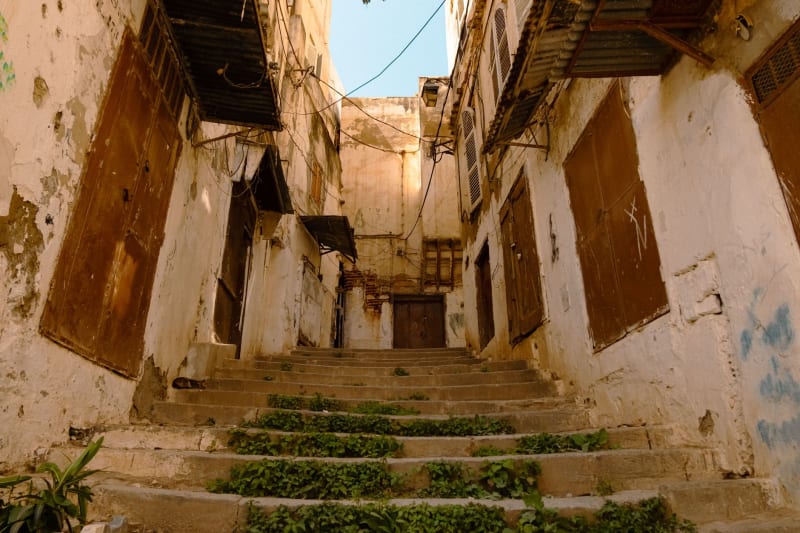 libya
Tripoli Old City
A medina where Ottoman mosques, Italian Rationalist boulevards, and a Roman arch standing in traffic all compete for the same narrow space.
Explore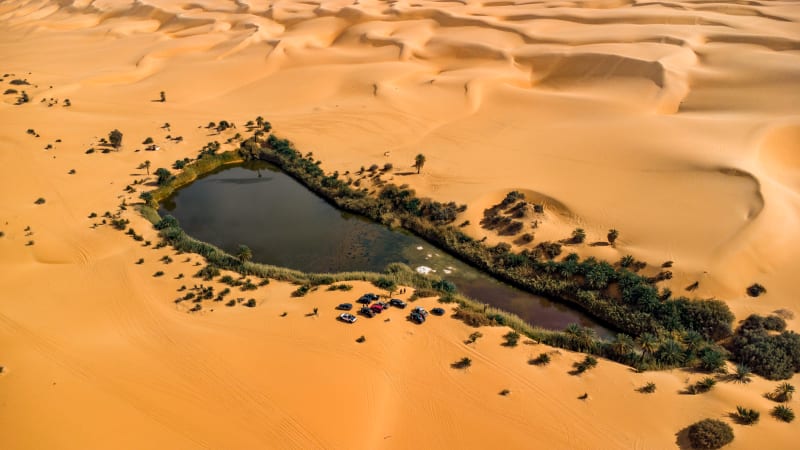 libya
Ubari Sand Sea
Saharan dunes the color of copper hiding improbable salt lakes that reflect the stars with an eerie, buoyant clarity — the most disorienting beautiful place I have been.
Explore libya
Waw an Namus
A black volcanic crater marooned deep in the Libyan Sahara, ringed by jewel-coloured salt lakes and a halo of dark ash in an ocean of pale sand.
Explore libya
Akakus Mountains
Prehistoric rock paintings hidden in Saharan sandstone — twelve thousand years of human art in a landscape that no longer resembles the world that made it.
Explore