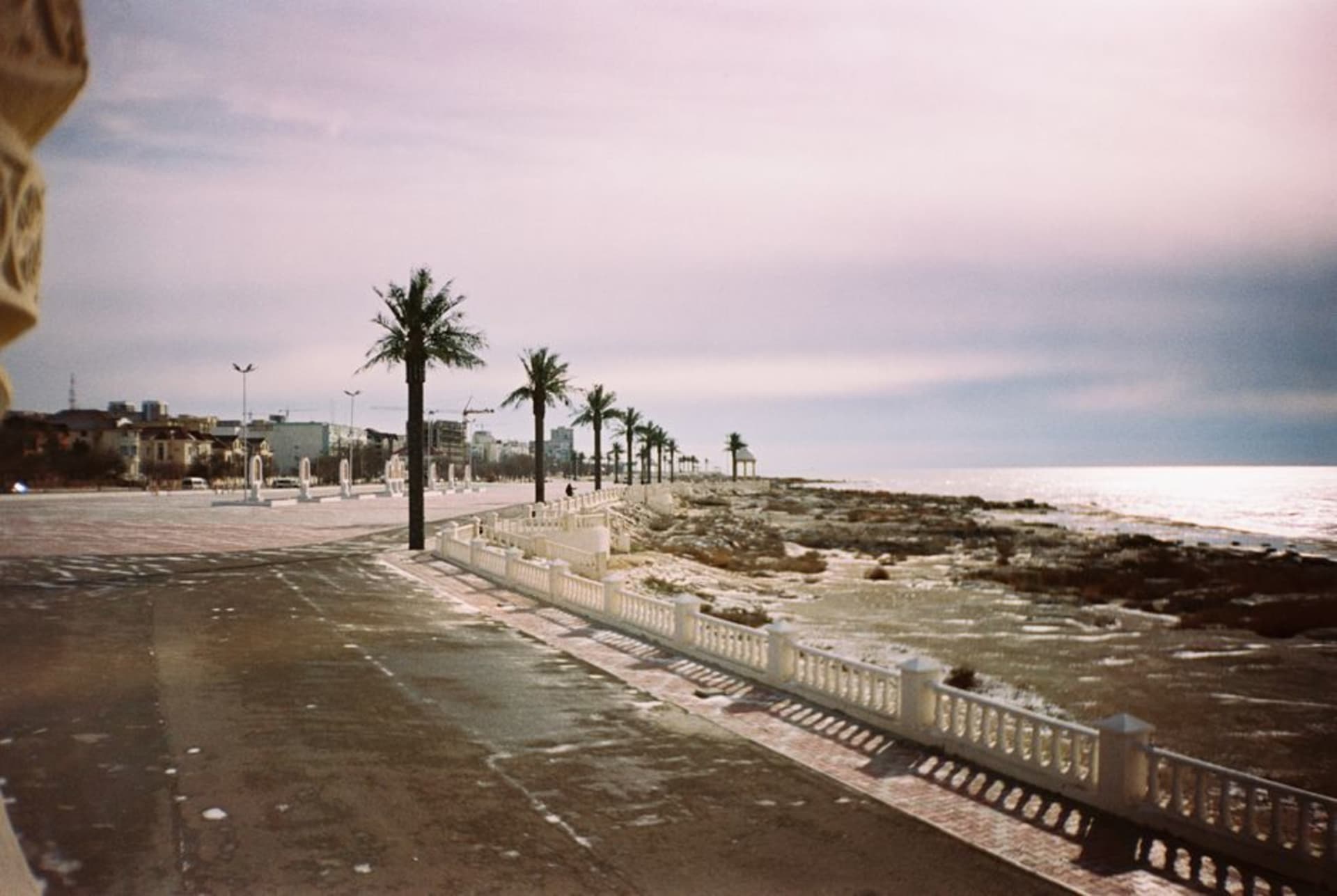
Sirte
"I remember thinking that Sirte was the quietest city we'd driven through in the whole country, and not in a peaceful way."
A quiet, scarred city on the Gulf of Sirte that still carries the outsized shadow of the man who once ruled from here.

There’s a specific kind of stillness in Sirte that I haven’t felt anywhere else in Libya. It was Gaddafi’s hometown, built up in the ’70s and ’80s into this improbable administrative showpiece — conference halls, wide ceremonial boulevards, buildings meant to say “look what he built for us” — and now a lot of that infrastructure just sits there, oversized for the city that actually uses it. Our driver, Nuri, slowed the car near Ouagadougou Hall, the huge conference center where African leaders once gathered, and just gestured at it without saying much. It felt less like a monument and more like a stage set someone forgot to strike.
We drove past the general area where Gaddafi made his last stand in 2011, and Nuri pointed it out matter-of-factly, the way you’d point out a gas station. That flatness surprised me — I’d expected something more charged, but people here seem to have absorbed that history into daily routine rather than dwell on it out loud, at least with a stranger like me asking questions through a translator.

What I didn’t expect was the coastline itself — the Gulf of Sirte here is this flat, pale turquoise, almost lagoon-like, and in the late afternoon a few local families were out with fishing lines off the breakwater, kids running along the sand. Lia waded in up to her ankles and said the water was warmer than anywhere else we’d swum on the trip. It was a strange, good moment to have in a city so associated with its worst chapter.

We didn’t stay long — Sirte still sits at a security fault line and Nuri was clear about not lingering after dark. But even in a few hours you get a sense of a city trying to just be a city again: a fish market reopening, kids on bikes weaving between checkpoints that felt more routine than tense. Whether that holds is anyone’s guess.
When to go: Only with a vetted local driver and up-to-date security clearance; cooler months (November to March) are more comfortable, but conditions here change fast, so check before committing to the trip.
Keep exploring
More from Libya
 libya
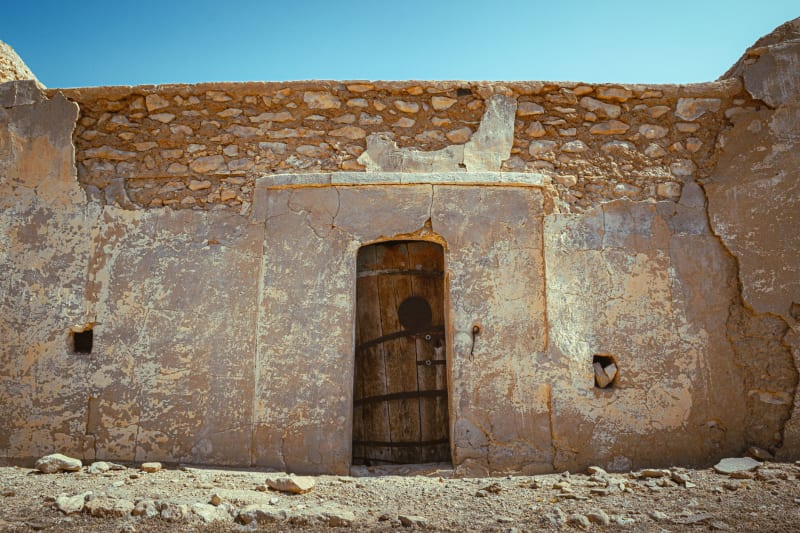
libya Tobruk
A port city defined by the Second World War's most brutal siege, where three different armies left three different cemeteries on the clifftops — each facing the same sea.
Explore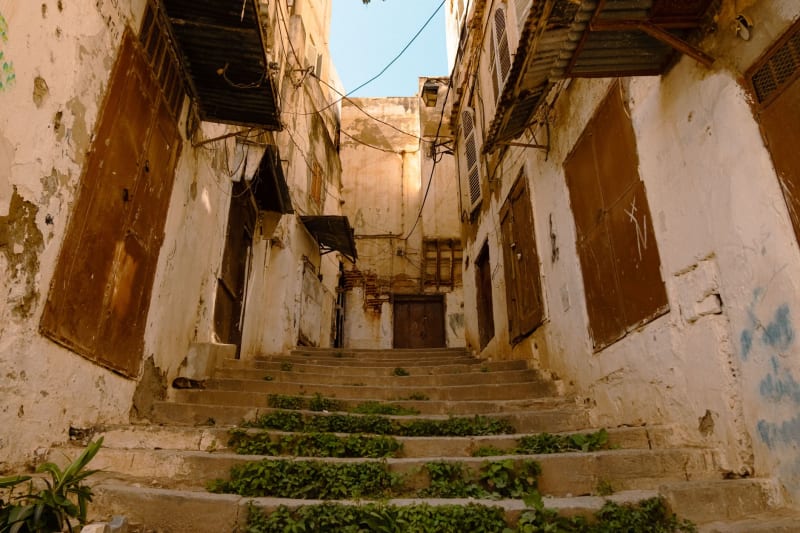 libya
libya Tripoli Old City
A medina where Ottoman mosques, Italian Rationalist boulevards, and a Roman arch standing in traffic all compete for the same narrow space.
Explore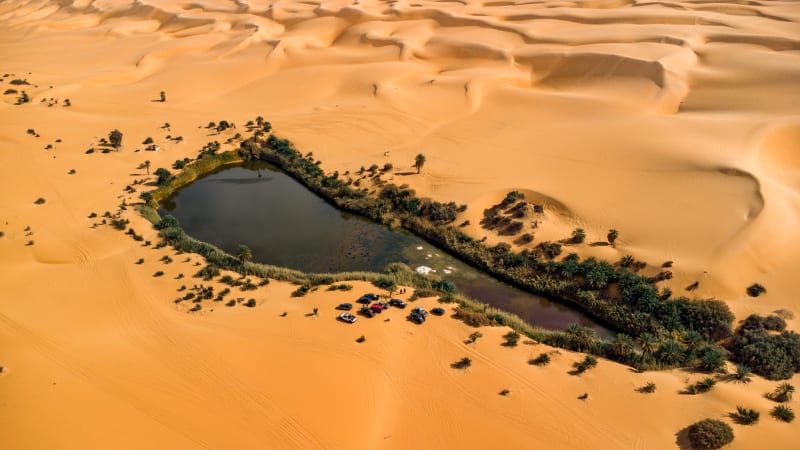 libya
libya Ubari Sand Sea
Saharan dunes the color of copper hiding improbable salt lakes that reflect the stars with an eerie, buoyant clarity — the most disorienting beautiful place I have been.
Explore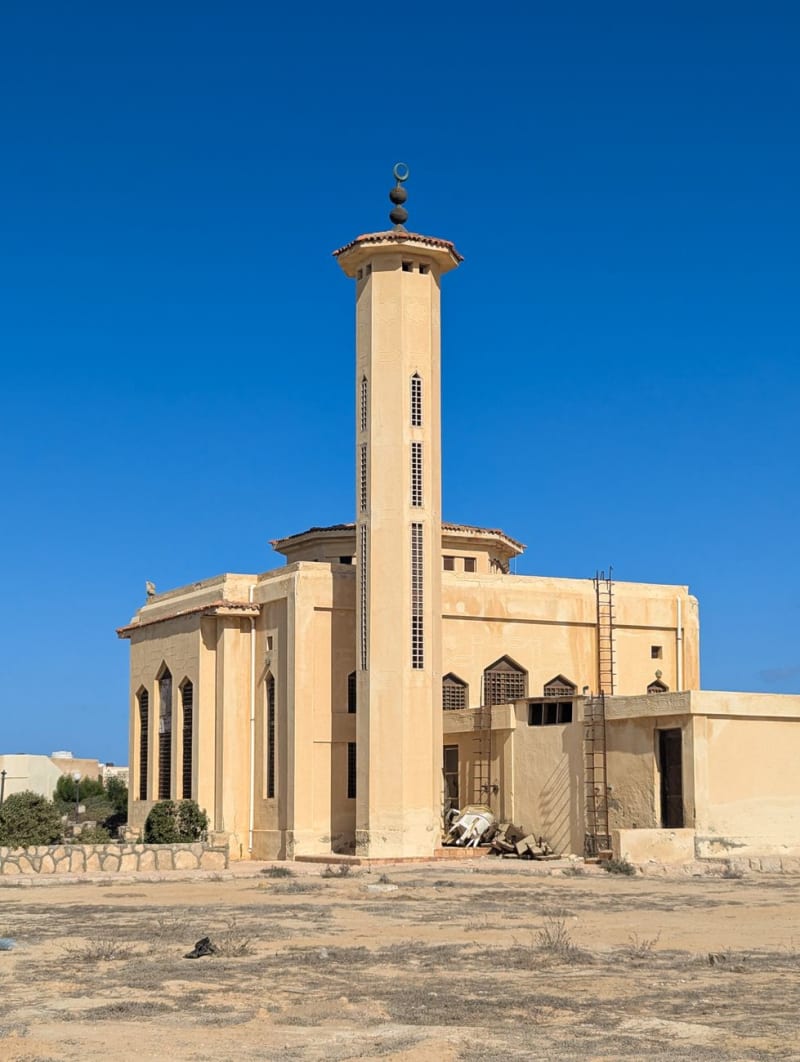 libya
libya Waw an Namus
A black volcanic crater marooned deep in the Libyan Sahara, ringed by jewel-coloured salt lakes and a halo of dark ash in an ocean of pale sand.
Explore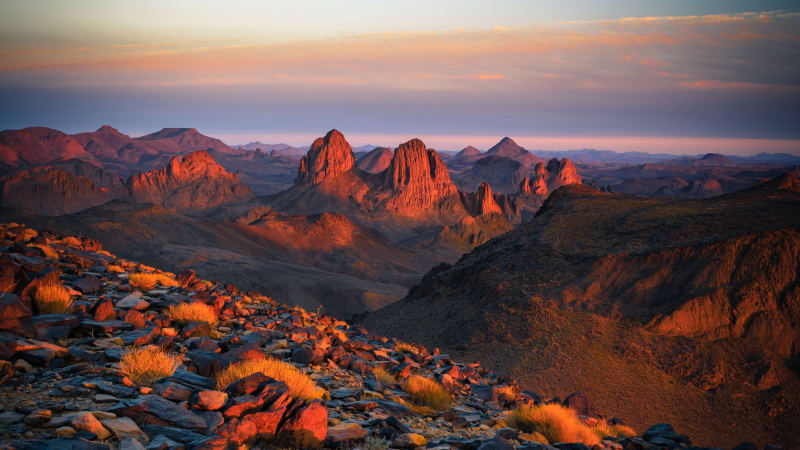 libya
libya Akakus Mountains
Prehistoric rock paintings hidden in Saharan sandstone — twelve thousand years of human art in a landscape that no longer resembles the world that made it.
Explore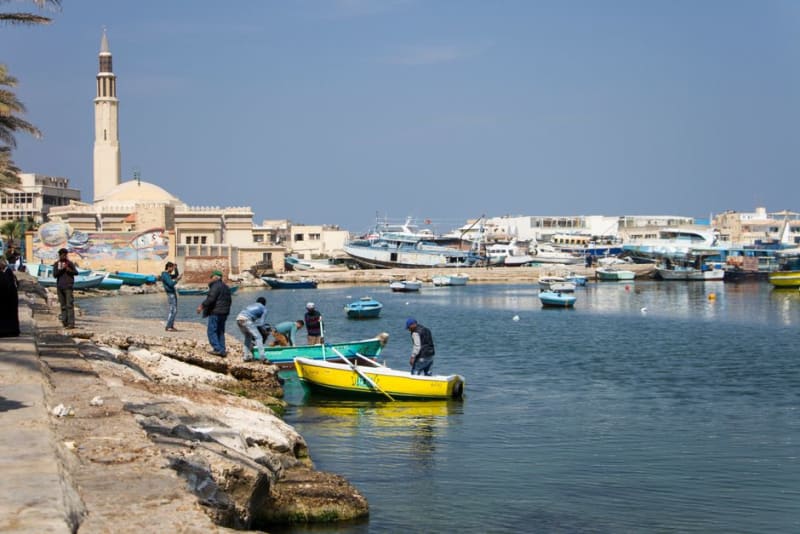 libya
libya Al-Khoms
A working fishing town on the coast road, useful mostly as the quiet gateway to the Roman ruins of Leptis Magna next door.
Explore