
Dečani Monastery
"The monk who guided us had the expression of someone who has been in the presence of something extraordinary for so long it has become ordinary — and that, in itself, was extraordinary."
A 14th-century white marble monastery in the mountain foothills that stopped me mid-step and made me reconsider what 'well-preserved' actually means.

The drive from Deçan town to the monastery took about ten minutes on a road through walnut and oak trees, and a Kosovo Force checkpoint at the entrance — KFOR soldiers in NATO gear, maintaining a buffer around the Serbian Orthodox monastery that was established after the war and has not been deemed unnecessary since — prepared me for something contested and heavy. What I found inside the compound walls was something else entirely: silence, wood pigeons in the trees, a stream running alongside the path, and one of the finest medieval buildings in the Balkans sitting there in the dappled afternoon light as if it had been doing so for six hundred and fifty years, which it had.
Visoki Dečani was founded in 1327 by the Serbian king Stefan Dečanski and completed by his son Stefan Dušan. The church is Romanesque-Byzantine — a combination that should not work as well as it does — built from alternating bands of white and pink marble quarried from the surrounding mountains. The façade is covered in hundreds of stone carvings: acanthus leaves, interlaced ribbons, faces of animals and saints, the whole medieval iconographic programme executed with a precision that seems impossible for the era and location. I stood outside it for ten minutes before going in, just looking.

Inside, the frescoes. More than a thousand of them, covering every surface from floor level to dome, dated to around 1340 and in a state of preservation that makes them appear almost newly painted. The colours — ochre, crimson, cobalt, the peculiar green that Byzantine painters achieved with copper compounds — remain vivid in a way that photographs cannot adequately capture. I stood in the nave for a long time looking at the Nemanjić family tree — a painting of Christ presiding over the dynastic genealogy of the Serbian royal family — and felt the specific bewilderment of being in the presence of something made with that level of care and intention.
The monks here still follow the monastic horarium, the schedule of prayer and work that has organized Orthodox monastic life since the desert fathers. I arrived during the late afternoon, between services, and heard chanting from somewhere deeper in the compound — the sound of it, male voices in unison, traveling through the stone walls and across the courtyard. The gift shop by the gate sells honey from hives on the monastery grounds, herbal liqueurs, and beeswax candles. The honey is extraordinary — dark and resinous, the flavour of mountain flowers concentrated by altitude.

The valley around the monastery is quiet in a way the towns of Kosovo rarely are, the surrounding beech and oak forest absorbing the ordinary sounds of the world. A stream runs along one wall of the compound, audible from the courtyard. On the hillside above, a path leads through the forest to a spring of cold water that the monks consider holy and the hikers consider extremely convenient.
When to go: Open to visitors year-round, though spring and autumn offer the most comfortable surrounding countryside. Women must cover their shoulders and hair; men should wear long trousers. Photography is permitted in exterior areas; inside the church, ask the monks. Avoid Sunday mornings, when services fill the interior. Give yourself at least two hours — rushing Dečani would be a mistake.
Keep exploring
More from Kosovo
 kosovo
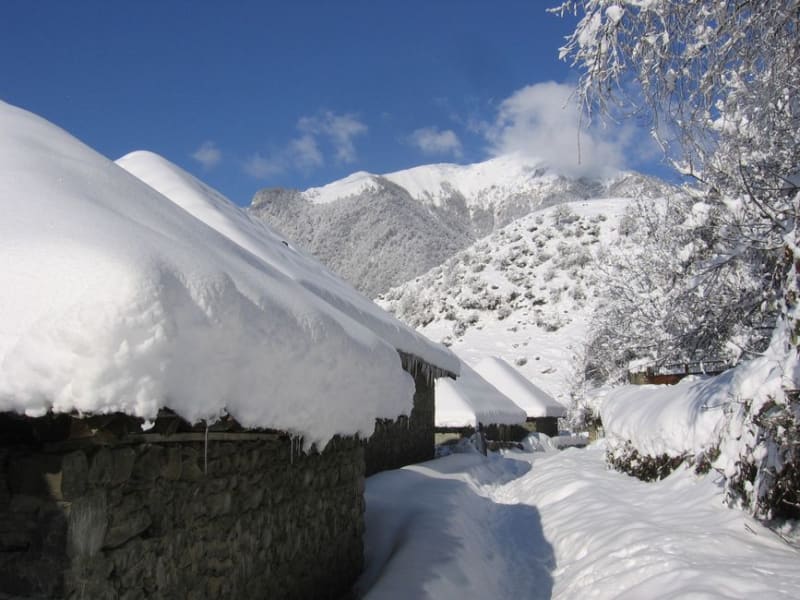
Dragash
A remote mountain municipality in the Sharr range where the Gorani minority still keeps its own dialect, food, and quiet stone villages alive.
Explore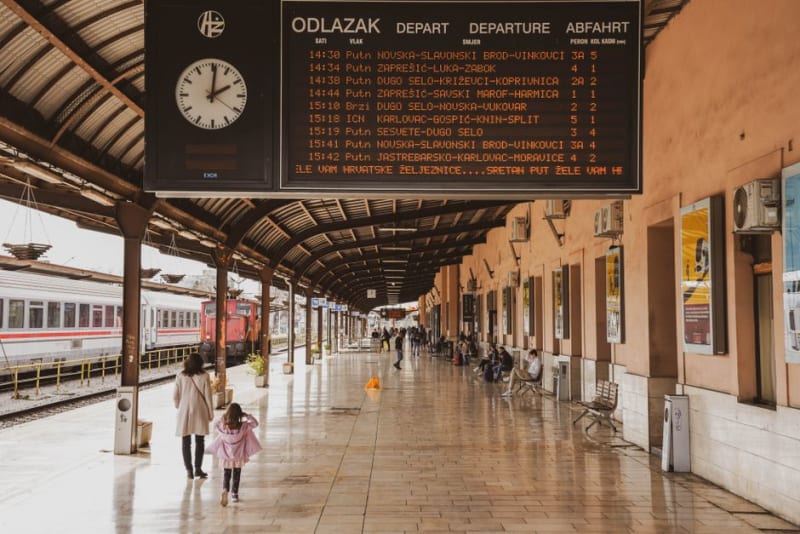 kosovo
Ferizaj
A no-nonsense railway city that grew up around a station on the old Balkan line to Thessaloniki, still running on that same working rhythm today.
Explore kosovo
Marble Cave of Gadime
A farmer digging for water in 1966 stumbled onto two million years of stone, and now you can walk through it near Pristina.
Explore kosovo
Gjakova
Kosovo's most preserved Ottoman bazaar town, where the craftsmen still work by hand, the pace is unhurried, and nobody seems to be performing for anyone.
Explore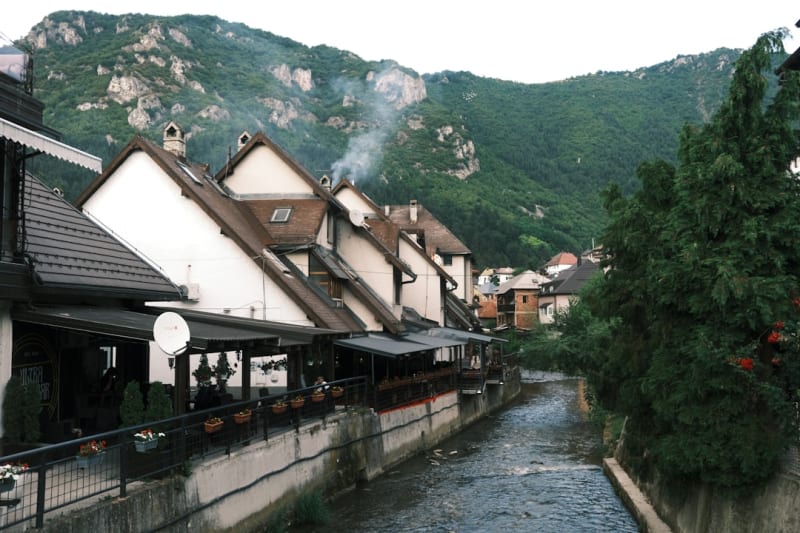 kosovo
Gjilan
An easygoing eastern market town near the North Macedonian border with a lively bazaar street and none of the pretension of Pristina.
Explore kosovo
Gračanica Monastery
A 14th-century Byzantine marvel ten kilometres from Pristina whose interior frescoes are so vivid they make the outside world feel temporarily drained of colour.
Explore