Dragash
"A shepherd waved us off the road so his sheep could cross, then stood there long enough that I turned the engine off."
A remote mountain municipality in the Sharr range where the Gorani minority still keeps its own dialect, food, and quiet stone villages alive.

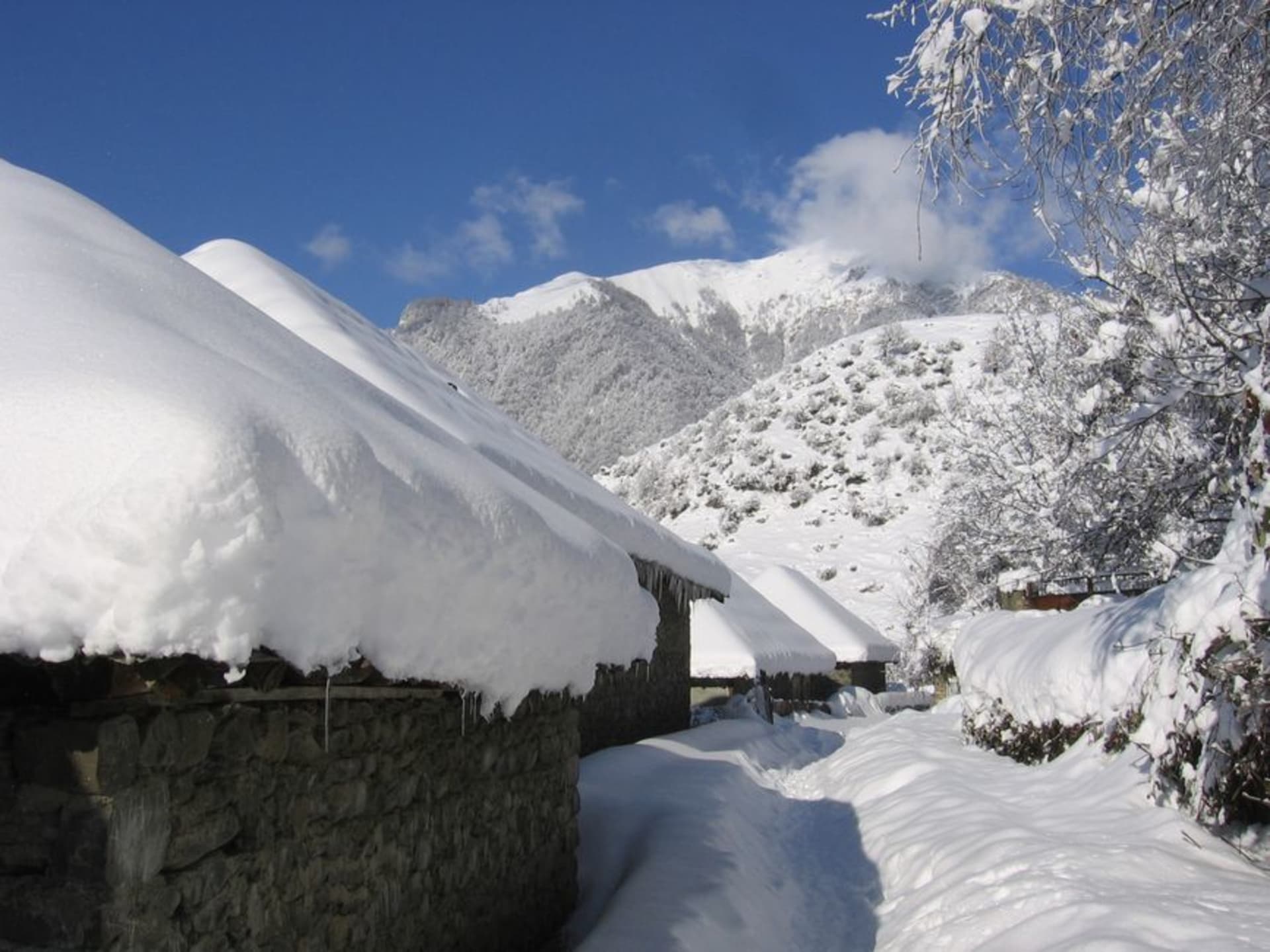
Dragash is the furthest south we went in Kosovo, and it felt like it — the roads narrow, the phone signal drops, and the villages start looking less like anything else in the country and more like something out of the mountains of northern Greece or Albania. This whole municipality sits in the Sharr range, and it’s home to the Gorani, a Slavic Muslim minority with their own dialect, their own dress traditions, and their own sense of not quite belonging fully to any of the nearby national narratives — Kosovar, Albanian, North Macedonian, or Bosnian. Lia’s family has Balkan roots and even she said the dialect she overheard in a Dragash café sounded like nothing she’d heard growing up.
We based ourselves in the town of Dragash itself for a night and used it to reach a few of the stone villages scattered up the valleys — Brod and Restelica stuck with me most, houses built from the same grey local stone as the mountains behind them, roofs low and steep against snow that apparently piles up hard here in winter. Even in late summer there was a chill in the morning air that told you this wasn’t lowland Kosovo anymore.

What I didn’t expect was how much of a hiking base this could be. The Sharr range here forms the edge of a proposed cross-border peace park connecting Kosovo, Albania, and North Macedonia, and trails head straight up from villages into alpine meadows that felt genuinely untouched — no huts, no signage, just sheep trails and the occasional shepherd who’d clearly walked these paths his whole life. We didn’t get far, maybe two hours up and back, but even that gave a sense of scale I hadn’t felt anywhere else in the country.

Food-wise, Dragash surprised us too — a Gorani specialty involving layered dough and local cheese that our guesthouse host called by a name I’ve since forgotten and never found written down anywhere. That’s Dragash in a sentence, honestly: things that exist here and pretty much nowhere else, half-documented, worth the long drive to catch before they change.
When to go: Come in July or August for hiking weather and open mountain passes; roads and trails can be genuinely difficult or closed once winter snow sets in.
Keep exploring
More from Kosovo
 kosovo
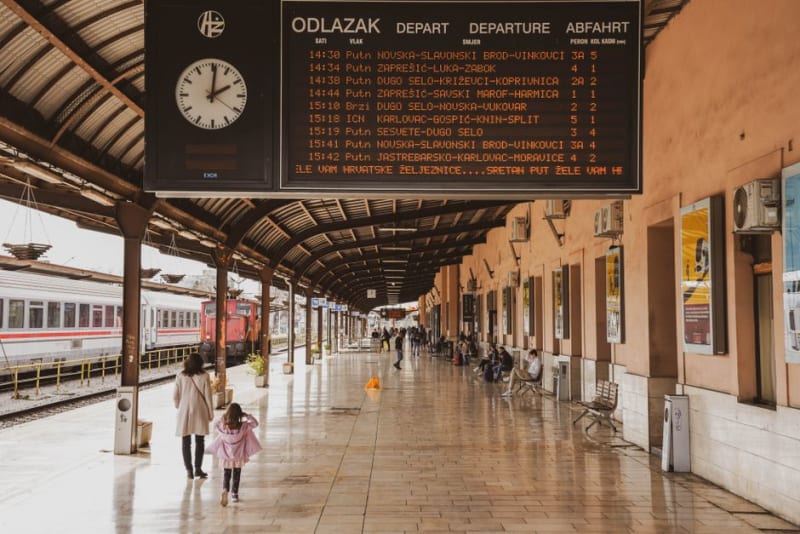
Ferizaj
A no-nonsense railway city that grew up around a station on the old Balkan line to Thessaloniki, still running on that same working rhythm today.
Explore kosovo
Marble Cave of Gadime
A farmer digging for water in 1966 stumbled onto two million years of stone, and now you can walk through it near Pristina.
Explore kosovo
Gjakova
Kosovo's most preserved Ottoman bazaar town, where the craftsmen still work by hand, the pace is unhurried, and nobody seems to be performing for anyone.
Explore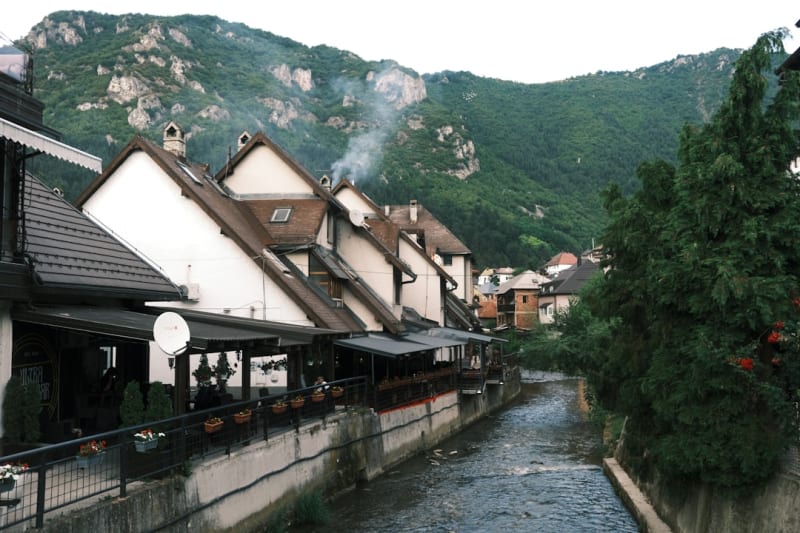 kosovo
Gjilan
An easygoing eastern market town near the North Macedonian border with a lively bazaar street and none of the pretension of Pristina.
Explore kosovo
Gračanica Monastery
A 14th-century Byzantine marvel ten kilometres from Pristina whose interior frescoes are so vivid they make the outside world feel temporarily drained of colour.
Explore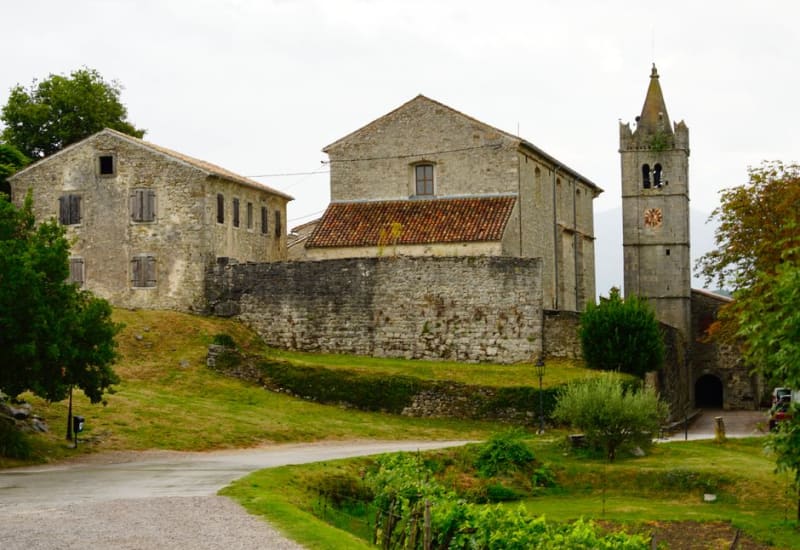 kosovo
Janjeve
A hillside Croatian Catholic village in central Kosovo where an old stone church still rings its bells over empty stone houses.
Explore