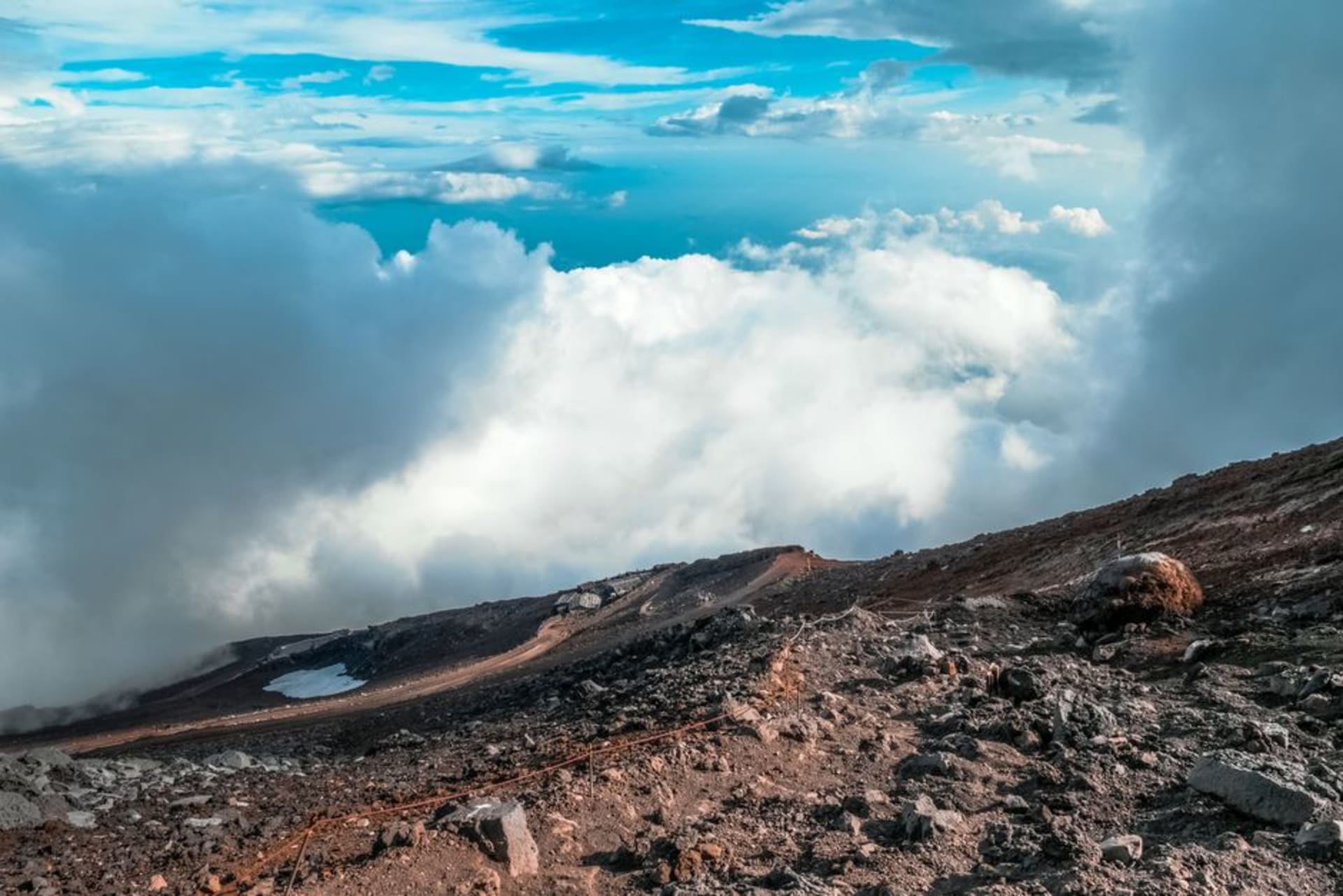
Mount Myogi
"I was gripping a chain bolted into bare rock, and Lia was taking photos like it was a stroll."
A jagged conglomerate ridge of six spires, ranked among Japan's three strangest rock formations, where a chain-bolted climbing route turns a hike into a genuine scramble above narrow, autumn-colored ridgelines.

I want to be upfront that Mount Myogi scared me a little, and that Lia found this enormously funny. A colleague of hers who hikes obsessively had described it as one of Japan’s three most unusual rock formations, a jagged ridge left behind after a volcano eroded down to its bones, and had mentioned almost as an afterthought that part of the route involves climbing chains bolted into a rock face. Lia heard “chains” and got excited. I heard “chains” and started quietly reconsidering my footwear.
Six Spires From an Eroded Volcano
Myogi’s silhouette is unlike anything else we saw in Kanto — six sharp conglomerate spires jutting up in a jagged row, the remnant of a volcano that millions of years of erosion stripped down to its hardened lava and volcanic tuff core. Seen from the valley road on the approach, it looks almost artificial, too spiky and deliberate to be the product of plain weathering, and it’s easy to understand why it’s earned its reputation as one of the country’s three most unusual rock formations. We stood at the trailhead for a while just looking up at it, trying to trace a plausible path up something that, from below, looked entirely vertical.

The Chained Ridge
The middle route up Myogi is the one everyone talks about, and it earns the talk — long stretches where the trail effectively disappears into bare rock, and thick chains bolted into the stone are the only real handhold across narrow ledges with a serious drop on either side. I moved slowly, testing each chain before committing my weight, my heart somewhere up near my throat the whole way. Lia, infuriatingly calm, kept pausing to admire the view instead of hurrying across. There’s a specific moment, crossing one exposed section with nothing below but air and treetops, where I stopped being scared and started being genuinely exhilarated instead — the kind of shift that only happens when you’ve committed too far to turn back.

Ridgelines in Autumn
We’d chosen November on purpose, and the payoff was worth every white-knuckled chain crossing: the narrow ridgelines wrapped in a corridor of red and gold foliage, the color somehow more vivid for how impossibly narrow the ground beneath it was. From the higher points you could see the whole valley spread out below, the autumn color rolling down the slopes in patches, distant peaks fading into blue haze. We sat on a wide enough ledge to actually relax for a few minutes, sharing water and trail snacks, before continuing the descent on legs that had gone slightly shaky from the effort and the adrenaline both.

Getting There
Myogi Station, on the Joshin Dentetsu Line, is the usual approach, reached via a transfer at Takasaki, itself accessible from Tokyo by shinkansen or regular train — the full trip runs around ninety minutes. From the station it’s a short bus or taxi ride to the main trailhead near Myogi Shrine. The chained middle route demands proper hiking shoes, dry conditions, and a genuine comfort with heights; the outer routes offer gentler, still-scenic alternatives for anyone who’d rather admire the spires from a safer angle.
Keep exploring
More of Kantō
Keep exploring
More from Kantō
 japan
japan Mount Takao
Tokyo's beloved forested mountain at the western edge of the city, where cedar trails climb to a clifftop temple, tengu goblins watch from the shadows, and Mount Fuji floats on the horizon on a clear day. The capital's easiest true escape into nature.
Explore japan
japan Nagatoro
A river gorge two hours from Tokyo where the Arakawa has carved a wide shelf of folded rock called Iwadatami — walkable at low water, and run through by rapids on a wooden boat. A quiet weekend escape that barely registers as an escape at all.
Explore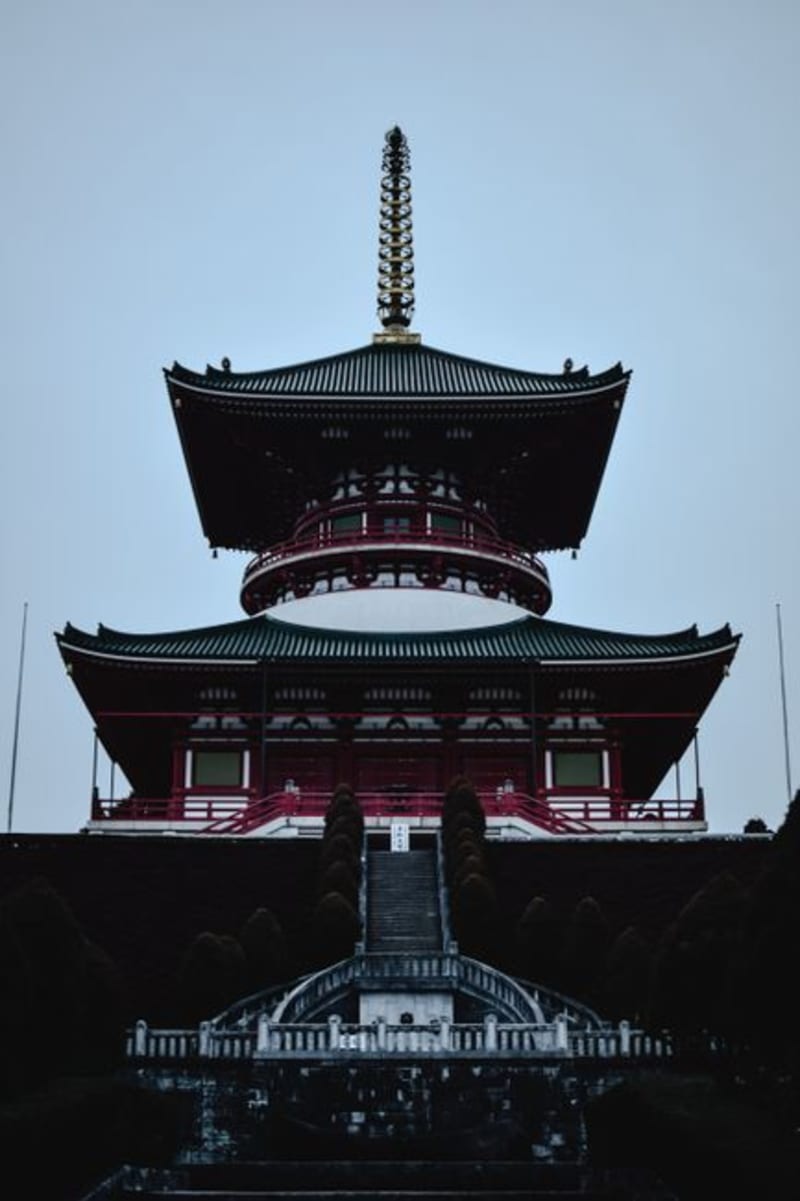 japan
japan Narita
A Chiba temple town in the shadow of the international airport, where a grand thousand-year temple sits at the end of an old pilgrim street famous for grilled eel. A surprising first or last taste of Japan, far richer than its runway-side reputation suggests.
Explore japan
japan Nasu
A breezy Tochigi highland of hot springs, dairy ranches, and volcanic slopes, long favoured by the imperial family as a summer escape. Nasu is where Tokyo goes to breathe — pine air, soft-serve ice cream, and steaming baths under an active mountain. We came for a night and stretched it to three.
Explore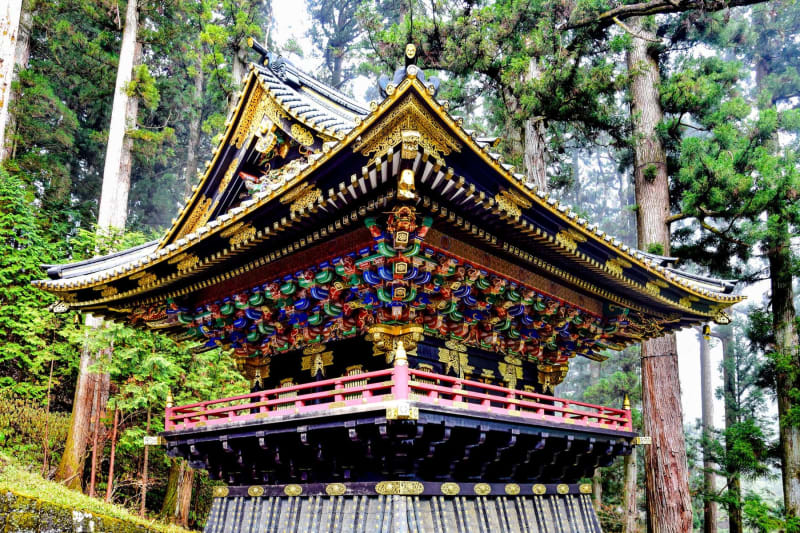 japan
japan Nikko
Extravagant Edo-era shrines buried in cedar forest, a deliberate overstatement of devotion.
Explore japan
japan Nokogiriyama
A jagged former quarry mountain across Tokyo Bay in Chiba, where a vertiginous clifftop lookout offers a 'peek into hell', a giant stone Buddha sits carved into the rock, and hundreds of weathered arhats watch from the hillside. Raw stone, sweeping bay views, and an easy escape by ferry.
Explore