Nokogiriyama
"You shuffle to the edge, look straight down, and understand the nickname instantly."
A jagged former quarry mountain across Tokyo Bay in Chiba, where a vertiginous clifftop lookout offers a 'peek into hell', a giant stone Buddha sits carved into the rock, and hundreds of weathered arhats watch from the hillside. Raw stone, sweeping bay views, and an easy escape by ferry.

The name means “saw mountain”, and from the ferry crossing Tokyo Bay you can see why — the ridge across the water in Chiba bites into the sky in hard, angular teeth, the leftover shape of centuries of stone-cutting. Lia and I had wanted a day trip with a bit of edge to it, something less polished than the temple towns, and Nokogiriyama delivered exactly that: a mountain that men carved into for building stone until it looked half-natural and half-ruin, now stitched together with staircases and dotted with old Buddhist carvings. Reaching it meant a ferry across the bay, which already felt like an adventure, the Tokyo skyline sinking behind us and the toothy ridge rising ahead.
The Peek into Hell
The mountain’s famous spot is Jigoku Nozoki — literally “hell peek” — a shelf of rock that juts straight out over a sheer quarried drop. You climb up through the temple grounds to a viewing platform, then edge out onto the overhang, and there is nothing below your feet but a very long fall to the forest and the blue bay beyond. Lia went right to the railing; I found my legs oddly reluctant and shuffled the last few steps like a much older man. The view, once I trusted the rock, was enormous — the whole sweep of Tokyo Bay, ships crossing it, and on that clear day the faint cone of Fuji away to the west. A line of visitors waited their turn to stand at the tip, everyone laughing nervously, everyone gripping the rail.

The Great Buddha and the Arhats
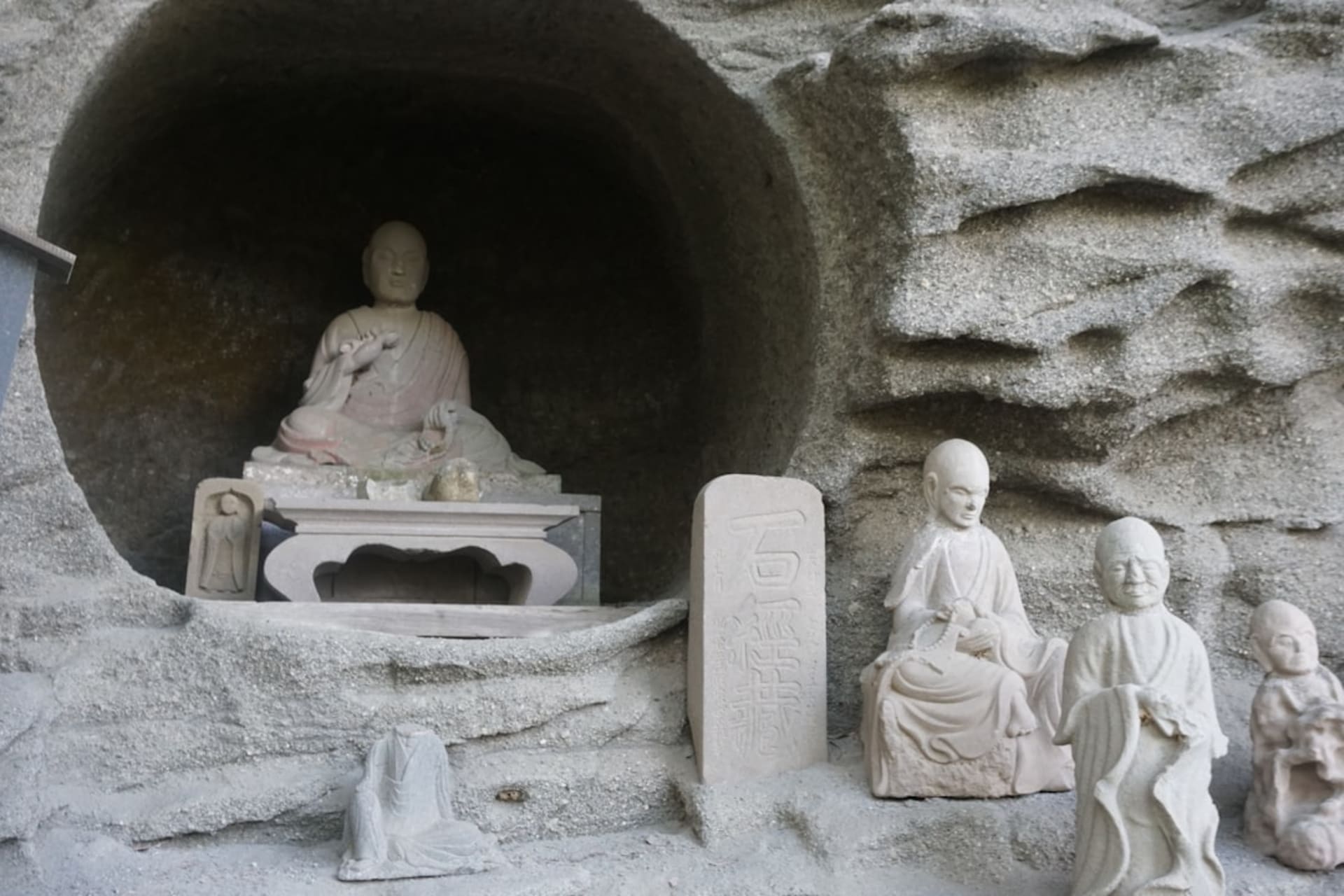
Down among the trees on the mountainside sits the Nihon-ji Daibutsu, a colossal stone Buddha carved out of the rock face — larger, in fact, than the more famous bronze ones at Kamakura or Nara, and quietly weathered by the sea air. He sits serene and mossy in a hollow of the hillside, and after the vertigo of the lookout there was something deeply steadying about standing at his feet. Nearby, scattered along the paths, are the hyaku-shaku kannon and rows upon rows of stone arhats — hundreds of small carved disciples of the Buddha, each with a different face, many missing heads or hands from the passage of time and old upheavals. Lia walked slowly along them, and I watched her stop at one whose worn expression seemed, she said, to be almost smiling.

Stone, Stairs, and Sea
What stays with me about Nokogiriyama is the raw texture of the place. Where the quarrymen worked, the rock is cut in clean vertical walls, sheer and grey, striped with tool marks, so that whole corridors of the mountain feel like open-air cathedrals of stone. We climbed and descended endless staircases threading between these walls and the forest that has crept back over the old workings. It is not a big mountain, but it is a steep one, and by the time we came back down to the ferry pier our knees were complaining and we were thoroughly happy. We ate grilled seafood at a stall by the water, watching the boats, the saw-toothed ridge now behind and above us catching the late light.

Getting There
The classic approach is the ferry, and I’d urge you to take it: the Tokyo-Wan Ferry crosses the bay from Kurihama, near Yokosuka on the Kanagawa side, to Kanaya in Chiba in about forty minutes, and the mountain rises right behind the pier. Alternatively, the JR Uchibō Line runs down the Chiba coast to Hama-Kanaya station, a short walk from the base. From Kanaya a ropeway lifts you most of the way up, or you can climb the trails on foot — the fittest option and the most rewarding. Wear proper shoes for the stone staircases, bring water in summer, and pick a clear day so the bay and Fuji show themselves from the peek into hell.
Keep exploring
More of Kantō
Keep exploring
More from Kantō
 japan
japan Okutama
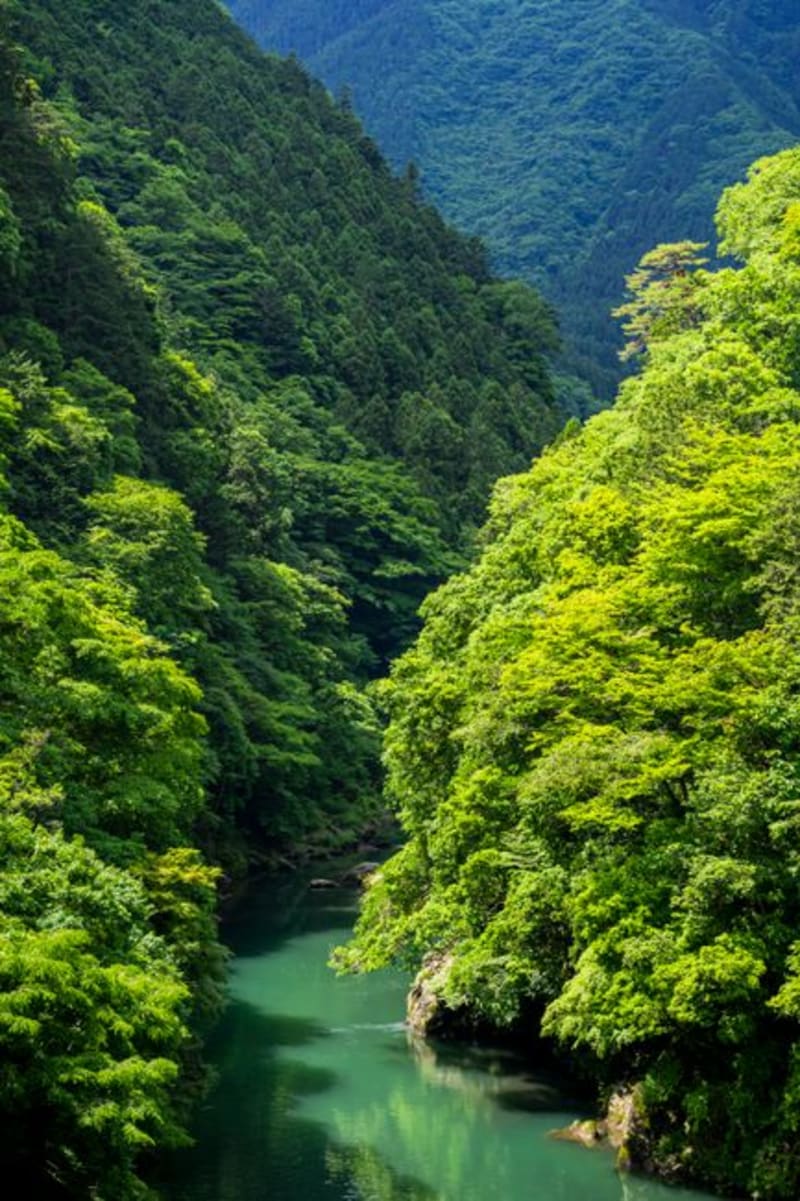
Tokyo's forgotten western edge, where the metropolis dissolves into cedar mountains and a jade-green reservoir. Lia and I came here to remember that the world's largest city keeps a wilderness in its back pocket. Two hours from Shinjuku and suddenly we could hear the river.
Explore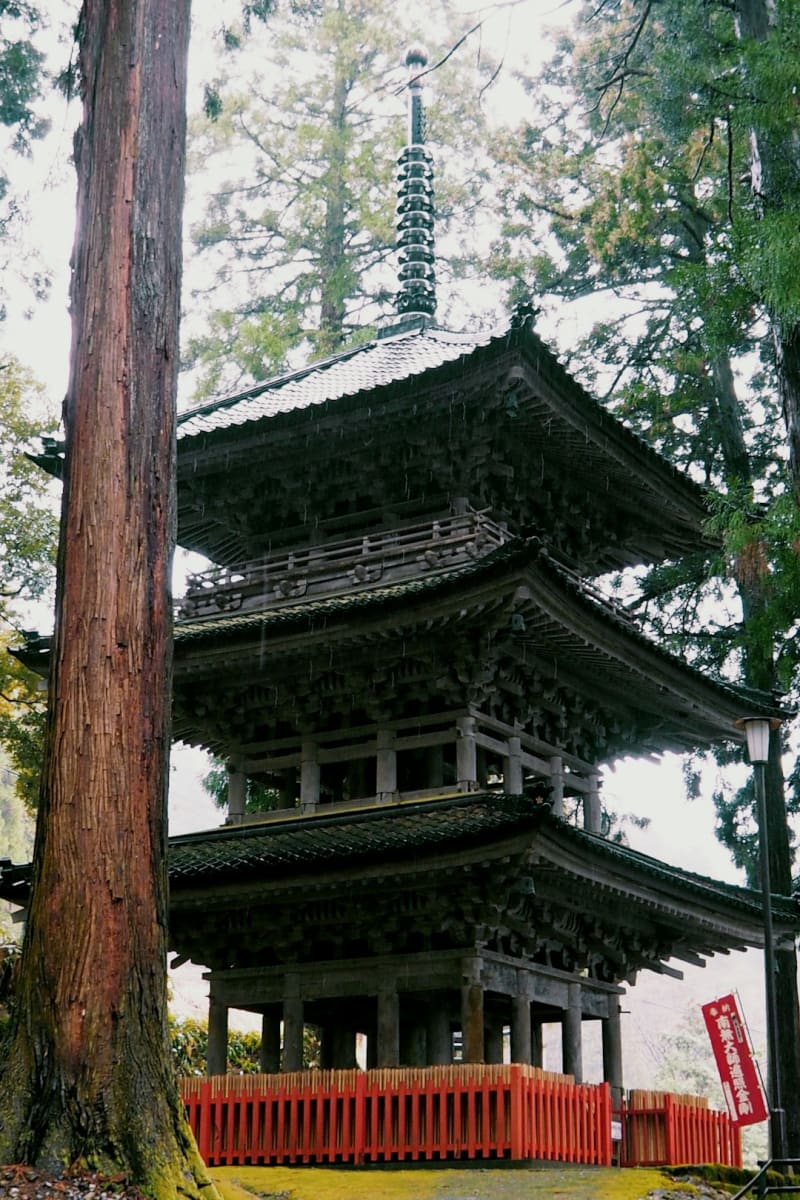 japan
japan Mount Takao
Tokyo's beloved forested mountain at the western edge of the city, where cedar trails climb to a clifftop temple, tengu goblins watch from the shadows, and Mount Fuji floats on the horizon on a clear day. The capital's easiest true escape into nature.
Explore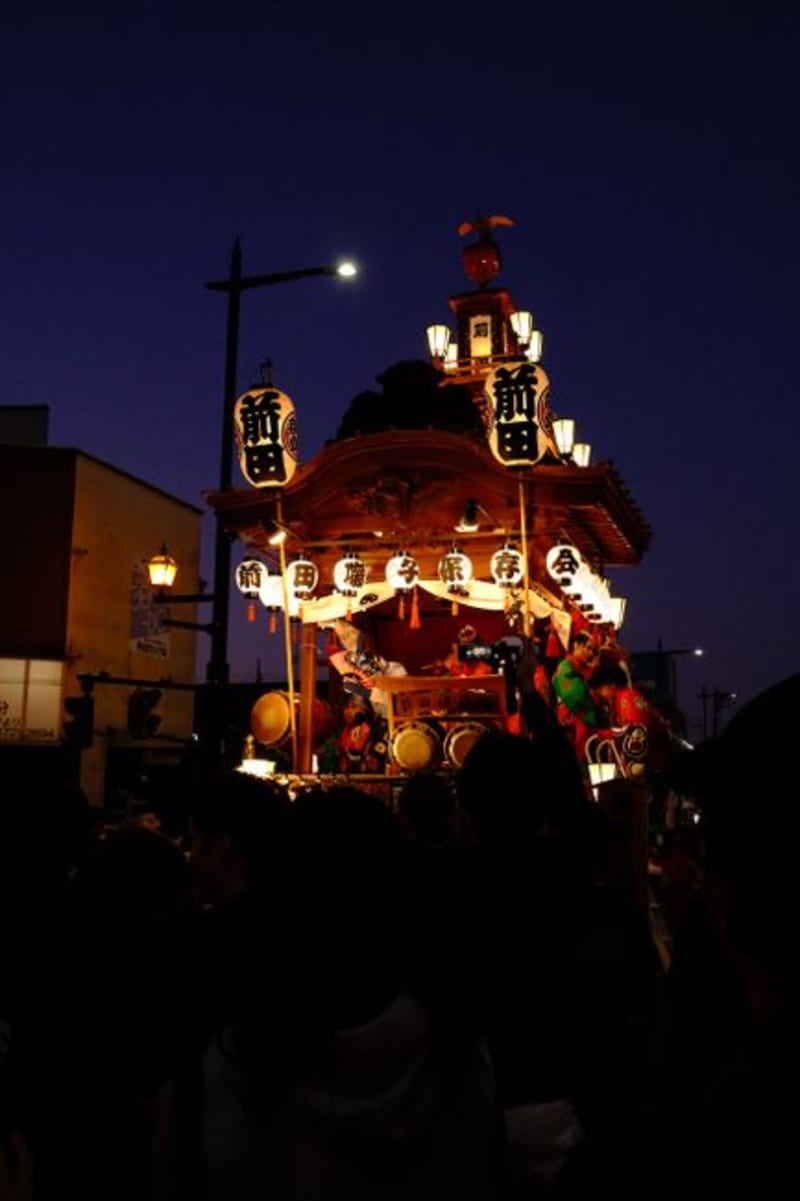 japan
japan Chichibu
A mountain-ringed basin in western Saitama, close to Tokyo and yet somehow overlooked — a district of old shrines and river valleys, of pilgrim temples and pink hills of moss phlox, and of one December night when floats hung with lanterns are hauled up a hill under fireworks.
Explore japan
japan Kawagoe
A Saitama town that kept its Edo-era face when Tokyo lost its own — a street of black clay-walled warehouses, a wooden bell tower that still marks the hours, and an alley that smells of burnt sugar. The easiest half-day escape from the capital I know.
Explore japan
japan Tomioka
A quiet Gunma town built around a red-brick silk mill that once dressed half the world. The Tomioka Silk Mill is a UNESCO monument to the moment Japan chose to modernise, and to the young women whose fingers made it happen. It's a place about thread, and about everything thread can pull along behind it.
Explore japan
japan Hakone
Volcanic hot-spring town offering the clearest views of Fuji across the caldera lake.
Explore