Taushubetsu Bridge / Nukabira Onsen
"It looked like something Roman, Lia said, stranded in the wrong century and the wrong country entirely."
An abandoned 1937 railway bridge with eleven concrete arches that vanishes underwater each June as a reservoir fills, then re-emerges through the winter draw-down — nicknamed the phantom bridge, and reached now only by a bear-belled walk from a quiet onsen village.

We were staying in Nukabira Onsen mostly to soak somewhere quiet after a long stretch of driving, and it was only over dinner that the innkeeper mentioned, almost as an aside, that a strange abandoned railway bridge sat out in the reservoir a short walk from where we were sleeping. Lia had her shoes back on before he’d finished the sentence. The Taushubetsu Bridge was built in 1937 for a rail line that no longer exists, and its eleven arches now stand in a reservoir that floods over them every June and drains back down through the winter, meaning the bridge spends half its life submerged and half its life visible, slowly eroding a little more each cycle. They call it the phantom bridge, and the name earns itself the moment you see it.
Walking In With a Bear Bell
The access road out to the bridge has been closed to vehicles since 2009, so seeing it now means parking near the trailhead and walking in on foot, bear bell clipped to your bag and swinging with every step. It’s not a hard walk, more of a firm reminder that you’re in genuine Hokkaidō backcountry rather than a groomed tourist path. Lia rang her bell with slightly exaggerated enthusiasm the whole way, half joking, half not, and I’ll admit I did the same once the trees closed in around us. We didn’t see anything larger than a fox, but the walk itself, quiet and slightly tense, felt like part of the experience rather than an obstacle to it — you earn the view in a way you wouldn’t if you could just drive up and park.

The Arches Themselves
Then the trees opened up and there it was — eleven bare concrete arches standing in still water, reflected so cleanly on a calm day that it was hard to tell where the bridge ended and its reflection began. Lia said it looked like something Roman, an aqueduct stranded in the wrong century and the wrong country, and she wasn’t wrong; there’s something almost classical about the rhythm of those repeating arches against flat water and pine-covered hills. We’d timed our visit for a point in the drawdown when most of the structure was exposed, and even knowing that in a few weeks it would start disappearing again gave the whole scene a kind of quiet urgency. We just stood there for a long while, not talking much, watching the light change on the water.

Back to the Onsen
We walked back out as the light started to go gold, and there is genuinely no better reward for a bear-belled forest walk than a hot spring waiting at the end of it. Nukabira Onsen is a small, unassuming village, a handful of ryokan and a quiet main street, nothing like the resort towns further south, and that suited us fine after a day like this. We soaked outside as the sky dimmed, steam rising off the water, still talking about the bridge in the low, half-tired way you talk after seeing something that doesn’t quite fit anywhere else you’ve been. Lia said it was one of the strangest, most beautiful things she’d seen in Hokkaidō, and given everything else we’d seen by that point, that was saying something.

Getting There
Nukabira Onsen sits about forty minutes by car from Obihiro, along a road that climbs steadily into the forested hills of central Hokkaidō. There’s no train service out this way, so a rental car is essential, and the drive itself, especially in autumn color, is worth taking slowly. The bridge is only fully visible during certain windows of the reservoir’s cycle — generally most exposed in winter and early spring, and mostly or fully submerged by midsummer — so check current conditions locally before you commit to the walk. Bring a bear bell, sturdy shoes, and, ideally, a change of clothes for the onsen waiting for you back in the village.
Keep exploring
More of Hokkaidō
Keep exploring
More from Hokkaidō
 japan
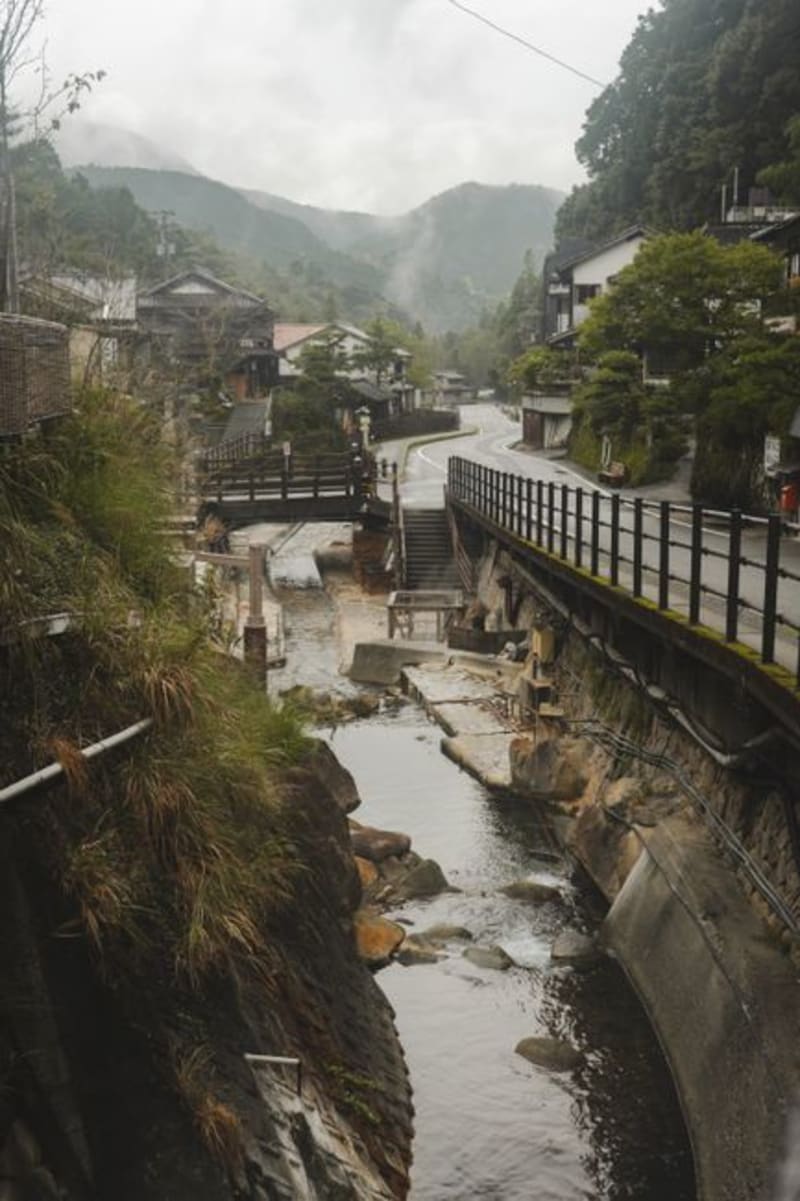
japan Tokachigawa Onsen
A hot-spring town on the wide Tokachi plain whose water is unlike anywhere else in Japan — a rare amber 'moor' spring, rich with ancient peat, that turns your skin soft and smells faintly of the earth. Tokachigawa doesn't have mountains or a famous lake. It has this strange dark water, and it turns out that's enough.
Explore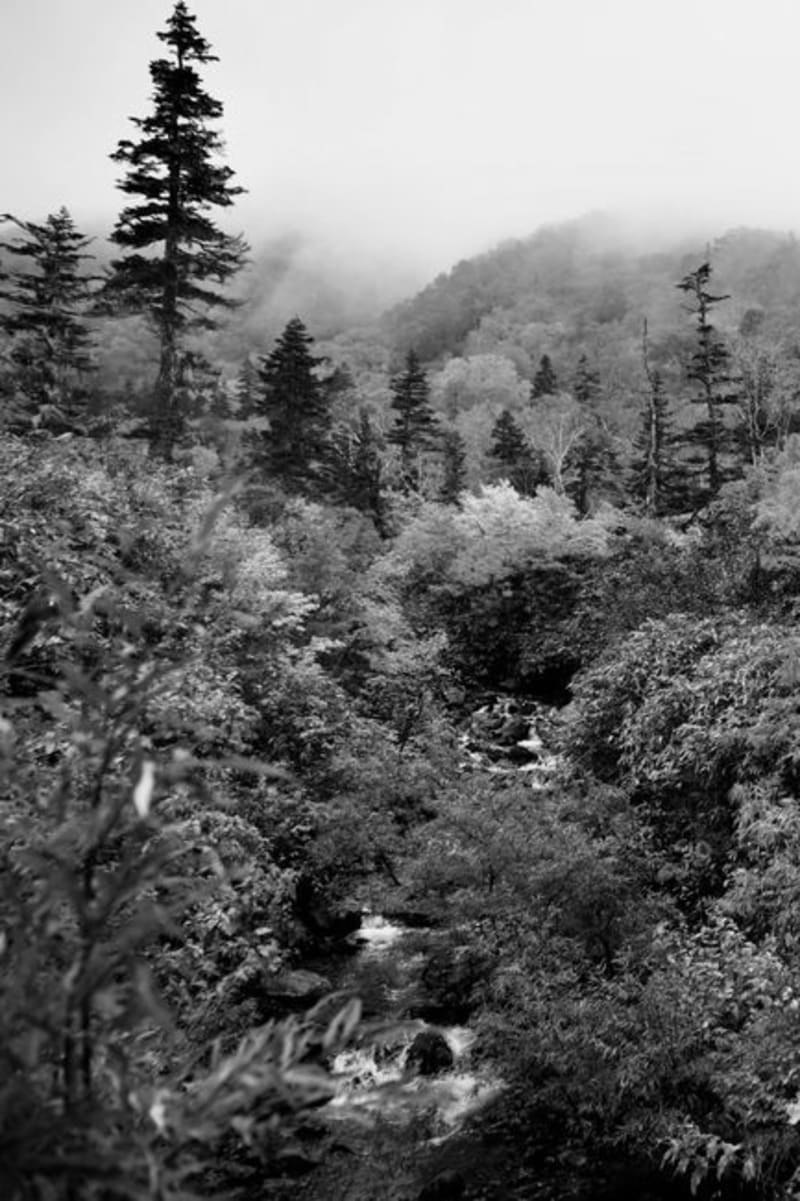 japan
japan Tomamu
A mountain resort in central Hokkaido known for its Unkai Terrace, where dawn spills a silent ocean of cloud across the valleys below. Twin glass towers rise from the forest, and the whole place is built around one gamble: that you'll wake before sunrise for a sea that may or may not appear. We took the bet twice.
Explore japan
japan Toyotomi Onsen
Japan's northernmost hot spring, opened in 1926 and drawn from an old oil and natural-gas field, its bathwater genuinely carrying a thin sheen of crude that visitors with eczema and psoriasis travel here specifically to soak in.
Explore japan
japan Wakkanai
Japan's northernmost city, a windswept dairy port looking out from Cape Sōya toward the coast of Sakhalin. Treeless green capes, herds grazing under a huge sky, and the ferry pier for the wild islands of Rishiri and Rebun.
Explore japan
japan Yubari
A steep valley town in central Hokkaido, once a roaring coal city and now Japan's most famous shrinking one, where legendary melons grow in the same hills that hold abandoned mines. Its story is bittersweet — boom, collapse, and a stubborn sweetness that refuses to leave. We came for the melons and stayed for the ghosts.
Explore japan
japan Abashiri
A port on the far northeastern edge of Hokkaidō where the Sea of Okhotsk freezes into a moving field of drift ice each winter. Icebreaker cruises that shoulder through the floes, a stark former-prison museum on a hill, and a light so pale and clean it feels like the end of the map.
Explore