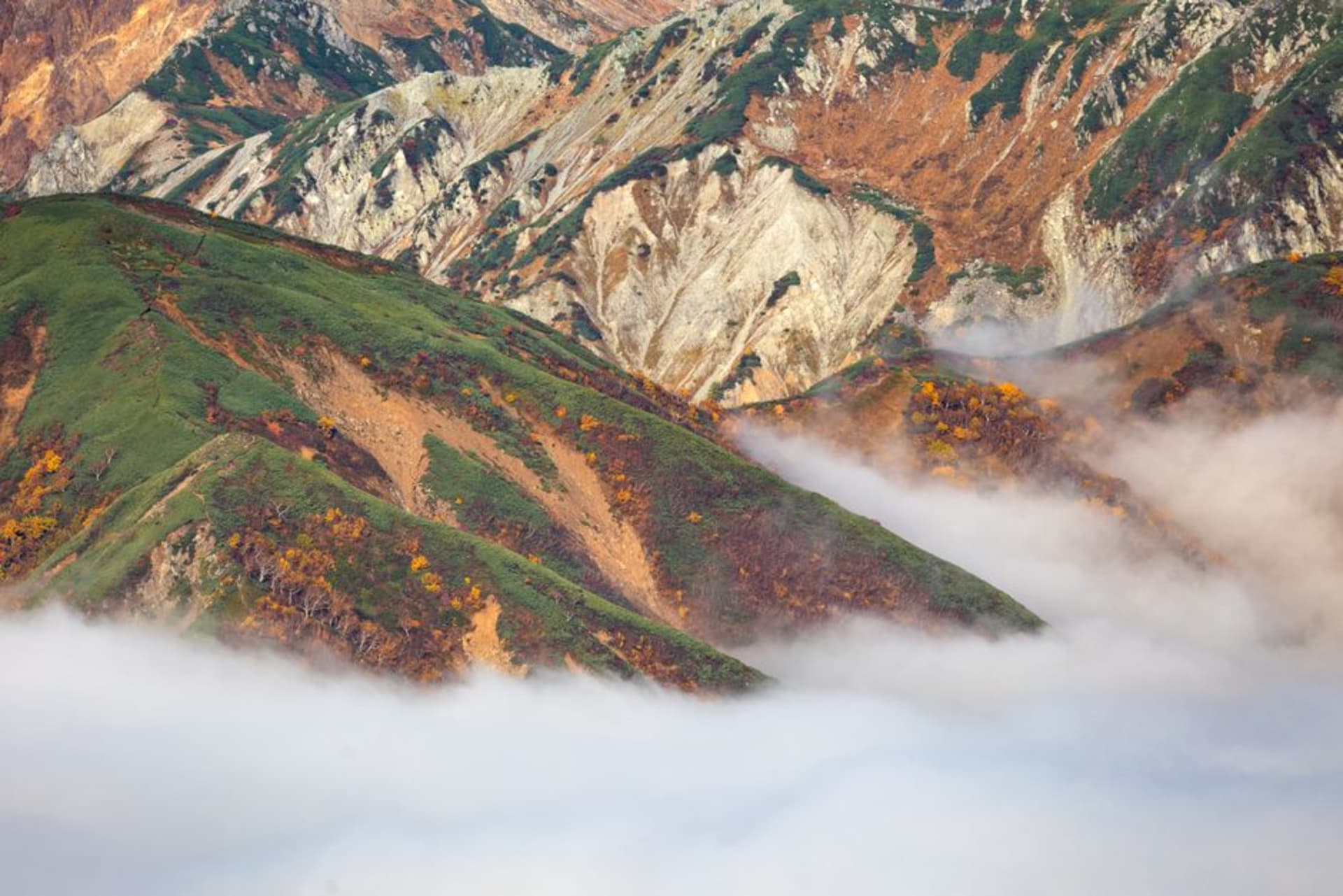
A mountain resort in central Hokkaido known for its Unkai Terrace, where dawn spills a silent ocean of cloud across the valleys below. Twin glass towers rise from the forest, and the whole place is built around one gamble: that you'll wake before sunrise for a sea that may or may not appear. We took the bet twice.

The alarm went off at four and Lia groaned into the pillow that this was a terrible idea. Twenty minutes later we were both standing at the base of a gondola in the pitch dark, breath fogging, coffee not yet in our systems, queuing with a hundred equally bleary strangers for something none of us could guarantee. That’s the deal Tomamu makes with you: the Unkai — the sea of clouds — only forms when the temperature, humidity and wind line up exactly right, and nobody, not the resort, not the app, can promise it. We’d read the odds were maybe one in three. We went up anyway, because the alternative was lying awake wondering.
The Unkai Terrace at Dawn
The gondola climbs Tomamu Mountain for about thirteen minutes, and for most of it we saw nothing but our own reflections in the glass. Then, as we crested the shoulder, the world outside went white. Below the terrace, filling the entire valley to the horizon, lay a slow-moving ocean of cloud, pale and luminous in the pre-dawn light, with only the far peaks breaking through like islands. Lia actually gasped. We’d won the lottery on our first morning. The Unkai Terrace is a deck built right at the edge of the drop, with a few clever cantilevered platforms — a “Cloud Walk” that juts out over nothing, a netted “Cloud Pool” you can lie back in — and we moved between them in a kind of reverent hush as the sun came up and turned the whole sea from grey to gold to a blinding white.

The Twin Towers and the Valley
Down at the base, Tomamu is unabashedly a resort — two mirrored high-rise towers, “The Tower” and “Risonare,” rising straight out of the Hokkaido forest like something dropped from orbit. I’m usually allergic to this kind of place, and I’ll admit the scale of it took some adjusting to. But there’s a strange charm in how completely it commits. We spent the warm middle of the day at Mina-Mina Beach, an absurd and wonderful indoor wave pool the size of a small lake, and in the afternoon wandered the boardwalks of the “Hotalu Street” village where little wooden cabins sell coffee and craft under the trees. Lia found a tiny shop selling Hokkaido cheese and we ate it on a bench watching families cross the forest paths. It shouldn’t have worked as a mood, and yet it did.

A Second Sunrise, and an Empty Sky
Emboldened, we set the alarm again for the next morning — and this time the mountain gave us nothing. We rode up into a flat, colourless sky, the valley below perfectly, boringly clear, not a wisp of cloud anywhere. And here’s the thing I didn’t expect: it was still worth it. With the crowds thinner and no spectacle to chase, we just sat at the terrace café with hot drinks and watched the ordinary sun come up over ordinary mountains, and it felt like being let in on the honest version of the place. Lia said the empty morning made the first one real. The resort earns its reputation on the days the sea appears, but it teaches you something on the days it doesn’t.

Getting There
Tomamu has its own station, Tomamu, on the JR Sekishō Line, which makes it unusually easy to reach for such a remote-feeling spot. Limited express trains from Sapporo take around ninety minutes, and from New Chitose Airport it’s roughly the same via a change. A free shuttle bus meets guests at the station and runs the short distance to the resort towers. If you’re driving, it’s about two hours from Sapporo on the Dōō Expressway. The Unkai Terrace operates only from roughly mid-May to mid-October, and only at dawn — check the resort’s cloud-probability forecast the night before, dress far warmer than the base temperature suggests, and make peace in advance with the possibility of an empty sky. Either way, get on the early gondola.
Keep exploring
More of Hokkaidō
Keep exploring
More from Hokkaidō
 japan
japan Furano
A wide farm valley in the middle of Hokkaidō, given over in high summer to striped fields of lavender and rainbow rows of flowers. Rolling farmland, sweet melons ripening under the sun, and in winter a quiet ski town under deep snow.
Explore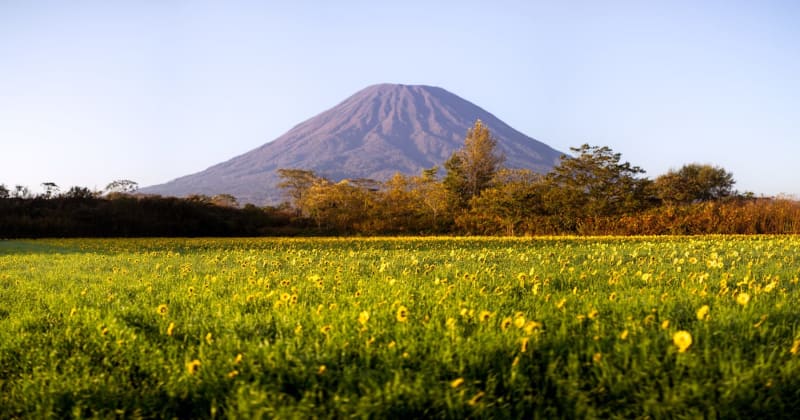 japan
japan Hokkaido Lavender Fields
Furano's summer lavender fields roll across Hokkaido's volcanic plateau in waves of purple and green.
Explore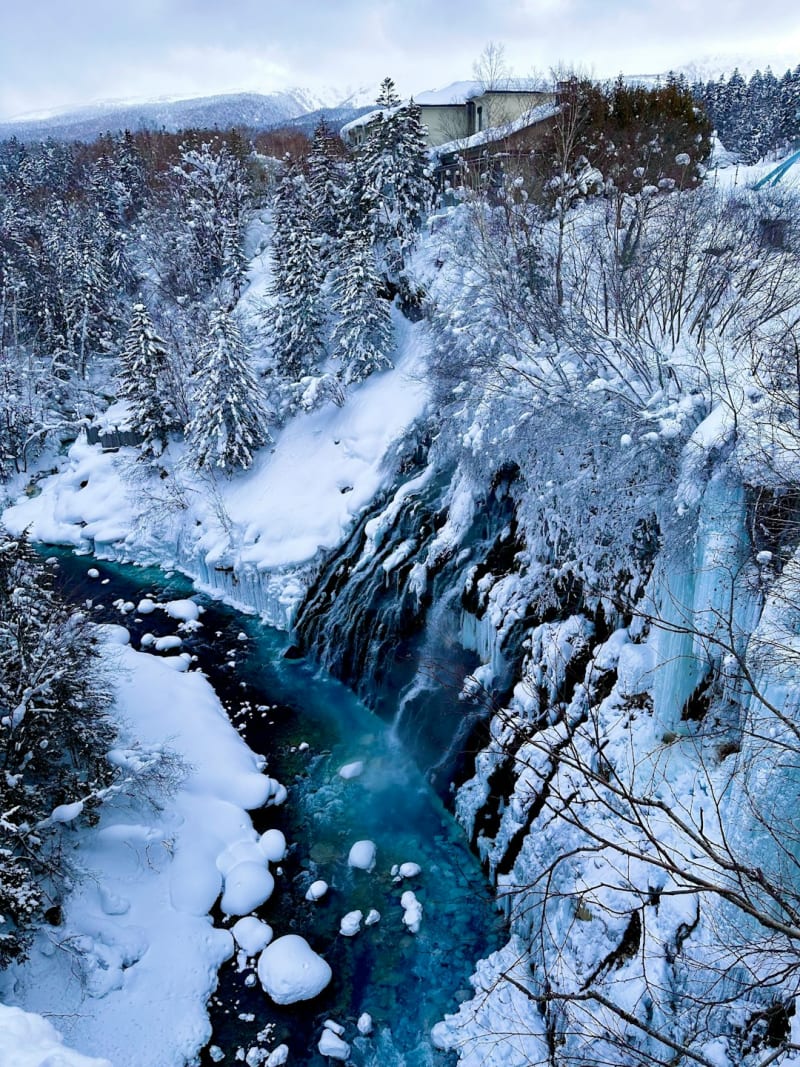 japan
japan Biei
A stretch of Hokkaidō countryside made of rolling patchwork hills, lone trees standing against the sky, and the impossible turquoise of the Blue Pond. Painterly, gentle land built for slow drives and long afternoons on a bicycle.
Explore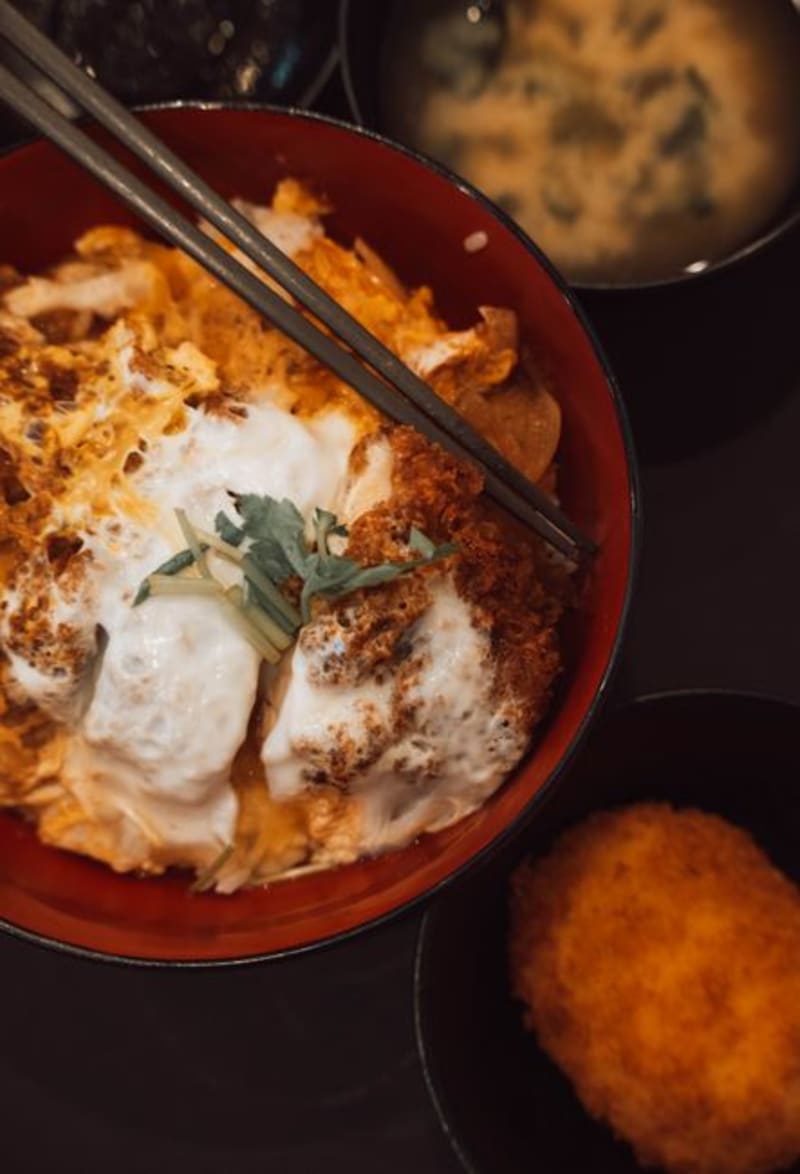 japan
japan Obihiro
The hearty farm capital of the vast Tokachi plain in eastern Hokkaidō. Grilled-pork rice bowls, a proud confectionery tradition, garden trails through the fields, and enormous agricultural skies that go pink at either end of the day.
Explore japan
japan Daisetsuzan National Park
Japan's largest national park and the roof of Hokkaido, where autumn arrives first in the whole country and brown bears still outnumber the hikers on some trails.
Explore japan
japan Yubari
A steep valley town in central Hokkaido, once a roaring coal city and now Japan's most famous shrinking one, where legendary melons grow in the same hills that hold abandoned mines. Its story is bittersweet — boom, collapse, and a stubborn sweetness that refuses to leave. We came for the melons and stayed for the ghosts.
Explore