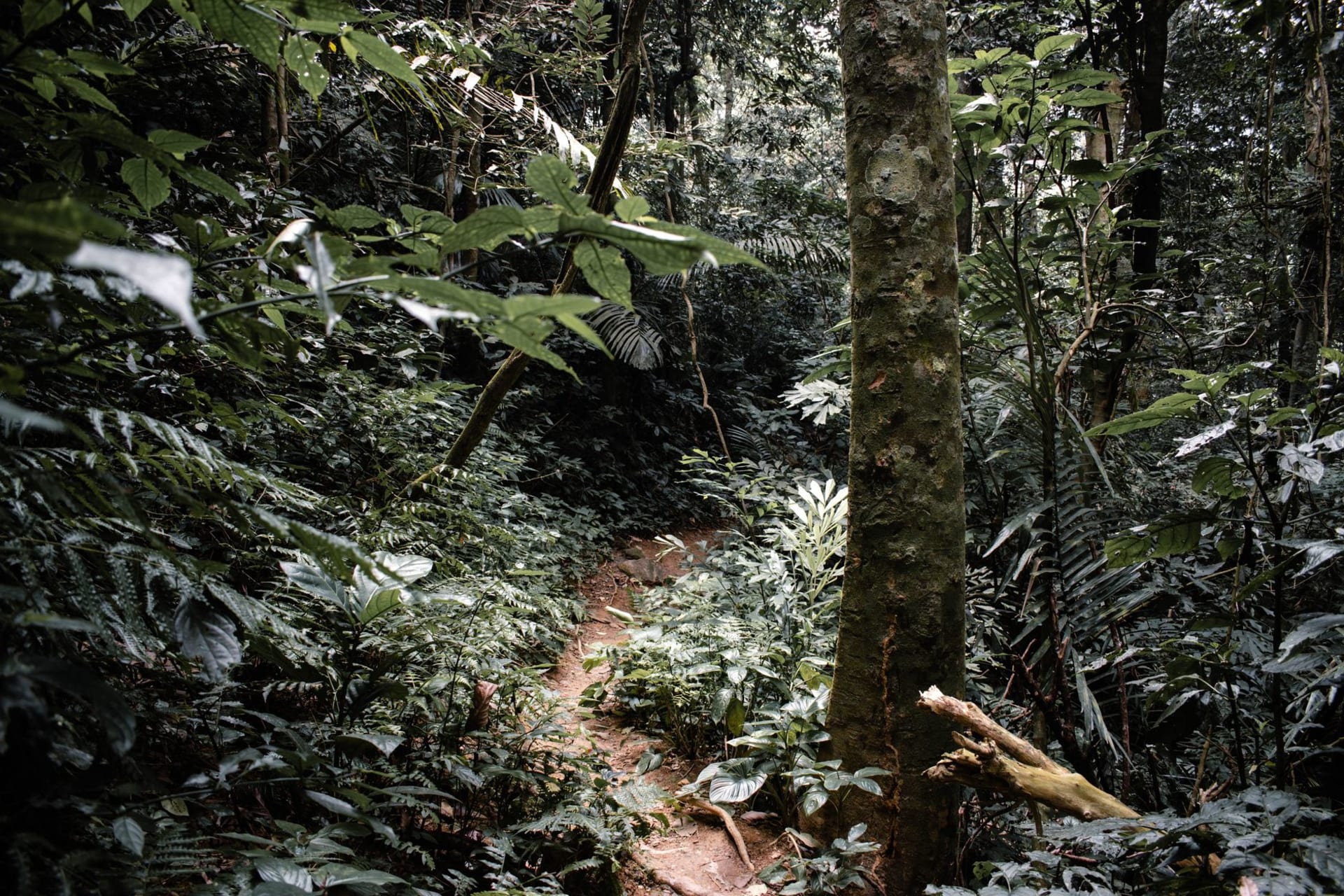
Taï National Park
"The forest here is so old and so complete that standing in it feels less like visiting a nature reserve and more like being briefly tolerated by something permanent."
One of the last intact Upper Guinea rainforests on Earth, where habituated chimpanzees move through a darkness so complete it makes you understand what we have already lost.

The road from San Pedro to Taï takes four hours on a good day, longer after rain, and arrives at a village of research station buildings, a guesthouse, and a wall of green so complete it functions as an architectural element. I had arranged a chimp-tracking permit in advance — the process requires coordination with the Institut Max Planck research team and doesn’t happen walk-in — and my guide, a man named Émile who had worked in the forest for seventeen years, collected me before dawn. We were inside the park boundary while the darkness was still total, moving by headlamp along a red laterite track that turned to forest floor within fifty meters of the gate.
The forest at Taï is not the secondary growth that covers much of West Africa. This is primary tropical rainforest: the trees here are two hundred, three hundred years old, the canopy eighty meters up in places, the understory so dense that by six in the morning the light was still only a gray-green suggestion filtering down through three layers of leaves. The sounds came before the light: dawn chorus of hornbills, something I couldn’t identify calling from the river direction, and then — at some point I can’t precisely locate in the timeline — the distant sound of chimpanzees beginning to vocalize. A low, rhythmic whooping that Émile stopped walking to listen to with the attention of someone reading a language.
We found the group — about twenty individuals, including three mothers with young — around eight in the morning, feeding in a fig tree twenty meters off the track. The habituation process has taken decades, and the chimps move through their routines with complete indifference to the small group of humans watching from below. A juvenile dropped from a lower branch to within three meters of where I stood, picked up a fallen fig, looked at me with an expression I can only describe as evaluative, and climbed back up. Émile said nothing. I said nothing. The forest made its continuous background noise of insects and water and whatever that bird was.
Taï is also home to forest elephants, pygmy hippos, and a range of endemic species that exist nowhere else, though you are unlikely to see large mammals other than chimps on a standard visit. What you will see, if you pay attention, is the forest itself: the architecture of the buttress roots, the density of the epiphytes, the mushrooms that glow faintly in the deeper darkness, the army ant columns that Émile walked around with practiced care. UNESCO designated Taï a World Heritage Site in 1982, and the forest earns the designation not as a managed spectacle but as a functioning ecosystem that has been, improbably, allowed to continue being itself.

When to go: The dry season from November to February is the standard window — the tracks are passable and the chimps are more predictable in their ranging. The long rains from April to July close some access routes but the forest is at its most biologically intense. Book chimp-tracking permits well in advance through the park authorities and the Max Planck research institute contact in Taï village.
Keep exploring
More from Ivory Coast
 ivory-coast
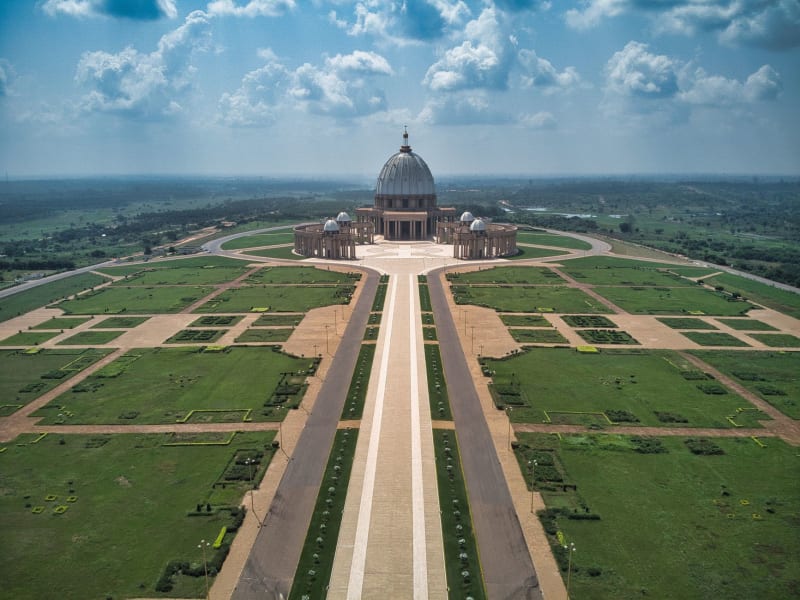
 Yamoussoukro
A planned capital of empty boulevards and the world's largest basilica, where sacred ibis outnumber tourists and the silence is almost Vatican-scaled.
Explore ivory-coast
 Abidjan Plateau
The glass-and-steel heart of West Africa's most ambitious city, where the BCEAO tower reflects in a lagoon that cuts through everything and nobody moves slowly.
Explore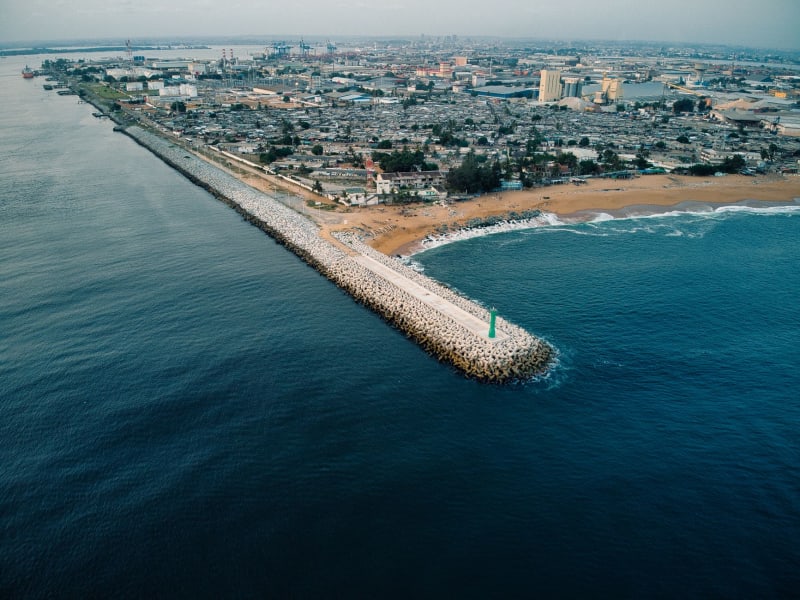 ivory-coast
 Assinie
A sliver of Atlantic coastline squeezed between lagoon and ocean where Abidjan unwinds on weekends and the coconut palms haven't made way for concrete yet.
Explore ivory-coast
 Bouaké
Ivory Coast's second city: a Dioula trading hub where the fabric market hasn't slept since independence and the street food operates twenty-four hours.
Explore ivory-coast
 Comoé National Park
A vast and almost forgotten savanna in the country's far northeast, where the Comoé River draws elephants, chimps, and hippos back to land that nearly lost them.
Explore ivory-coast
 Grand-Bassam
Ivory Coast's crumbling colonial ghost town, where ochre facades meet fishing pirogues and UNESCO designation hasn't killed the weekend energy.
Explore