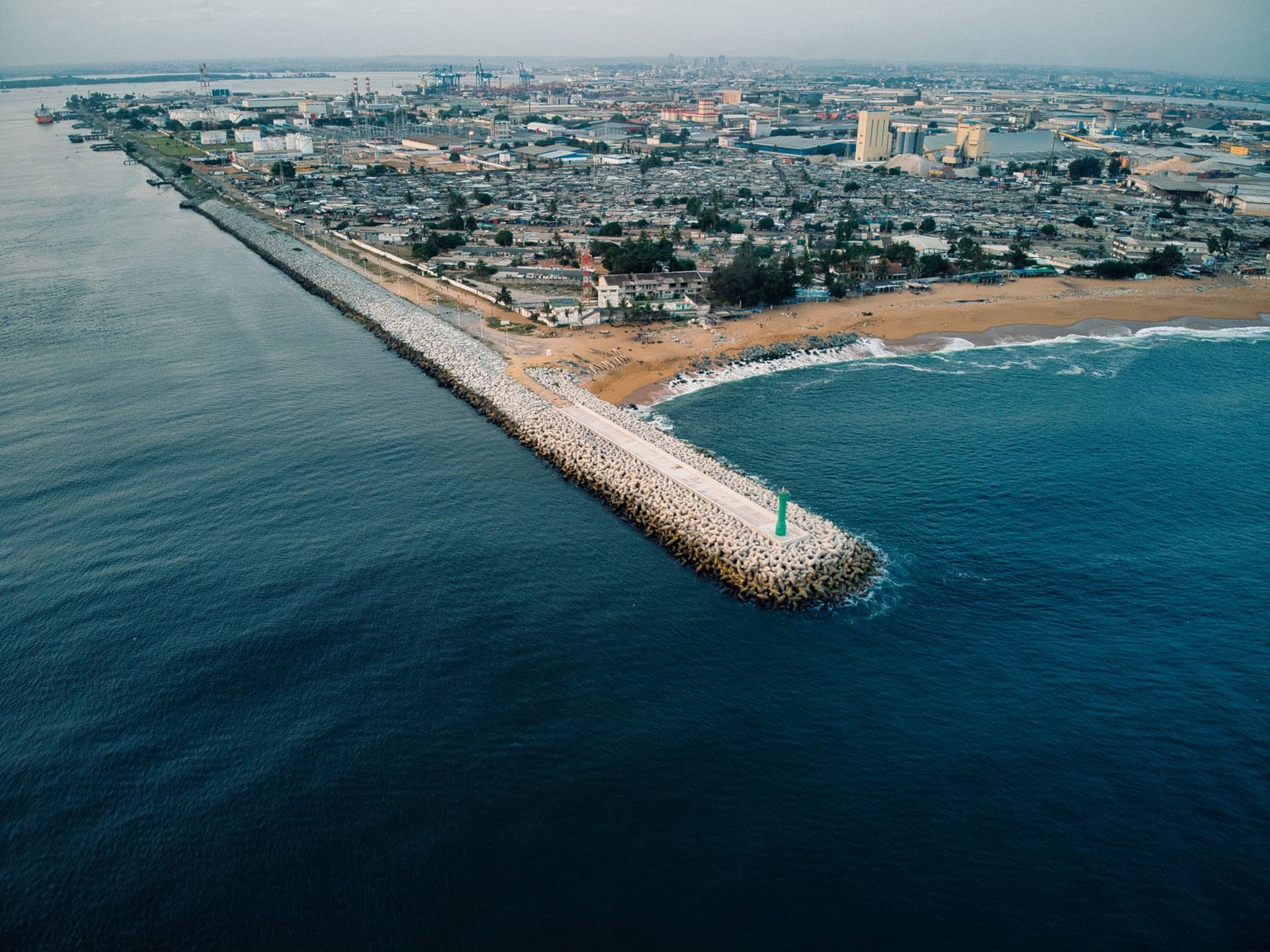
Assinie
"Two bodies of water, one strip of sand, and the entire city of Abidjan arriving on Friday evening."
A sliver of Atlantic coastline squeezed between lagoon and ocean where Abidjan unwinds on weekends and the coconut palms haven't made way for concrete yet.

The taxi-brousse from Abidjan drops you at the lagoon side, and from there you cross by pirogue — a two-minute crossing with your bag balanced on your knees and the boatman using a long pole to push off from the muddy bank. On the other side is Assinie: a narrow peninsula barely a kilometer wide between the Aby Lagoon and the Atlantic, covered in coconut palms, beach bars, and the particular energy of a place that functions as a city’s collective weekend release valve. By Friday evening every house and compound along the main track has someone spilling out of it. By Monday morning it is nearly empty. I chose to arrive on a Thursday and left on a Saturday, which I recommend as the perfect calibration.
The beach here runs for miles with almost no infrastructure on the ocean side — no vendors during the week, no beach chairs, just the Atlantic arriving in long sets that have nothing between them and the Canary Islands. The sand is dark and volcanic-feeling, and the coconut palms lean over it at angles that look deliberately picturesque. I swam every morning at six, when the light was horizontal and orange and the only other person visible was a fisherman checking nets about two hundred meters out. The water is warm enough to stay in for an hour without thinking about it.

The lagoon side is where the food is. Maquis line the waterfront, their plastic tables facing the water, and the menus are built around whatever came in that morning: grilled barracuda, crayfish soup, langoustines the size of small lobsters served with attiéké and piment. I ate at the same spot three days running because the woman who ran it had a way with crab that I couldn’t improve on. She never wrote anything down. The bill arrived at the end of each meal as an approximate number delivered with complete confidence, and I paid it without argument because it was fair and because she had earned it.
There is a village at the far eastern end of the peninsula — Assinie-Mafia, the original fishing settlement — where life runs on completely different rhythms from the resort end. The pirogues go out before dawn and return mid-morning, and the women dry fish on racks made from palm frond ribs. The resort infrastructure becomes sparser and the coconut grove thicker as you walk in that direction, and the ten minutes between the last beach bar and the first fishing compound is one of those transitional walks where you can feel the tourist economy giving way to something older.

When to go: November through April is the dry season — the beach is at its best and the sea is calmer. Weekdays offer a completely different experience from weekends; if you want the peaceful lagoon side and empty beach, arrive midweek. The July–September period brings slightly rougher seas but the peninsula empties out and prices drop significantly.
Keep exploring
More from Ivory Coast
 ivory-coast
 Bouaké
Ivory Coast's second city: a Dioula trading hub where the fabric market hasn't slept since independence and the street food operates twenty-four hours.
Explore ivory-coast
 Comoé National Park
A vast and almost forgotten savanna in the country's far northeast, where the Comoé River draws elephants, chimps, and hippos back to land that nearly lost them.
Explore ivory-coast
 Grand-Bassam
Ivory Coast's crumbling colonial ghost town, where ochre facades meet fishing pirogues and UNESCO designation hasn't killed the weekend energy.
Explore ivory-coast
 Grand-Lahou
A ghost town of crumbling colonial ruins on a shrinking sandbar, where the Bandama River gives itself to the Atlantic.
Explore ivory-coast
 Korhogo
The Senufo heartland where hand-painted mud cloth and bronze casting traditions survive in working artisan villages just outside a dusty northern city.
Explore ivory-coast
 Man
A mountain town in Ivory Coast's forested west where fog clings to the Dents de Man and the weekly market belongs entirely to the Yacouba people.
Explore