Odienné
"Out here the forest gives up, the sky opens, and Ivory Coast starts telling a different story."
A dusty, proud Malinké capital in the far northwest, where savanna hills remember a kingdom that never fully bowed to the French.
We got to Odienné after two days of shared taxis and one very long wait at a gare routière in Man, and I remember the exact moment the landscape changed — trees thinning out, red laterite dust replacing the green, the air suddenly drier against my face. Lia rolled down the window and just said “okay, this is a different country” — and in a way it is. Odienné sits way up in the Kabadougou Region, closer to Mali and Guinea than to Abidjan, and it feels like it. The Malinké identity here is strong and unmistakable, worn in the language you hear in the street, the shape of the mosques, the way people greet each other, nothing like the coastal Ivory Coast we’d gotten used to.
What pulled me to Odienné in the first place was the history. This was the seat of the Kabadougou Kingdom, founded in the 19th century by Vakaba Touré, a Malinké warrior-ruler who spent his life pushing back rivals in every direction before the French eventually folded the kingdom into French West Africa in the early 1900s. I asked a shopkeeper near the market about it, half expecting a shrug, and instead got twenty minutes of animated history, hand gestures included, about Touré resisting the French longer than most of the region. You feel that pride still sitting in the town — quiet, but not at all buried.
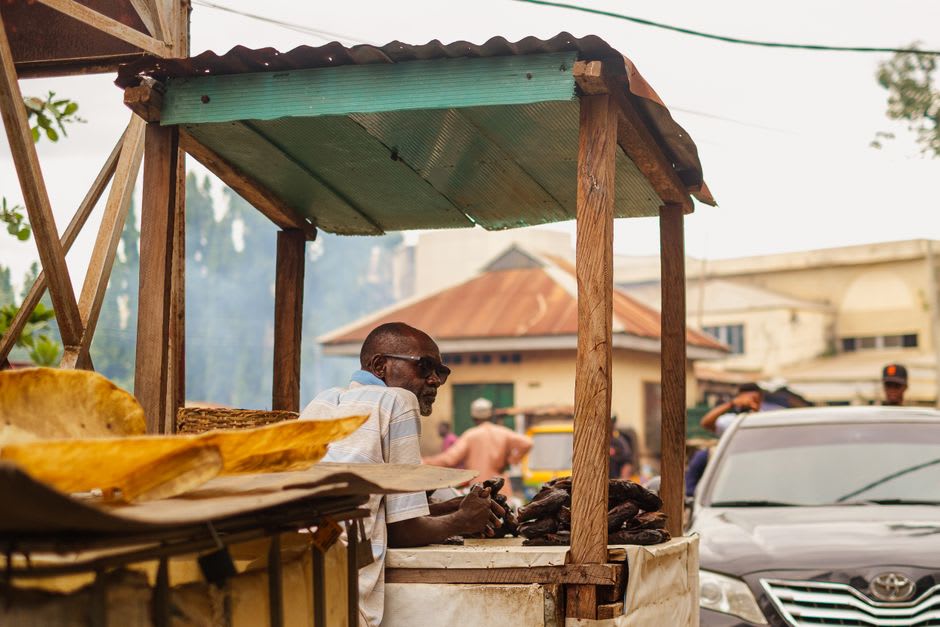
We spent one afternoon just wandering the market, and it’s a good one — less performative than markets I’ve seen further south, more about actual daily commerce. Grain sacks, cola nuts, dried fish trucked up from who knows where, women selling shea butter in old plastic tubs. I bought grilled corn from a woman who laughed at my French accent mixing with my very bad Malinké greeting, and we ended up talking for a while about the dry season and how much easier it makes travel out here compared to the mud of the rainy months.
The other reason to come is what’s just outside town. The Denguélé massif and Mount Tou rise up from the savanna in a way that genuinely surprised me — I hadn’t expected real hiking terrain this far north. We didn’t have proper gear or enough days to do a serious trek, but we drove out one morning and walked a couple of hours along a herding trail, Lia stopping every ten minutes to photograph the light hitting the grass. It’s a completely different Ivory Coast up here, dry and open and quiet in a way the south never is.
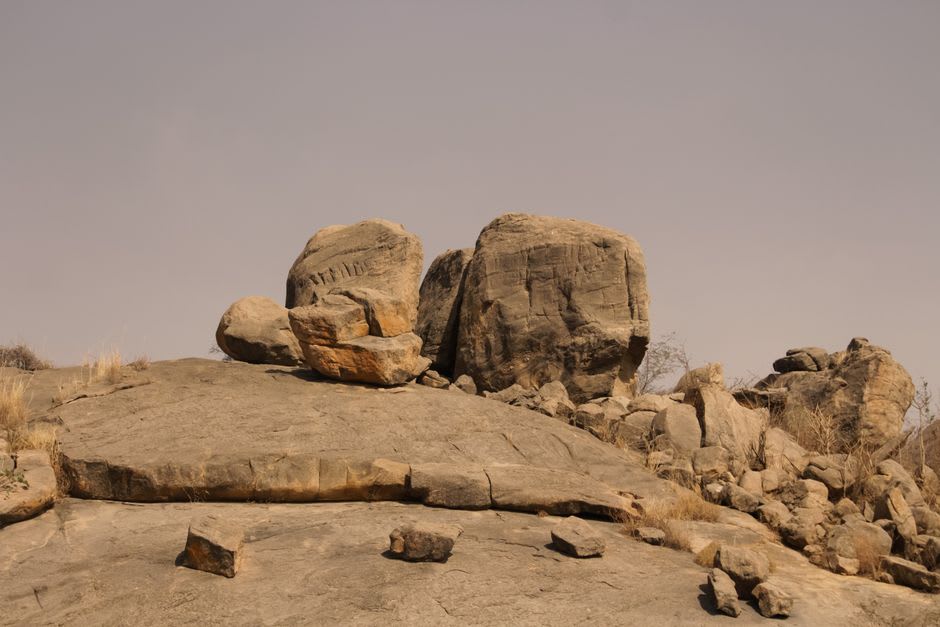
When to go: We went in the dry season, and I’d tell anyone to do the same — from November to February the regional roads actually hold up, whereas I heard more than one story about vehicles stuck axle-deep once the rains hit.
Keep exploring
More from Ivory Coast
 ivory-coast
 San Pedro
Ivory Coast's second port hums with cacao and timber money, rough maritime energy, and seafood that tastes like it arrived this morning because it did.
Explore ivory-coast
 Sassandra
A drowsy colonial port at the mouth of a wide river where time moves at the speed of a fishing pirogue and the beaches to the west remain magnificently unbuilt.
Explore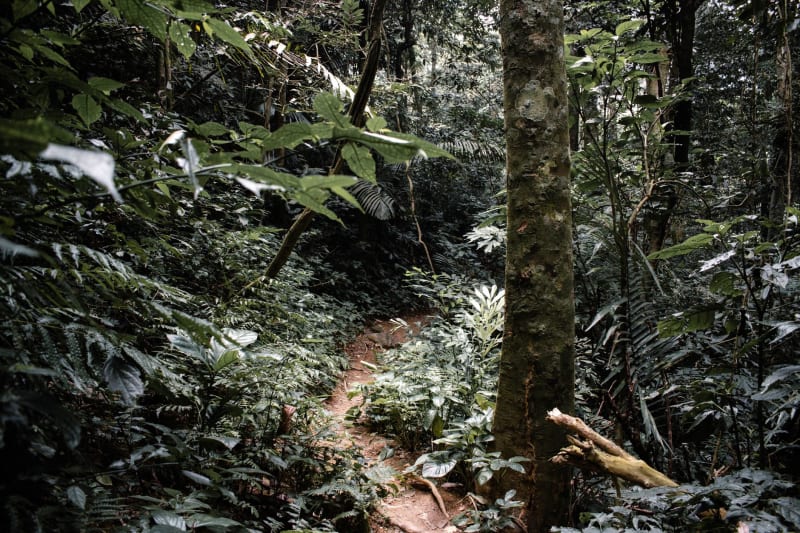 ivory-coast
 Taï National Park
One of the last intact Upper Guinea rainforests on Earth, where habituated chimpanzees move through a darkness so complete it makes you understand what we have already lost.
Explore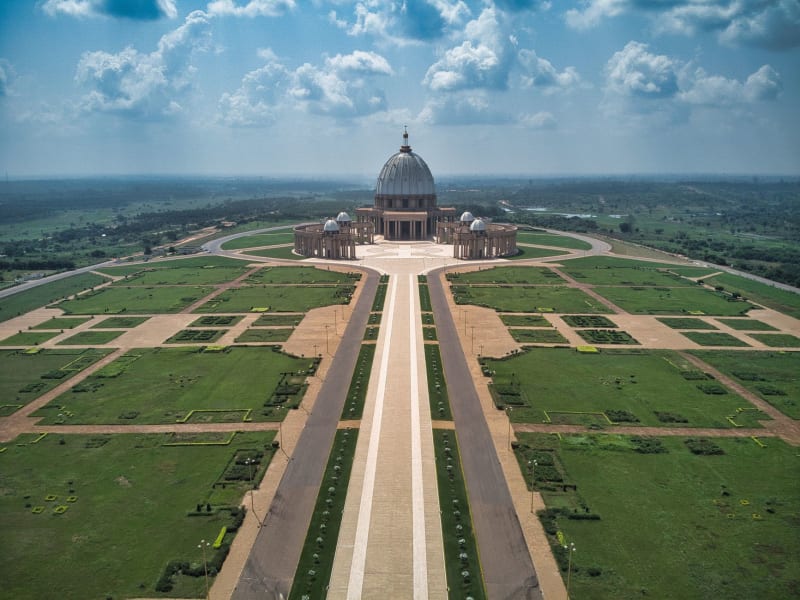 ivory-coast
 Yamoussoukro
A planned capital of empty boulevards and the world's largest basilica, where sacred ibis outnumber tourists and the silence is almost Vatican-scaled.
Explore ivory-coast
 Abidjan Plateau
The glass-and-steel heart of West Africa's most ambitious city, where the BCEAO tower reflects in a lagoon that cuts through everything and nobody moves slowly.
Explore ivory-coast
 Assinie
A sliver of Atlantic coastline squeezed between lagoon and ocean where Abidjan unwinds on weekends and the coconut palms haven't made way for concrete yet.
Explore