
Varela
"Four hours on a dirt track to reach a beach with nobody on it. I would do it again without hesitating."
The northernmost point of Guinea-Bissau's coast, where wild Atlantic surf hits an empty beach and the effort to get there is the entire point.

The journey to Varela begins in Bissau with the search for a sept-place — one of the shared Peugeot estate cars that constitute the long-distance transport network of French-speaking West Africa, stubborn and overloaded and somehow still running after decades. There is a vehicle to Varela every morning, in theory, when there are enough passengers to fill the seven seats, which in my experience took two hours of sitting in the vehicle waiting for the other seats to also have someone sitting in them. I read the same chapter of my book four times. The woman next to me fell asleep on my shoulder with a complete absence of self-consciousness and I did not move for the rest of the journey, which took four and a half hours north on roads that the term “unpaved” does not quite capture.
Varela sits at the northern tip of Guinea-Bissau, an hour’s walk from the Senegalese border, which in practice means it feels more like the edge of the world than a border crossing. The village is small — a few hundred people, some concrete structures, some thatched — and it sits back from a beach that runs for kilometres in both directions without a single structure on it except, at one end, the ruins of a Portuguese naval lookout that has been sliding toward the water since before independence. The Atlantic here arrives without the buffer of any island between here and the Americas and it arrives accordingly: heavy rollers, powerful undertow, surf that collapses with a sound you feel in your feet through the sand.

I had the beach to myself both mornings I was there, or nearly — a fisherman working a cast net at dawn on the first morning, three boys body-surfing the shallows on the second. The sense of scale that arrives when you are alone on a large beach is different from the sense of scale that arrives when you are alone in a landscape: the beach is human-scaled, built for walking, and yet the ocean in front of it is not, and the collision of those two scales produces something that I find myself returning to when I need it, the way you return to a piece of music.
The guesthouse in Varela is the only guesthouse in Varela, run by a Guinean man named Lourenço whose generator runs from eight to eleven in the evening and whose cook prepares one meal a day at a time of her choosing, which in my case was seven in the evening and consisted of oysters — wild, small, harvested from the rocks north of the beach — grilled over charcoal and served with a squeeze of lime and nothing else. I have eaten oysters in restaurants that cost fifty times as much and been significantly less satisfied. The lime was from a tree ten metres from where we were sitting. The charcoal smell persisted until I fell asleep.

The mangrove estuary south of the village is another world entirely — the same salt water but completely different in register, calm where the beach is violent, intricate where the beach is vast. I walked through it one afternoon along a path that Lourenço described but did not accompany me on, which led to a channel where egrets stood in the shallows in a sequence so regular it looked arranged. The mud between the roots was alive with fiddler crabs that moved in coordinated pulses whenever I got close, one bright-clawed arm raised like a flag of their own choosing.
Varela is the kind of place that you cannot recommend to everyone because not everyone is prepared to spend hours on a bad road to reach it, and those who are not will find the beach and the guesthouse less than what they imagined. Those who are — who understand that the difficulty is not an obstacle but a filter — will find something that is getting harder to find: a coast that has not yet been organized for anyone’s consumption but its own.
When to go: November through May, before the rains close the northern roads. The surf is strongest and most consistent from October through February. The border with Senegal is technically open but rarely crossed by travelers; most people return to Bissau the way they came.
Keep exploring
More from Guinea-Bissau
 guinea-bissau
Bafatá
A faded colonial river town on the banks of the Geba, birthplace of Amílcar Cabral, where crumbling Portuguese facades stand over a slow brown river and an even slower pace of life.
Explore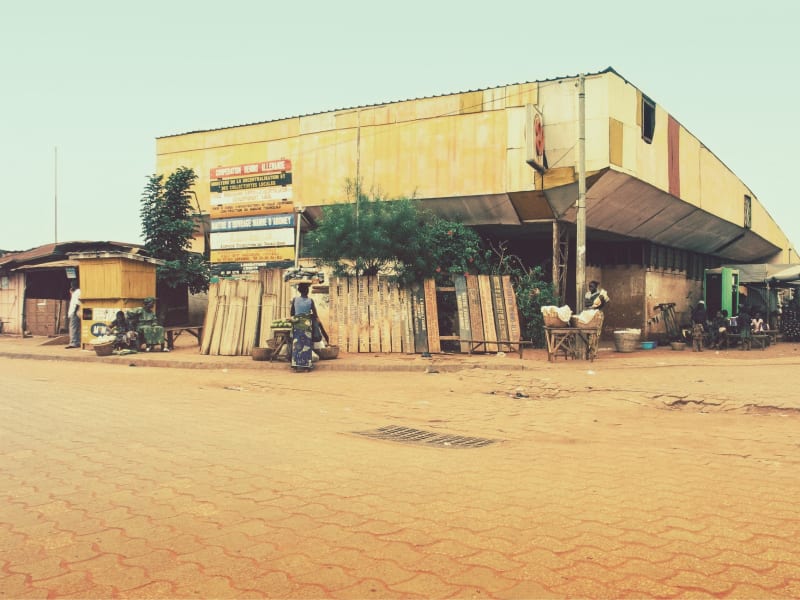 guinea-bissau
Bissau
A capital city that runs on its own clock, where the best barracuda of your life costs almost nothing and nobody is performing for you.
Explore guinea-bissau
Bolama
Guinea-Bissau's forgotten colonial capital, a ghost island where crumbling Portuguese mansions dissolve into the jungle at their own quiet pace.
Explore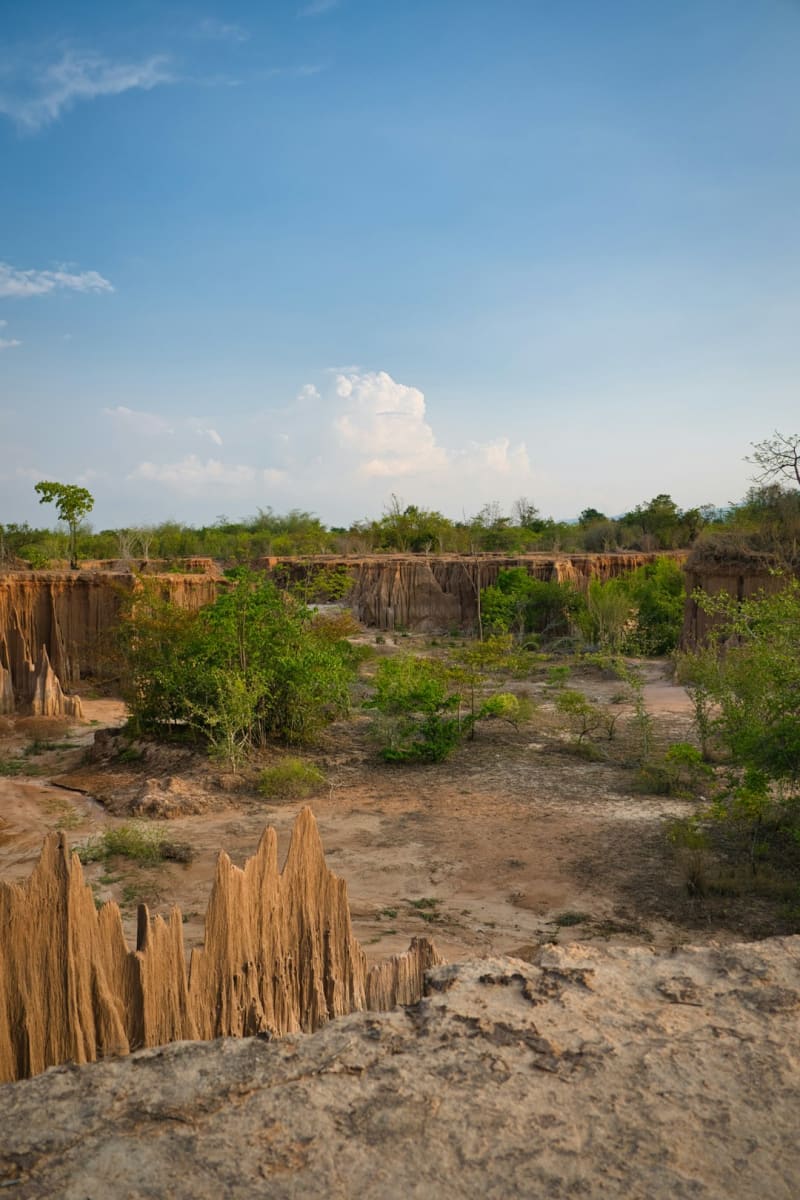 guinea-bissau
Buba
A quiet river town where pirogues outnumber cars and hippos surface in the lagoons just beyond the market.
Explore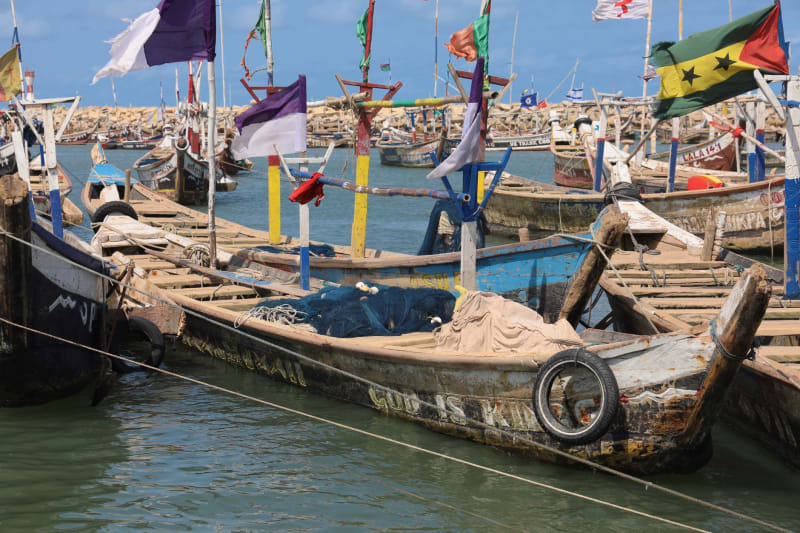 guinea-bissau
Bubaque Island
The Bijagós gateway island where sand streets lead to pirogue crossings and the archipelago opens up like a slowly revealed secret.
Explore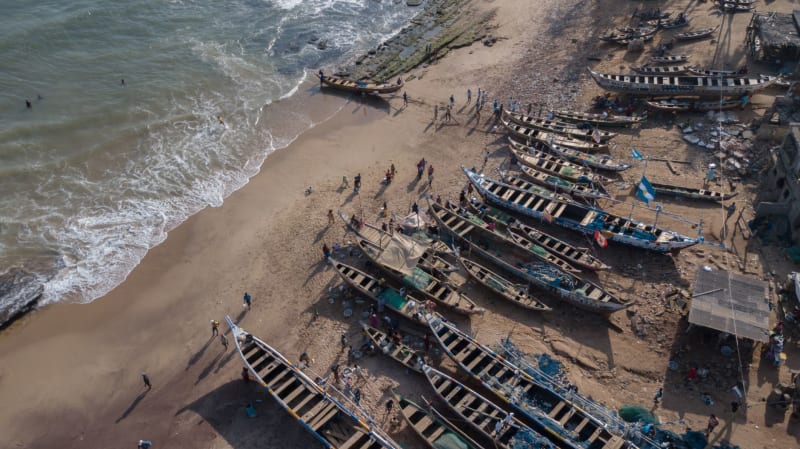 guinea-bissau
Cacheu
A river town weighted by five centuries of slave-trade history, where the old Portuguese fort watches the water and the mangroves press closer every year.
Explore