
Nuku Hiva
"Nuku Hiva is what happens when the Pacific doesn't bother being polite about it."
The Marquesas' largest island, where there are no lagoons, no coral, and no pastels — just raw volcanic cliffs dropping into the deep Pacific and a culture that was ancient before anyone else arrived.

The flight from Papeete to Nuku Hiva takes three and a half hours, and the first thing that tells you you’ve arrived somewhere categorically different from the Society Islands is the air. In Bora Bora or Moorea, the air smells of tiaré and salt and something tropical that feels designed to be pleasant. At the Temarii Airport — a strip of asphalt on a plateau above cliffs that drop three hundred meters into the sea — the air smells of earth and rain and wild guava from the interior, and there is a quality of rawness to it that makes you feel you’ve arrived somewhere the world hasn’t finished yet.
The Marquesas Islands are geologically young and ecologically distinct: no barrier reefs, no lagoons, no graduated turquoise shallows. The islands rise straight from deep ocean, their cliffs and ridges shaped by winds and rain rather than the coral-and-calm logic of the Society Islands. The sea off Nuku Hiva is dark blue-black, the swells running without interruption from Antarctica, and the shoreline is all black rock and volcanic sand and the booming of waves. It is beautiful in a completely different register — the beauty of exposure rather than enclosure.

The main town of Taiohae sits in a deep horseshoe bay on the southern coast, its single main street running along the waterfront between the cathédrale — a squat concrete building that nonetheless contains spectacular wooden carvings in the Marquesan style — and the small museum that holds tiki statues, adze heads, and the elaborately patterned ceremonial objects of a culture that produced some of the most sophisticated art in the Pacific. The tiki tradition is alive here, not museum-bound: tattoo artists in Taiohae work in traditional Marquesan geometric patterns that cover entire bodies, and the waiting lists for the most skilled artists run to years.
I hired a 4x4 and a driver named Kimi to take me into the interior, on a track that climbs from sea level to the plateau through jungle so wet the ferns were enormous and prehistoric-feeling, their fronds dripping. The island’s center is a plateau of grassland at altitude — completely unexpected — where horses roam wild and you can see the full arc of the island’s coastline from a single point. We descended the far side into the Taipivai Valley, where Herman Melville jumped ship from a whaling vessel in 1842 and spent three weeks with the Typee people before escaping, later writing Typee, a novel that made the Marquesas mysterious and exotic for the Western imagination. The valley is green and narrow and feels genuinely inhabited by what happened there.

The Vaipo Waterfall in the Hakaui Valley, accessible only by boat or a multi-hour trek from the plateau, is one of the tallest waterfalls in the world — over three hundred and fifty meters. I reached it by boat across the bay to the valley mouth, then on foot through a river canyon with walls that pressed in close and blocked the sky. The fall itself announces itself with sound before you see it — a sustained roar that seems to come from the rock itself — and then the valley widens and there it is, a white thread of water dropping from a notch in the cliff above into a pool that throws a perpetual mist over the surrounding boulders. It had been raining in the mountains. The volume was enormous.
The food in Nuku Hiva reflects the island’s isolation and the Marquesan tradition of abundance: raw goat cheese made from the wild goats that populate the hills, breadfruit in every form — roasted, fermented, boiled, fried — fresh tuna served simply with lime and rock salt, and popoi, a paste made from fermented breadfruit that is an acquired taste and which I acquired, after three days, to a degree that surprised me.
When to go: May through October is the drier and more comfortable season for hiking and exploration. The Marquesas are considerably wetter than the Society Islands year-round, and the interior can be impassable in heavy rain. The Marquesas Arts Festival, held every four years (most recently in 2023), is an extraordinary gathering of Polynesian culture from across the archipelago and worth building a trip around if the timing aligns.
Keep exploring
More from French Polynesia
 french-polynesia
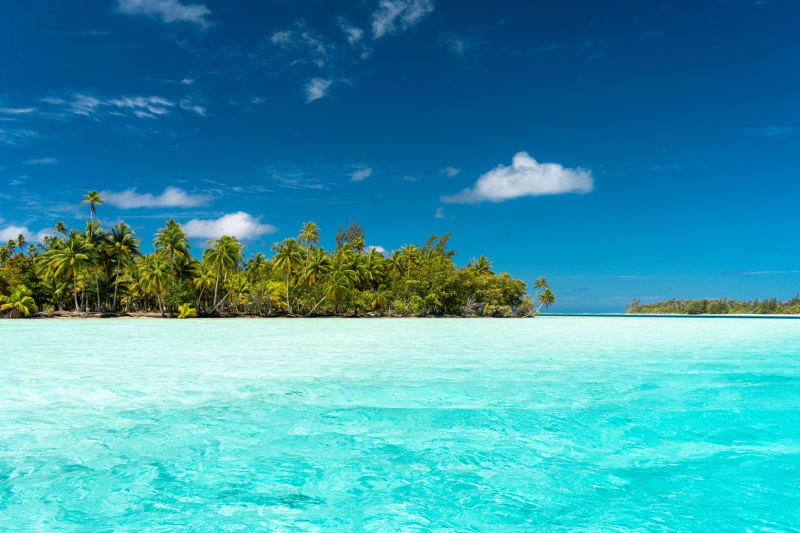
Raiatea
The sacred island at the center of the Polynesian world, where a UNESCO World Heritage marae still radiates the weight of what it meant to be chosen by the gods.
Explore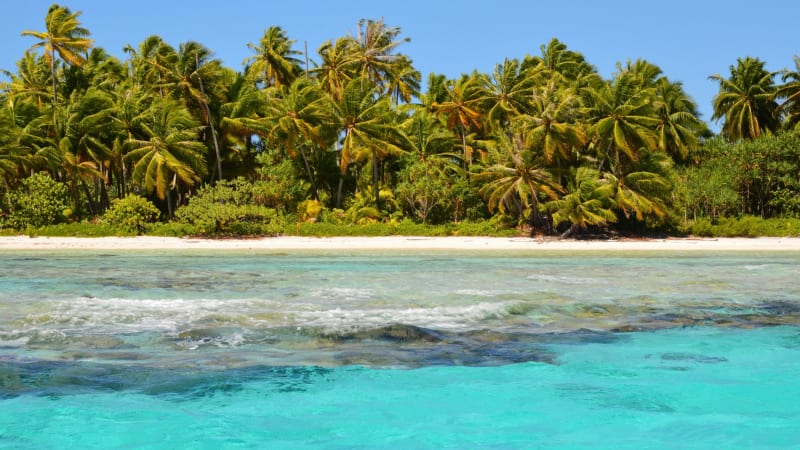 french-polynesia
Rangiroa
The world's second-largest atoll, where the horizon is endless water in every direction and the passes hold sharks the way rivers hold fish.
Explore french-polynesia
Rurutu
An Austral island where humpback whales come so close to shore in winter that boat guides cut their engines and just drift, and where limestone caves hide sacred bones.
Explore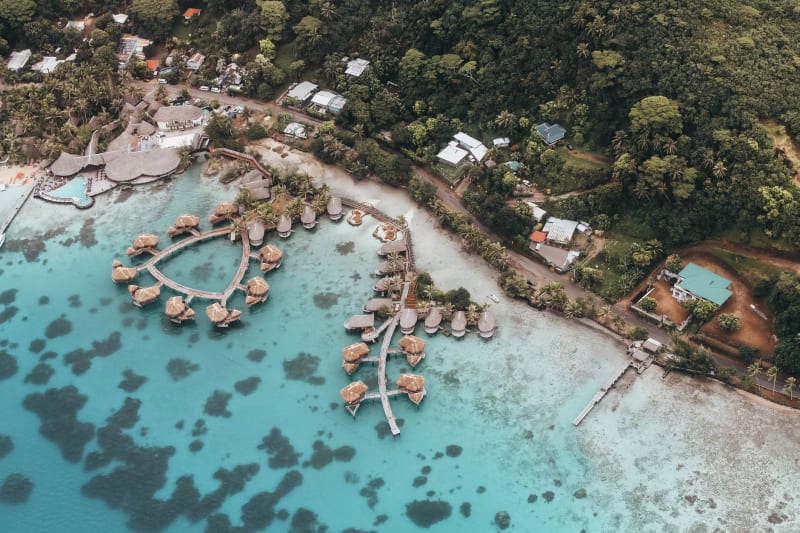 french-polynesia
Taha'a
The vanilla island, where the scent hits you before you dock and every plantation visit ends with a pod pressed into your hand like a secret.
Explore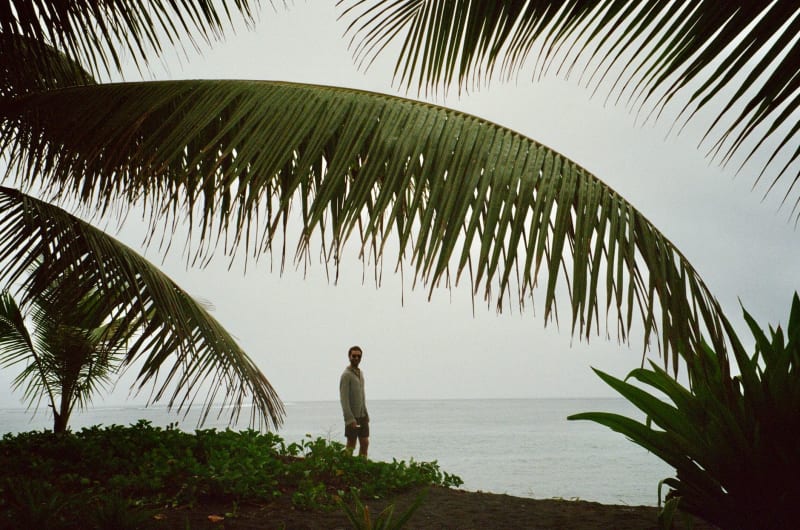 french-polynesia
Tahiti
The unglamorous heart of French Polynesia — a real city with traffic and market stalls and black sand beaches and a volcanic interior most tourists never see.
Explore french-polynesia
Tahuata
A small Marquesan island reachable only by boat from Hiva Oa, with the whitest sand in the archipelago and a village still shaped by a French missionary's first landing.
Explore