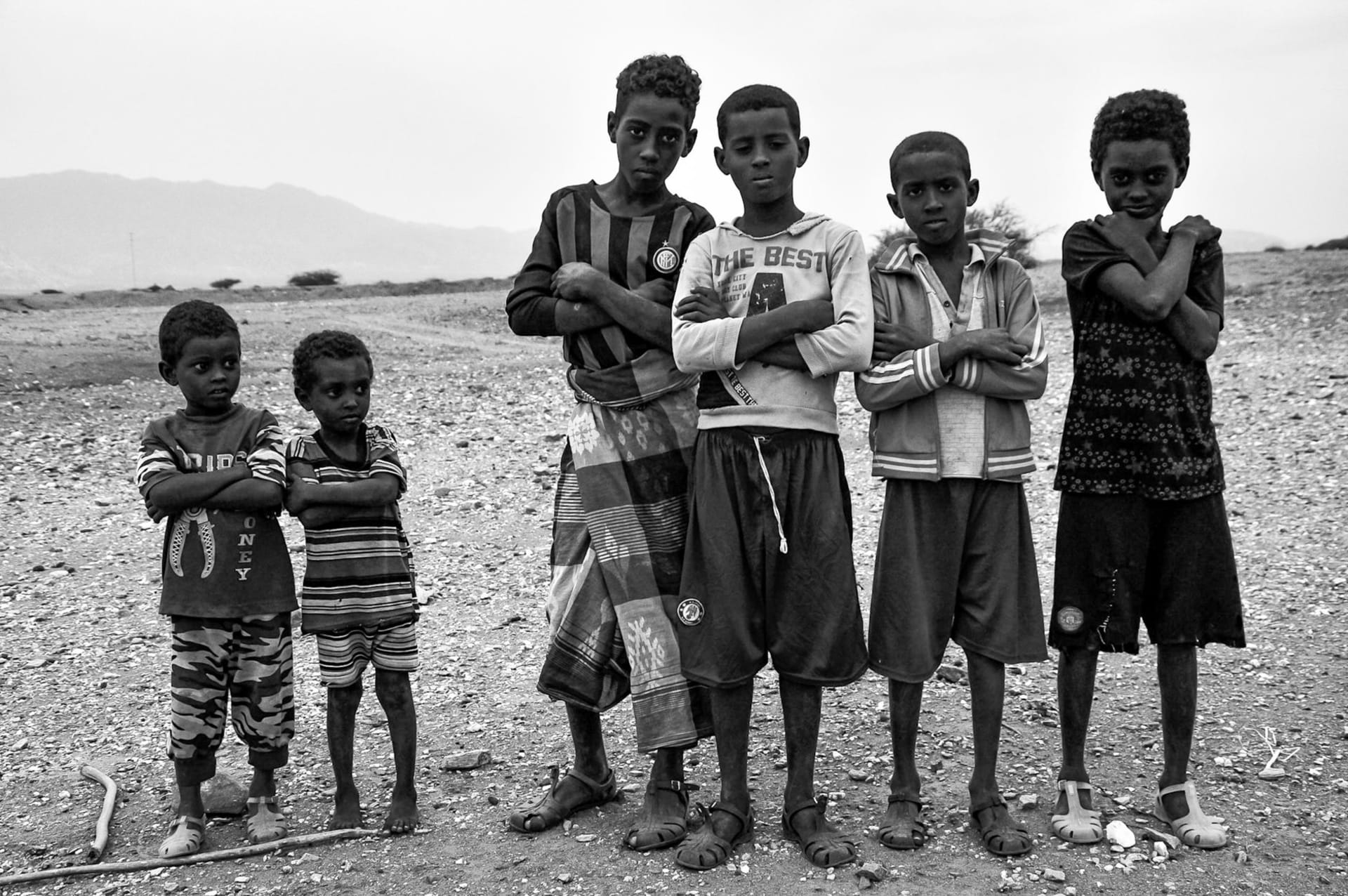
Mendefera
"Eritrean wine in a country that officially doesn't have tourists — it tastes better for the contradiction."
A southern highland town that grows grapes and takes its wine seriously — a sentence I did not expect to write about Eritrea.

The road south from Asmara descends gradually through farmland before climbing again into the Debub region, where the highlands broaden into a plateau that is, by highland African standards, generously arable. The town of Mendefera materializes as a cluster of buildings and trees in the middle of this plateau, and arriving in it feels less like arriving in a town and more like arriving in the middle of someone’s long afternoon. The pace here is slower than Asmara, the streets are wider and emptier, and the market — twice weekly — is the social architecture around which everything else organizes itself.
I came to Mendefera partly because a friend who had traveled through Eritrea three years before said “there’s a winery” and I assumed she was misremembering. She was not. The Zara Wine company — named for a type of grape grown locally — produces red and white wines on the highland plateau at altitude, and they are genuinely drinkable, which represents either a modest or an extraordinary claim depending on what you expected. The winery is not set up for visitors in any formal sense, but the word “visit” applied loosely gets you inside, gets you talking to someone who knows something about the process, and occasionally results in a glass being put in front of you.

The red, which uses local grape varieties, tastes something like a rough Côtes du Rhône with an altitude sharpness that’s entirely its own — dry, slightly tannic, with an earthiness that I kept associating with the color of the soil outside. I drank it with a lunch of zigni — the slow-cooked beef stew in berbere sauce that is the emotional core of Eritrean cooking — in a restaurant where the tablecloth was a piece of blue plastic sheeting. This combination, which sounds like an exercise in incongruity, was actually very good.
The town market is worth an entire morning. Mendefera draws traders from a significant radius, and the range of produce reflects how well the highlands farm: sorghum and teff, root vegetables, dried legumes in every shade from cream to near-black, spice merchants with small tin scoops and vast quantities of berbere, dried ginger, fenugreek. The women who run the grain stalls work with a brisk efficiency that makes the whole process feel more like a precision operation than a marketplace. I bought a small amount of berbere because I wanted something to carry home that wasn’t packaged, and the woman who sold it to me looked at what I’d bought and wordlessly added more.

The surrounding plateau has the quality of open highland space that becomes addictive after a few days in Eritrea — you can see for enormous distances in every direction, the horizon is always clear, and the light at altitude has a particular sharpness that makes colors look slightly more saturated than they actually are. I drove out of town in the late afternoon with a driver who stopped twice without explanation to point at distant hills, and both times I didn’t understand what he was pointing at and both times it didn’t matter.
When to go: October through March for the driest, clearest weather. The winery is more active in the autumn after the harvest; call ahead if “more active” is important to your visit. The market runs on Tuesdays and Saturdays and is worth building your schedule around.
Keep exploring
More from Eritrea
 eritrea
 Nakfa
The mountain town that refused to fall for thirty years, carved into granite and still half-underground, where the independence war never quite became the past.
Explore eritrea
 Qohaito
A highland plateau strewn with ancient ruins almost no one visits, where a pre-Aksumite city sits quietly above a three-hundred-meter canyon.
Explore eritrea
 Semenawi Bahri
A surprise at Eritrea's edge: a pocket of actual jungle on the highland escarpment, full of baboons and mist and waterfalls that no one comes to see.
Explore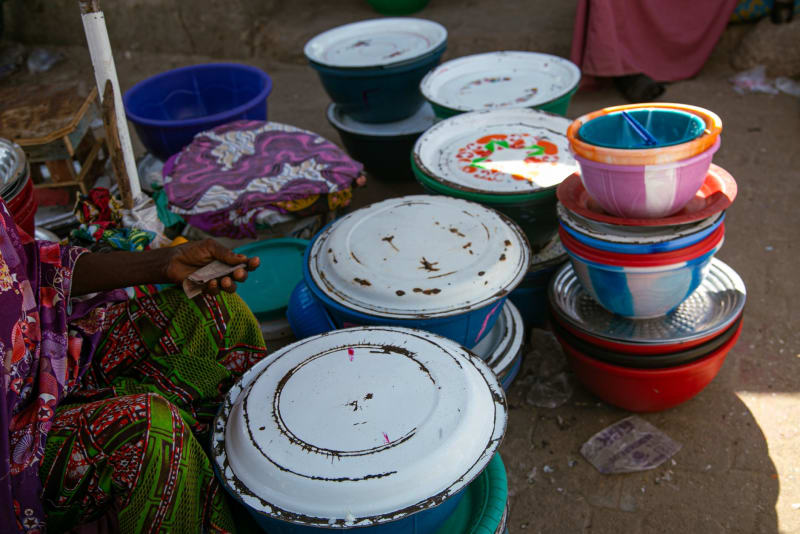 eritrea
 Senafe
A border-town gateway to Eritrea's ancient highland ruins, where the escarpment drops away and the view toward Ethiopia is too big for any photograph.
Explore eritrea
 Adulis
The half-excavated ruins of an ancient Red Sea port that once shipped ivory and gold to Rome and Byzantium, lying silent in a thorn-scrub plain where the heat presses down like a hand.
Explore eritrea
 Asmara
A highland capital so improbably beautiful — all Art Deco curves and espresso bars — that you keep expecting someone to explain the joke.
Explore