Bellapais
"We sat under the same tree Durrell wrote about and watched the abbey ruins turn orange, and neither of us said a word for ten minutes."
A hillside village above Kyrenia crowned by a ruined 13th-century Gothic abbey and a famous tree the writer Lawrence Durrell once wrote under.

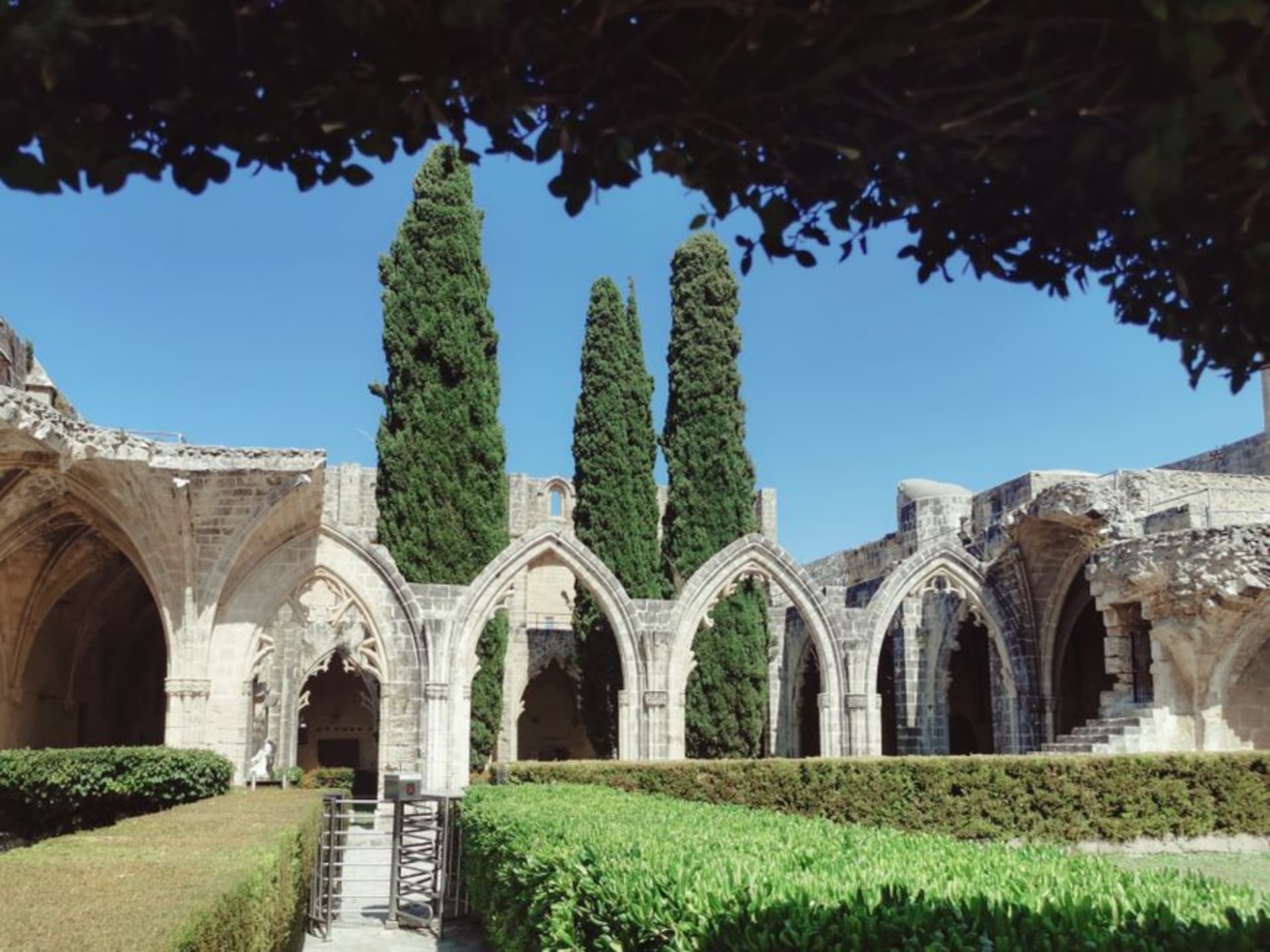
Bellapais sits just above Kyrenia, up a winding road with switchbacks tight enough that I regretted not renting a smaller car, and the payoff at the top is one of the most striking ruins I’ve seen anywhere in the eastern Mediterranean. The abbey — Abbaye de la Paix, White Abbey, depending on which language and century you’re going by — was built by Augustinian canons in the early 1200s and somehow, even roofless and crumbling in parts, still reads as one of the finest examples of Gothic architecture I’ve come across outside Western Europe. Pointed arches frame nothing but sky now, and there’s a refectory hall so intact you can practically hear it echo.
I’d read Lawrence Durrell’s “Bitter Lemons” before the trip, where he describes buying a house in this exact village in the 1950s and sitting under a huge tree in the square with the old men of the village, so when we found that tree — still there, still enormous, right by the abbey gate — I felt genuinely moved in a way I didn’t expect from a travel memoir written seventy years ago. We ordered coffee at the café beneath it and just sat, watching the light shift on the abbey stone as the afternoon wore on, and honestly it’s one of the only times on this whole Cyprus trip that Lia and I stopped talking and just looked at something together for a long stretch.

The village itself is tiny, a cluster of stone houses climbing the hillside with views straight down to the Mediterranean and the Kyrenia range rising behind, and it’s been discovered enough that a handful of boutique guesthouses and restaurants have moved in without quite ruining the quiet. We wandered the narrow lanes below the abbey as the sun dropped, cats sprawled on warm stone steps, bougainvillea spilling over garden walls, and at one point an older man sitting outside his door nodded at us and said something in Turkish that I’m fairly sure was a comment on the weather, though I couldn’t be certain.

We stayed until the abbey ruins went orange with the last light, then amber, then a kind of ash grey, and it was hard to leave. There’s something about ruins with no ticket booth rush and a village this small around them that lets you actually sit with a place instead of just photographing it and moving on.
When to go: Late afternoon into sunset is the best time to see the abbey, and spring or autumn gives you cool enough weather to enjoy the hillside walk without melting on the climb up.
Keep exploring
More from Cyprus
 cyprus
Cape Greco
A white-cliffed headland at the southeastern tip of Cyprus where the sea has chewed the limestone into caves and arches, and the water turns a blue that feels almost rude.
Explore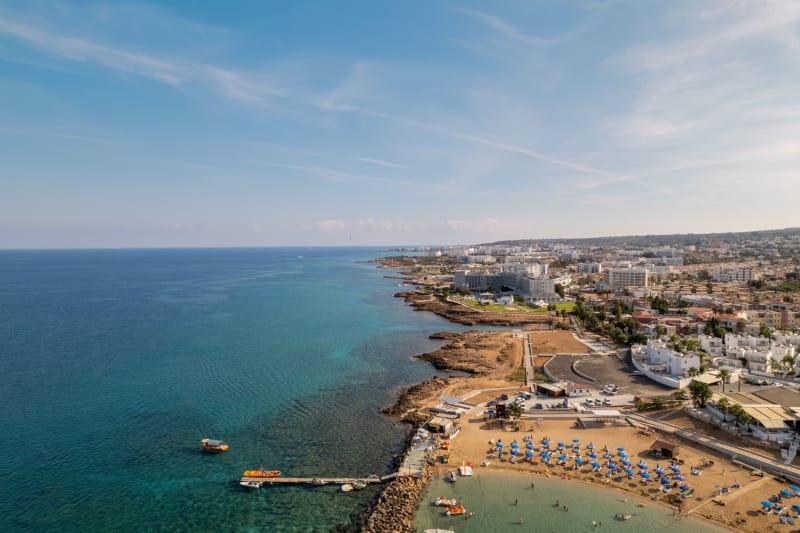 cyprus
Famagusta
A walled medieval city in the north where a Gothic cathedral became a mosque and a ghost town of abandoned hotels sits locked behind fences by the sea.
Explore cyprus
Kakopetria
A mountain village in a river gorge where Byzantine frescoes, cool forest air, and a preserved old quarter sit at 1,000 meters elevation.
Explore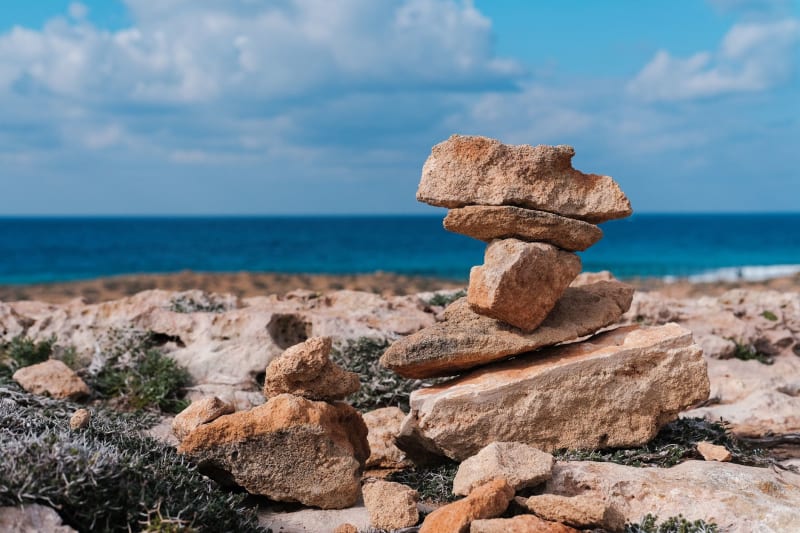 cyprus
Karpaz Peninsula
A wild finger of land reaching toward Syria in northern Cyprus where wild donkeys roam empty beaches and a fifth-century basilica faces the open sea.
Explore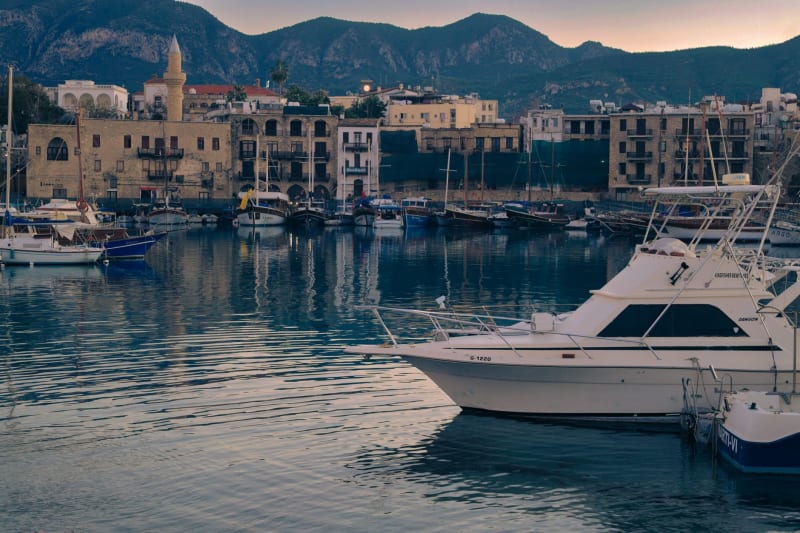 cyprus
Kyrenia
The north's jewel harbor, ringed by a crusader castle and mountains, where the most dramatic seafront in Cyprus opens onto a contested sea.
Explore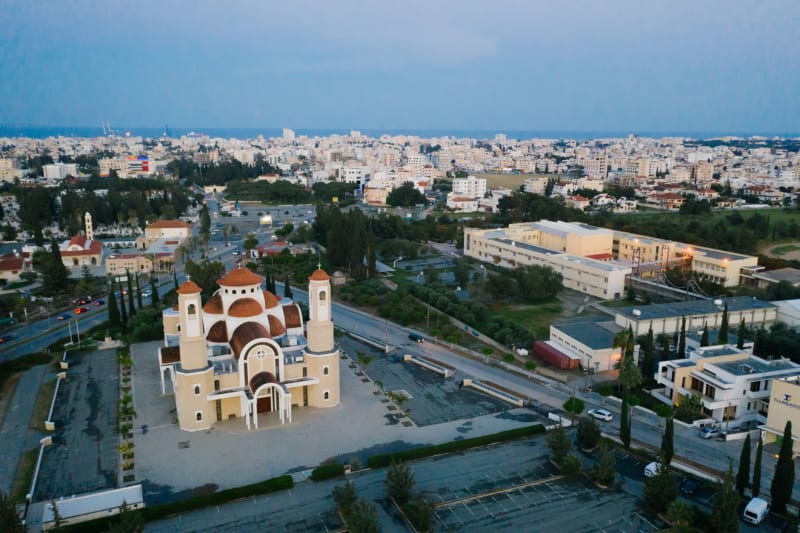 cyprus
Larnaca
A working-class port city where a Phoenician salt lake, a mosaic-floored mosque, and the best beach promenade on the island coexist without ceremony.
Explore