Ripoll
"Our guide said Ripoll was 'the cradle of Catalonia' so flatly, like she'd said it a thousand times, that I almost missed how big a claim it actually was."
A quiet Pyrenean foothill town built around the monastery where Wilfred the Hairy is buried, often called the birthplace of Catalonia.

Ripoll doesn’t look like the birthplace of a nation. It’s a modest town in the foothills below the higher Pyrenees, quiet enough on the Tuesday afternoon we visited that we could hear our own footsteps on the stone, and it took me a beat to square that against what the monastery at its center actually represents. Santa Maria de Ripoll was founded in 879 by Wilfred the Hairy, the count generally credited as the founder of the Catalan dynasty, and he’s buried inside it. If you’re looking for a single physical place to point at and say “this is where Catalonia, as a distinct political and cultural entity, starts,” this is probably it.
The main draw, and the thing that made me stop talking for a solid five minutes, is the west doorway. It’s this enormous, densely carved stone portal, sometimes called the “Ripoll Bible in stone,” covered top to bottom in biblical scenes and figures — Old Testament narratives, the months of the year, a whole visual encyclopedia carved into 12th-century sandstone. Centuries of weather have softened some of the detail, but there’s still an overwhelming amount to look at, and I found myself doing that thing where you keep spotting new figures the longer you stand there.

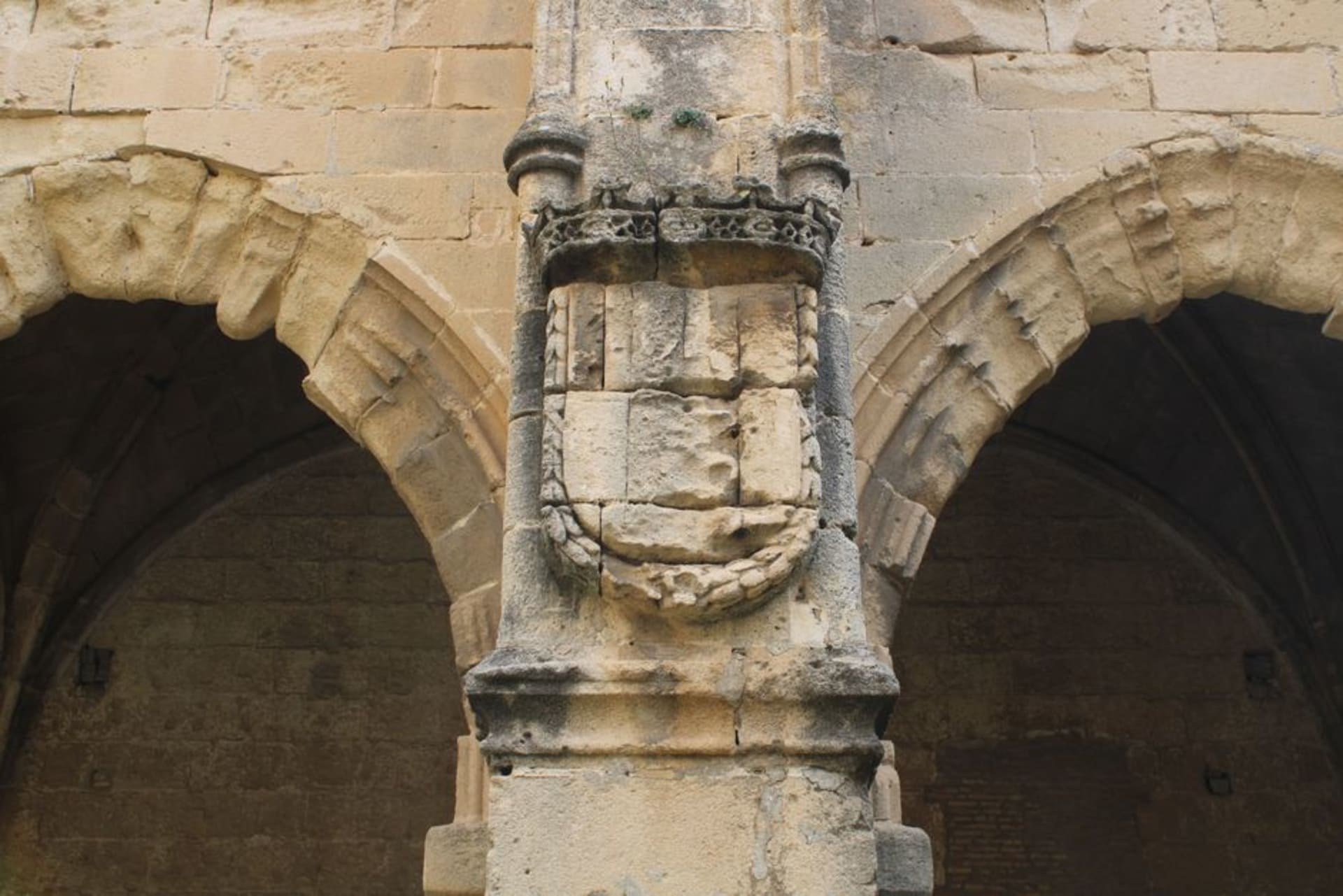
The monastery itself was, at its medieval peak, one of the great centers of learning in Europe — its scriptorium and library were renowned, and Gerbert d’Aurillac studied here before going on to become Pope Sylvester II, credited with helping introduce Arabic numerals to the West. None of that grandeur is obvious from the current building, honestly, which has been rebuilt more than once after fires and, weirdly, a 19th-century earthquake, and the interior now feels more solemn than magnificent. But standing in the cloister, with its two tiers of slightly mismatched arcades from different building phases, I found it easier to imagine monks copying manuscripts here a thousand years ago than I usually do in more polished, restored sites.
We had lunch afterward at a small place near the river, the Ter, which runs right through town, and talked with the owner about the annual reenactment Ripoll holds, apparently, of Wilfred’s founding of the monastery — a detail that tells you how seriously this town holds onto its origin-story status even now. It’s not a flashy kind of pride. Nobody was selling t-shirts about it. It’s more that the town just quietly assumes you already know why it matters, which after visiting, I did.

It’s an easy stop on the way toward the higher Pyrenees or Vic, and I’d give it two or three unhurried hours rather than a rushed thirty minutes.
When to go: any season works, but spring and early autumn give you good light for the stone carving without summer’s heat radiating off the square.
Keep exploring
More from Catalonia
 catalonia
Sitges
A seaside town south of Barcelona with a whitewashed old quarter, a church on a rock above the waves, and an unembarrassed sense of fun.
Explore catalonia
Tarragona
A Roman capital rebuilt as a Catalan city, where amphitheater ruins meet the sea and the locals seem unbothered by the archaeology underfoot.
Explore catalonia
Tossa de Mar
A fortified medieval town on the Costa Brava where Chagall found his blue paradise above a crescent of sand.
Explore catalonia
Val d'Aran
A Pyrenean valley that speaks Aranese, drains toward the Atlantic instead of the Mediterranean, and skis like nowhere else in Catalonia.
Explore catalonia
Vic
An inland Catalan market town where Roman ruins sit behind a bakery and the smell of cured sausage follows you down every street.
Explore catalonia
Barcelona
A Mediterranean city that somehow figured out how to be both wildly ambitious and casually beautiful at the same time.
Explore